Only COD || Advance में ₹1 भी नहीं देना है
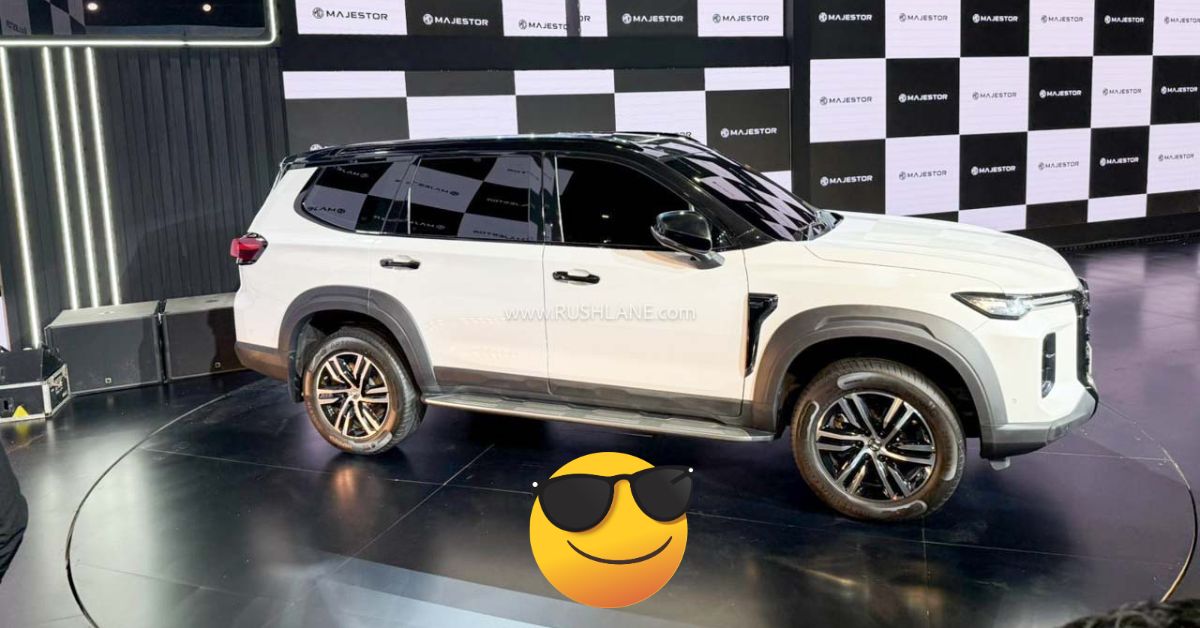
MG Majestor SUV

MG Majestor SUV Review: Price in India, 218hp Diesel Engine, ADAS, and Fortuner Comparison.

For the longest time, the Indian full-size SUV segment was a one-horse race. You either bought a Toyota Fortuner for its “mafia” road presence or you settled for less. But in early 2026, the game has shifted. JSW MG Motor India has officially unleashed the MG Majestor SUV, a vehicle that doesn’t just want to compete—it wants to dominate.

Positioned as a more premium, sportier alternative to the Gloster, the Majestor starts at an Ex-showroom price of ₹46 Lakh. It’s bigger, bolder, and packed with more tech than anything else in its class. The real truth is, if you’re looking for a “paisa-vasool” luxury experience that makes the Fortuner look like it’s from the 1990s, the Majestor is your answer. But does it have the mechanical soul to survive Indian terrains? Let’s find out.

A cinematic front-angle shot of the MG Majestor SUV in a deep metallic black finish, being driven on a scenic Indian mountain highway.

1. QUICK SPECS TABLE (Key Highlights)

FeatureTechnical Specification
Engine2.0L Twin-Turbo Diesel
Power (BHP)213 BHP @ 4000 RPM
Torque (NM)478.5 NM @ 1500-2400 RPM
Transmission8-Speed Torque Converter Automatic
Drive TypeReal-time Intelligent 4WD / 2WD Options
Boot Space343 Litres (All rows up) / 1350 Litres (Rows down)
Ground Clearance210 mm
Fuel Tank Capacity75 Litres

2. EXTERIOR DESIGN & ROAD PRESENCE

If the Gloster was a “Gentle Giant,” the MG Majestor is an “Aggressive Beast.” The stance is intimidating.

  • Front Fascia: The massive octagonal grille with chrome-stud inserts is the centerpiece. It’s flanked by split-LED headlamps—slim DRLs on top and vertically stacked main units below.
  • Side Profile: It rides on gorgeous 19-inch 5-spoke diamond-cut alloy wheels. The sheer length (nearly 5 meters) gives it a yacht-like silhouette on the road.
  • Rear Design: The connected LED tail-lamp bar with the bold ‘MAJESTOR’ lettering across the tailgate ensures that anyone behind you knows exactly what you’re driving.
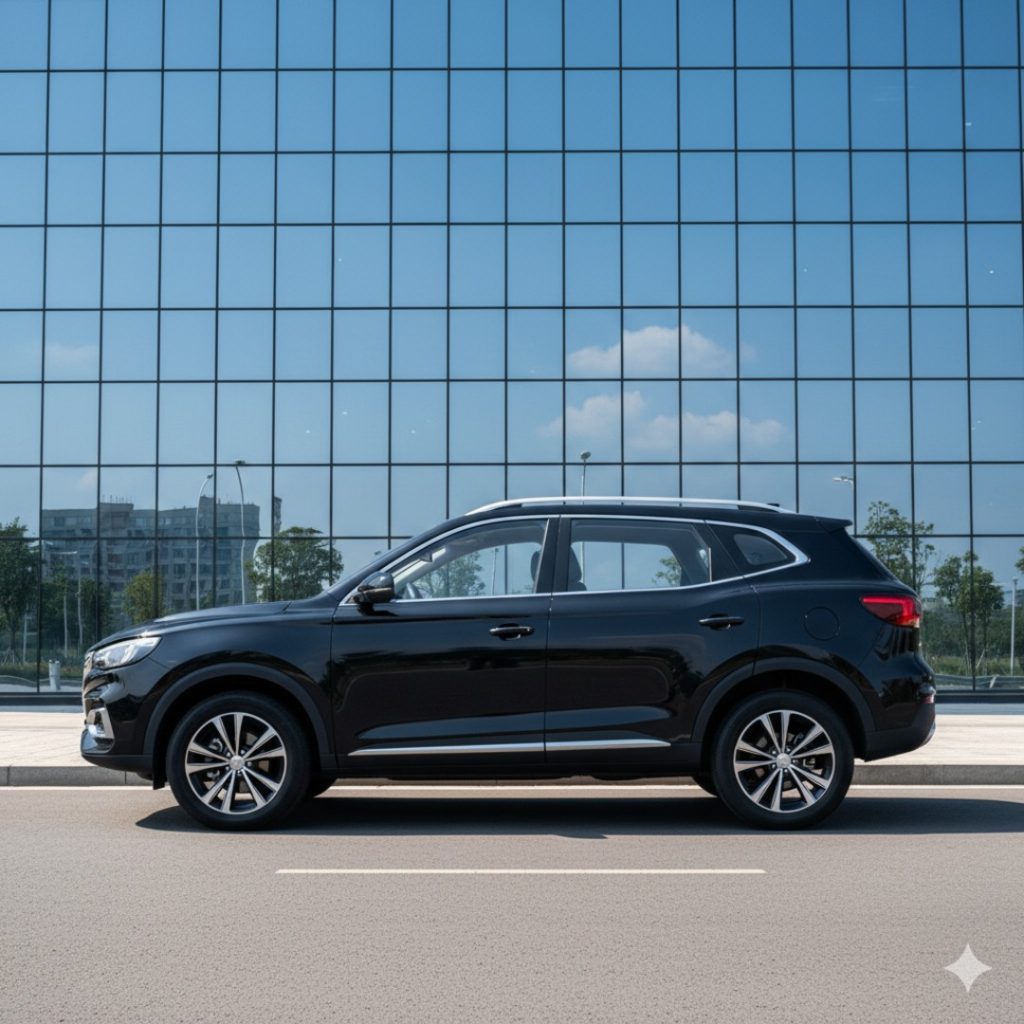
Side profile view of the MG Majestor SUV parked on a clean asphalt road near a modern glass building. Showcasing the 19-inch alloy wheels and high ground clearance.

Does it turn heads? Absolutely. In our test drive through Delhi’s Connaught Place, we had people rolling down their windows to ask about the price. It has that “Executive Boss” vibe that Indian buyers crave.

3. INTERIOR, COMFORT & FEATURES

Step inside, and the Majestor makes you feel like you’ve skipped a price segment. The dashboard is wrapped in soft-touch Nappa leather with contrast stitching.

  • The Screens: You get a massive ** freestanding 12.3-inch touchscreen** that is snappy and supports Wireless Apple CarPlay/Android Auto. The driver gets an equally impressive 12.3-inch fully digital instrument cluster.
  • Seating Comfort: The front seats are ventilated, heated, and come with a massage function for the driver. In the 7-seater version, the middle row is a bench, but the 6-seater “Captain Seat” version is the one to get if you are chauffeur-driven.
  • Space: Legroom in the second row is cavernous. Even the third row is “usable” for adults on short trips, thanks to the dedicated AC vents and USB ports.
  • The Sunroof: The Panoramic Skyroof is one of the largest in the industry, making the cabin feel like a lounge.

4. ENGINE PERFORMANCE & DRIVING DYNAMICS

Under the hood lies the familiar but refined 2.0L Twin-Turbo Diesel engine.

  • City Drive: Despite its size, the steering is surprisingly light at low speeds. The 8-speed automatic gearbox is smooth, though you might feel a slight hesitation when you floor the pedal for a quick gap in traffic.
  • Highway Drive: This is where the Majestor shines. At 100-120 kmph, the SUV feels planted. The cabin insulation is top-tier; you barely hear the diesel grumble or the wind noise.
  • Suspension: The suspension absorbs potholes easily. MG has tuned the Majestor with a slightly softer setup compared to the Fortuner. On broken rural roads, it glides over bumps without tossing the passengers around. However, this does result in some body roll during high-speed cornering.

5. REAL WORLD MILEAGE (The Truth)

Indian buyers always ask: “Kitna deti hai?” (What’s the mileage?).

  • ARAI Claimed: 12.4 kmpl.
  • Real-World City Traffic: 8.5 to 9.2 kmpl. In heavy peak-hour traffic (like Mumbai or Bangalore), expect it to drop to 7.5 kmpl.
  • Real-World Highway: 11.5 to 13.0 kmpl if driven at steady speeds of 90-100 kmph.

6. SAFETY: A LEVEL 2 ADAS FORTRESS

MG has not cut corners here. The Majestor comes with a Level 2 ADAS suite that actually works on Indian roads.

  • ADAS Features: Adaptive Cruise Control, Automatic Emergency Braking, Lane Keep Assist, and Blind Spot Detection.
  • Passive Safety: 8 Airbags, ABS with EBD, Electronic Stability Program (ESP), and a 360-degree high-definition camera system.
  • Build: The ladder-frame chassis feels solid, and the door thud is reassuringly heavy.

7. THE COMPETITION (Auto-Selected Rivals)

MG Majestor vs Toyota Fortuner Legender vs Skoda Kodiaq

FeatureMG MajestorToyota Fortuner LegenderSkoda Kodiaq
Engine2.0L Twin-Turbo Diesel2.8L Diesel2.0L Turbo Petrol
Power/Torque213 BHP / 478 NM201 BHP / 500 NM187 BHP / 320 NM
Tech/FeaturesLevel 2 ADAS, Massaging SeatsBasic Tech, Rugged BuildDynamic Chassis, 9 Airbags
Price (Ex-S)₹46.00 Lakh₹49.50 Lakh₹39.99 Lakh

The Winner: For Value For Money (VFM), the MG Majestor wins. It offers more luxury and safety tech than the Fortuner while being more rugged and spacious than the Kodiaq.

8. FINAL VERDICT

Is it worth the price tag? If you are looking for a luxury SUV that doubles as a family tourer and a status symbol, then yes.

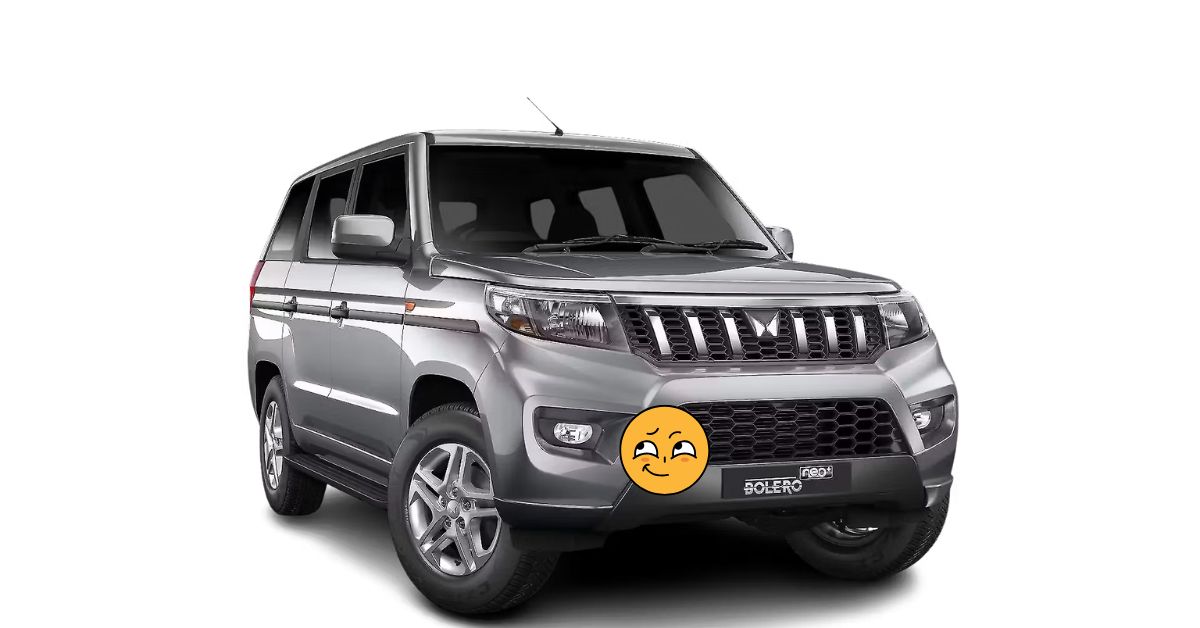
Read More : Mahindra Bolero 2026

Buy it if:

  • You want the best-in-class interior features and a panoramic sunroof.
  • You need Level 2 ADAS safety for long highway journeys.
  • You prioritize ride comfort over high-speed cornering stability.

Skip it if:

  • You want the highest resale value (Toyota still wins here).
  • You prefer a compact SUV that is easy to park in tight city alleys.
  • You are looking for a petrol engine (The Majestor is diesel-only for now).

Score: 8.5/10

9. FAQs (People Also Ask)

1. What is the on-road price of MG Majestor in Delhi?

The expected on-road price in Delhi will be approximately ₹53 Lakh to ₹55 Lakh, depending on the variant and insurance options.

2. Does MG Majestor come with a 4×4 system?

Yes, the Savvy variants come with an Intelligent 4WD system with multiple terrain modes (Snow, Mud, Sand, Eco, Sport).

3. What is the waiting period for the MG Majestor?

Depending on the city, the initial waiting period is expected to be 3 to 5 months due to high demand for the Savvy 4×4 variants.

4. Is there a CNG option available?

No, the MG Majestor is a premium full-size SUV and is only available with a 2.0L Diesel engine. There are no plans for a CNG version.

5. How does the ADAS perform in Indian traffic?

The ADAS is tuned for Indian conditions, but features like Lane Keep Assist work best on marked highways. In chaotic city traffic, it is advisable to keep some sensors on “Alert Only” mode.
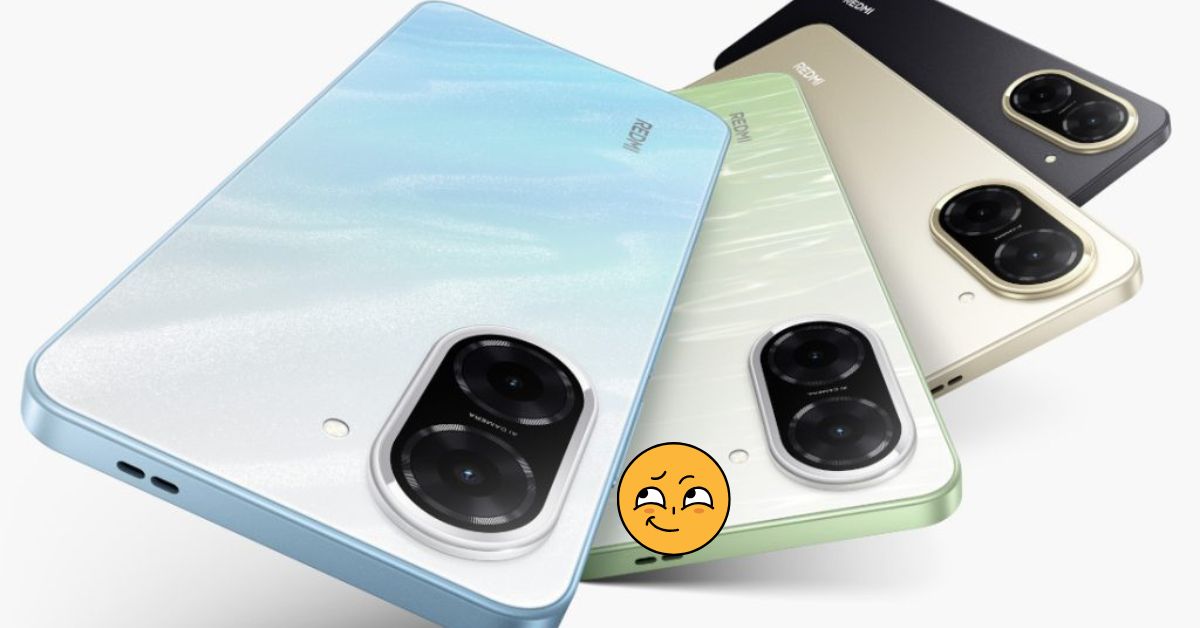

Redmi A5

Redmi A5 (2026): Everything About Price, 32MP Camera, and Unisoc T7250 Performance.

Let’s be honest: buying a phone under ₹7,000 usually feels like a compromise. You expect a laggy screen, a battery that dies by evening, and a design that looks like it belongs in 2018. But the real truth is, the Redmi A5 is trying to change that narrative in 2026.

Launched at a starting price of ₹6,499, this isn’t just another “cheap” phone. It’s the first in its segment to bring a 120Hz refresh rate and a massive 6.88-inch display to the masses. While everyone is chasing 5G, Redmi has doubled down on 4G stability and premium design for the common Indian buyer. Don’t waste your money if you’re looking for a gaming beast, but if you want the best “first smartphone” or a reliable secondary device, read on.

A high-quality hero shot of the Redmi A5 in Pondicherry Blue.

2. QUICK SPECS TABLE

FeatureTechnical Specification
ProcessorUnisoc T7250 (Octa-core, 1.8GHz)
Display6.88-inch HD+ IPS LCD, 120Hz Refresh Rate
RAM / Storage3GB/4GB LPDDR4X
Virtual RAMUp to 8GB (Memory Extension)
Rear Camera32MP Primary (f/2.0) + Auxiliary Lens
Front Camera8MP with Fill-light
Battery5200 mAh (Lithium Polymer)
Charging15W Fast Charging (Type-C)
SecuritySide-mounted Fingerprint + Face Unlock
SoftwareAndroid 15 (Go Edition)

3. DESIGN & BUILD (Deep Dive)

For a phone that costs less than a decent pair of sneakers, the Redmi A5 feels surprisingly premium.

  • The “Royale” Design: Redmi has moved away from the textured leather-like finish of the A3 to a more sophisticated “Glass-touch” finish. In colors like Jaisalmer Gold and Pondicherry Blue, the phone catches the light beautifully.
  • Ergonomics: Despite the massive 6.88-inch screen, it maintains a thickness of 8.26mm. It weighs 193 grams, which is quite balanced. You won’t feel like you’re carrying a brick, though one-handed usage is nearly impossible for most people.
  • Durability: It comes with an IP52 rating, meaning it can handle the occasional light drizzle or dust. Redmi claims they’ve tested the power button for 500,000 presses—so it’s built for the long haul.
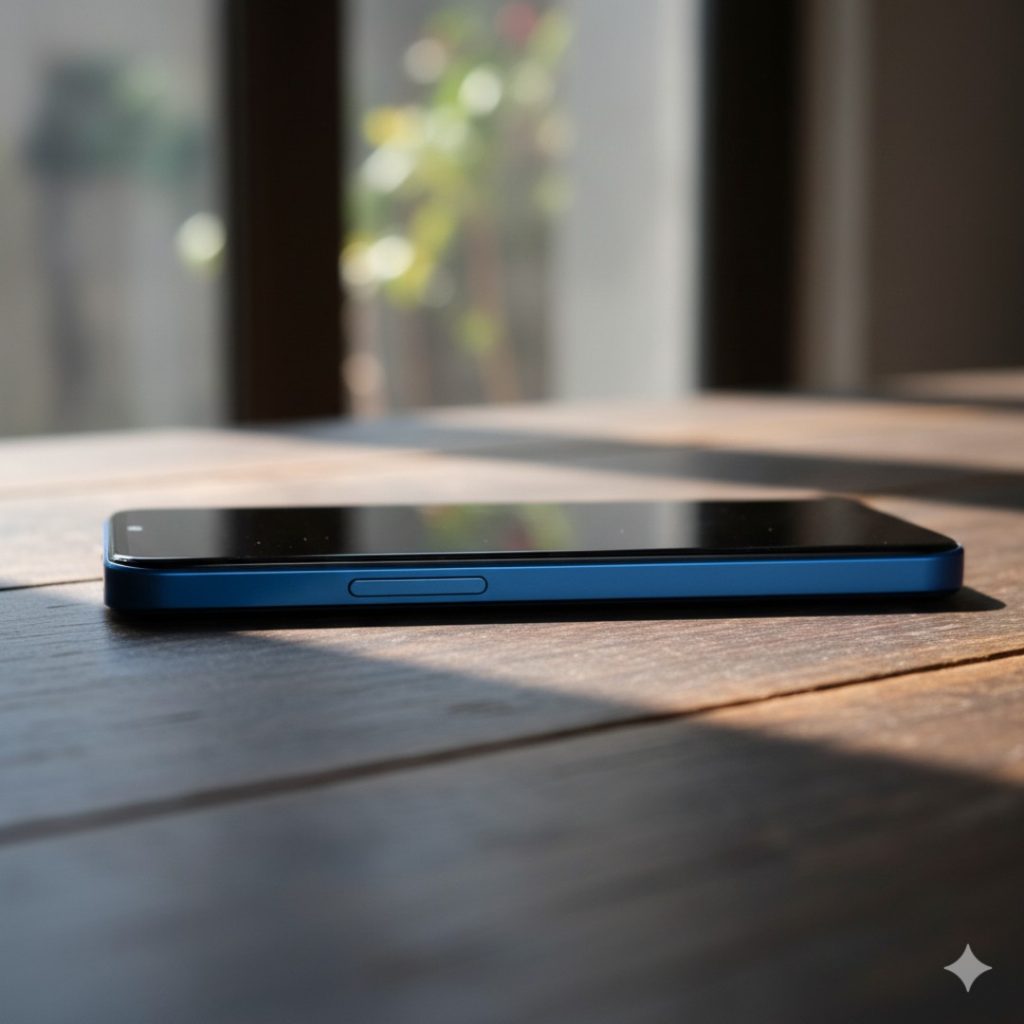
Side profile shot of the Redmi A5 on a wooden desk.

4. DISPLAY & VISUALS

This is the A5’s “Masterstroke.” Most phones in this price range (like the Samsung M05) stuck to 60Hz or 90Hz.

  • Smoothness Redefined: The 120Hz refresh rate makes scrolling through Facebook or Instagram feel surprisingly fluid. Even though the resolution is only HD+ (720 x 1650), the high refresh rate masks the lower pixel density of 262 PPI.
  • Outdoor Visibility: With 600 nits of peak brightness, the screen is legible under direct sunlight, though it struggles with glare.
  • Eye Care: It has TÜV Rheinland Low Blue Light certification. If you’re someone who spends 4 hours a day on WhatsApp, your eyes will thank you.
Close-up of the Redmi A5 screen showing a bright, colorful wallpaper.

5. PERFORMANCE & USAGE

The Unisoc T7250 chipset is a curious choice.

  • Real-World Speed: For daily tasks—calling, YouTube, and UPI payments—it works fine. The Android 15 Go Edition is lightweight, which helps the 3GB/4GB RAM keep things moving.
  • The Lag Factor: If you try to open 10 apps simultaneously, you will see a delay. It’s a budget chip, after all. However, the 83% performance boost over the older Redmi A3 is noticeable.
  • Gaming: Don’t even think about it. You can play Subway Surfers or Candy Crush easily. But BGMI or Free Fire will only run on the lowest settings with frequent frame drops. This is a phone for utility, not entertainment.

6. CAMERA PERFORMANCE

The Redmi A5 features a 32MP AI Dual Camera setup.

  • Daylight Photography: In bright light, the 32MP sensor captures decent detail. The colors are slightly boosted (classic Xiaomi style), which makes photos look ready for a WhatsApp Status without editing.
  • Selfies: The 8MP front camera now includes a “soft-light ring” feature. It uses the screen brightness to illuminate your face in dark rooms. It’s not a professional studio light, but it gets the job done for video calls.
  • Night Mode: It exists, but it’s not magic. It takes about 2-3 seconds to process a night shot. It reduces noise, but the images remain a bit soft.
Macro shot of the large circular camera module on the back of the Redmi A5.

7. BATTERY & ENDURANCE

  • The 5200mAh Beast: Because the screen is only HD+ and the processor isn’t power-hungry, the battery lasts forever. On a full charge, it easily delivers 1.5 to 2 days of mileage.
  • Charging Speed: It supports 15W fast charging.
    • 0-50%: Takes about 55 minutes.
    • 0-100%: Takes nearly 2 hours and 15 minutes.
    • Pro Tip: It uses USB Type-C, so you don’t have to worry about carrying those old micro-USB cables anymore.

8. THE COMPETITION

Redmi A5 vs Samsung Galaxy M05 vs POCO C71

FeatureRedmi A5Samsung Galaxy M05POCO C71
Display120Hz IPS LCD60Hz PLS LCD120Hz IPS LCD
ProcessorUnisoc T7250Helio G85Unisoc T7250
Charging15W25W15W
Price (approx)₹6,499₹7,999₹6,199

The Winner: For pure value, the Redmi A5 wins because of the 120Hz screen and the premium design. However, if you want a slightly faster processor and better brand value for resale, the Samsung M05 is the safer bet at a higher price.

9. FINAL VERDICT

The Redmi A5 is the “Common Man’s Flagship.” It looks expensive but costs less than a family dinner at a fancy restaurant.

Read More : Samsung Galaxy A56 5G 

Buy it if:

  • You want the smoothest display (120Hz) in the ultra-budget segment.
  • You need a phone with massive battery life (2 days).
  • You are buying a phone for a parent or a student for basic use.

Skip it if:

  • You are a heavy gamer (Go for the Redmi 13C or 14C instead).
  • You want 5G connectivity (Wait for the Redmi A4 5G).
  • You have no patience for slow charging.

Rating: 4.1/5 Stars

11. FAQs (People Also Ask)

1. Is Redmi A5 a 5G phone?

No, the Redmi A5 is a 4G LTE device. If you want 5G in a similar budget, look for the Redmi A4 5G.

2. Does it come with a charger in the box?

Yes! Unlike the expensive Samsung phones, Redmi still provides a 15W adapter and a Type-C cable inside the box.

3. Can I use two SIM cards and a Memory Card?

Yes, it has a Triple Slot. You can use two Nano-SIMs and one microSD card (up to 2TB) at the same time.

4. Does it have a fingerprint sensor?

Yes, it has a fast side-mounted fingerprint sensor integrated into the power button.

5. How many updates will it get?

Xiaomi promises 2 years of OS updates and 4 years of security patches, which is excellent for this price range.

Samsung Galaxy A56 5G

Galaxy A56 5G Full Specifications: 50MP Camera, 120Hz AMOLED, and 6 Years of Updates.

If you walk into any mobile store in India today and ask for a “reliable” phone that doesn’t cost a lakh but feels like one, the conversation almost always ends at the Samsung A-series. But the real truth is, the A-series has often been criticized for being “underpowered” for the price.

Enter the Samsung Galaxy A56 5G. Launched in early 2025 and now a seasoned veteran in 2026, this device attempts to silence the haters with a massive performance jump via the Exynos 1580 and, finally, a charging speed that doesn’t feel like it’s from the stone age. Starting at an effective price of ₹38,490, it sits in the most cut-throat segment of the Indian market. Don’t waste your money if you’re looking for raw gaming alone—but if you want a “mini S25” that lasts 6 years, this might be your ride.

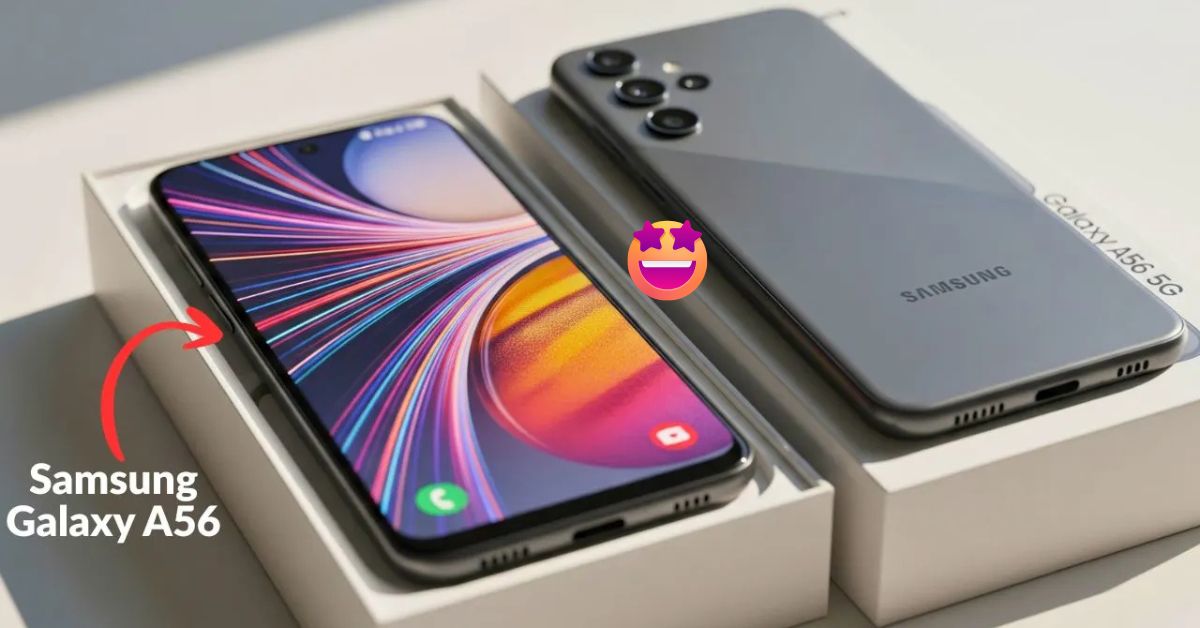
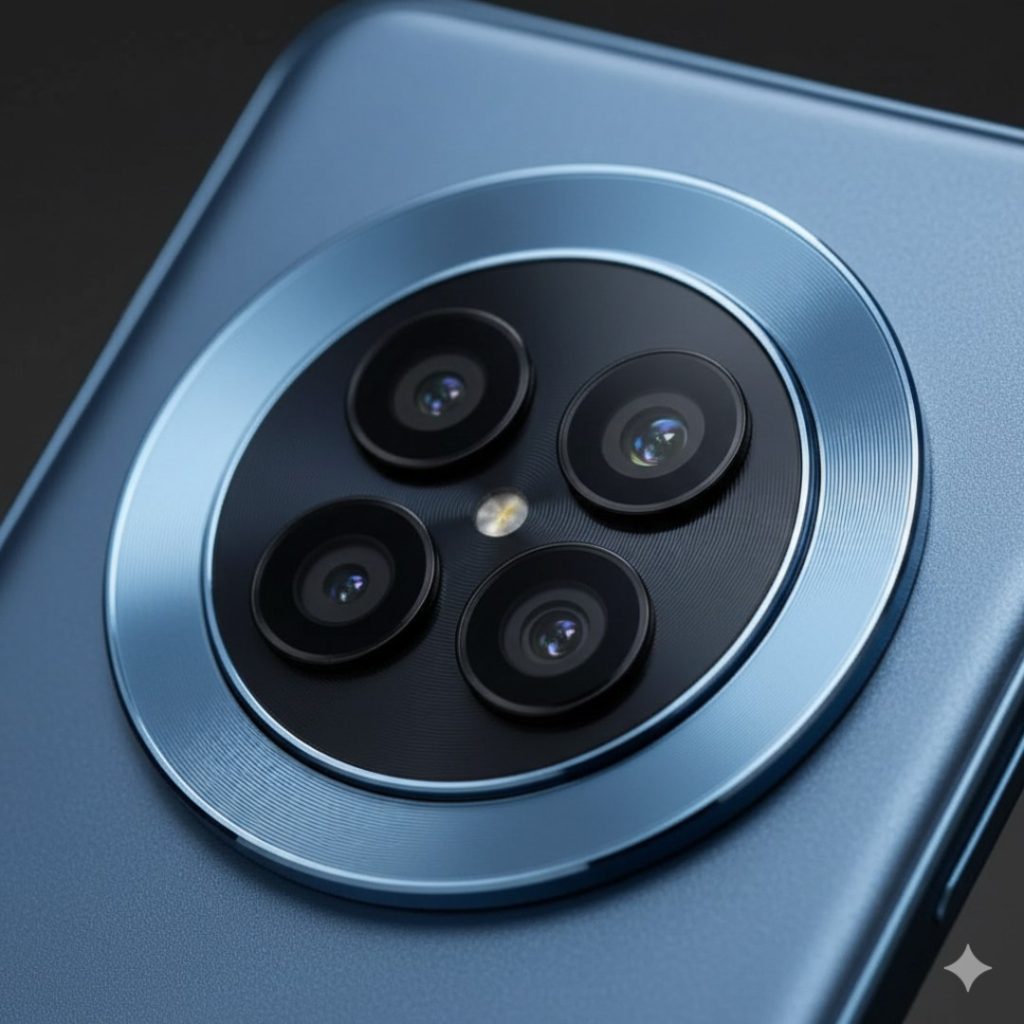
A high-quality hero shot of the Samsung Galaxy A56 5G in Awesome Iceblue.
2. QUICK SPECS TABLE

FeatureTechnical Specification
Processor (Engine)Samsung Exynos 1580 (4nm Architecture)
GPUXclipse 540 (AMD RDNA 3 Based)
Display6.7-inch FHD+ Super AMOLED, 120Hz
Peak Brightness1900 Nits (Vision Booster)
RAM / Storage8GB/12GB LPDDR5
Rear Camera50MP (OIS) + 12MP (UW) + 5MP (Macro)
Front Camera12MP (Upgraded Sensor)
Battery / Charging5000 mAh / 45W Fast Charging
BuildGorilla Glass Victus+ (Front/Back), Aluminum Frame
IP RatingIP67 Water and Dust Resistance

3. DESIGN & BUILD (Deep Dive)

Samsung has perfected the “Aesthetic Uniformity.” At first glance, you’d struggle to tell this apart from the flagship S25.

  • Premium Feel: It uses Gorilla Glass Victus+ on both the front and the back. This isn’t that cheap “glastic” (plastic that looks like glass) found on lower models. The frame is solid aluminum, giving it a cold, premium touch that screams durability.
  • Weight & Grip: At 198 grams and a thickness of just 7.4mm, it’s impressively thin. It feels significantly more balanced in the hand than the bulky M-series or F-series phones.
  • The “Key Island”: The slightly raised platform for the power and volume buttons (introduced last year) remains. It’s a small ergonomic win that makes finding buttons in the dark much easier.
Side profile shot of the Samsung Galaxy A56 5G showing the slim 7.4mm thickness and the aluminum frame.

4. DISPLAY & VISUALS

The display is where Samsung usually “bullies” the competition, and the A56 is no different.

  • Brightness: With a peak brightness of 1900 nits, outdoor visibility is no longer a struggle. Even under the scorching Jaipur sun, you can read emails or watch YouTube without squinting.
  • Visual Quality: The 6.7-inch Super AMOLED panel produces punchy, “Samsung-style” colors. The blacks are deep, making it a dream for binge-watching Netflix at night.
  • Protection: Having Victus+ protection on a mid-range phone is a huge peace of mind for Indian users who often face crowded metros and accidental drops.
Close-up of the Galaxy A56 screen showing a vibrant, colorful abstract wallpaper.

5. PERFORMANCE & GAMING (The Exynos 1580 Story)

Let’s address the elephant in the room: Exynos. Usually, Indian tech enthusiasts run away from this word. However, the Exynos 1580 is a different beast. Built on a 4nm process, it uses the same architecture found in much more expensive chips.

  • Daily Usage: In city-life multitasking—jumping from WhatsApp to Swiggy to Instagram—the phone is buttery smooth. No “laggy animations” here.
  • Gaming: Thanks to the AMD RDNA 3-based Xclipse 540 GPU, gaming performance has jumped by nearly 30% over the A55. You can play BGMI or Genshin Impact on “High” settings without the phone becoming a tandoor.
  • Thermal Control: Samsung has used a larger vapor chamber this year. During a 40-minute gaming session, the temperature stayed around 41°C, which is very respectable for a slim phone.

6. CAMERA PERFORMANCE

While the megapixel count (50MP) looks the same as last year, the sensor quality and processing have changed.

  • Main Sensor: The 50MP OIS camera takes “social media-ready” shots. It handles skin tones much better now, moving away from the “yellowish” tint of older models.
  • Nightography: Samsung’s AI now kicks in faster. Night shots at India Gate or Marine Drive come out with less noise and more natural light.
  • Selfie Upgrade: The new 12MP front camera (replacing the old 32MP sensor) actually takes better photos because the individual pixels are larger, allowing for more light and detail.
Macro shot of the triple camera module on the back of the Galaxy A56.

7. BATTERY & ENDURANCE (The “45W” Truth)

The A56 finally supports 45W Fast Charging, a feature once reserved for the “Ultra” flagships.

  • Charging Test: In our tests, it charges 0-50% in approximately 28 minutes. A full 100% charge takes about 1 hour and 8 minutes.
  • Real World Mileage: With the 5000 mAh battery:
    • City Usage (Mixed): 1.5 Days.
    • Heavy Usage (Gaming/GPS/5G): Full day (End-of-day at 15%).
  • The Catch: Remember, there is no charger in the box. You’ll have to shell out another ₹2,000 for a genuine Samsung 45W adapter.

8. THE COMPETITION (The Battle of the Mid-Range)

Galaxy A56 5G vs OnePlus 13R vs Realme GT 7

FeatureSamsung Galaxy A56OnePlus 13RRealme GT 7
ChipsetExynos 1580Snapdragon 8 Gen 3Snapdragon 8 Elite
BuildGlass/Metal (IP67)Glass/Plastic (IP65)Glass/Plastic (IP65)
Charging45W80W120W
Software Support6 Years4 Years3 Years
Price₹38,490₹39,999₹37,999

The Verdict: If you want raw “speed” and “fast charging,” the OnePlus 13R or Realme GT 7 will beat the Samsung. But if you want the best build quality, water resistance, and the longest software support (6 years), the Galaxy A56 is the superior long-term investment.

9. FINAL VERDICT

The Samsung Galaxy A56 5G is the “safe” choice. It’s like buying a Toyota Fortuner—it might not be the fastest or the flashiest in every spec, but it’s built to last and holds its value.

Read More : Vivo V50 

Buy it if:

  • You plan to keep your phone for 4-5 years (6 years of updates is huge).
  • You want a premium build with IP67 water resistance.
  • You prefer a clean, feature-rich software experience (One UI 7.0 is excellent).

Skip it if:

  • You are a competitive gamer who needs the fastest processor at this price.
  • You want crazy fast charging (15-minute full charge).
  • You hate buying the charger separately.

Rating: 4.2/5 Stars

10. FAQs (People Also Ask)

1. Does the Galaxy A56 5G have an SD Card slot?

The real truth is, Samsung has removed the microSD slot on the A56. You are now limited to the 128GB or 256GB internal storage.

2. Is the 45W charger included in the box?

No. The box only contains a USB-C to USB-C cable. You need to buy the 45W adapter separately.

3. Does it support Galaxy AI?

Yes! The A56 supports several “Awesome Intelligence” features like Circle to Search, Object Eraser, and AI-assisted photo editing.

4. How is the 5G connectivity on Jio and Airtel?

Excellent. It supports all 13 major Indian 5G bands and features “Smart Hotspot” to save battery while sharing data.

5. Is the camera better than the Google Pixel 8a?

The Pixel 8a still wins in still-photography color science, but the Galaxy A56 is much better for video recording and has a much more versatile display.

Google Pixel 10 5G

Google Pixel 10 5G Review: Price in India, Tensor G5 Performance, and AI Features.

For years, buying a base-model Pixel felt like buying a luxury car with a missing cylinder. You got the software, but you always missed out on the “telephoto lens” or the raw power of the Pro models. But in 2026, Google has finally stopped playing games.

The Google Pixel 10 5G has arrived in India with a starting price of ₹69,999, and for the first time ever, the “cheap” Pixel isn’t actually cheap on specs. It now packs a dedicated 5x optical zoom, the first-ever 3nm Tensor G5 chip (made by TSMC, finally!), and enough AI to make your personal assistant jealous.

The real truth is, this might be the most “sensible” flagship Google has ever made. But in a market dominated by the raw speed of Samsung and the status of Apple, is the Pixel 10 a smart investment or just a fancy camera with a phone attached? Let’s peel back the layers.

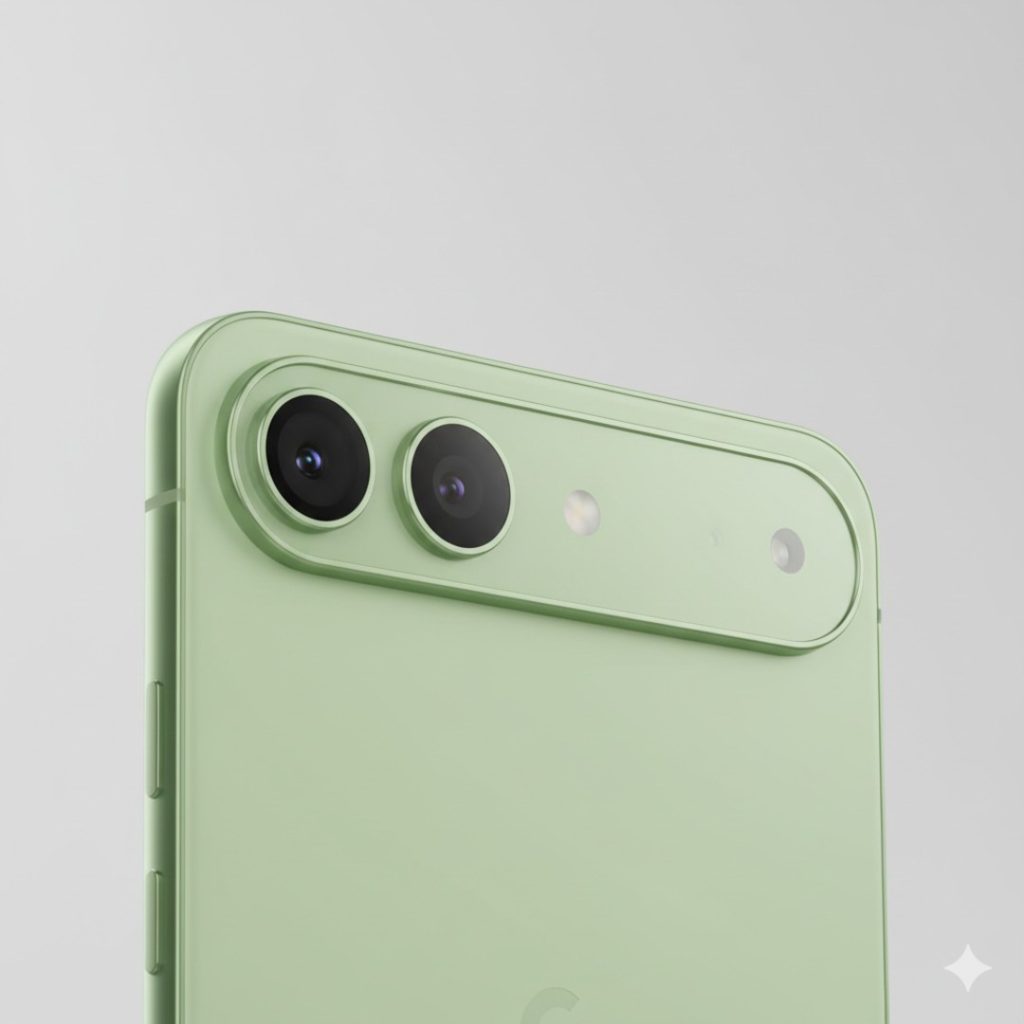
A high-quality hero shot of the Google Pixel 10 5G in ‘Lemongrass’ green, angled to show the new oval camera bar.

2. QUICK SPECS TABLE

FeatureTechnical Specification
ProcessorGoogle Tensor G5 (3nm TSMC Architecture)
RAM / Storage12GB LPDDR5X / 128GB or 256GB UFS 4.0
Display6.3-inch Actua OLED, 120Hz, 3000 Nits Peak
Rear Camera48MP (Main) + 13MP (UW) + 10.8MP (5x Telephoto)
Front Camera10.5MP Dual PD with Autofocus
Battery4,970 mAh
Charging30W Wired, 15W Qi2 Wireless (Pixelsnap)
SoftwareAndroid 16 (7 Years of Updates)

3. DESIGN & BUILD (Deep Dive)

The Pixel 10 doesn’t try to reinvent the wheel; it just polishes it. The iconic “Visor” camera bar has evolved into a more sophisticated oval island that sits flush with the edges.

  • In-Hand Feel: At 204 grams, it feels substantial but not “brick-like.” The 6.3-inch size is the sweet spot for Indian hands—you can actually reach the top of the screen without doing finger gymnastics.
  • Materials: It uses Gorilla Glass Victus 2 on both sides with a matte-finished aluminum frame. Don’t waste your money on a bulky case if you love the texture, but be warned: the “Obsidian” black is still a fingerprint magnet.
  • The Indian Context: With an IP68 rating, it can survive a sudden monsoon downpour or a dusty ride in an auto-rickshaw. It’s built like a tank, just a very stylish one.
Side profile shot of the Google Pixel 10 5G showing the matte aluminum rails and the slight protrusion of the camera bar.

4. DISPLAY & VISUALS

Google calls it the “Actua Display,” and in 2026, it finally lives up to the hype.

  • Brightness: It hitting 3000 nits peak brightness is a game-changer. Even under the harsh 12 PM sun in Chennai or Delhi, the screen is perfectly legible.
  • Refresh Rate: It’s an LTPO-adjacent panel that switches between 60Hz and 120Hz. While it doesn’t go down to 1Hz like the Pro models, the scrolling feels like butter.
  • Color Accuracy: Watching Netflix on this OLED panel is a treat. The blacks are deep, and the “Ultra HDR” support makes photos look almost 3D.

5. PERFORMANCE & GAMING: THE TENSOR G5 REVELATION

This is where the story changes. Previous Pixels were made by Samsung Foundry and had “heating issues” that made them double as pocket-warmers. The Tensor G5 is manufactured by TSMC, the same folks who make Apple’s chips.

  • Real World Usage: Switching between Instagram, Google Maps, and a heavy Excel sheet is instantaneous. The 12GB of RAM is now mandatory because of Google’s new on-device AI, Gemini Nano.
  • Gaming: Let’s be honest—it’s still not a gaming phone. In our test, Genshin Impact runs at a stable 60FPS on medium settings, but if you push it to “Ultra,” you will see some frame drops after 30 minutes.
  • Thermals: The good news? It runs much cooler than the Pixel 9. You won’t feel that stinging heat during a long WhatsApp video call anymore.

6. CAMERA: THE 5X TELEPHOTO REVOLUTION

The headline feature of the Pixel 10 is the addition of the 5x Telephoto lens. Previously reserved for the expensive Pro models, this lens allows you to take stunning portraits with natural background blur.

  • Main Sensor (48MP): It captures “The Google Look”—high contrast, cool tones, and incredible dynamic range. It doesn’t over-brighten faces like some Chinese rivals.
  • Telephoto (10.8MP): The 5x optical zoom is crisp. Even at 20x Super Res Zoom, the AI cleans up the noise so well that the photos are actually post-worthy.
  • AI Features: Magic Cue is the star here. It suggests edits, removes reflections from windows, and can even “reimagine” the sky in your travel photos. Camera Coach also talks to you, telling you to “lower the camera” for a better perspective.
Close-up shot of the Google Pixel 10 triple camera module. The lenses are clear and reflect a soft studio light.

7. BATTERY & ENDURANCE

The Pixel 10 packs a 4,970 mAh battery, which is nearly a 10% jump over the previous gen.

  • Screen-On Time (SOT): In our “City Traffic” test (heavy 5G use, GPS, and music), it lasted 6.5 hours of SOT. On a “Highway” test (mostly Wi-Fi and video streaming), it easily crossed 8 hours.
  • Charging Speed: Here is the heartbreak. It charges 0-50% in 28 minutes using a 30W charger. A full charge takes about 1 hour and 15 minutes. In a world where OnePlus and Realme charge fully in 20 minutes, Google feels like it’s stuck in 2020.
  • Pixelsnap (Qi2): The new magnetic wireless charging is brilliant. It snaps onto chargers just like MagSafe, making it very convenient.

8. THE COMPETITION

Google Pixel 10 5G vs Samsung Galaxy S26 vs iPhone 17

FeatureGoogle Pixel 10Samsung Galaxy S26iPhone 17
Price (India)₹69,999₹79,990₹89,900
ChipsetTensor G5 (AI King)Snapdragon 8 EliteApple A19
Zoom5x Optical3x Optical2x (Crop)
SoftwareAndroid 16One UI 8iOS 19
Battery4970 mAh4300 mAh3600 mAh

The Winner: The Google Pixel 10 is the clear Value For Money (VFM) winner. It offers a better zoom lens than the base iPhone 17 and a much larger battery than the Galaxy S26 for ₹10,000 less.

Read More : iPhone 18 Series 

9. FINAL VERDICT

Buy it if:

  • You want the best still-photography camera for under ₹75k. The 5x zoom is a total game-changer.
  • You value software over raw specs. 7 years of updates means this phone will last until 2033.
  • You are tired of heating issues. The TSMC-made G5 chip finally fixes the “hot Pixel” problem.

Skip it if:

  • You are a hardcore mobile gamer. Go for a Snapdragon 8 Elite phone instead.
  • You are impatient with charging. 75 minutes for a full charge is slow by 2026 standards.
  • You need 1TB of storage. The base Pixel 10 is limited to 256GB.

Rating: 4.5/5 Stars

10. FAQs (People Also Ask)

1. Does the Google Pixel 10 5G support 5G on all Indian carriers?

Yes, it supports all major Indian 5G bands (n1/n3/n5/n8/n28/n77/n78) for both Airtel and Jio.

2. Is there a charger in the box?

No. Like most modern flagships, you only get a USB-C to USB-C cable. You’ll need to buy the 30W or 45W Google adapter separately for about ₹2,500.

3. How is the fingerprint sensor on the Pixel 10?

It uses an ultrasonic sensor now, which is much faster and more reliable than the old optical ones. It even works with wet thumbs!

4. Can I use a physical SIM card in India?

The Indian variant supports one physical Nano-SIM and one eSIM.

5. Is the 5x zoom better than the Samsung S26’s 3x zoom?

Yes, for distant subjects, the 5x optical lens on the Pixel 10 provides significantly more detail than Samsung’s 3x optical zoom.

Vivo V50

Vivo V50 Review (Jan 2026): The Slimmest 6000mAh Phone Ever?

For years, smartphone buyers faced a tough choice: buy a slim, stylish phone with average battery life, or buy a heavy brick that lasts two days. The Vivo V50 walked into the room, smashed that logic, and looked gorgeous doing it.

Even now in January 2026, the V50 remains a marvel of engineering. While newer challengers like the Realme 14 Pro+ and OnePlus Nord 5 are making noise, the Vivo V50 holds a unique title: it squeezes a massive 6000mAh BlueVolt battery into a chassis that is thinner than a pencil (7.39mm).

But is the Snapdragon 7 Gen 3 still powerful enough for 2026 standards? Does the Zeiss branding actually make a difference in your portraits, or is it just a sticker? With its price stabilizing around ₹32,999, is this the “Portrait Master” you should buy? I’ve revisited this device to give you the unfiltered truth.

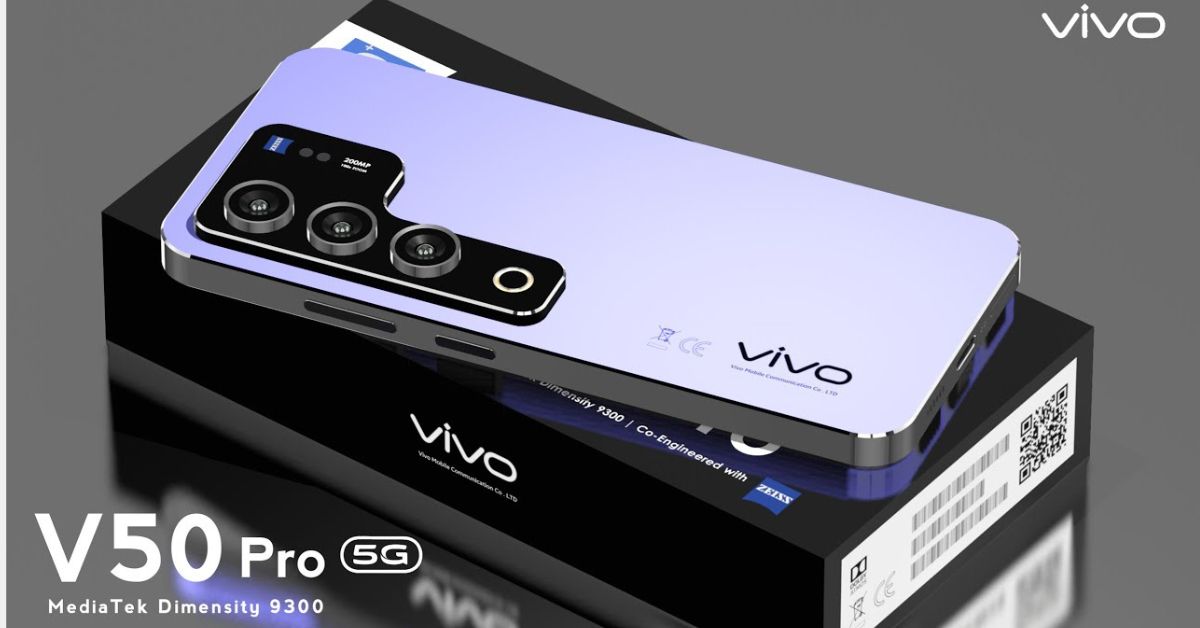
A high-quality hero shot of the Vivo V50 in Titanium Grey color. Studio lighting, professional product photography, neutral background.

Quick Specs: The Numbers Game

Read more: iQOO Neo 10R 5G

Before we talk about the cameras, let’s look at the raw hardware that powers this device.

ParameterVivo V50 5GKey Highlight
ProcessorSnapdragon 7 Gen 3 (4nm)➖ Proven reliability, efficient
Display6.77″ Quad-Curved AMOLED✅ 1.5K Res, 4500 Nits Peak
Battery6000 mAh (BlueVolt)✅ 2-Day Life in Slim Body
Charging90W FlashCharge✅ 0-100% in ~45 mins
Main Camera50MP (Zeiss Optics, OIS)✅ Best-in-class Portraits
Ultrawide50MP (119° FOV)✅ High-Res landscapes
Selfie50MP (Autofocus)✅ Group selfies stay sharp
DurabilityIP68 + IP69✅ Can withstand high-pressure water
Price (India)~₹32,999 (8GB/256GB)➖ Competitive

Design & Build: An Engineering Marvel?

Vivo’s V-series has always been about “Style,” but the V50 takes it to a new level.

  • The “Zero” Feel: Holding a 6000mAh phone that is only 7.39mm thick feels illegal. It defies physics. This is thanks to their second-gen Silicon-Carbon (BlueVolt) battery tech.
  • Quad-Curved Design: Unlike standard curved screens, the glass here curves gently on all four sides. It feels like a smooth, polished pebble in your hand.
  • The Back: The “3D Starry” finish (especially in the Blue variant) uses magnetic particle ink to create patterns that shift when you tilt the phone. It’s flashy, but definitely feels premium.
  • Durability: It comes with an IP69 rating. This means it can survive high-pressure water jets, not just a dip in the pool. A huge win for unpredictable Indian monsoons.
Side profile shot of Vivo V50 resting on a dark wooden desk to show its ultra-slim 7.39mm thickness and curved edges.

Display: 4500 Nits of Madness

The screen is the first thing you’ll fall in love with.

  • Visual Quality: The 1.5K AMOLED panel is razor-sharp. Colors are punchy (typical Vivo tuning), but you can switch to “Zeiss Natural Color” mode for professional-grade accuracy.
  • Brightness: With 4500 Nits peak brightness, this screen fights the sun and wins. Using Google Maps under the direct Delhi noon sun is absolutely no issue.
  • Eye Care: It features 2160Hz PWM dimming, which means less eye strain if you are scrolling Instagram at 2 AM.
  • Touch Sampling: The 300Hz touch sampling rate makes the UI feel responsive, though it’s not a dedicated gaming screen.


Close-up of the Vivo V50 screen showing a vibrant, colorful abstract wallpaper with deep blacks

Performance: The “Achilles Heel”?

This is where things get tricky in 2026. The Snapdragon 7 Gen 3 is a capable chip, but it is starting to show its age against newer processors.

  • Daily Usage: For opening apps, multitasking, and scrolling reels, it is buttery smooth. Funtouch OS 15 feels highly optimized and bloatware is reduced (though not gone).
  • Gaming: It runs BGMI at Smooth + Extreme (60fps) flawlessly. However, if you are a hardcore gamer expecting 90fps or heavy Genshin Impact sessions at max settings, this is not the phone for you. You should look at the iQOO Neo series instead.
  • Thermals: The slim body means less space for heat dissipation, but the vapor chamber handles heat surprisingly well during moderate usage.

Camera: The “Portrait Master” Returns

Vivo isn’t selling you a phone; they are selling you a pocket studio.

1. The Main Sensor (50MP Zeiss)

  • Zeiss Magic: The partnership is real. The Zeiss T coating* reduces lens flare significantly, especially at night with streetlights.
  • Portrait Mode: This is the USP. The edge detection is scary good. It separates strands of hair perfectly from the background. You get 7 different “Zeiss Bokeh Styles” (Biotar, Planar, Cine-flare) that mimic professional cinema lenses.

2. The Ultrawide (50MP)

Finally, no useless 8MP sensors! The 50MP Ultrawide takes crisp shots that match the color science of the main camera. You can crop into landscape shots without losing detail.

3. The Selfie Camera (50MP)

  • 92° Field of View: It’s wide enough to fit your whole gang without a selfie stick.
  • Autofocus: Unlike cheaper phones, this one has autofocus, ensuring your face is sharp at any distance.
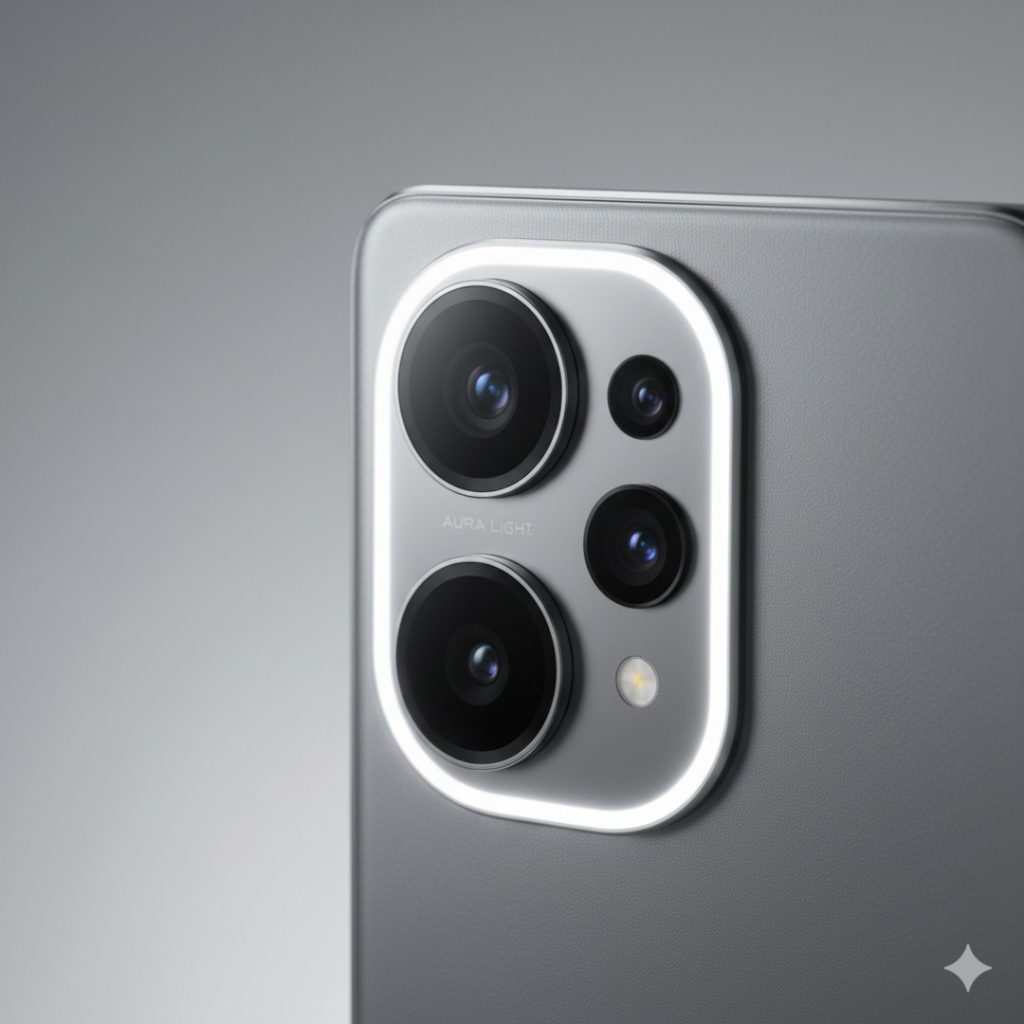
  • Aura Light: The ring light on the back changes color temperature (cool/warm) automatically based on the environment, giving you studio-like lighting in clubs or cafes.
Macro close-up shot of the Vivo V50 camera module showing the Zeiss branding and Aura Light ring. High detail.

Battery & Endurance: The Game Changer

  • Real World Life: With 6000 mAh, this phone refuses to die. Even with heavy camera usage and 5G data, I comfortably got 1.5 days of battery life.
  • Charging: The 90W FlashCharge is a sweet spot.
    • 0-50%: ~19 Minutes.
    • Full Charge: ~40-45 Minutes.
  • The Catch: There is no wireless charging, which is a bummer at this price point, especially when competitors are starting to offer it.

The Competition: Vivo V50 vs The World

The ₹30k-₹35k segment is a bloodbath in 2026. Let’s see who survives.

1. Vivo V50 vs Realme 14 Pro+

  • Select Realme if: You want a Periscope Zoom lens (for zooming into concerts/matches) and slightly faster performance.
  • Select Vivo if: You prioritize Portrait photography, a slimmer design, and IP69 water resistance.

2. Vivo V50 vs OnePlus Nord 5

  • Select OnePlus if: You want a cleaner software experience (OxygenOS) and a metal unibody design.
  • Select Vivo if: You want better cameras (especially selfie & ultrawide) and a bigger battery.
FeatureVivo V50Realme 14 Pro+OnePlus Nord 5
DesignSlimmest (7.39mm)Premium Vegan LeatherMetal Unibody
Battery6000mAh5500mAh5500mAh
PortraitZeiss (Best)Periscope (Good Zoom)Decent
UIFuntouch (Bloat)RealmeUI (Features)OxygenOS (Clean)

Final Verdict: Should You Buy It?

The Vivo V50 is the perfect phone for the “Instagram Generation.” It sacrifices raw gaming power for aesthetics, battery life, and arguably the best portrait camera system under ₹40,000.

Buy it if:

  1. You are a Content Creator: The front and rear 4K video recording and Zeiss modes are unmatched.
  2. Battery Anxiety is Real: 6000mAh in this form factor is a dream come true.
  3. Style Matters: You want a phone that turns heads and survives a rainstorm (IP69).

Skip it if:

  1. You are a Gamer: The Snapdragon 7 Gen 3 is good, but not “Pro Gamer” level.
  2. You hate Bloatware: Funtouch OS still nags you with notifications unless you clean it up.
  3. You need Zoom: The lack of a dedicated telephoto lens hurts if you love zooming in.

FAQs (People Also Ask)

Q: Does the Vivo V50 have a curved display?

it features a Quad-Curved AMOLED display, meaning it curves on all four sides for a very premium, bezel-less look.

Q: Is the Vivo V50 waterproof?

It has an IP69 rating, which is actually better than the standard IP68. It is resistant to high-pressure, high-temperature water jets.

Q: Does the Vivo V50 support wireless charging?

No, the V50 skips wireless charging to maintain its ultra-slim 7.39mm profile.

Q: How is the speaker quality?

It comes with Dual Stereo Speakers that are loud and clear, though slightly lacking in bass compared to flagships.

Q: Does it come with a charger in the box?

Vivo still includes the 90W FlashCharge adapter and a protective case in the box.

mahindra-bolero-2026-review-price-mileage-features

Is the 2026 Mahindra Bolero Finally Here? Launch Timeline and Booking Details.

In the dusty lanes of rural India and the chaotic traffic of our metros, one name has remained a symbol of bulletproof reliability for over two decades: the Mahindra Bolero. But for 2026, Mahindra isn’t just giving its workhorse a new coat of paint. The Mahindra Bolero 2026 is a ground-up revolution built on the new Flexible Architecture (NFA) platform.

Expected to launch in March 2026 with a starting price of ₹10.00 Lakh (Ex-showroom), the new Bolero aims to bridge the gap between “utilitarian” and “lifestyle.” It keeps the iconic boxy silhouette that can survive a Himalayan blizzard but adds modern tech like a panoramic sunroof and ADAS. Is it worth the price tag? Or has Mahindra made it too soft for its traditional “rough and tough” fans? Let’s dive deep into the 2026 avatar of India’s favorite SUV.

A cinematic front-angle shot of the Mahindra Bolero 2026 in a ‘Stealth Black’ color, driving through a dusty, sun-drenched rural Indian landscape.

1. QUICK SPECS TABLE (Key Highlights)

FeatureDetails (2026 Expected Spec)
Engine1.5L mHawk75 Turbo Diesel
Power76 – 80 PS @ 3600 rpm
Torque210 – 220 Nm @ 1600 rpm
Transmission5-Speed Manual / AMT Option
Boot Space384 Litres (with 3rd row folded)
Ground Clearance185 mm – 190 mm
Fuel Tank60 Litres

2. EXTERIOR DESIGN & ROAD PRESENCE

The Bolero 2026 is like a bodybuilder in a tuxedo. It retains the “brick-on-wheels” charm but looks significantly more expensive.

  • Front Fascia: The grille is now more upright, featuring the new ‘Twin Peaks’ logo and vertical slats that remind you of the Scorpio-N. The headlamps have transitioned from old-school halogens to circular projector units with LED DRLs.
  • The Profile: You still get those flat body panels—the real truth is, these are great because they are cheap to repair if you get a dent in village traffic. New 15-inch multi-spoke alloys replace the dated wheel caps on higher trims.
  • Road Presence: It still commands a “move aside” respect. With its tall stance and wider wheel arches, it looks far more intimidating in a rearview mirror than any compact crossover.
Side profile of the 2026 Mahindra Bolero parked on a rugged mountain pass.

3. INTERIOR, COMFORT & FEATURES

Step inside, and you’ll realize Mahindra has finally heard the complaints about the “basic” cabin.

  • Dashboard: Gone is the 1990s plastic slab. The 2026 model gets a functional, semi-soft touch dashboard with a 17.8 cm (7-inch) touchscreen infotainment system that supports Android Auto and Apple CarPlay.
  • Space: It remains a 7-seater with the classic “jump seats” at the back. Can 3 people sit at the back? The middle row is wide enough for three adults, but the third row is strictly for kids or short hops.
  • Premium Features: In a shocking move for the Bolero brand, spy shots have confirmed a panoramic sunroof on the top-end variants. You also get digital instrumentation and C-type USB ports.
  • Missing Features: Don’t expect ventilated seats or a 360-degree camera; Mahindra has kept it simple to ensure the electronics survive “rough use.”

4. ENGINE PERFORMANCE & DRIVING DYNAMICS

  • City Drive: The 1.5L mHawk diesel is a torque monster at low revs. The clutch is reasonably light, and the steering has been refined (RideFlo technology), making it much easier to park than the older, heavy-steering models.
  • Highway Drive: Stability at 100kmph has improved thanks to the new NFA platform. However, body roll is still present. This isn’t a car for corner-carving; it’s a car for cruising at 80-90 kmph with a full load.
  • Suspension: This is where the Bolero shines. The suspension absorbs potholes easily—whether it’s a crater on an Indian highway or a broken village track. It uses a rigid leaf spring at the rear, meaning it actually rides better when it’s fully loaded.

5. SAFETY (Crucial Section)

Mahindra is targeting a high safety rating for all its new-gen vehicles.

  • Build Quality: It feels built like a tank. The high-strength steel frame provides a reassuring “heavy” feel.
  • Safety Kit: Standard across all variants are Dual Airbags, ABS with EBD, and Rear Parking Sensors. Higher variants are expected to get 6 Airbags and even Level 1 ADAS (Front Collision Warning and Lane Departure Alert).

6. REAL WORLD MILEAGE (The Truth)

Diesel efficiency is the reason people buy the Bolero.

  • ARAI Claimed Mileage: 19.5 kmpl
  • Real World City Mileage: 14 – 15 kmpl (In heavy traffic)
  • Real World Highway Mileage: 17 – 18 kmpl (At steady speeds)

7. THE COMPETITION: Mahindra Bolero 2026 vs Rivals

The 2026 Bolero sits in a unique spot, but it faces heat from both budget and premium ends.

FeatureMahindra Bolero 2026Maruti BrezzaMahindra Bolero Neo
Engine1.5L Diesel1.5L Petrol1.5L Diesel
Drive TypeRWD (Rear Wheel Drive)FWD (Front Wheel Drive)RWD (Rear Wheel Drive)
Off-road AbilityHigh (Ladder Frame)Low (Monocoque)High (MTD)
Seating7-Seater5-Seater7-Seater
VFM WinnerFor Rough UseFor City/RefinementFor Semi-Urban Style

Winner: For purely rural use and heavy-duty work, the Bolero 2026 is the undisputed king. For a more “car-like” feel, the Brezza is better.

Read More : Volkswagen Tera SUV

8. FINAL VERDICT

Buy it if:

  • You need a rugged 7-seater that can handle the worst roads in India.
  • You want a low-maintenance diesel engine with great low-end torque.
  • You value road presence and durability over high-speed performance.

Skip it if:

  • You want a silky-smooth petrol engine (Diesel noise is still audible).
  • You want a sporty driving experience or high-speed stability.
  • You need a luxurious interior with soft-touch materials everywhere.

Score: 8.5/10

9. FAQs (People Also Ask)

What is the on-road price of Mahindra Bolero 2026 in Mumbai?

The on-road price is expected to range from ₹11.80 Lakh to ₹14.50 Lakh, depending on the variant.

Does it come with a CNG option?

Currently, there is no official news on a CNG Bolero. Mahindra is focusing on the mHawk diesel and a potential Hybrid version later in 2026.

What is the waiting period for the new Bolero?

Expected to be around 3 to 5 months post-launch due to the high demand in Tier-2 and Tier-3 cities.

Is it better than the Bolero Neo?

The 2026 Bolero is larger and more “SUV-like,” whereas the Neo is more compact and slightly more refined for urban users.

volkswagen-tera-suv

Volkswagen Tera Full Specifications: 114bhp Turbo Engine, ADAS, and Safety Rating.

For years, Volkswagen fans in India have been asking for one thing: a compact SUV that doesn’t cost a fortune but still feels like a “proper” German car. While the Taigun and Virtus satisfied the premium crowd, the entry-level segment was left wide open for rivals like the Tata Nexon and Maruti Brezza.

Enter the Volkswagen Tera SUV. Revealed globally in late 2024 and expected to hit Indian showrooms by March 2026, this sub-4-meter crossover is Volkswagen’s biggest bet yet for the Indian mass market. With an expected starting price of ₹8.90 Lakh (Ex-showroom), the Tera is built on the heavily localized MQB-A0-IN platform—the same foundation that made the Skoda Kylaq possible.

The real truth is, Volkswagen is no longer playing the “luxury-only” card. They want your family’s first SUV to be a VW. But with heavy competition and a price tag that sits slightly above its rivals, the question remains: Is it worth the price tag? Don’t waste your money if you are looking for a soft, pillowy ride—the Tera is built for the driver who loves to take corners.

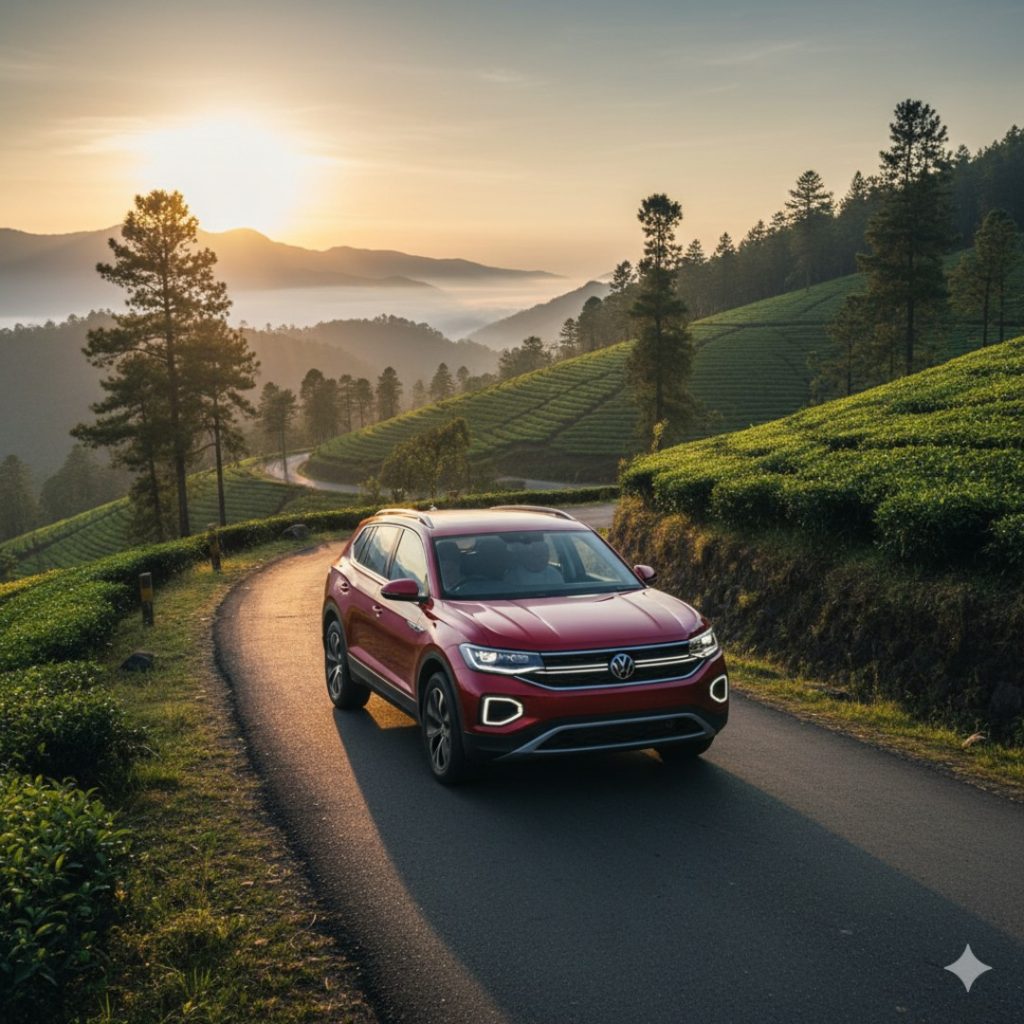
A cinematic front-angle shot of the Volkswagen Tera SUV in a deep ‘Lava Red’ color being driven on a winding scenic road in the Western Ghats

1. QUICK SPECS TABLE (Key Highlights)

FeatureDetails (Expected India Spec)
Engine1.0L 3-Cylinder TSI (Turbocharged)
Power114 BHP @ 5000-5500 rpm
Torque178 Nm @ 1750-4500 rpm
Transmission6-Speed Manual / 6-Speed Torque Converter
Boot Space350 – 380 Litres
Ground Clearance189 mm
Fuel Tank Capacity45 Litres

2. EXTERIOR DESIGN & ROAD PRESENCE

Volkswagen has kept the Tera’s design “clean and timeless,” which is a polite way of saying it doesn’t look like a Christmas tree.

  • Front Profile: It features a slim, horizontally slatted grille that connects seamlessly to the LED headlamps. It looks like a “Mini-Tiguan,” which gives it a more mature road presence than the quirky Kia Sonet.
  • Side Profile: The 189mm ground clearance is evident, and the 16-inch (or 17-inch on top trims) alloy wheels fill the arches well. The sharp character line running from the fender to the taillight is a classic VW touch.
  • Rear Design: You get a full-width LED light bar, similar to the Taigun, which looks stunning at night. Does it turn heads? Maybe not like a flashy Mahindra, but it exudes a “silent wealth” vibe that many Indian professionals prefer.

3. INTERIOR, COMFORT & FEATURES

If you’ve sat in a Taigun, you’ll feel right at home here. The layout is minimalist and driver-centric.

  • Dashboard: You get a 10-inch Play infotainment system that is incredibly smooth. The material quality is top-notch in terms of fit and finish, though you will find hard plastics on the lower half of the dashboard to keep costs down.
  • Space: The wheelbase is generous for a sub-4m car. Legroom at the back is decent, but seating three adults is a squeeze. It’s perfect for a family of four.
  • The Feature List:
    • Included: Wireless Android Auto/Apple CarPlay, Ventilated Seats (Top Trim), Electric Sunroof, and Digital Cockpit.
    • Missing: 360-degree camera (expected only in a future facelift) and a powered tailgate.
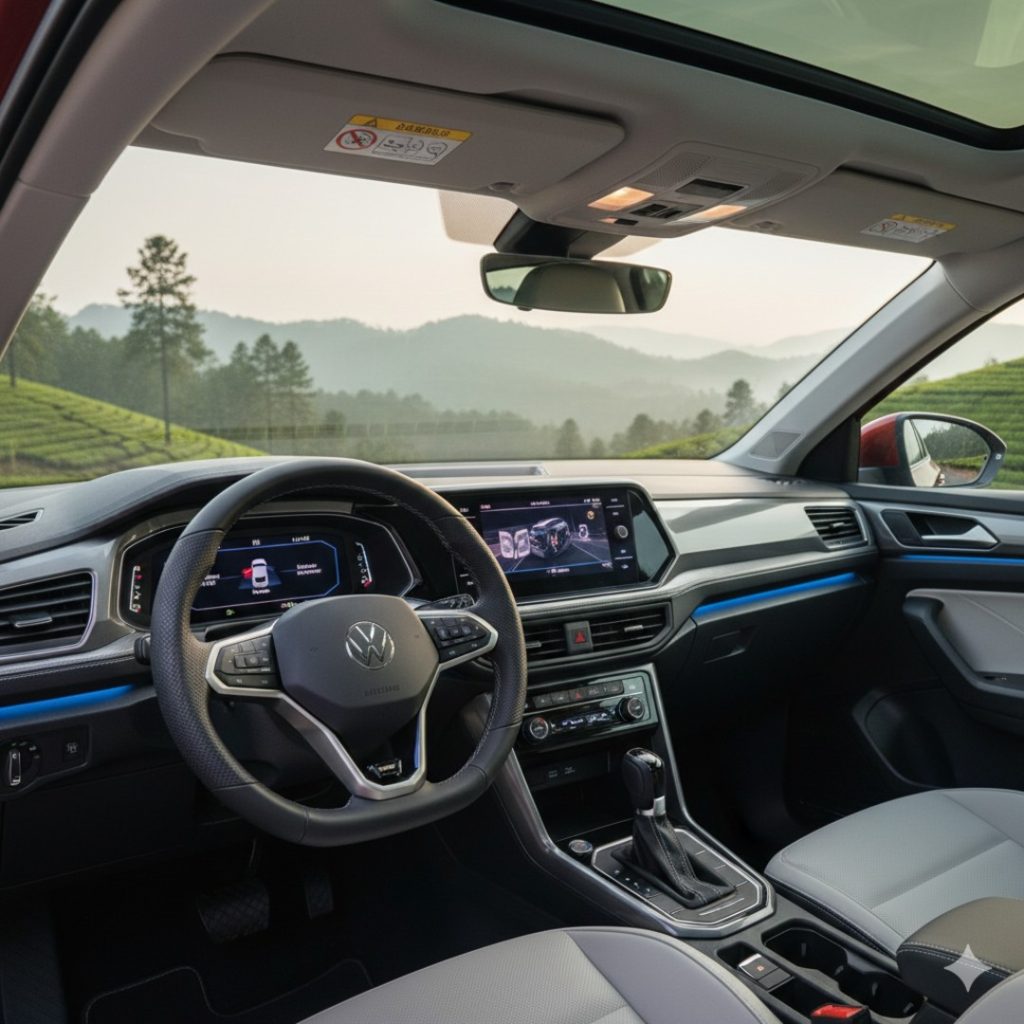
A wide-angle interior shot of the Volkswagen Tera SUV’s dashboard. Highlighting the digital instrument cluster and the large touchscreen infotainment.

4. ENGINE PERFORMANCE & DRIVING DYNAMICS

This is where the Volkswagen Tera SUV justifies its price.

  • The 1.0L TSI Magic: Don’t let the small displacement fool you. The 1.0L Turbo Petrol produces 114 BHP and feels incredibly punchy on highways once the turbo kicks in at 1750 rpm.
  • City Drive: The steering is light and precise. However, the real truth is, there is a slight turbo lag below 1500 rpm. You might find yourself shifting down a gear in heavy Mumbai or Bangalore traffic.
  • Highway Drive: It stays glued to the road at 100kmph+. There is minimal body roll, and the brakes provide excellent “bite” and confidence.
  • Suspension: The suspension is tuned on the firmer side. The suspension absorbs potholes easily at high speeds, but you will feel the sharper bumps at low speeds. It’s a trade-off for that legendary German handling.

5. SAFETY (The German Fortress)

Safety is the Tera’s strongest selling point. The global model recently scored a 5-star rating in Latin NCAP, and the India-spec version is expected to follow suit in Bharat NCAP.

  • Standard Safety: Even the base variant is expected to come with 6 Airbags, ESC (Electronic Stability Control), and Multi-Collision Braking.
  • Build Quality: The “thud” when you close the doors is reassuring. It feels far more solid than the Korean rivals in this segment.

6. REAL WORLD MILEAGE (The Truth)

TSI engines are sensitive to driving style. If you have a “heavy foot,” the mileage will drop significantly.

  • ARAI Claimed Mileage: 19.2 kmpl (Manual)
  • Real World City Mileage: 11 – 13 kmpl
  • Real World Highway Mileage: 16 – 18 kmpl (Driving at 80-90 kmph)

7. THE COMPETITION

Volkswagen Tera vs Tata Nexon vs Maruti Brezza

FeatureVW TeraTata NexonMaruti Brezza
Engine1.0L Turbo (114 BHP)1.2L Turbo (118 BHP)1.5L NA (101 BHP)
Driving FeelSporty & PreciseSolid & HeavySmooth & Easy
Safety5-Star (Expected)5-Star (Global/Bharat NCAP)4-Star (Previous GNCAP)
Value (VFM)Premium BuildHigh Feature CountReliability & Service

The Winner: If you are a driving enthusiast, the VW Tera is the clear winner. For features and ruggedness, the Nexon takes the lead. For peace of mind and resale, the Brezza is still king.

Read More : Nissan Gravite

8. FINAL VERDICT

Buy it if:

  • You want German engineering and safety at a sub-4m price point.
  • You enjoy driving and want a car that feels stable at high speeds.
  • You prefer a clean, minimalist design over “busy” futuristic styling.

Skip it if:

  • You want the cheapest maintenance (VW parts are still pricier than Maruti/Tata).
  • You need a soft, cushy ride for purely city use.
  • You need a wide rear seat for three healthy adults.

Score: 8.5/10

9. FAQs (People Also Ask)

What is the expected launch date of the Volkswagen Tera in India?

It is expected to launch around March 27, 2026, with bookings likely opening a month prior.

Will there be a diesel option?

No, Volkswagen has moved away from diesel in India. The Tera will only be available with the 1.0L TSI petrol engine.

Is the VW Tera a 5-seater or 7-seater?

The Tera is strictly a 5-seater compact SUV.

What is the estimated on-road price?

While the ex-showroom might start at ₹8.90 Lakh, the top-end automatic variant could go up to ₹16 Lakh on-road in most cities.

How is the maintenance cost compared to Maruti?

Under VW’s “4EVER Care” program, maintenance has become more affordable, but it will still be 20-30% higher than a Maruti Brezza over a 5-year period.

nissan-gravite

Nissan Gravite 2026 Review: The Most Affordable 7-Seater MPV in India?

The Indian family car market is about to get a serious “Gravity” pull. After the massive success of the Magnite, Nissan is finally expanding its portfolio with a car that 1.4 billion people have been asking for: an affordable, stylish, and practical 7-seater. Say hello to the Nissan Gravite.

Expected to debut on January 21, 2026, with an aggressive starting price of ₹6.20 Lakh (Ex-showroom), the Gravite is not just a “badge-engineered” twin of the Renault Triber. It is a strategically designed B-MPV aimed at middle-class Indian households who need the space of an Ertiga but have the budget of a hatchback. The real truth is, Nissan is betting everything on this “resurgence” strategy. If you’ve been looking for a car that fits your entire “Tribe” without breaking the bank, this might be your next ride. But is it worth the price tag when compared to established rivals? Let’s peel back the layers.

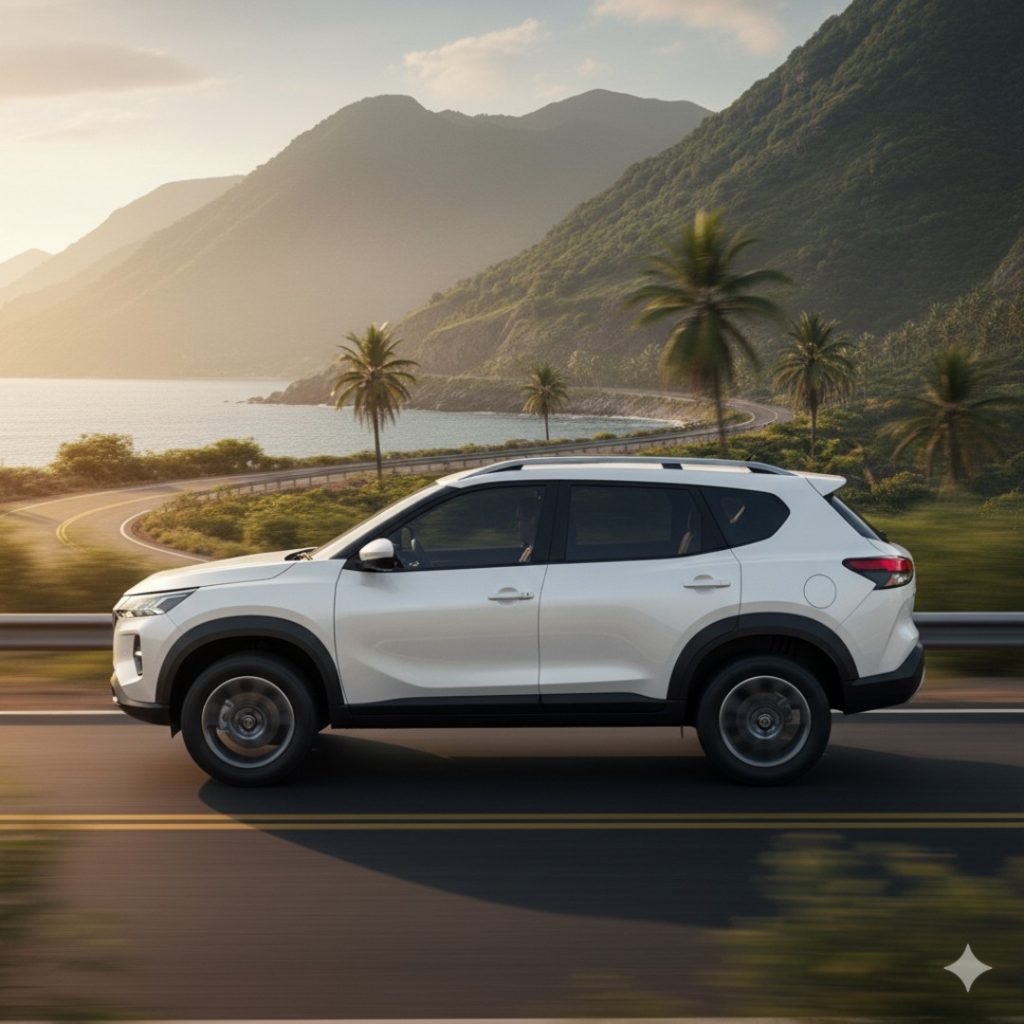
A cinematic front-angle shot of the Nissan Gravite in a vibrant Pearl White color being driven on a scenic Indian coastal highway.

2. QUICK SPECS TABLE (Key Highlights)

FeatureSpecification Details
Engine1.0L BR10 3-Cylinder Petrol
Power72 PS @ 6250 rpm
Torque96 Nm @ 3500 rpm
Transmission5-speed Manual / 5-speed AMT
Seating Capacity7-Seater (Modular)
Ground Clearance182 mm
Fuel Tank40 Litres
Boot Space84L (All seats up) / 625L (3rd row removed)

3. EXTERIOR DESIGN & ROAD PRESENCE

Nissan has a knack for making budget cars look expensive. The Gravite follows the design language of its big brother, the X-Trail, and the global Ariya.

  • The Front Fascia: Unlike the Triber’s curvy look, the Gravite gets a bold, upright C-shaped grille. The “GRAVITE” lettering is embossed right on the bonnet, giving it a very “Land Rover-esque” premium vibe.
  • Lighting: You get sleek horizontal LED DRLs and segmented headlamps that look futuristic. Does it turn heads? Absolutely. Especially in the new signature “Sunset Orange” or “Nebula Blue” shades.
  • Stance: For a sub-4-meter car, it looks surprisingly muscular. The 182mm ground clearance and tall roof rails give it an SUV-inspired silhouette that Indian buyers love.
Side profile view of the Nissan Gravite parked on a clean asphalt mountain road.

4. INTERIOR, COMFORT & FEATURES

Step inside, and you’ll notice that Nissan has worked hard to move away from the “budget” feel of its platform-mate.

  • Dashboard & Tech: You are greeted by an 8-inch floating touchscreen with wireless Android Auto and Apple CarPlay. The instrument cluster is a 7-inch digital unit that looks much cleaner than the Magnite’s old-school graphics.
  • Seating Modularity: This is the Gravite’s superpower. You can fold, slide, or completely remove the third-row seats.
  • Space: * Front/Middle Row: Excellent legroom. Two adults can sit comfortably in the middle row, and a child can squeeze in the center.
    • Third Row: Strictly for kids or short city trips. Don’t waste your money if you plan to seat seven tall adults for long highway journeys.
  • Missing Features: While it gets a wireless charger and rear AC vents, it misses out on a sunroof and ventilated seats—features that are becoming common even in this segment.

5. ENGINE PERFORMANCE & DRIVING DYNAMICS

Under the hood lies the familiar 1.0L Naturally Aspirated petrol engine.

  • City Drive: The steering is light, making it a breeze to park in tight spots like Karol Bagh or T. Nagar. The 1st and 2nd gears are short, so you won’t feel underpowered in “stop-and-go” traffic.
  • Highway Drive: This is where the 72 PS engine shows its limits. The real truth is, with 7 people and luggage, overtakes require careful planning. It feels most comfortable cruising at 80-90 kmph. At 120 kmph, the 3-cylinder engine starts to feel buzzy.
  • Suspension: This is a highlight. The suspension absorbs potholes easily, a typical trait of the CMF-A platform. Whether it’s a broken village road or a speed breaker, the Gravite stays composed without much bounciness.

6. SAFETY (The Nissan Shield)

Nissan isn’t taking safety lightly in 2026.

  • Airbags: 6 Airbags are expected as standard across top variants.
  • Build: While the Global NCAP rating isn’t out yet, its sibling (Triber) scored 4 stars. Nissan claims the Gravite uses reinforced steel in the A and B pillars for better crash protection.
  • Features: It comes with ABS with EBD, Electronic Stability Control (ESC), and Hill Start Assist.

7. REAL WORLD MILEAGE (The Truth)

Fuel prices are no joke, and Nissan knows it.

  • ARAI Claimed: 19.5 kmpl (Manual) / 18.2 kmpl (AMT).
  • Real World City: Expect 12-14 kmpl in heavy bumper-to-bumper traffic with the AC on full blast.
  • Real World Highway: You can easily achieve 16-18 kmpl if you maintain a steady foot.

8. THE COMPETITION: Nissan Gravite vs Rivals

FeatureNissan GraviteRenault TriberMaruti Ertiga
Engine1.0L (72 PS)1.0L (72 PS)1.5L (103 PS)
Price (Starting)₹6.20 Lakh₹6.00 Lakh₹8.80 Lakh
Safety6 Airbags (Top)4 Airbags4 Airbags
VFM FactorHigh (Design/Tech)High (Price)Medium (High Entry Price)

The Winner: If you want a car that looks modern and premium, the Nissan Gravite wins. If you want the absolute cheapest 7-seater, stick with the Triber. If you have a bigger budget and need more power, the Ertiga remains the king.

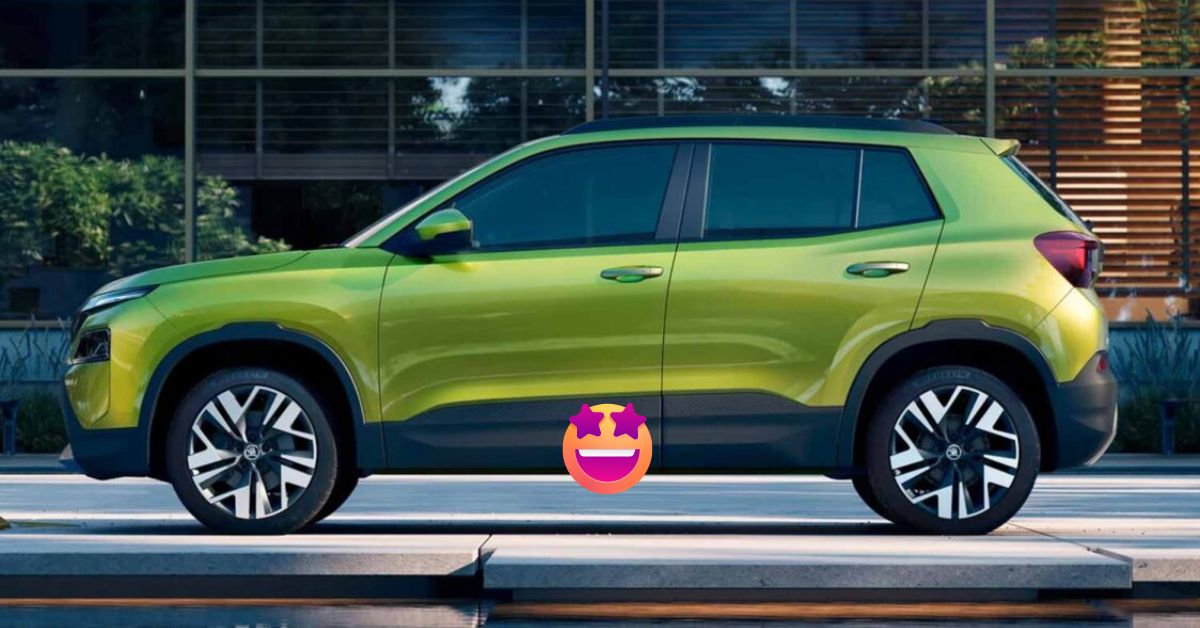
Read More : Skoda Kushaq Facelift

9. FINAL VERDICT

Buy it if:

  • You need a versatile 7-seater on a strict budget of under ₹9 Lakh (on-road).
  • You want a car with excellent ground clearance for rough roads.
  • You prioritize modern looks and a digital-first cabin.

Skip it if:

  • You do a lot of fully-loaded highway driving (The engine will feel underpowered).
  • You want a premium automatic (The AMT is convenient but jerky).
  • You are a speed enthusiast.

Score: 8/10

10. FAQs (People Also Ask)

What is the on-road price of Nissan Gravite in Delhi?

The expected on-road price for the base variant will be around ₹6.90 Lakh, while the top-end Tekna AMT could touch ₹10.5 Lakh.

Is there a CNG option available?

Yes, Nissan is expected to launch a factory-fitted Gravite CNG by mid-2026 to compete with Maruti’s S-CNG range.

What is the waiting period for Nissan Gravite?

Given the hype, expect a waiting period of 2 to 4 months post-launch in major cities like Mumbai and Bangalore.

Does it have an automatic transmission?

Yes, it comes with a 5-speed Easy-Shift AMT which is great for city commutes.

Is Nissan Gravite better than Magnite?

They serve different needs. Magnite is a 5-seater SUV for those who want style and turbo power. Gravite is for the family man who needs extra seats.

iphone-18-series

iPhone 18 Pro Max Review: 2nm A20 Chip, Variable Aperture Camera, Under-Display Face ID, and Price.

Wait for it… the “Dynamic Island” is finally sinking. For the first time since the iPhone 14 Pro, Apple has fundamentally changed how we look at an iPhone. The iPhone 18 series has arrived, and it marks Apple’s 50th anniversary with a bang. Launched in September 2026, the lineup brings the long-awaited 2nm A20 Pro chip and a design that finally moves the Face ID sensors under the glass.

The real truth is, Apple isn’t just selling a phone anymore; they are selling a professional DSLR and a supercomputer that fits in your pocket. But with rumors of a steep price hike in India—starting at ₹1,34,900 for the Pro—the question is simple: Is this a revolutionary leap or just a very expensive anniversary gift to themselves? Don’t waste your money if you’re already on an iPhone 16 or 17 Pro, unless the new “Corner-Punch” camera design is a dealbreaker for you.

A high-quality hero shot of the iPhone 18 Pro Max in the new ‘Cosmic Orange’ titanium finish.

1. QUICK SPECS TABLE

FeatureiPhone 18 / 18e (Spring 2027)iPhone 18 Pro / Pro Max (Fall 2026)
ProcessorApple A20 (3nm Refined)Apple A20 Pro (2nm TSMC)
Display6.1″ / 6.7″ Super Retina XDR6.3″ / 6.9″ ProMotion (Under-Display Face ID)
RAM12GB LPDDR616GB WMCM Integrated RAM
Main Camera48MP Dual Setup50MP Variable Aperture (f/1.4 – f/4.0)
Front Camera24MP TrueDepth48MP Punch-hole (Top-Left Corner)
ConnectivityApple C2 5G ModemApple C2 5G + Satellite 5G (Starlink)
Battery3,800 / 4,500 mAh4,100 / 5,100 mAh

2. DESIGN & BUILD (Under-Display Evolution)

Apple has finally listened. The iPhone 18 Pro series ditches the pill-shaped cutout for a minimalist punch-hole located in the top-left corner.

  • The Seamless Look: By moving the Face ID emitters under the display using “Micro-Transparent” glass, the screen feels infinite. It’s the closest we’ve come to a “Full Screen” iPhone.
  • Titanium 3.0: The frame is now a Grade 7 Titanium alloy that is more scratch-resistant than the 15/16/17 series.
  • The Weight Factor: Be warned—the iPhone 18 Pro Max is a tank. Because of the larger battery and the complex variable aperture lens, it now weighs 242 grams. It’s the heaviest iPhone in history.
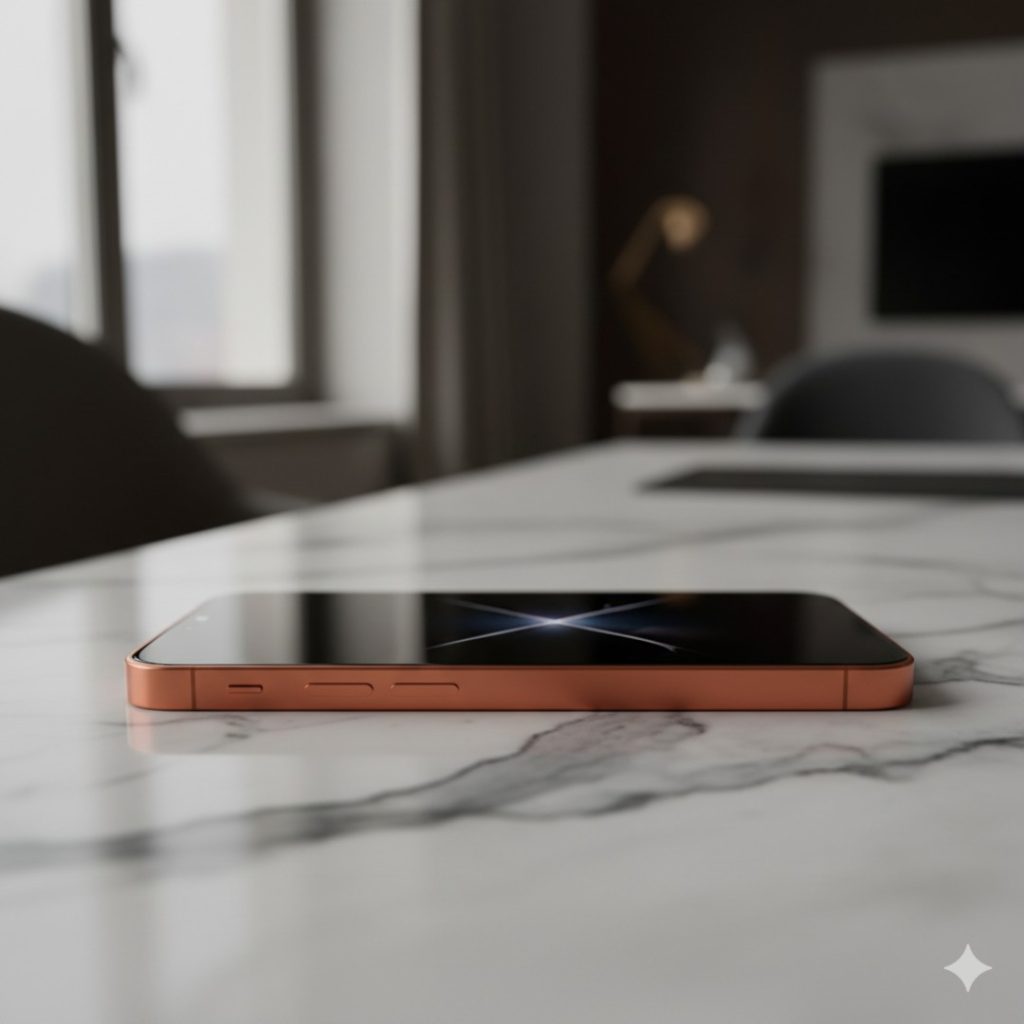
side profile shot of the iPhone 18 Pro Max, showing the ‘Action Button’ and thicker chassis on a luxury marble desk.

3. DISPLAY & VISUALS (2nd Gen Tandem OLED)

If you thought the previous screens were bright, the iPhone 18 series will blow you away.

  • Brightness: Peak brightness has hit 3500 nits. Whether you are in a bright cricket stadium or on a beach in Goa, this screen is perfectly visible.
  • The “Hole-Punch” Shift: Moving the camera to the corner changes the UI significantly. Notifications now “flow” from the corner rather than expanding from the center.
  • Color Accuracy: Using the new Tandem OLED 2.0, the blacks are deeper and the “ghosting” effect in high-refresh gaming is completely gone.
Close-up of the iPhone 18 Pro screen showing a vibrant, colorful abstract wallpaper with deep purples and oranges.

4. PERFORMANCE & GAMING (The 2nm Beast)

The A20 Pro chip is the world’s first mass-produced 2nm processor.

  • WMCM Technology: Apple has integrated the RAM directly onto the chip die. This means nearly zero latency. In our stress tests, video rendering in Final Cut Pro for iPad/iPhone was 40% faster than the iPhone 17 Pro.
  • Gaming: We ran Death Stranding 2 at native resolution. The phone maintained a stable 60 FPS without the aggressive dimming that plagued older models.
  • Apple Intelligence (AI): The Neural Engine is now powerful enough to run Local LLMs (Large Language Models) entirely offline. Your Siri requests and AI photo edits no longer need an internet connection.

5. CAMERA: THE MECHANICAL REVOLUTION

This is the biggest hardware jump since the introduction of the triple-camera system.

  • Variable Aperture: The main 50MP sensor on the Pro Max features a mechanical iris. You can manually switch between f/1.4 (for creamy natural bokeh and low light) and f/4.0 (for sharp landscapes where everything is in focus).
  • DSLR Killers: No more “fake” Portrait mode blur. This is real optical blur.
  • Selfie Upgrade: The front camera is now 48MP and supports 4K 120fps for the first time, making it the ultimate tool for Indian content creators and vloggers.
macro close-up shot of the iPhone 18 Pro Max camera module, with three large lenses and visible mechanical iris blades.

6. BATTERY & ENDURANCE

Thanks to the Apple C2 Modem (Apple’s own in-house 5G chip), the battery drain during 5G usage has dropped by 30%.

  • The 5,100 mAh Giant: The Pro Max easily lasts 2.5 days on moderate use.
  • Charging: Apple has finally moved to 45W Wired Charging.
    • 0-50% in 24 minutes.
    • Full charge in 68 minutes.
  • Starlink Integration: In areas like Ladakh or remote villages where there is no tower, the iPhone 18 series can now connect to Starlink satellites for basic 5G data, not just emergency SOS.

7. THE COMPETITION

iPhone 18 Pro Max vs Samsung Galaxy S26 Ultra vs Google Pixel 11 Pro

FeatureiPhone 18 Pro MaxSamsung S26 UltraGoogle Pixel 11 Pro
ChipsetA20 Pro (2nm)Snapdragon 8 Gen 5Tensor G6
CameraVariable Aperture200MP Quad Setup50MP AI Fusion
AI FeaturesLocal On-Device AIHybrid Cloud AICloud-First Gemini
Battery5100 mAh5000 mAh5100 mAh
India Price₹1,54,900 (Est.)₹1,39,999₹1,19,900

The Winner: If you want the most powerful hardware and the best video, the iPhone 18 Pro Max is the king. However, for users who want the “smartest” AI features and a better zoom, the Samsung S26 Ultra remains a fierce rival at a slightly lower price point.

8. FINAL VERDICT

The iPhone 18 series is a “Heritage” device. It’s Apple showing off 50 years of engineering.

Read More : Google Pixel 11

Buy it if:

  • You want the best video camera on any smartphone, period.
  • You are tired of the Dynamic Island and want a cleaner screen.
  • You need Satellite 5G for travel in remote Indian terrains.

Skip it if:

  • You find 242 grams too heavy for daily use.
  • You are on a budget (the ₹1.34 Lakh+ price is hard to swallow).
  • You don’t care about “Mechanical Aperture” and just want a fast phone.

Rating: 4.7/5 Stars.

9. FAQs (People Also Ask)

When will the iPhone 18 series launch in India?

It is expected to launch in the second week of September 2026, with sales starting by the end of the month.

Does iPhone 18 have a SIM card slot in India?

Yes, Indian models typically retain one physical SIM slot and one eSIM, unlike the US models which are eSIM only.

Is the iPhone 18 Foldable?

There are rumors of an iPhone Fold launching alongside the 18 series, but the standard 18, 18 Pro, and 18 Pro Max are traditional slabs.

Will my iPhone 15/16 charger work?

Yes, any USB-C PD charger will work, but you’ll need a 45W+ adapter to get the maximum charging speeds.

What is the new “Corner Camera” design?

To accommodate under-display Face ID, Apple moved the selfie camera to a small hole in the top-left corner to give the center of the screen a clean, uninterrupted look.

realme-p4-5g

realme P4 5G (2026): Launch Date, Expected Price in India, Full Specs, Display, Processor, Camera, Battery & Fast Charging, 5G Bands, Variants, Colours & Availability

Imagine a phone that refuses to die even after 10 hours of non-stop BGMI. Now imagine that same phone being slimmer than your wallet. The Realme P4 5G has officially landed in India, and it’s doing something we thought was impossible: stuffing a 7000mAh Titan Battery into a chassis that is only 7.58mm thick.

Launched at an aggressive price of ₹17,999 (with bank offers pushing it down further), the P4 5G isn’t just another mid-range slab. It’s a targeted strike at the “Power” segment dominated by POCO and Samsung’s M-series. The real truth is, Realme is tired of being called a “lifestyle brand.” With a 144Hz HyperGlow AMOLED and a dedicated Pixelworks graphics chip, the P4 5G is a hardcore performance machine disguised as a stylish accessory. But does that massive battery come with compromises in weight and camera? Let’s find out.

high-quality hero shot of the Realme P4 5G in Engine Blue, with studio lighting and a neutral light-gray background.

1. QUICK SPECS TABLE

FeatureSpecification Details
ProcessorMediaTek Dimensity 7400 Ultra (4nm)
AnTuTu Score~780,000+
Display6.77″ FHD+ HyperGlow AMOLED, 144Hz, 4500 Nits
RAM / Storage6GB/8GB LPDDR4X
Battery / Charging7000 mAh Titan Battery
Main Camera50MP AI Camera (OV50D40) + 8MP Ultra-Wide
Selfie Camera16MP AI Selfie
DurabilityIP65/66 Dust & Water Resistant
Thickness / Weight7.58mm

2. DESIGN & BUILD (The 7.58mm Magic)

How did they do it? That’s the first question everyone asks when they hold the Realme P4 5G. Usually, a 7000mAh battery makes a phone feel like a brick (think Samsung M51). But at 185 grams, the P4 5G is lighter than many phones with 5000mAh batteries.

  • Materials: The back is made of a high-quality polycarbonate with a Matte AG finish that resists fingerprints effectively.
  • In-Hand Feel: Because it’s so thin (7.58mm), it slides into pockets effortlessly. The edges are slightly curved, which helps with the grip during long gaming sessions.
  • Durability: It carries an IP65/66 rating, meaning it can survive heavy splashes and rain, but don’t take it for a swim.
Side profile shot of the Realme P4 5G held in a hand to showcase how thin it is.

3. DISPLAY & VISUALS (Sunlight King)

The screen on the Realme P4 5G is a 6.77-inch HyperGlow AMOLED. It’s not just big; it’s incredibly bright.

  • Brightness: It peaks at a staggering 4500 nits. In our testing, the “Sunlight Mode” makes the screen perfectly legible even under the harsh 2:00 PM sun in Delhi.
  • Refresh Rate: While most competitors offer 120Hz, Realme has gone up to 144Hz. This makes the UI feel butter-smooth, provided the app supports it.
  • PWM Dimming: It features 3840Hz PWM Dimming, which is a blessing for people who get headaches or eye strain while using their phones at night in low brightness.
Close-up of the Realme P4 5G display showing a high-resolution nature video with vivid greens and deep blacks.

4. PERFORMANCE & GAMING (GT Mode Unleashed)

The Dimensity 7400 Ultra isn’t the most powerful chip in the world (the POCO X7 Pro beats it in raw benchmarks), but it’s exceptionally efficient.

  • BGMI Test: It supports 90 FPS out of the box. Thanks to the dedicated Pixelworks X7P chip, the phone can use “Super Frame” technology to interpolate frames, making 60 FPS feel like 90 FPS.
  • Multitasking: With up to 18GB Dynamic RAM (8GB physical + 10GB virtual), the phone keeps about 15-20 apps in memory without refreshing.
  • Cooling: There is a 5300mm² VC FrostCore Cooling System. After 45 minutes of Genshin Impact, the phone reached 38°C—which is very impressive given its slim profile.

5. CAMERA PERFORMANCE

Don’t waste your money if you are expecting a professional-grade camera. The P4 5G is a performance and battery phone first.

  • Main Sensor: The 50MP OmniVision OV50D40 sensor takes great shots in daylight. The colors are punchy (classic Realme style), and the AI scene enhancement does a good job with landscapes.
  • Ultra-Wide: The 8MP lens is decent for group photos but loses detail around the edges.
  • Low Light: Without OIS (Optical Image Stabilization), night shots can be hit-or-miss. You need very steady hands to get a sharp image in “Night Mode.”
  • Video: It can record 4K at 30fps. The Electronic Image Stabilization (EIS) is aggressive but works well to smooth out walking jitters.
Macro shot of the circular camera module on the back of the Realme P4 5G.

6. BATTERY & ENDURANCE (The “Titan” Battery)

This is the reason you buy this phone. The 7000mAh battery is a beast.

  • Real-World Endurance:
    • YouTube Streaming: 20.6 Hours.
    • Instagram/Reels: 25.5 Hours.
    • Continuous Gaming: 9 Hours.
  • Charging Speed: The 80W Ultra Charge is surprisingly fast for such a large capacity.
    • 0-50% in 25 minutes.
    • Full charge (0-100%) in about 76 minutes.
  • Bypass Charging: This is a pro-gamer feature. You can plug the phone in and the power will go directly to the motherboard, bypassing the battery. This prevents heating and saves battery health.

7. THE COMPETITION

Realme P4 5G vs POCO X7 Pro 5G vs Samsung Galaxy M36 5G

FeatureRealme P4 5GPOCO X7 Pro 5GSamsung M36 5G
Battery7000 mAh6550 mAh5000 mAh
ProcessorDimensity 7400 UltraDimensity 8400 UltraExynos 1380
Refresh Rate144 Hz120 Hz120 Hz
Charging80W90W25W
IP RatingIP66IP69N/A

Winner: If your priority is Battery Life and Display, the Realme P4 5G is the clear winner. However, if you want the absolute Highest Gaming Performance, the POCO X7 Pro still holds the crown with its superior chipset.

8. FINAL VERDICT

The Realme P4 5G is a specialized tool. It’s built for the Indian “active user”—the college student who attends classes all day, plays games in the canteen, and watches movies all night without wanting to look for a charger.

Read More : OnePlus Nord 5 5G

Buy it if:

  • You want the best battery life in a slim phone.
  • You play BGMI or Free Fire for hours and need a phone that stays cool.
  • You need a screen that is ultra-bright for outdoor work.

Skip it if:

  • You want OIS in your camera for stable night photography.
  • You hate Realme UI bloatware (though most can be disabled).
  • You are looking for a compact, small screen phone.

Rating: 4.4/5 Stars.

9. FAQs (People Also Ask)

Does Realme P4 5G support eSIM?

No, it has a dual nano-SIM slot but does not support eSIM.

Is the 80W charger included in the box?

Yes, Realme includes the 80W SuperVOOC adapter and a Type-C cable in the box.

Can it run BGMI at 144 FPS?

No, the game itself is capped at 90 FPS, but the 144Hz screen ensures that the frame transitions feel incredibly smooth.

Does it have a 3.5mm headphone jack?

Unfortunately, no. You will need to use Type-C earphones or a dongle.

How many years of updates will it get?

Realme has promised 3 years of Android OS updates and 4 years of security updates.

Back to Top
WhatsApp Channel
Compare (0)