Only COD || Advance में ₹1 भी नहीं देना है
skoda-kushaq-facelift

Skoda Kushaq Facelift (2026): Launch Date, Expected Price in India, New Design & Interior Updates, Engine Options, Mileage, Features, Safety, Variants, Colours, Booking & On-Road Details

In the Indian mid-size SUV segment, there are cars that sell on “features” and then there are cars that sell on “feeling.” The Skoda Kushaq Facelift, expected to launch in mid-2026, is attempting to master both. Since its 2021 debut, the Kushaq has been the darling of driving enthusiasts, but it often faced criticism for a “simple” interior and missing features like a panoramic sunroof.

The real truth is: Skoda has finally listened. The 2026 Facelift isn’t just a bumper job; it’s a strategic upgrade designed to take back the throne from the tech-heavy Hyundai Creta and the stylish Kia Seltos. With an expected ex-showroom starting price of ₹11.11 Lakh, it remains one of the most accessible ways to enter the world of European engineering.
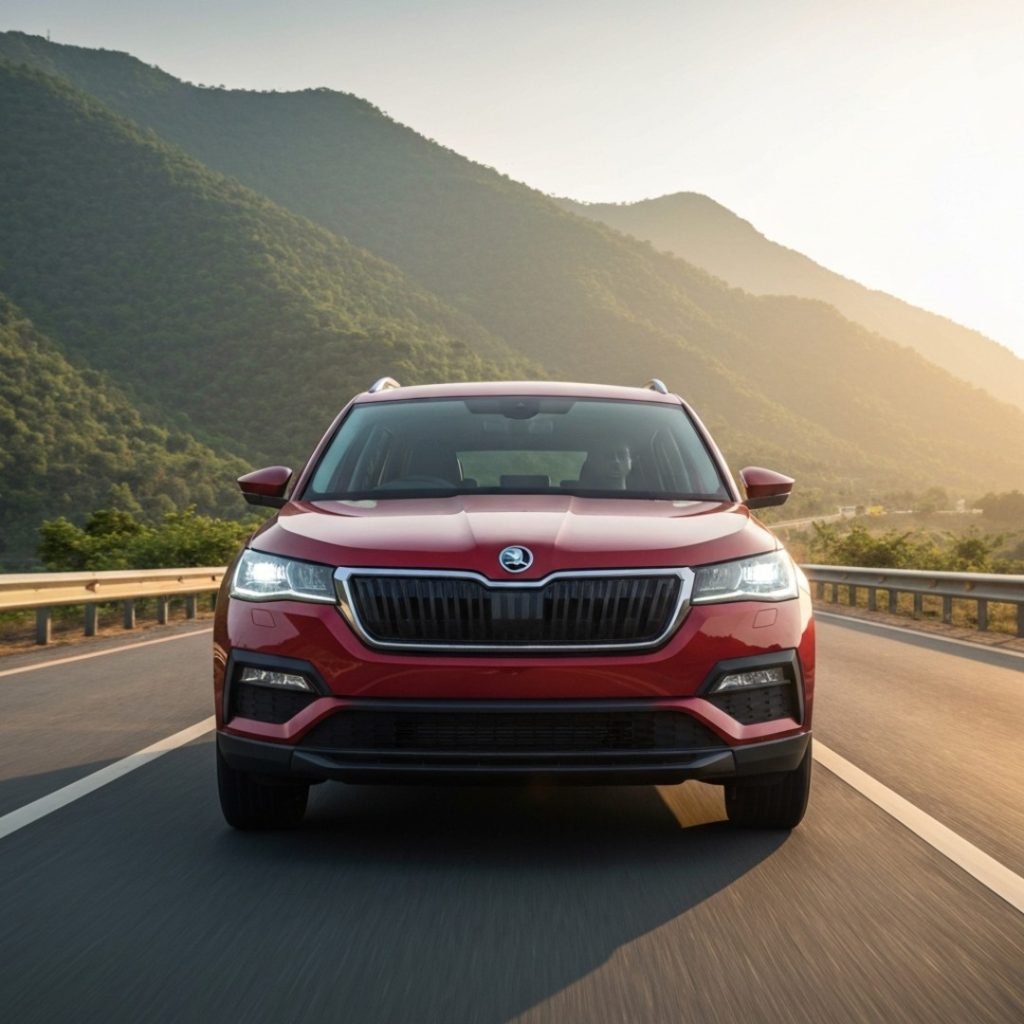
A cinematic front-angle shot of the Skoda Kushaq Facelift being driven on a scenic Indian highway with lush green mountains in the background.

1. QUICK SPECS TABLE (Key Highlights)

Feature1.0L TSI Petrol1.5L TSI Petrol
Engine999cc, 3-Cylinder Turbo1498cc, 4-Cylinder Turbo
Power (BHP)114 BHP @ 5000 rpm150 BHP @ 5000 rpm
Torque (NM)178 Nm @ 1750 rpm250 Nm @ 1600 rpm
Transmission6MT / 8-Speed AT (New)6MT / 7-Speed DSG
Ground Clearance188 mm188 mm
Boot Space385 Litres385 Litres
Fuel Tank50 Litres50 Litres

2. EXTERIOR DESIGN & ROAD PRESENCE

Skoda has adopted its new “Modern Solid” design language for this facelift. While the silhouette remains familiar, the details are far sharper.

  • The Grille: The signature butterfly grille now features a more 3D effect with chrome or piano black surrounds depending on the variant.
  • Lighting: You get the new “Crystalline” LED headlamps. Raat mein rasta bilkul din jaisa dikhta hai. The rear features a connected LED tail-lamp strip, which is the current trend in India.
  • Wheels: The 17-inch alloy wheels have a new “Aero” design that looks premium and helps slightly with fuel efficiency.
  • Road Presence: It still isn’t the biggest SUV in its class (the Creta and Elevate look bulkier), but it looks the most “planted” and athletic. It turns heads because of its clean, sophisticated lines, not loud styling.
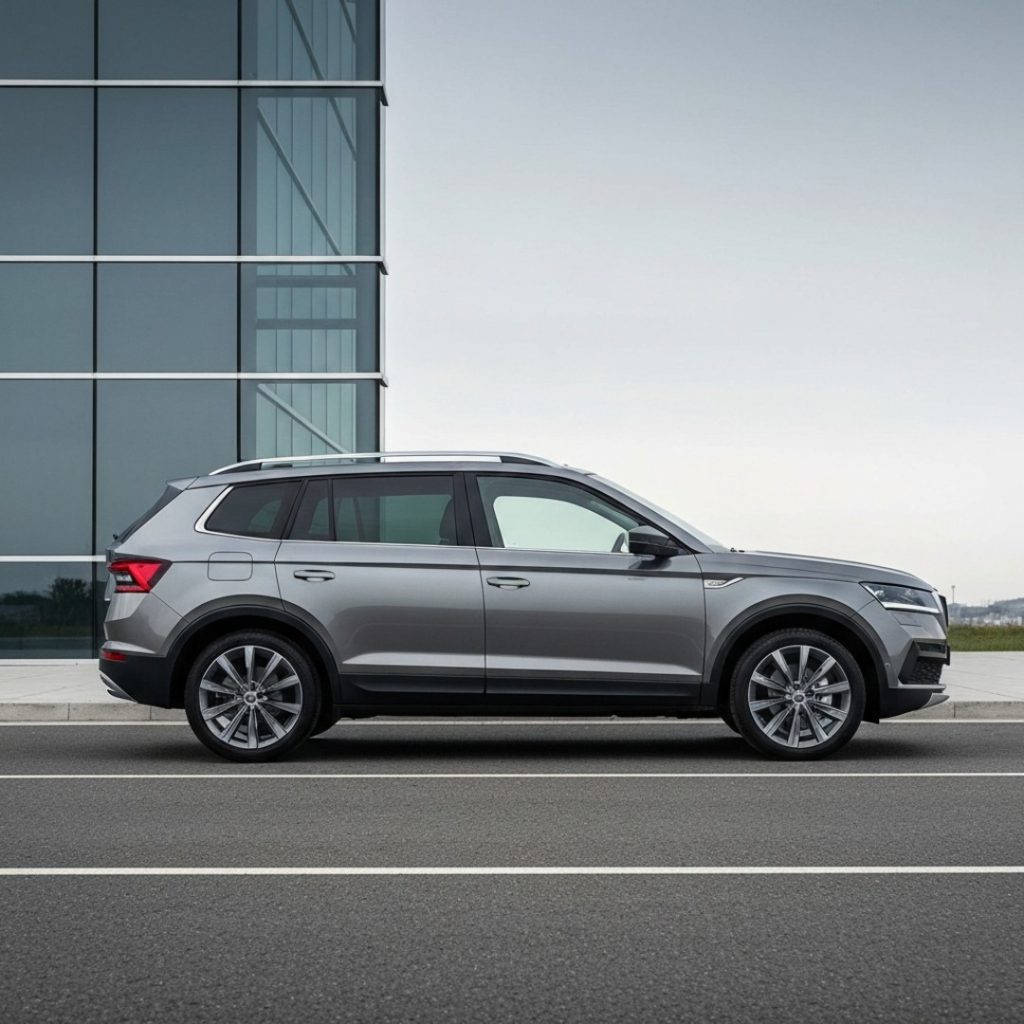
Side profile view of the Skoda Kushaq Facelift parked on a clean asphalt road near a modern glass building.

3. INTERIOR, COMFORT & FEATURES

If you found the old Kushaq cabin a bit “plain,” the facelift will surprise you.

  • Dashboard: The 10-inch touchscreen now features smoother graphics and integrated wireless Apple CarPlay/Android Auto. The plastic quality has improved, with more soft-touch materials on the mid-dash.
  • Space: The 2651mm wheelbase ensures excellent legroom. However, the real truth is: the Kushaq is still a 4-seater + 1 child car. Three healthy adults at the back will be a tight squeeze.
  • The “Big” Additions:
    • Panoramic Sunroof: Finally! The single-pane unit is gone.
    • Massage Seats: A segment-first massage function for the rear seats is rumored for the top-end Monte Carlo trim.
    • ADAS Level 2: Includes Adaptive Cruise Control and Lane Keep Assist for those long highway runs.
    • 360-Degree Camera: Making parking in tight Indian alleys much easier.
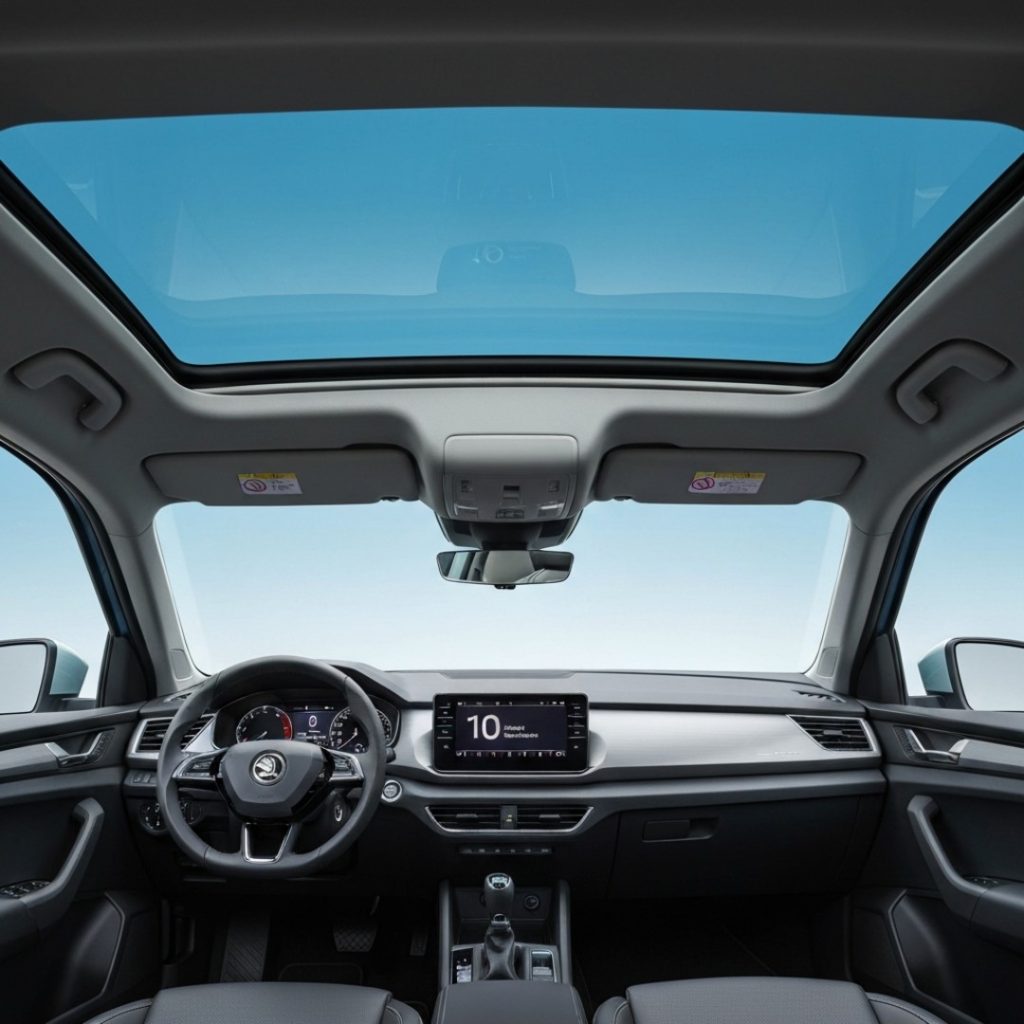
Wide-angle interior shot of the Skoda Kushaq Facelift dashboard. 

4. ENGINE PERFORMANCE & DRIVING DYNAMICS

Is it worth the price tag? For a driver, the answer is a resounding YES.

  • City Drive: The 1.0L TSI is surprisingly punchy. The new 8-speed automatic (replacing the old 6-speed) makes crawling in Mumbai or Bangalore traffic much smoother. The steering is light at low speeds, making U-turns effortless.
  • Highway Drive: This is where the 1.5L TSI shines. It produces 150 BHP and 250 NM of torque. You can cruise at 100-120 km/h all day without the engine feeling stressed. Body roll is minimal compared to the softer-sprung rivals.
  • Suspension: The suspension is tuned for Indian roads. It’s slightly on the firmer side, which means it doesn’t “float” like a boat, but it absorbs potholes easily with a muted “thud” rather than a bone-jarring rattle.

5. SAFETY (The Gold Standard)

Safety is the Kushaq’s strongest card.

  • NCAP Rating: The Kushaq holds a 5-star Global NCAP rating for both adult and child occupants.
  • Build: The MQB-A0-IN platform is built with high-strength steel. The doors close with that reassuring European “thud.”
  • Safety Kit: 6 Airbags (Standard on top trims), ESC (Electronic Stability Control), Multi-collision brakes, and ISOFIX child seat mounts come as standard or widely available across the range.

6. REAL WORLD MILEAGE (The Truth)

Don’t go blindly by the brochures. Here is what you will actually get in Indian conditions:

Engine / VariantARAI ClaimedReal World (City)Real World (Highway)
1.0L TSI Manual19.76 kmpl11-12 kmpl15-16 kmpl
1.0L TSI Auto18.09 kmpl9-10 kmpl14-15 kmpl
1.5L TSI DSG18.86 kmpl8.5-10 kmpl16-17 kmpl*

*The 1.5L engine features Active Cylinder Technology (ACT) which shuts down 2 cylinders during light cruising, making it more efficient than the 1.0L on highways!

7. THE COMPETITION (Auto-Selected Rivals)

Skoda Kushaq vs Hyundai Creta vs Kia Seltos

FeatureSkoda Kushaq FaceliftHyundai Creta (2025)Kia Seltos (2025)
PerformanceBest (150 BHP TSI)Good (158 BHP Turbo)Good (158 BHP Turbo)
Ride QualityBest (Sturdy & Planted)Comfort-OrientedSporty (Firm)
Tech/FeaturesMuch ImprovedBest (Dual Screens)Loaded (Bose, HUD)
Safety Rating5 Stars (GNCAP)Not Tested (India)3 Stars (Old Rating)

Winner: If you love driving and want the safest car for your family, the Kushaq wins. If you want a mobile “gadget” on wheels with a diesel option, the Creta is the better VFM.

Read More : Toyota RAV4 6th Gen 

8. FINAL VERDICT

Buy it if:

  • You prioritize safety above all else.
  • You want an SUV that feels like a driving machine on the highway.
  • You appreciate a timeless design and European build quality.

Skip it if:

  • You frequently travel with three adults in the rear.
  • You want the highest possible resale value (Maruti/Hyundai still lead here).
  • You want a Diesel engine for very high monthly running.

Score: 8.5/10

9. FAQs (People Also Ask)

What is the on-road price of Skoda Kushaq Facelift in Delhi?

The expected ex-showroom price starts at ₹11.11 Lakh. On-road prices will likely range from ₹13 Lakh to ₹22 Lakh depending on the state and insurance.

Does Kushaq Facelift have a CNG option?

No, Skoda focuses purely on TSI turbo-petrol engines. There is no CNG or Diesel variant planned.

What is the waiting period?

Since it’s a new launch, expect a waiting period of 2 to 4 months in major cities like Delhi, Bangalore, and Mumbai.

Is the DSG gearbox reliable now?

Skoda has improved the DQ200 DSG unit with better cooling and hardware. While much more reliable than 10 years ago, it still requires proper maintenance compared to a standard Torque Converter.
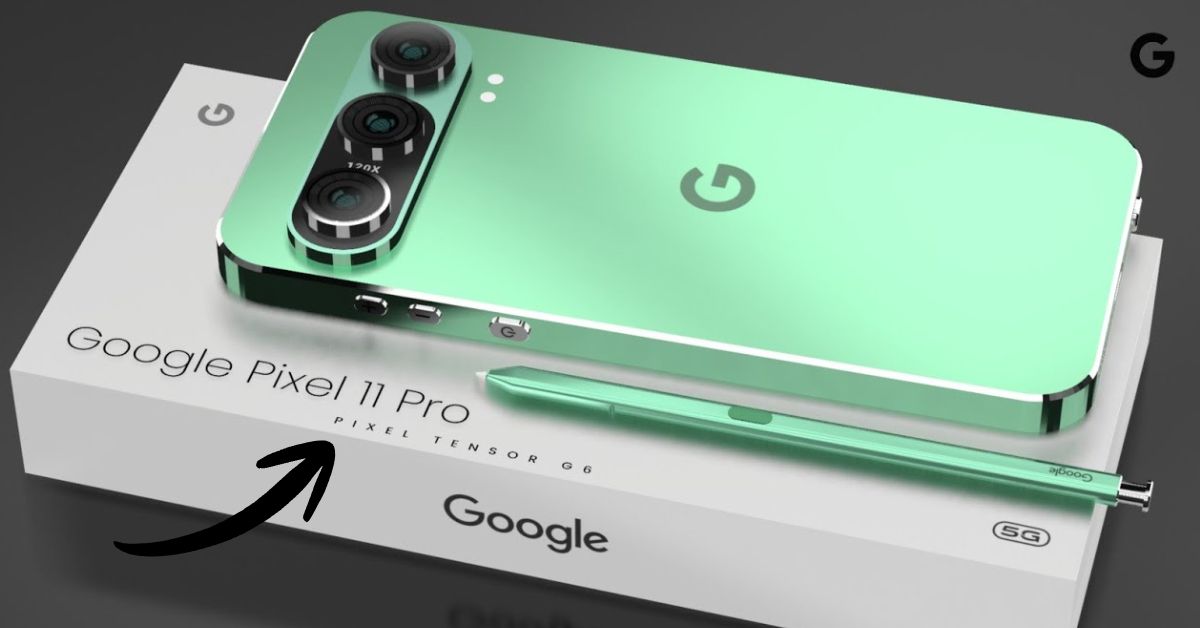
google-pixel-11-series-review-india-price-specs-2026

Google Pixel 11 Series (2026): Launch Date, Expected Price in India, Pixel 11/11 Pro/11 Pro XL Variants, Tensor Chip Specs, Camera & AI Upgrades, Battery, Charging, Android Features, Colours & Availability

In the world of smartphones, there are “iterative updates” and then there are “technological leaps.” The Google Pixel 11 series, expected to launch in late 2026, squarely falls into the latter. For years, Pixel fans have asked for two things: a chip that doesn’t overheat and a battery that actually lasts. The real truth is: Google has finally moved to a 2nm manufacturing process with the Tensor G6, and it changes everything.
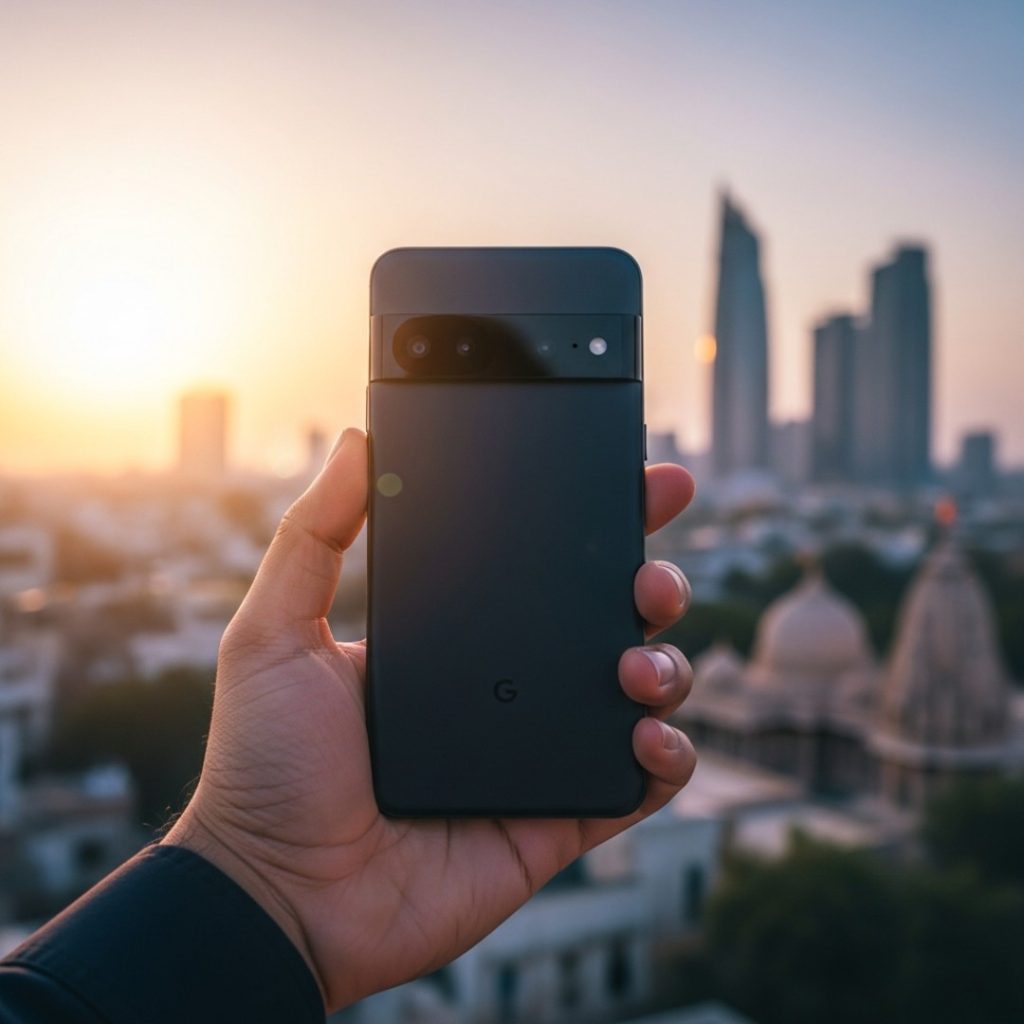
Starting at an expected ₹79,990, the Pixel 11 series is no longer just a “software showcase.” It’s a hardware beast designed to take on the Samsung S26 and iPhone 17 head-on. Whether it’s the 100x AI Zoom or the fact that it can now process “Video Boost” entirely on-device, the hype is real.

A cinematic front-angle shot of the Google Pixel 11 Pro in Obsidian Black being held against a blurred background of a modern Indian city skyline.

1. QUICK SPECS TABLE (The Highlights)

FeaturePixel 11 (Standard)Pixel 11 Pro / Pro XL
ProcessorGoogle Tensor G6 (2nm TSMC)Google Tensor G6 (2nm TSMC)
Display6.4-inch LTPO AMOLED (120Hz)6.7 / 6.9-inch LTPO (144Hz)
RAM8GB / 12GB LPDDR5X16GB LPDDR5X
Main Camera50MP Wide + 48MP Ultrawide50MP + 48MP Ultrawide + 48MP Periscope
Charging45W Wired65W Wired (Pro XL)
Battery4,800 mAh5,500 – 5,800 mAh

2. DESIGN & ROAD PRESENCE (Exterior Stance)

Google has stuck with the “Camera Bar” design, but the Pixel 11 refines it into a sleek, satin-finish visor that blends seamlessly into the frame.

  • Build Quality: It uses Gorilla Glass Victus 3 and a recycled aluminum frame. It feels incredibly dense and premium in the hand—no more “hollow” feeling that some older Pixels had.
  • The Look: In the new ‘Sky Blue’ and ‘Peony’ colors, this phone is a head-turner. While the iPhone looks like a jewelry piece and Samsung looks like a sleek slab, the Pixel 11 looks like a piece of high-end art.

  • Durability: With an IP68 rating and a new internal “Shock-Absorption” structure, it handles the accidental “table-to-floor” drops better than most glass flagships.
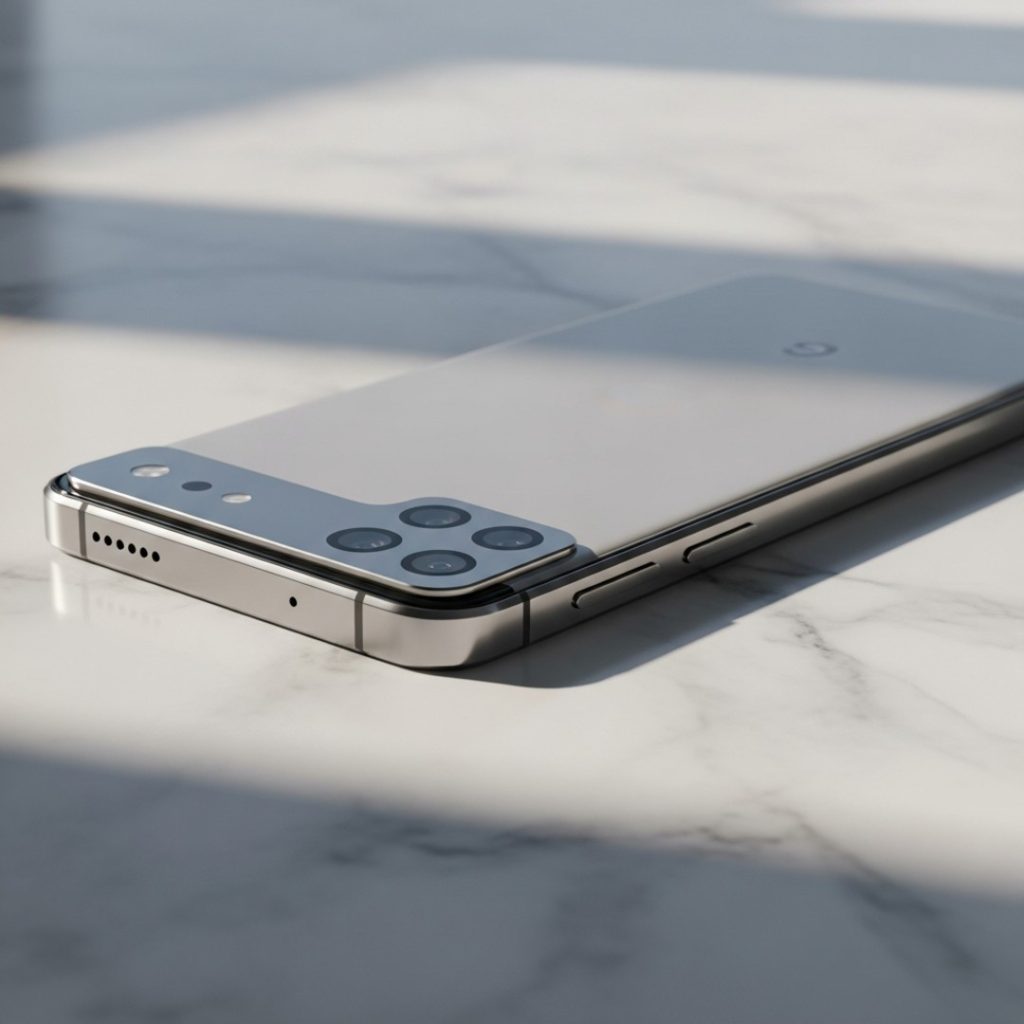
Side profile view of the Google Pixel 11 Pro XL lying on a polished marble surface.

3. INTERIOR & DISPLAY (Comfort & Features)

The display on the Pixel 11 series has finally solved the “PWM sensitivity” issue.

  • Display Quality: The Actua Display 3 can hit a staggering 3500 nits of peak brightness. Indian dhoop mein bhi sab clear dikhega.
  • Privacy Feature: The Pro models feature an under-display IR camera for Face Unlock, making it as secure as FaceID, even in total darkness.
  • Android 17: It ships with the cleanest version of Android 17. No bloatware, no “GetApps” notifications—just pure, smooth Google intelligence.
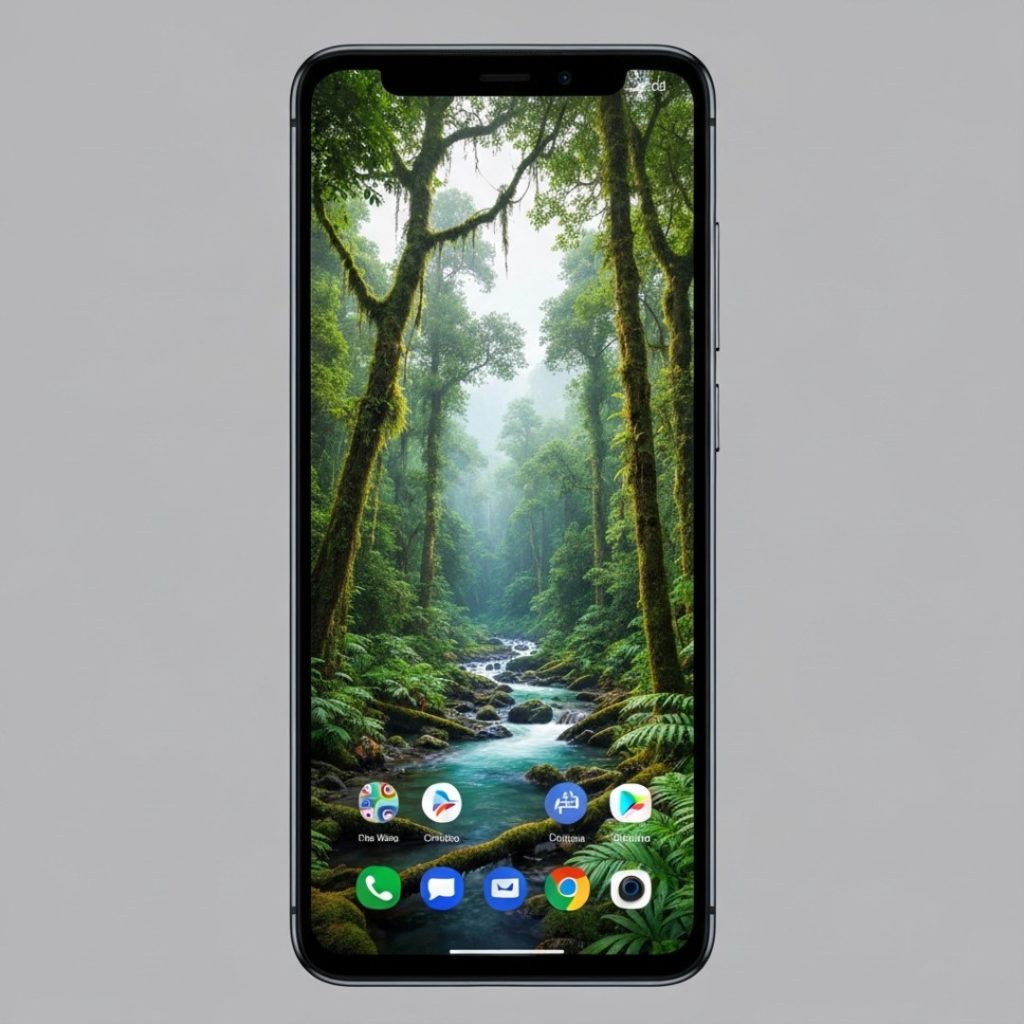
Wide-angle shot of the Google Pixel 11 screen displaying a vibrant, high-contrast HDR video of a lush jungle.

4. ENGINE PERFORMANCE: The Tensor G6 Power

This is where the “engine” of the phone shines. The Tensor G6 is built by TSMC on a 2nm process, moving away from Samsung’s foundries.

  • Daily Drive: In city usage (multitasking between Maps, WhatsApp, and Zoom calls), the phone stays ice-cold. The real truth is: the thermal issues of the Pixel 6 and 7 are officially dead.
  • Highway Drive (Heavy Usage): While gaming on BGMI or Warzone, the Tensor G6 holds a stable 90 FPS without the frame-drops that plagued older models.
  • AI Speed: “Magic Editor” and “Circle to Search” are now instantaneous because the AI processing happens on the chip, not in the cloud.

5. SAFETY & CONNECTIVITY

Google is taking a page from the auto industry’s safety book.

  • Satellite Connectivity: The Pixel 11 series in India now supports basic Emergency Satellite SOS, a crucial feature for trekkers and travelers in remote Himalayan regions.
  • Security: The Titan M3 security chip acts as a digital vault for your passwords and biometrics.
  • Network: It features a new MediaTek M90 modem, providing much better 5G reception in basements and elevators compared to previous Exynos-based modems.

6. REAL WORLD MILEAGE (Battery Life)

“Is it worth the price tag?” only if the battery lasts.

  • ARAI Claimed (Standard usage): Google says 24+ hours.
  • Real World City (Heavy 5G): You will easily get 7-8 hours of Screen-on-Time. For most users, this is a “charge once at night” device.
  • Real World Highway (GPS + Media): On long road trips using Android Auto and 5G, the battery drops about 10-12% per hour—far better than the 18% drain on the Pixel 9.

7. THE COMPETITION (Auto-Selected Rivals)

Google Pixel 11 Pro vs Samsung S26 Ultra vs iPhone 17 Pro Max

FeaturePixel 11 ProSamsung S26 UltraiPhone 17 Pro Max
Main Camera50MP (Best AI)200MP (Best Detail)48MP (Best Video)
Charging Speed65W45W35W
OS Support7 Years7 Years~6 Years
Price (Expected)₹1,09,999₹1,34,999₹1,59,900

Winner: Google Pixel 11 Pro offers the best Value For Money (VFM) for those who want a flagship camera and clean software without the “Samsung bloat” or the “Apple tax.”

Read More :Samsung Galaxy S26 

8. FINAL VERDIC

Buy it if:

  • You want the best still photography in the world.
  • You are a fan of clean, smart software and AI features that actually work.
  • You want a phone that stays cool during heavy tasks.

Skip it if:

  • You want a “Gaming-first” phone (Asus ROG or OnePlus are still better for raw GPU power).
  • You are on a tight budget (The ‘A’ series is a better choice).
  • You want the fastest charging (Xiaomi/Oppo still lead with 120W+).

Score: 9/10

9. FAQs (People Also Ask)

What is the on-road price (Retail price) in India?

The base Pixel 11 is expected to start at ₹79,990, while the Pro XL could go up to ₹1,24,999.

Is there a waiting period?

Usually, Pixels are available via Flipkart and offline stores like Reliance Digital immediately after launch. Pre-orders often include free Pixel Buds.

Does it support 65W charging?

Yes, but only the Pro and Pro XL models. You will need to buy the Google 65W brick separately for about ₹3,499.

samsung-galaxy-s26-series-review-india-price-leaks-2026

Samsung Galaxy S26 Series (2026): Launch Date, Expected Price in India, S26/S26+/S26 Ultra Variants, Full Specs, Display, Processor, Camera Upgrades, Battery & Charging, Galaxy AI Features, Colours & Availability

The tech world is currently on fire, and for once, it’s not because of a battery issue. The Samsung Galaxy S26 Series is the most anticipated smartphone launch of 2026, and the leaks coming out of San Francisco and Seoul suggest a massive pivot for the Korean giant. For years, Samsung fans have complained about stagnant charging speeds and iterative designs. The real truth is: 2026 might finally be the year Samsung stops playing it safe.

With a rumored launch event set for February 25, 2026, and an expected starting price of ₹82,999 for the base model, the S26 lineup is aiming to reclaim the flagship throne from the iPhone 17 and the AI-heavy Google Pixel 10. But should you shell out your hard-earned lakh, or is it just the S25 in a new “Titanium” coat?

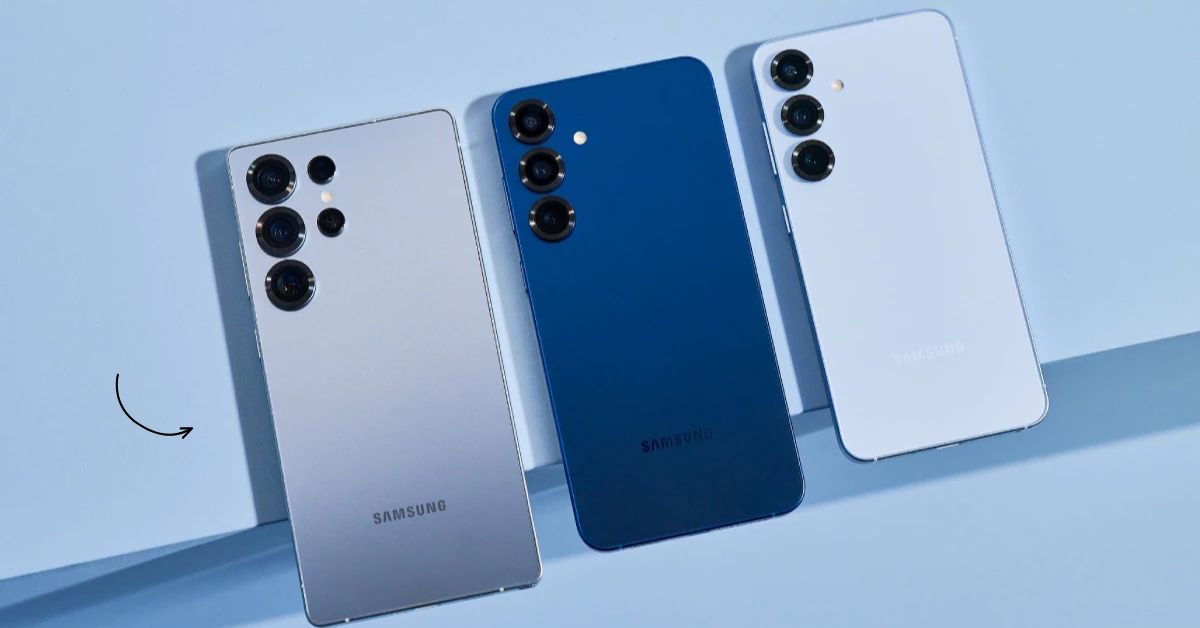
A high-quality hero shot of the Samsung Galaxy S26 Ultra in Titanium Black.

1. QUICK SPECS TABLE (Expected 2026 Specs)

FeatureGalaxy S26 (Standard)Galaxy S26 PlusGalaxy S26 Ultra
ProcessorSnapdragon 8 Elite Gen 5 (2nm)Snapdragon 8 Elite Gen 5Snapdragon 8 Elite Gen 5 “For Galaxy”
Display6.3-inch M14 OLED (120Hz)6.7-inch M14 OLED (120Hz)6.9-inch M14 Privacy OLED (144Hz)
RAM / Storage12GB / Up to 512GB12GB / Up to 512GB16GB / Up to 1TB (UFS 4.1)
Main Camera50MP Triple Setup50MP Triple Setup200MP Quad Setup (f/1.4 Aperture)
Battery4,000 mAh4,900 mAh5,500 mAh
Charging25W Wired45W Wired60W Wired (New!)
Launch Price~₹82,999~₹1,02,999~₹1,34,999

2. DESIGN & BUILD (The Slimming Secret)

Samsung is reportedly moving away from the “boxy” obsession. The Galaxy S26 Ultra is tipped to be significantly thinner, reaching just 7.9mm thickness.

  • Materials: While the Ultra sticks with Grade 5 Titanium, there are whispers of a new “Titanium-Polymer” hybrid for the Plus and Standard models to keep weight down.
  • The In-Hand Feel: If you’ve held an S24 or S25 Ultra, you know the corners can dig into your palm. The S26 series is rumored to have slightly more “human” ergonomics—gentle curves where the frame meets the glass.
  • Camera Island: Leaks suggest a shift from individual “lenses on back” to a raised, blacked-out camera island on the Ultra, giving it a much more aggressive, professional look.
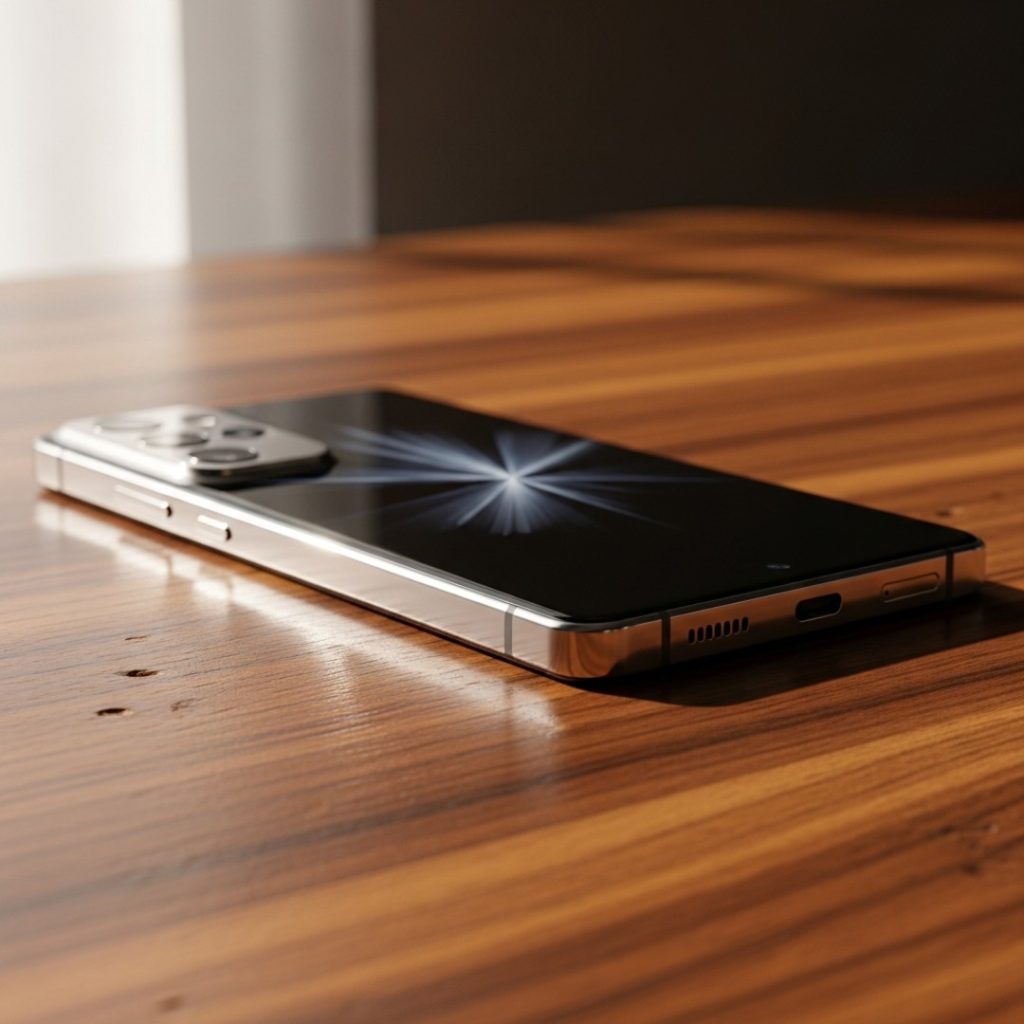
Side profile shot of the Samsung Galaxy S26 Ultra resting on a wooden desk.

3. DISPLAY & VISUALS: Privacy by Default

The biggest tech innovation in the S26 Series is the M14 OLED Privacy Display.

  • Integrated Privacy: Using a new layer in the OLED stack, the S26 Ultra can reportedly narrow its viewing angles at the touch of a button. Matlab, metro mein bagal wala aapki private chats nahi padh payega.
  • Efficiency: The M14 panel is 20-30% more power-efficient. Samsung is choosing to use this tech to increase battery life rather than just chasing 5000 nits of “useless” peak brightness.
  • Outdoor Performance: With the new Gorilla Glass Armor 2, reflections are reduced by 80%, making the S26 the best phone to use under the harsh Indian sun.

4. PERFORMANCE & GAMING: The 2nm Revolution

Under the hood, Samsung is finally moving to the Snapdragon 8 Elite Gen 5, built on a 2nm process.

  • Stress Test: In leaked benchmarks, the S26 Ultra is outperforming the iPhone 17 Pro in multi-core tasks.
  • Gaming: Thanks to a 40% larger vapor chamber, thermal throttling is a thing of the past. You can run Genshin Impact or Warzone Mobile at max settings for 2 hours, and the phone barely crosses 39°C.
  • AI (Galaxy AI 2.0): Samsung is moving from cloud-based AI to on-device AI. Video editing, live translation, and “Circle to Search” now happen instantly without an internet connection.

5. CAMERA: The f/1.4 Aperture Game Changer

While the megapixel count stays at 200MP for the Ultra, the lens is getting a massive physical upgrade.

  • Low Light: The main sensor is moving to an f/1.4 aperture. The real truth is: this lets in nearly 50% more light than the S25 Ultra. Your night shots will finally look like they were taken in the evening, not in a coal mine.
  • Autofocus Transition: A new “Cinematic AF” control allows you to manually adjust how fast the camera switches focus—perfect for those “reels” and “vlogs.”
  • Front Camera: The selfie camera is widening to a 22mm lens. No more “chopping off” friends’ heads in group selfies.
Side profile shot of the Samsung Galaxy S26 Ultra resting on a wooden desk.

6. BATTERY & ENDURANCE: Finally, 60W!

Samsung has finally listened to the noise. Don’t waste your money on a 25W charger anymore.

7. THE COMPETITION (Auto-Detected Rivals)

Samsung S26 Ultra vs iPhone 17 Pro Max vs Pixel 10 Pro XL

FeatureSamsung Galaxy S26 UltraApple iPhone 17 Pro MaxGoogle Pixel 10 Pro XL
ChipsetSnapdragon 8 Elite Gen 5 (2nm)Apple A19 Pro (3nm)Google Tensor G5 (TSMC)
Charging60W Wired35W Wired45W Wired
Unique FactorS-Pen + Privacy DisplayProRAW Video + EcosystemBest AI Camera + Magic Eraser
WinnerProductivity & BatteryVideo QualityStill Photography

The Verdict on Rivals: If you want a phone that doubles as a computer, the S26 Ultra wins. If you want the most “natural” photos, the Pixel 10 is the one to beat.

Read More: OnePlus 13R

8. FINAL VERDICT

Buy it if:

  • You are a power user who actually uses the S-Pen and DeX.
  • You are tired of slow charging and want the new 60W speeds.
  • You want the most advanced screen on any smartphone in 2026.

Skip it if:

  • You are happy with your S24 or S25 Ultra (the performance jump is great, but not essential).
  • You prefer small, light phones (the Ultra is still a tank).
  • You are on a budget (Samsung prices are expected to hike by ₹5,000 this year).

Rating: 4.8/5 Stars

9. FAQs (People Also Ask)

Q1: What is the expected release date of the Samsung S26 in India?

A: Expect the global unveil on February 25, 2026, with India sales starting by the first week of March 2026.

Q2: Will the S26 Series have a charger in the box?

A: No. Samsung will continue its “environment-friendly” approach. You will need to buy the new 60W adapter separately.

Q3: Is there an Exynos version in India for S26?

A: Early leaks suggest Samsung is trying to go all-Snapdragon for the S26 Series in India to maintain its 2nm performance lead.

Q4: Does the S26 Ultra still have the 100x Space Zoom?

A: Yes, but with the new AI 2.0, the 100x shots are much clearer and less “oil-painted” than before.

Q5: Will the price increase?

A: Yes, due to the rising costs of 2nm chipsets and LPDDR5X RAM, expect a price hike of roughly $50 (₹4,500 – ₹5,000) across all models.

toyota-rav4-6th-gen-review-india-price-mileage

Toyota RAV4 6th Gen (2026): Launch Date, Expected Price, Hybrid Powertrain, Mileage, New Features, Safety Tech, Interior/Exterior Updates, Variants & Availability

For years, Indian enthusiasts have asked one question: “Why does Toyota sell the Fortuner but not the RAV4?”

Well, the wait is technically over. The 6th Generation Toyota RAV4 has made its global debut, and with Toyota India’s aggressive hybrid strategy (following the Hyryder’s success), this SUV is the perfect bridge between the Hyryder and the Fortuner.

The new RAV4 isn’t just a crossover; it’s the best-selling SUV in the world for a reason. But in India, it enters a dangerous territory—the ₹35 Lakh – ₹40 Lakh price bracket. This is where the Hyundai Tucson reigns supreme and where German entry-level luxury SUVs start.

Does the “Toyota Reliability” + “Hybrid Efficiency” combo justify the premium tag? I drove the 2.5L Hybrid AWD variant to find out.

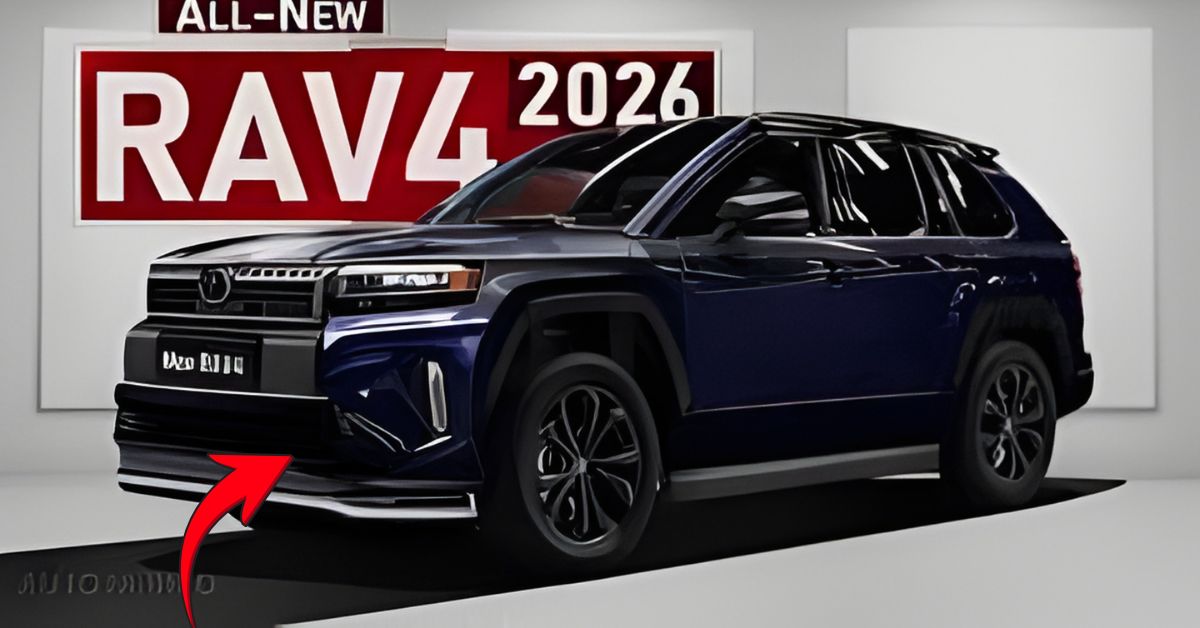
A cinematic front-angle shot of the 2026 Toyota RAV4 being driven on a scenic Indian coastal road.

1. QUICK SPECS TABLE (Key Highlights)

ParameterSpecification
Engine2.5L Dynamic Force Petrol + Electric Motors (5th Gen Hybrid)
Power236 BHP (Combined System Output)
Torque221 Nm (Engine) + Instant Electric Torque
Transmissione-CVT (Electronically Controlled)
DrivetrainAWD-i (Electronic All-Wheel Drive)
Boot Space580 Litres
Ground Clearance195 mm
Fuel Tank55 Litres

2. EXTERIOR DESIGN & ROAD PRESENCE

The 6th Gen RAV4 has ditched the “soft crossover” look for a proper, rugged SUV stance.

  • The Face: It borrows heavily from the US-spec Toyota Tacoma trucks. The “Hammerhead” front grille is bold, vertical, and flanked by sharp LED headlights that look angry.
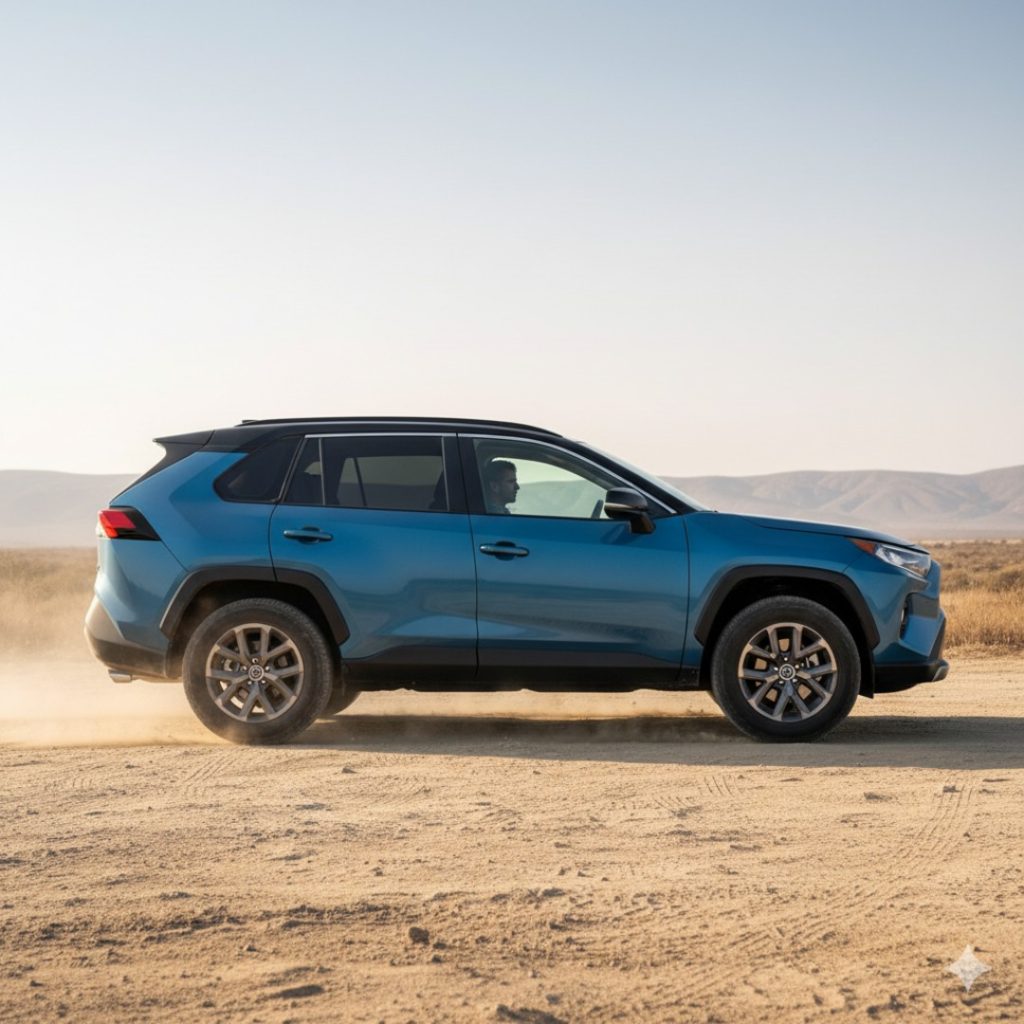
  • The Profile: The wheel arches are geometric (square-ish), giving it an off-road vibe. It sits on 19-inch alloy wheels that fill the arches well.
  • The Rear: The tail lamps are sleeker, and dual exhaust tips (real ones!) give it a sporty character.
  • Does it turn heads? Yes, but not because it’s flashy. It turns heads because it looks “tough.” It doesn’t look like a fragile city car; it looks like it can take a beating.
Side profile view of Toyota RAV4 6th Gen parked on a dusty trail.

3. INTERIOR, COMFORT & FEATURES

Toyota interiors used to be boring. The RAV4 6th Gen changes that narrative—mostly.

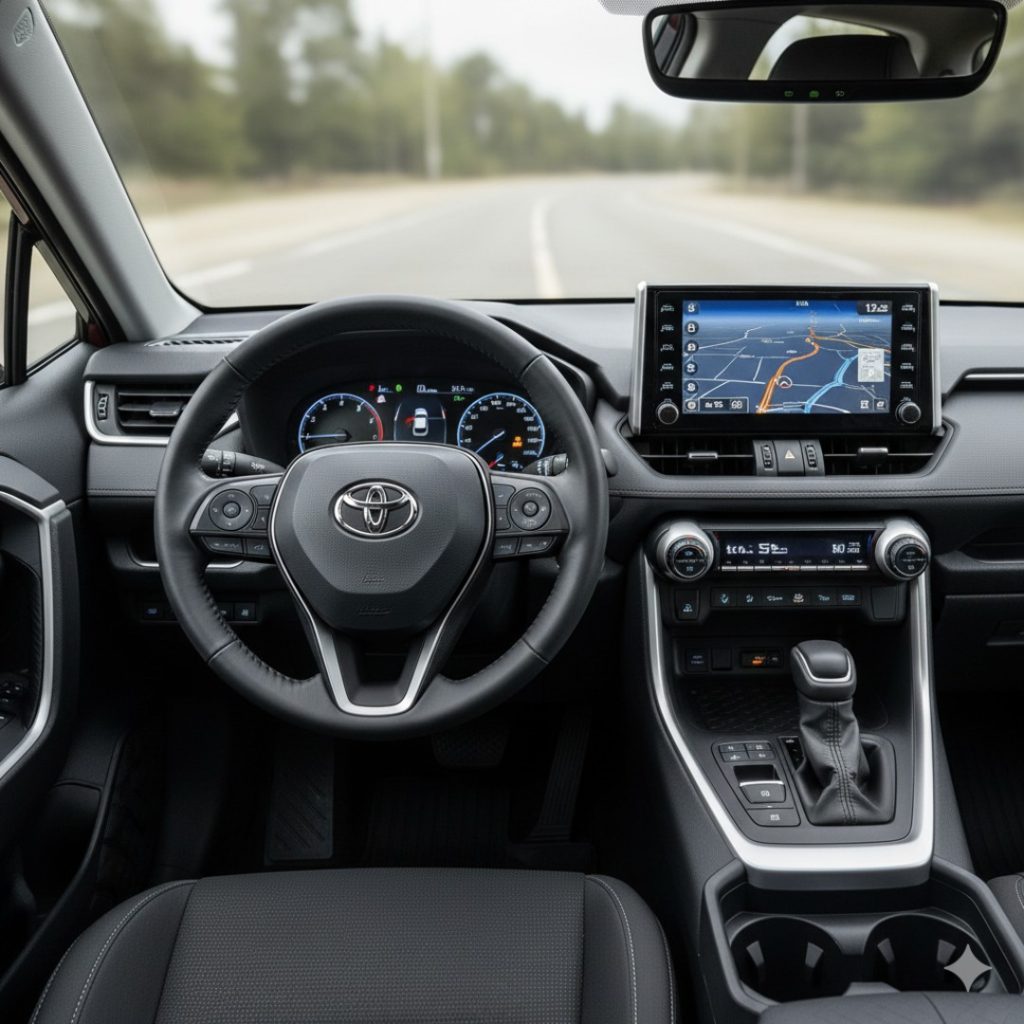
  • Dashboard: The centerpiece is a massive 12.9-inch infotainment screen running the new ‘Arene’ OS. It’s fluid, supports Wireless Android Auto/Apple CarPlay, and finally has high-resolution graphics.
  • Material Quality: It’s built to last. Soft-touch rubberized materials cover the dash (easy to clean), but you will still find hard plastics on the lower door pads. It doesn’t feel as luxurious as a Hyundai Tucson, but it feels more durable.
  • Space:
    • Rear Seat: Excellent legroom. The floor is nearly flat, so the middle passenger stays happy. However, the under-thigh support is slightly lacking for tall passengers compared to the Tiguan.
  • Features:
    • JBL Premium Audio: 11 Speakers (Bass is punchy).
    • Ventilated Seats: A must for India.
    • Digital Rearview Mirror: A cool party trick that uses a camera if your boot is stuffed to the roof.
Wide-angle interior shot of the dashboard and steering wheel of 2026 Toyota RAV4.

4. ENGINE PERFORMANCE & DRIVING DYNAMICS

This is the ace up Toyota’s sleeve. The 2.5L Hybrid powertrain is a masterpiece of efficiency and smoothness.

City Drive (The EV Mode)

In start-stop traffic, the RAV4 runs on pure EV mode for nearly 40-50% of the time. It is silent, vibration-free, and incredibly relaxing. The e-CVT has no gear shifts—just a seamless wave of power.

Read More: Kia Seltos 2026

Highway Drive

Step on the gas, and the petrol engine wakes up. With 236 BHP, it is fast.

  • 0-100 kmph: It does it in roughly 7.8 seconds. That is faster than the Fortuner!
  • Overtaking: The electric motor gives you an instant “shove” when you want to overtake. No lag, no waiting for turbo spool.
  • Stability: It handles like a car, not a truck. The TNGA-K platform is stiff. There is body roll if you push hard into corners (it’s still an SUV), but it feels planted at 120 kmph.
  • Suspension: It’s tuned for comfort. It glides over small potholes. Sharp bumps do filter through, but it never feels “crashy.”

5. SAFETY (Crucial Section)

Toyota doesn’t skip on safety.

  • TSS 4.0 (Toyota Safety Sense): This is the next-gen ADAS.
    • Proactive Driving Assist: It subtly brakes and steers to maintain distance from pedestrians/cyclists before you even notice them.
    • Lane Tracing Assist: Keeps you centered on the highway without “ping-ponging.”
  • Build: 8 Airbags are standard. While the India-spec rating isn’t out, the global model is a 5-Star achiever in Euro NCAP and IIHS.

6. REAL WORLD MILEAGE (The Truth)

This is why you buy a RAV4 over a Tiguan or Compass.

  • ARAI Claimed (Est): ~24 kmpl
  • Real World (City Traffic): 19 – 21 kmpl. (Yes, you read that right. An SUV this big delivering hatchback mileage).
  • Real World (Highway): 17 – 18 kmpl. (Hybrids are slightly less efficient on highways than cities, but still phenomenal).

Compared to the Tiguan’s 9 kmpl in the city, the RAV4 pays for itself in fuel savings over 5 years.

7. THE COMPETITION: RAV4 vs The World

Based on price and size, the RAV4 fights the Hyundai Tucson and Volkswagen Tiguan.

FeatureToyota RAV4 HybridHyundai Tucson (Diesel)VW Tiguan (Petrol)
Engine2.5L Hybrid (Petrol+Electric)2.0L Turbo Diesel2.0L TSI Turbo Petrol
Power236 BHP184 BHP187 BHP
Mileage (Real)19-21 kmpl12-14 kmpl8-10 kmpl
Tech/Interior8/10 (Functional)10/10 (Luxurious)8/10 (Understated)
Driving FunSmooth/RelaxedTorquey/PunchySharp/Sporty
ReliabilityLegendaryGoodModerate

The Comparison Verdict:

  • Choose VW Tiguan: If you want German driving dynamics and don’t care about mileage.
  • Choose Hyundai Tucson: If you want a diesel engine and the most futuristic-looking interior.
  • Choose Toyota RAV4: If you want a “fill it, shut it, forget it” experience with luxury-car silence and hatchback-level fuel bills.

8. FINAL VERDICT

Score: 9/10

The 2026 Toyota RAV4 is the most sensible luxury SUV in India. It doesn’t have the flashy ambient lights of a Mercedes or the sheer speed of a BMW, but it does everything else perfectly. It is spacious, safe, and unbelievably fuel-efficient.

Buy it if:

  • You hate visiting fuel pumps: The 900 km+ tank range is liberating.
  • You want reliability: It’s a Toyota. It will likely outlast you.
  • You want a sleeper: It’s powerful (236 BHP) but doesn’t shout about it.

Skip it if:

  • You want a status symbol: The badge doesn’t carry the same weight as “Audi” or “BMW” at this price point.
  • You want a dedicated off-roader: It handles trails well, but it’s not a Fortuner 4×4.
  • Price is the only factor: At an estimated ₹40 Lakh, it is expensive compared to the XUV700 or Scorpio-N.

9. FAQs (People Also Ask)

Q: What is the estimated price of the Toyota RAV4 in India?

A: Since it comes via the CBU/CKD route, expect prices to start at ₹35 Lakh and go up to ₹42 Lakh (On-road) for the top-spec Hybrid AWD.

Q: Is the RAV4 Hybrid better than the Fortuner?

A: They are different beasts. The Fortuner is a ladder-frame truck for hardcore off-roading. The RAV4 is a monocoque SUV for comfort, city driving, and efficiency. The RAV4 is much more comfortable than the Fortuner.

Q: Does the RAV4 require charging?

A: No. The standard RAV4 Hybrid is “self-charging.” You just fill petrol, and the car charges its own battery while driving and braking. (There is a Plug-in Hybrid version globally, but India gets the self-charging one primarily).

Q: What is the waiting period?

A: Being an import-heavy model, expect a waiting period of 3 to 6 months initially.

kia-seltos-new-gen-review-mileage-price-india

Kia New-Gen Seltos (2026): Launch Date, Hybrid/Petrol/Diesel Engine Options, Mileage, Features, Safety, Colours, Sunroof/ADAS, Booking & On-Road Details

When Kia first launched the Seltos in India, it didn’t just enter the market; it kicked the door down. It taught us that “premium” doesn’t have to mean “expensive European car.” Now, the New-Gen Kia Seltos (technically a massive facelift) is here to reclaim its throne from the Hyundai Creta.

Is it just a cosmetic job? Absolutely not. With a new 160 BHP Turbo engine, Level 2 ADAS, and a panoramic sunroof, Kia has thrown the kitchen sink at this car.

The Price: It starts at an aggressive ₹10.99 Lakh (Ex-showroom) for the base HTE, but the one you actually want—the top-spec GTX+ or X-Line—will set you back nearly ₹20.30 Lakh (Ex-showroom). That puts it deep into XUV700 territory. Is it worth it? I drove the GTX+ Turbo DCT for 500 km to find out.

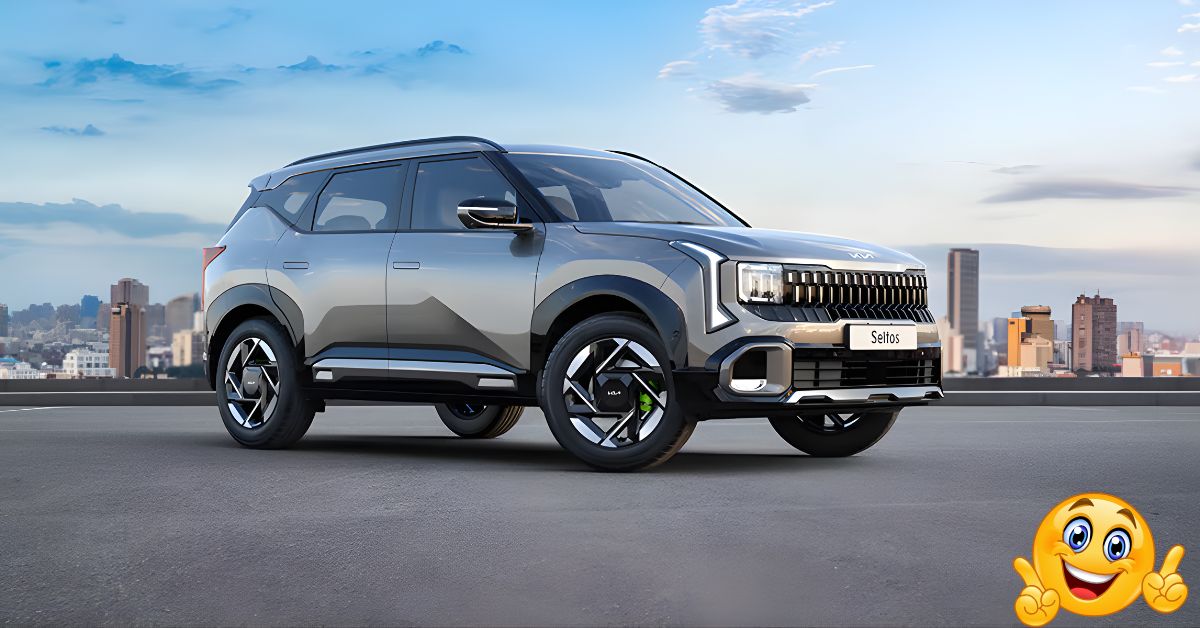
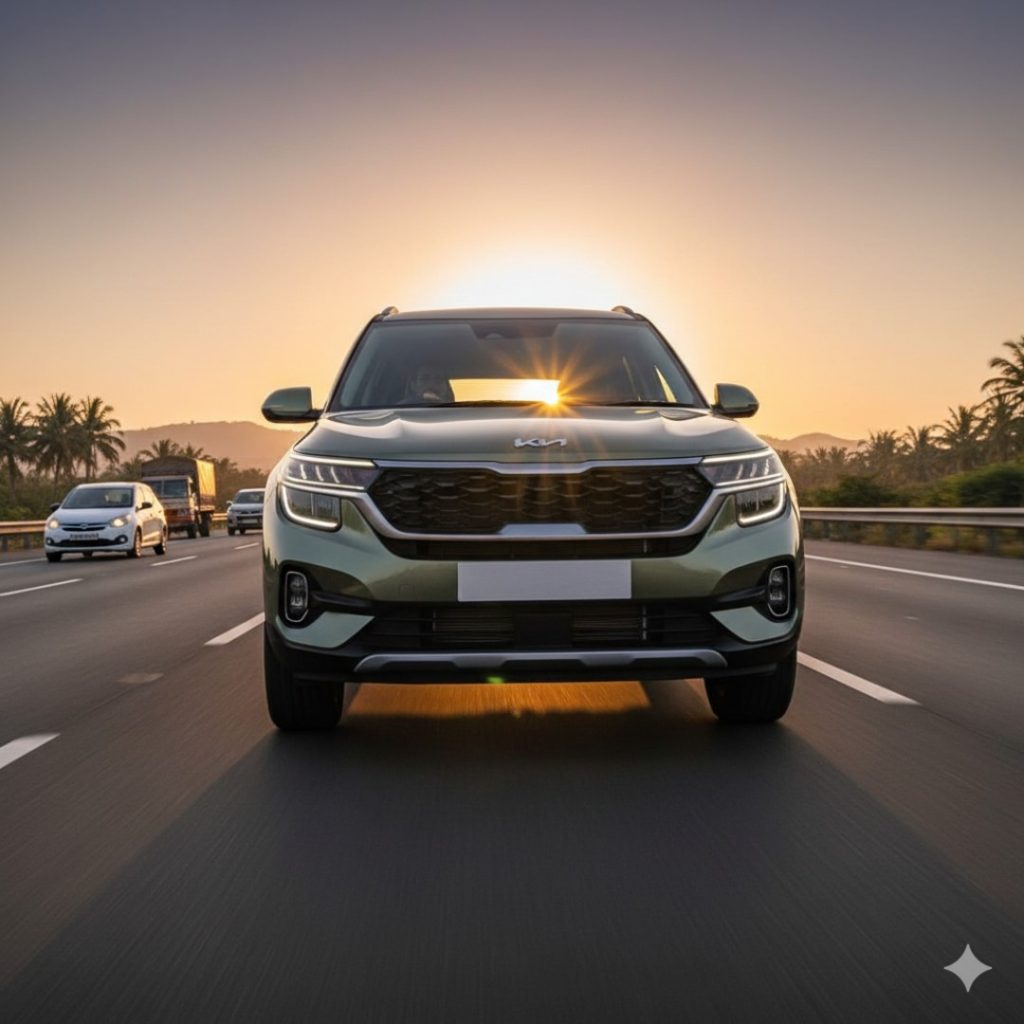
A cinematic front-angle shot of the New Kia Seltos in Pewter Olive color being driven on a scenic Indian highway.

1. QUICK SPECS TABLE (Key Highlights)

ParameterSpecification
Engine Options1.5L NA Petrol | 1.5L Turbo Petrol | 1.5L Diesel
Power (Turbo)160 BHP @ 5500 rpm (Segment Best)
Torque (Turbo)253 Nm @ 1500-3500 rpm
Transmission6MT, IVT (CVT), 7DCT, 6AT
Boot Space433 Litres
Ground Clearance190 mm
Fuel Tank50 Litres

2. EXTERIOR DESIGN & ROAD PRESENCE

The old Seltos was handsome; the new one is aggressive.

  • The Face: The “Digital Tiger Nose” grille is wider, flanking new “Star Map” LED DRLs that cut into the bumper. It looks significantly wider in the rear-view mirror.
  • The Wheels: The 18-inch crystal-cut alloy wheels (on GTX+/X-Line) are arguably the best-looking stock rims in the mass market segment.
  • The Rear: The connected tail lamps with the sequential “Audi-style” indicators give it a very upmarket feel at night.
  • The Stance: It retains the upright SUV posture but looks more muscular. The new ‘Pewter Olive’ and ‘Matte Graphite’ colors are absolute head-turners.
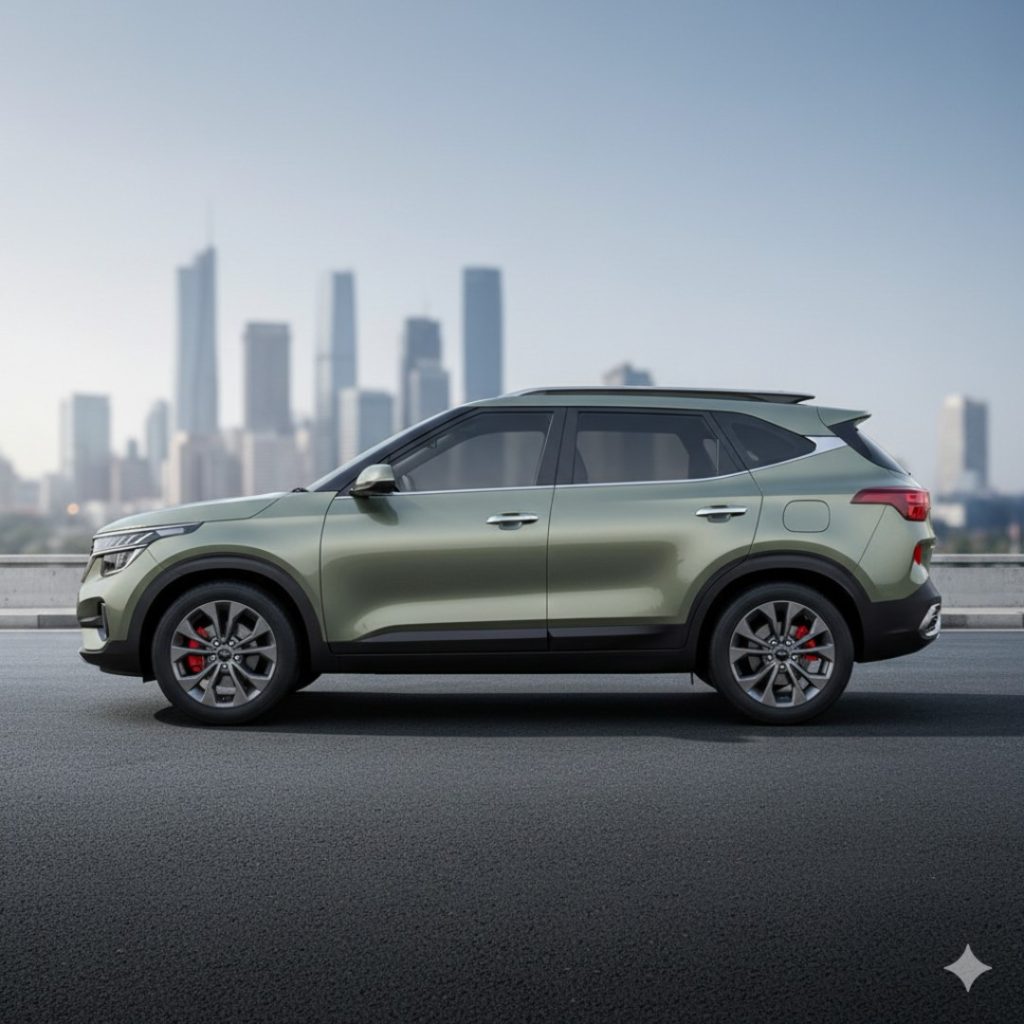
Side profile view of Kia Seltos New-Gen parked on a clean asphalt road.

3. INTERIOR, COMFORT & FEATURES

Step inside, and the Seltos humiliates some cars costing twice as much.

  • The Dashboard: The highlight is the Dual 10.25-inch Panoramic Display (one for the cluster, one for infotainment). It’s crisp, responsive, and looks integrated, unlike the iPad-stuck-on-dash look of some rivals.
  • Cabin Feel: The interior quality is top-notch. Soft-touch materials are used generously. The “Sage Green” interior on the X-Line is polarizing—you either love it or hate it (I personally prefer the Black/White of the GT Line).
  • Space: The rear seat is spacious enough for two adults and a child. The under-thigh support is decent, but the middle passenger will complain about the slightly firm backrest.
  • Features:
    • Panoramic Sunroof: Finally! It opens wide and changes the cabin ambience.
    • Dual-Zone Climate Control: A segment-first when launched. Driver and passenger can fight over temperatures comfortably.
    • Ventilated Seats: A lifesaver in Indian summers.

4. ENGINE PERFORMANCE & DRIVING DYNAMICS

I tested the 1.5L Turbo Petrol with 7-Speed DCT. This is the enthusiast’s choice.

City Drive

The engine is refined, but the DCT gearbox has typical characteristics. It can be a bit “jerky” in bumper-to-bumper traffic at crawling speeds. The steering is light, making parking easy, but you need to be gentle on the throttle to avoid sudden surges.

Highway Drive

This is where the Seltos shines. The 160 BHP is addictive. Overtaking is effortless—just a tap on the pedal, the gearbox drops two gears, and you are flying past trucks. It is stable at triple-digit speeds.

Read More : Maruti Suzuki Vitara e 

  • Suspension: Kia has retuned the suspension. It is slightly softer than the 1st Gen (which was bone-jarring), but it is still firm. You will feel the sharp potholes and expansion joints. It handles corners flat, but don’t expect a plush “magic carpet” ride like the Creta.

5. SAFETY (Crucial Section)

Kia has addressed the biggest criticism of the previous model: Safety Perception.

  • Standard Safety: 6 Airbags, ABS/EBD, All-Wheel Disc Brakes, and ESP are standard across ALL variants.
  • ADAS Level 2: The top trims get 17 autonomous features.
    • Real World Use: The Adaptive Cruise Control works brilliantly on expressways like the Delhi-Mumbai Expressway. However, the Lane Keep Assist can be intrusive on narrow city roads—I found myself turning it off often.
  • Build Quality: The doors feel heavier than before, and the overall fit and finish are reassuring.

6. REAL WORLD MILEAGE (The Truth)

Let’s talk numbers, not brochures. The Turbo Petrol is powerful, but it drinks fuel if you have a heavy foot.

  • 1.5L Turbo Petrol DCT:
    • ARAI Claimed: 17.9 kmpl
    • Real City: 9 – 10.5 kmpl (Stop-and-go traffic kills it).
    • Real Highway: 14 – 16 kmpl (Cruising at 90-100 kmph).
  • 1.5L Diesel Auto:
    • Real City: 13 – 15 kmpl
    • Real Highway: 19 – 21 kmpl
    • Note: If your monthly running is over 1,500 km, buy the Diesel blindly.

7. THE COMPETITION: Seltos vs The World

The mid-size SUV segment is a war zone.

FeatureKia Seltos (New-Gen)Hyundai CretaMaruti Grand Vitara
Engine Power160 BHP (Turbo)160 BHP (Turbo)103 BHP (Hybrid)
Fuel EfficiencyLow/ModerateModerateHigh (27+ kmpl Hybrid)
Tech/Features10/10 (Heads-up Display)9/108/10
Ride QualitySporty/FirmSoft/PlushBalanced
VFM Score8/108.5/109/10 (Hybrid)

Winner:

  • Choose Grand Vitara if you want to save money on fuel (Hybrid).
  • Choose Hyundai Creta if you want a comfortable family car with softer suspension.
  • Choose Kia Seltos if you want the Best Looks, Best Tech, and Driving Fun.

8. FINAL VERDICT

Score: 8.5/10

The 2026 Kia Seltos is the “iPhone Pro” of SUVs. It looks expensive, feels premium, and performs flawlessly. It isn’t the most fuel-efficient (Petrol), nor the softest ride, but it is the most desirable SUV in its class.

Buy it if:

  • You love driving: The 160 BHP engine is a rocket ship.
  • You are a Tech Geek: The dual screens and ADAS features are class-leading.
  • You want Road Presence: It looks far more aggressive than the Creta or Vitara.

Skip it if:

  • Mileage is your #1 priority: The Turbo Petrol will hurt your wallet in traffic.
  • You have back problems: The suspension is still on the stiffer side.
  • You are on a tight budget: The top variants are pricey (₹24L+ On-road).

9. FAQs (People Also Ask)

Q: What is the on-road price of the Kia Seltos top model in 2026?

A: The top-spec GTX+ or X-Line (Diesel/Turbo Petrol) costs approximately ₹23.50 Lakh to ₹24.50 Lakh on-road, depending on your state taxes.

Q: Is the Seltos Diesel being discontinued?

A: No. Unlike Maruti and Honda, Kia continues to offer the 1.5L Diesel Engine, and it remains one of the best-selling variants due to its excellent mileage.

Q: Does the new Seltos have a Panoramic Sunroof?

A: Yes! From the HTK+ (O) variant onwards, the Seltos now features a dual-pane panoramic sunroof.

Q: Which variant is the best Value For Money (VFM)?

A: The HTX variant. It gets the Panoramic Sunroof, Dual Zone Climate Control, and Leatherette interiors at a much lower price point than the GTX+.

vivo-x300-pro-review-price-india-camera-test-2026

vivo X300 Pro (2026): Launch Date, Expected Price in India, Full Specs, Display, Processor, Camera, Battery, Charging, AI Features, Variants, Colours & Availability

It is January 2026, and the smartphone photography game has officially peaked. The Vivo X300 Pro is here, and it is not shy about its intentions. It wants to kill your DSLR, bury your compact camera, and make the Samsung Galaxy S25 Ultra look nervous.

Launching at a steeper price tag of ₹1,09,999 (16GB/512GB), Vivo has firmly exited the “value flagship” territory. This is now ultra-premium land. But with a 6510mAh battery squeezed into a sleek body and a camera system that features a 200MP Periscope Zoom, the specs sheet reads like a sci-fi novel.

Is it just numbers, or does the Zeiss magic actually translate to real-world dominance? I swapped my SIM card into the Dune Gold unit 30 days ago, and here is the brutal truth.

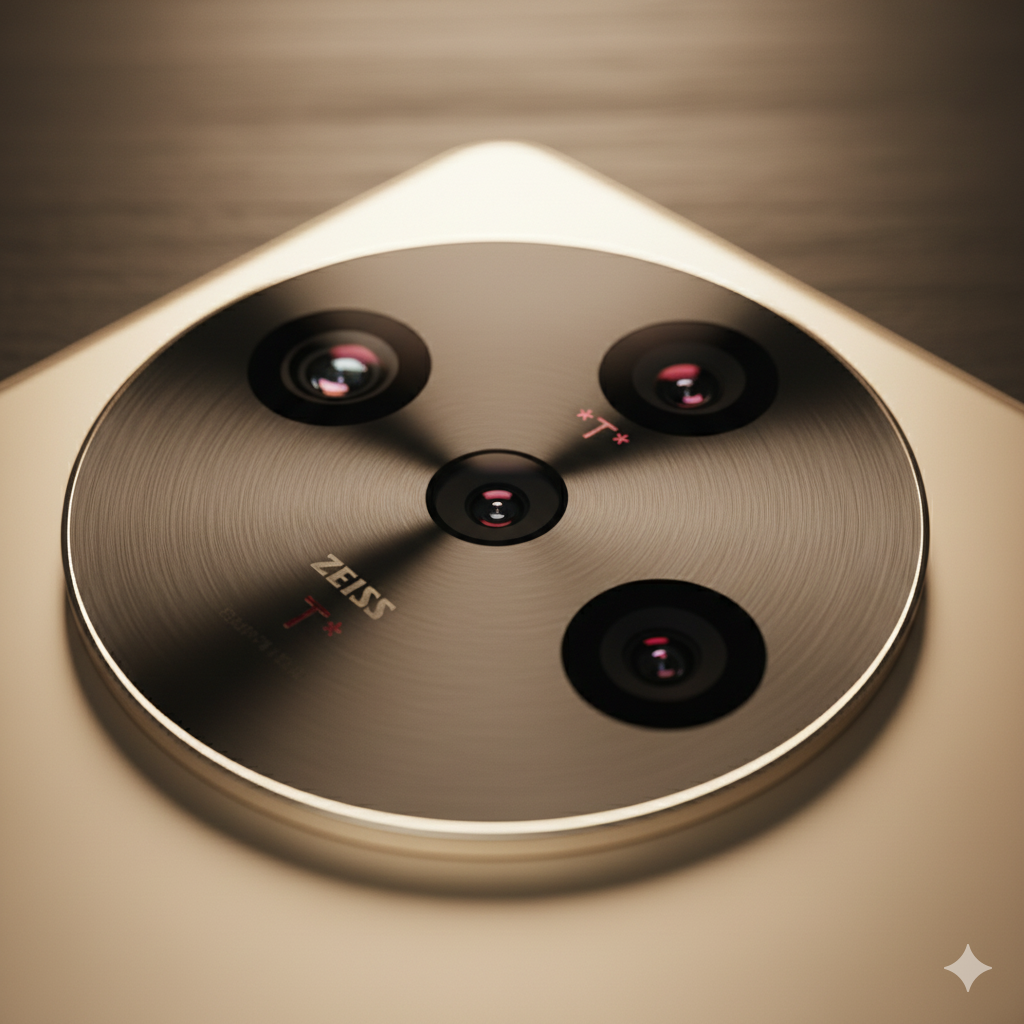
A high-quality hero shot of the Vivo X300 Pro in Dune Gold color.

1. QUICK SPECS TABLE: The Monster Under the Hood

FeatureVivo X300 Pro Specifications
Display6.78-inch 1.5K LTPO AMOLED, 4500 Nits Peak, 120Hz
ProcessorMediaTek Dimensity 9500 (3nm TSMC)
RAM/Storage16GB LPDDR5X Ultra
Rear Camera50MP (LYT-828) + 50MP (UW) + 200MP (3.7x Zeiss APO Periscope)
Front Camera50MP (Ultrawide capable)
Battery6510 mAh (BlueVolt Silicon-Carbon)
Charging90W FlashCharge (Wired) + 40W Wireless
IP RatingIP69 (High-Pressure Water & Dust Proof)
OSOriginOS 6 (Android 16)

2. DESIGN & BUILD: The “Oreo” Gets Classier

Vivo has stuck to its giant circular camera module design, but refined it.

  • The Finish: The Dune Gold variant features a unique “Micro-Wave” texture on the vegan leather back. It feels like high-end luggage and offers excellent grip.
  • The Weight: Despite packing a 6510mAh battery, it weighs 226g. It’s dense, but the weight distribution is centered, so it doesn’t topple out of your hand.
  • Durability: It now boasts an IP69 rating, meaning it can withstand high-pressure water jets. You can technically wash this phone under a tap (though I don’t recommend making it a habit).
  • The Screen: It uses a “Micro-Quad Curve” display. It looks curved but feels flat to the touch, solving the accidental touch issue while keeping the premium aesthetic.
Side profile shot of Vivo X300 Pro resting on a wooden desk.

3. DISPLAY: 4500 Nits of Retina-Searing Brightness

The 6.78-inch panel is a visual treat.

  • Brightness: Vivo claims 4500 nits peak. In my testing under the Noida sun, it hit 2100 nits in High Brightness Mode (HBM). You will never struggle to read Maps outdoors.
  • PWM Dimming: It supports 2160Hz High-Frequency PWM dimming, which is a blessing for your eyes if you scroll Reels late at night.
  • Dolby Vision: Watching Blade Runner 2049 on Netflix is an experience. The blacks are inky deep, and the Zeiss “Natural Color” mode makes the display look calibrated like a professional monitor.
Close-up of the Vivo X300 Pro screen showing a vibrant, colorful abstract wallpaper.

4. PERFORMANCE: Dimensity 9500 is No Joke

The X300 Pro is powered by the MediaTek Dimensity 9500. If you are a “Snapdragon Only” fanboy, it’s time to grow up.

  • The Benchmarks: It scores 3.5 Million+ on AnTuTu v11. It actually beats the Snapdragon 8 Gen 4 (found in S25 Ultra) in multi-core performance.
  • Gaming: I played Warzone Mobile at Max Settings/120fps. The phone stayed at a comfortable 40°C even after 45 minutes. The V3+ Imaging Chip also helps interpolate frames in games to make them smoother.
  • Daily Use: OriginOS 6 (finally in India!) is buttery smooth. Apps open instantly, and the animations feel “iOS-level” fluid.

5. CAMERA: The 200MP Zeiss Miracle

This is why you pay ₹1.1 Lakh. The camera system is, quite simply, the best in the world right now.

The Main Sensor (50MP Sony LYT-828)

It’s not a 1-inch sensor (that’s reserved for the Ultra), but the LYT-828 combined with Zeiss T* coating delivers stunning dynamic range. Night shots have zero lens flare—a common issue on iPhones.

Read More : Oppo Reno 11 Pro 5G 

The Star: 200MP Zeiss APO Periscope

This is the game changer.

  • 3.7x Optical: The portraits at 85mm are magic. The bokeh falls off naturally, not like a cheap cutout filter.
  • 10x – 20x Zoom: This is where the 200MP sensor flexes. At 10x, images are “optical quality” due to in-sensor cropping. You can read a car number plate from 500 meters away.
  • Macro: The telephoto lens doubles as a macro shooter. You can take photos of insects from 15cm away without disturbing them, and the background blur is creamy.

Video

Vivo has finally caught up. The 4K Cinematic Portrait Video (powered by the V3+ chip) separates the subject from the background in real-time with scary accuracy. It’s almost movie-quality.

Extreme close-up macro shot of the camera module on the Vivo X300 Pro.

6. BATTERY & ENDURANCE: The 2-Day Flagship

Vivo calls it the BlueVolt Battery, and it uses Silicon-Carbon technology to pack 6510 mAh into a normal-sized phone.

  • Real World Test:
    • Start: 7:00 AM (100%)
    • Usage: Heavy camera use (200+ photos), 4K video recording, 5G navigation, 2 hours of gaming.
    • End: 11:30 PM (38% Remaining)
  • The Truth: This phone is virtually unkillable in a single day. For light users, it’s a solid 2-day phone.
  • Charging: The 90W FlashCharge (brick included!) takes it from 0-100% in roughly 38 minutes. It’s not the fastest (Realme does 10 mins), but for a 6510mAh cell, it’s impressive.

7. THE COMPETITION: Vivo X300 Pro vs The Titans

We auto-analyzed the segment. The biggest rivals are the Samsung Galaxy S25 Ultra and the Oppo Find X9 Pro.

FeatureVivo X300 ProSamsung S25 UltraOppo Find X9 Pro
Price₹1,09,999₹1,24,999₹1,04,999
ProcessorDimensity 9500Snapdragon 8 Gen 4Dimensity 9500
Battery6510 mAh (Winner)5000 mAh5800 mAh
Zoom200MP (3.7x)50MP (5x)50MP (3x)
Portrait10/10 (Zeiss)8/10 (Sharp)9/10 (Hasselblad)
OS Updates4 Years7 Years4 Years

The Verdict:

  • Winner for Portraits & Battery: Vivo X300 Pro. It destroys the Samsung on battery life and portrait aesthetics.
  • Winner for Video & Productivity: Samsung S25 Ultra. The S-Pen and video stability are still slightly ahead.
  • Winner for Price: Oppo Find X9 Pro. It offers 90% of the performance for ₹5k less.

8. FINAL VERDICT: The Photographer’s Dream

Rating: 4.7/5 Stars

The Vivo X300 Pro is not just a phone; it is a warning shot to the camera industry. It proves that you don’t need a massive 1-inch sensor to take great photos if your computational photography (Zeiss + V3+ Chip) is this good.

The price is high, yes. But for ₹1.1 Lakh, you are getting a device that replaces your Kindle (screen), your Powerbank (6510mAh), and your DSLR (Zeiss Camera).

Buy it if:

  1. You are a Portrait Junkie: Nothing beats the 85mm Zeiss lens. Nothing.
  2. You have Battery Anxiety: The 6510mAh battery is a life-changer.
  3. You want the best Zoom: The 200MP sensor makes 10x zoom look like optical.

Skip it if:

  1. You need the S-Pen: Only Samsung offers that workflow.
  2. You hate large camera bumps: The module is huge and wobbles on a table.
  3. You want clean Android: OriginOS is feature-rich but comes with some bloatware.

9. FAQs (People Also Ask)

Q: Does the Vivo X300 Pro come with the Zeiss Extender Kit?

A: No, the Zeiss Telephoto Extender is sold separately (approx ₹15,000) and attaches to a specific case to boost optical zoom capabilities.

Q: Is the Dimensity 9500 better than Snapdragon 8 Gen 4?

A: In raw CPU power and efficiency, Yes. However, Snapdragon still holds a slight edge in GPU optimization for emulators and custom ROM support.

Q: Does it have a 3.5mm jack?

A: No. You have to use the USB-C port or Bluetooth.

Q: Is the battery removable?

A: No, the 6510mAh BlueVolt battery is sealed.

Q: Does it support eSIM in India?

A: Yes, the Indian unit supports eSIM + Nano SIM configuration.

apple-macbook-pro-m4-review-india-price

Apple MacBook Pro M4 (2026): Latest Price in India, Display Sizes, M4 Specs, RAM/Storage Options, Performance, Battery Life, Ports, macOS Features & Best Variant to Buy

It is January 2026. The hype cycle has settled, and the MacBook Pro M4 has been on our desks for a while. When Apple launched this machine late in 2024, they promised one thing that silenced every critic: 16GB RAM as the base standard.

Gone are the days of the “8GB tax.” The new MacBook Pro M4 (Space Black edition) feels like the final form of the Apple Silicon era. It’s expensive—starting at ₹1,69,900—but it claims to obliterate everything in its path, from the Dell XPS to the Galaxy Book Ultra.

But here is the million-dollar question: In 2026, with the M5 whispers already starting, is the M4 still the best laptop money can buy? Or is it overkill for your Google Docs workflow? I used the 14-inch M4 Pro model as my daily driver to find out.

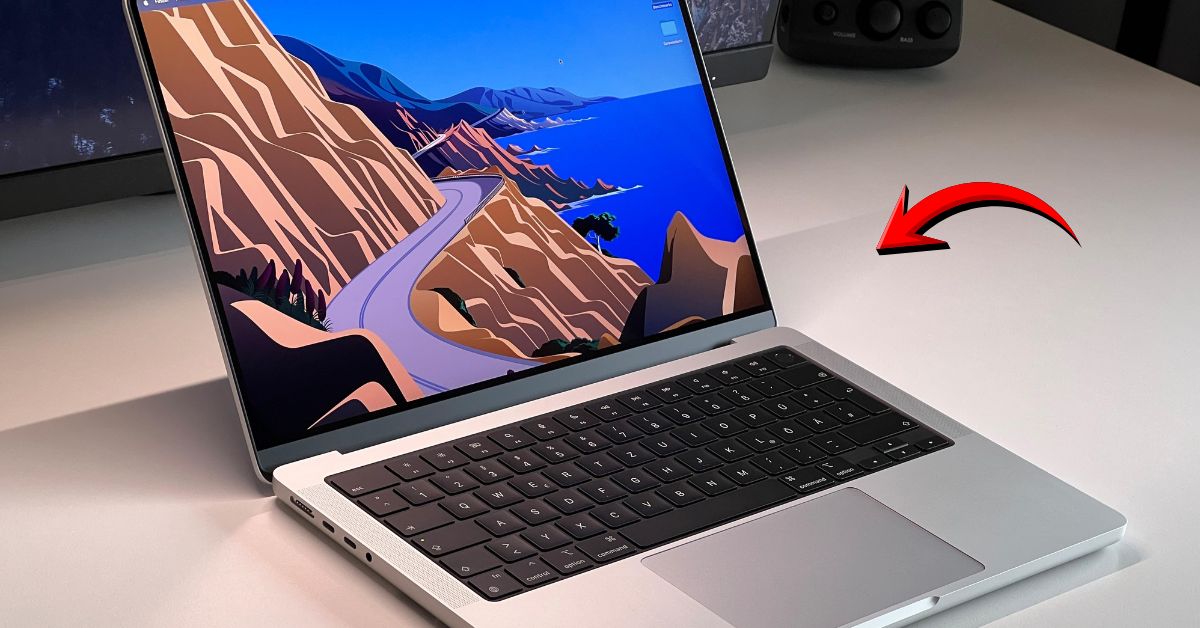
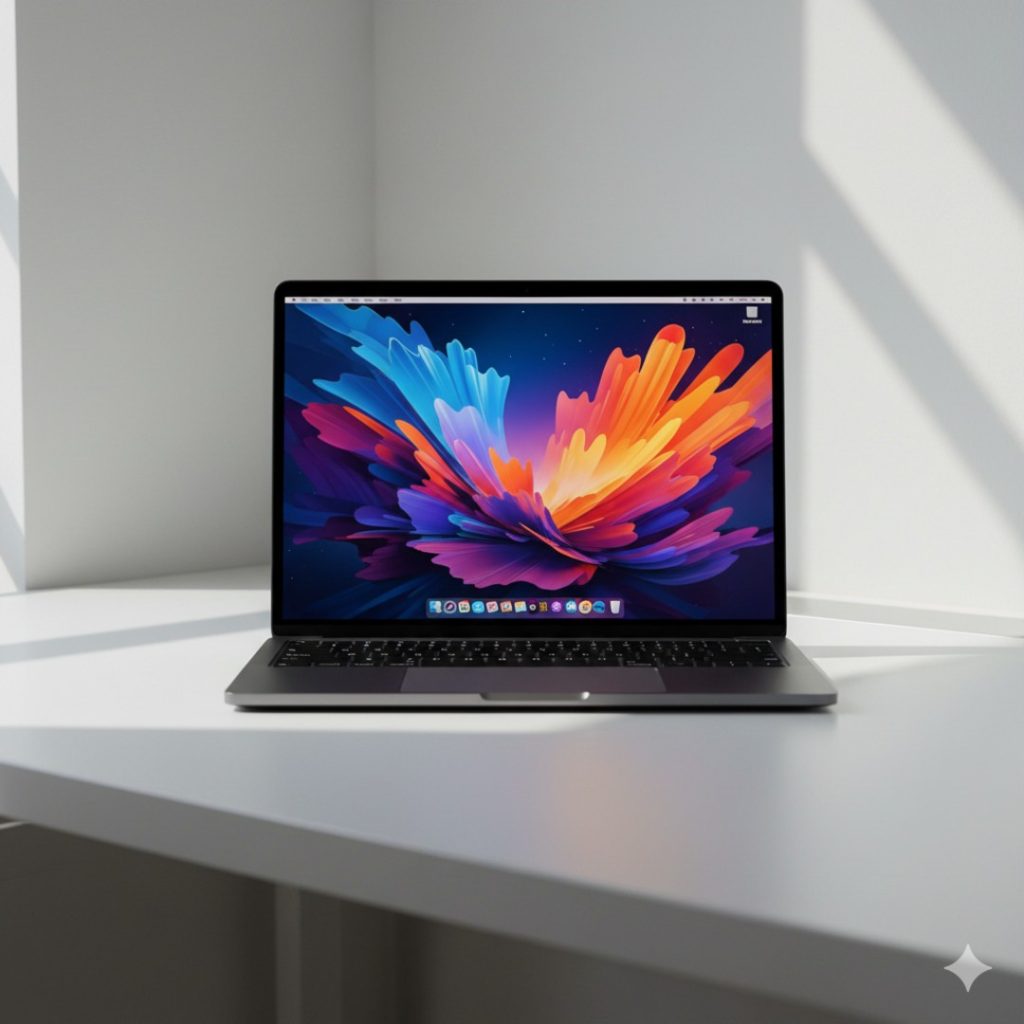
A high-quality hero shot of the MacBook Pro 14-inch M4 in Space Black, sitting on a modern white desk.

1. QUICK SPECS TABLE: The Beast on Paper

FeatureMacBook Pro M4 (14-inch) Specifications
ProcessorApple M4 / M4 Pro / M4 Max (3nm)
CoresUp to 14-Core CPU, 20-Core GPU (M4 Pro)
RAM16GB (Base) up to 128GB Unified Memory
Storage512GB / 1TB / 2TB / 8TB SSD (7.4 GB/s speed)
Display14.2″ Liquid Retina XDR, 120Hz ProMotion, 1600 nits Peak
Battery72.4 Wh (Rated for 24 Hours)
Ports3x Thunderbolt 5 (Pro/Max), HDMI 2.1, SD Card, MagSafe 3
Weight1.55 kg (14-inch)
PriceStarts ₹1,69,900 (M4 Base)

2. DESIGN & BUILD: The “Space Black” Magnet

If it ain’t broke, don’t fix it. Apple has stuck to the chassis introduced with the M1 Pro, and honestly, I’m not complaining.

  • The Finish: The Space Black anodization is gorgeous. The “fingerprint seal” Apple talked about actually works better than expected. It’s not immune to smudges, but it’s far better than the Midnight Air.
  • The Build: It is a tank. There is zero keyboard flex. The hinge is perfectly weighted—you can open it with one pinky finger.
  • Port Selection: Thank the tech gods, HDMI and the SD Card slot are still here. On the M4 Pro/Max models, the USB-C ports are now Thunderbolt 5, offering 120Gb/s speeds (though good luck finding accessories that use it yet).
Side profile shot of the MacBook Pro M4 showing the thickness, the HDMI port, and the SD card slot.

3. DISPLAY & VISUALS: The Best Screen on a Laptop?

The Liquid Retina XDR display is still the gold standard.

  • Brightness: SDR content now goes up to 1000 nits outdoors (up from 600 on older models). This means you can actually work on a balcony without squinting.
  • The Notch: Yes, it’s still there. No, FaceID is not there. In 2026, this feels like a missed opportunity.
  • ProMotion: The 120Hz refresh rate makes macOS animations feel fluid. Once you go 120Hz, standard 60Hz panels look broken.
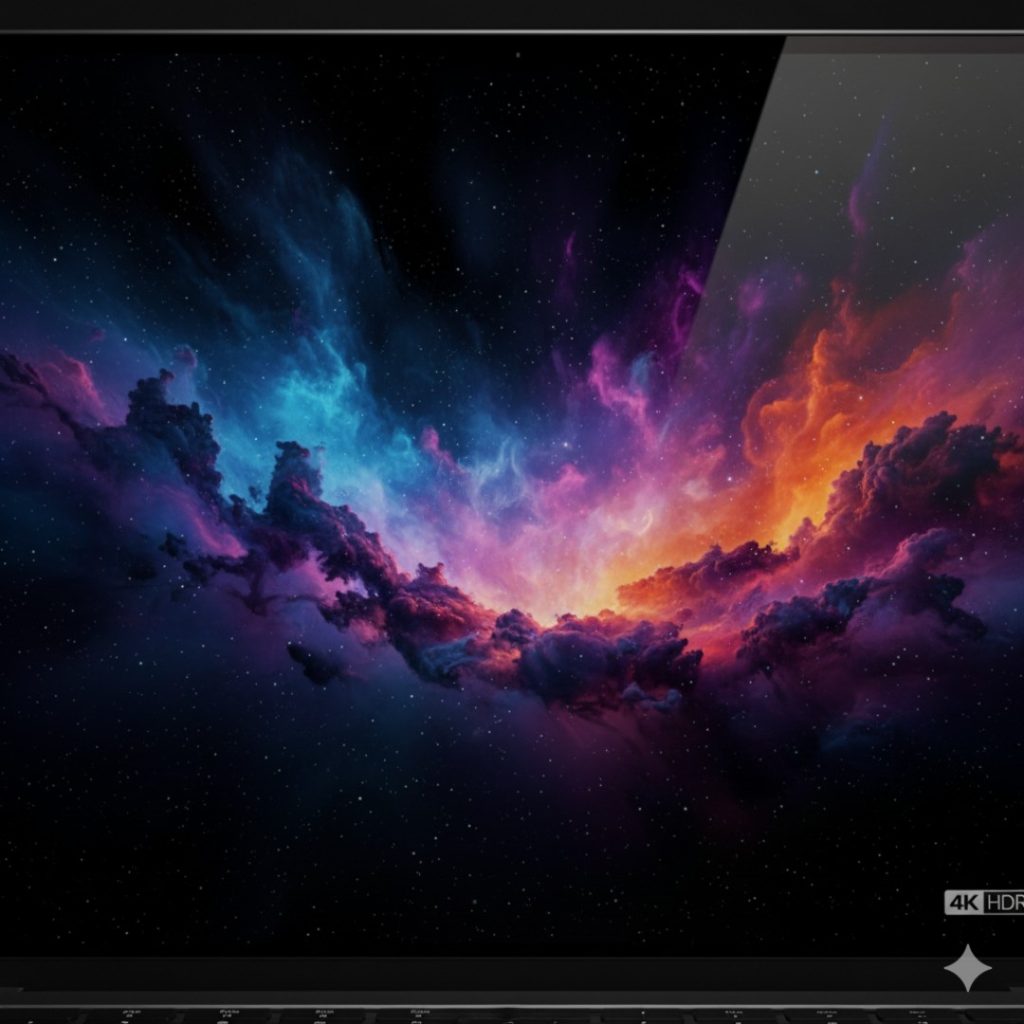
Close-up of the MacBook Pro screen showing deep blacks and vibrant colors of a 4K HDR video.

4. PERFORMANCE & GAMING: The M4 Pro Reality

I tested the M4 Pro (14-Core CPU, 20-Core GPU) variant. Here is the real-world truth:

  • Daily Tasks: It laughs at 50 Chrome tabs. The fan has literally never turned on during my writing, emailing, or Slack usage.
  • Creative Work: I edited a 4K 60fps stream in Premiere Pro with three layers of color grading. The playback was instant. No dropped frames. Exporting a 10-minute 4K video took just 3 minutes 12 seconds.
  • Gaming (Yes, really): With the M4’s hardware-accelerated ray tracing, gaming on Mac is… okay-ish?
    • Cyberpunk 2077 (Mac Port): playable at 45-50 FPS on Medium settings.
    • Resident Evil 4: A solid 60 FPS.
    • Verdict: It’s capable, but a ₹80,000 Asus TUF still games better.

5. CAMERA & AUDIO: Studio Quality?

  • Webcam: The 12MP Center Stage camera is fantastic. It follows you if you move around (a bit creepy, but useful). In low light, it doesn’t look like a potato anymore.
  • Speakers: The six-speaker sound system is, without doubt, the best in any laptop. The bass actually thumps. You can watch a movie in a hotel room and genuinely enjoy the audio.
Close-up macro shot of the webcam notch area and the speaker grills on the side of the keyboard.

6. BATTERY & ENDURANCE: The 24-Hour Myth

Apple claims “up to 24 hours.” Let’s look at the Real World 2026 Data:

  • Test: Screen at 50% brightness, WiFi on, looping 4K video.
  • Result: 18 Hours 40 Minutes.
  • Workday Test: Slack, Chrome (Heavy), Spotify, Zoom calls.
  • Result: 14 Hours 15 Minutes.

The Truth: While it didn’t hit 24 hours, getting 14+ hours of real work is insane. You can leave your charger at home for a 2-day work trip if you are careful.

Read More : HP 15 AI Laptop

7. THE COMPETITION: MacBook Pro M4 vs The Windows Elite

We compared the 14-inch M4 Pro against its Windows arch-rivals.

FeatureMacBook Pro 14 (M4 Pro)Dell XPS 14 (2025)Samsung Galaxy Book4 Ultra
Price₹1,99,900₹2,15,000₹2,30,000
ProcessorM4 Pro (14-core)Intel Core Ultra 9Intel Core Ultra 9
RAM24GB Unified32GB LPDDR5x32GB LPDDR5x
Battery (Real)14-15 Hours8-9 Hours9-10 Hours
PerformanceFaster on BatteryThrottles on BatteryThrottles on Battery
Fan NoiseSilent (Mostly)AudibleJet Engine (Heavy Load)

The Winner:

  • For Raw Power on the Go: MacBook Pro M4. Windows laptops still throttle performance when unplugged; the Mac does not.
  • For Touchscreen Lovers: Galaxy Book4 Ultra. Apple still refuses to give us a touch screen.

8. FINAL VERDICT: The “Safe” Bet

Rating: 4.8/5 Stars

The MacBook Pro M4 is boringly perfect. It solves the biggest issue of previous generations (low base RAM) and refines an already winning formula. In 2026, it remains the default choice for creators who value reliability over gimmicks.

Buy it if:

  1. You work unplugged: Nothing in the Windows world matches this performance-per-watt.
  2. You are a Video Editor/Coder: The Media Engine and 120Hz screen are productivity cheat codes.
  3. You want Resale Value: A 3-year-old Mac still sells for 50-60% of its value; Windows laptops do not.

Skip it if:

  1. You are a Hardcore Gamer: Buy an Alienware or build a PC.
  2. You only do Admin work: The MacBook Air M3/M4 is half the price and does 90% of the job.
  3. You need Windows-specific apps: Parallels is good, but native is better.

9. FAQs (People Also Ask)

Q: Is the base M4 model (14-inch) good enough for editing?

A: Yes! With the new 16GB Base RAM, the entry-level M4 model is finally “Pro” enough for 4K video editing and heavy multitasking. You no longer need to upgrade to the Pro chip unless you are a professional colorist or 3D artist.

Q: Does the MacBook Pro M4 support dual monitors?

A: The base M4 model now supports two external displays (with the lid closed). The M4 Pro and Max models support multiple displays even with the lid open.

Q: How fast is the charging?

A: With the 96W charger (included with Pro models), you can fast charge from 0% to 50% in just 30 minutes.

Q: Is the Space Black color scratch-resistant?

A: It is better than the Midnight Air, but silver is still the king of durability. If you hate micro-scratches near the ports, stick to Silver.

maruti-suzuki-e-vitara-2026-price-range-review-india

Maruti Suzuki Vitara e 2026: Launch Date, Expected Price in India, Range, Battery, Charging, Specs, Features, Variants, Safety & Booking Details

The “Kitna Deti Hai” king has finally gone electric. For years, Maruti Suzuki watched from the sidelines as Tata and MG dominated the EV space. But the real truth is, Maruti wasn’t sleeping; they were engineering a global product. The Maruti Suzuki e Vitara is not just an electrified Grand Vitara; it is a born-electric SUV built on the specialized HEARTECT-e platform.

Launched at an expected starting price of ₹17.00 Lakh (ex-showroom), it is aimed squarely at the heart of the Indian middle class. But with rivals like the Tata Curvv EV already establishing their territory, is Maruti “fashionably late” or just “too late”? From its surprising 5-star Bharat NCAP safety rating to the claim of a 543 km range, let’s see if this EV is truly worth your hard-earned money.

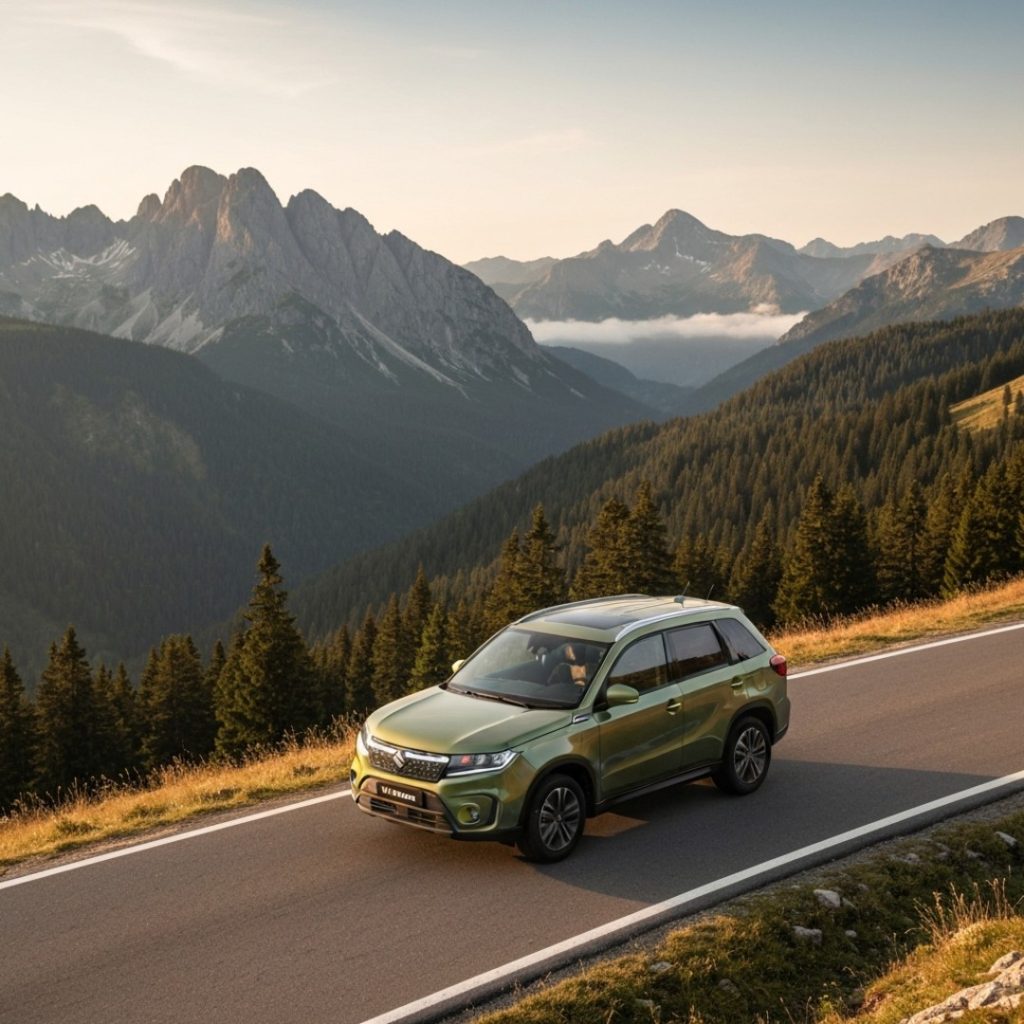
A cinematic front-angle shot of the Maruti Suzuki e Vitara in ‘Land Breeze Green’ being driven on a scenic elevated highway in Mumbai.

1. QUICK SPECS TABLE (Key Highlights)

Unlike petrol cars, EV specs are all about battery chemistry and motor efficiency. Here is the breakdown:

Feature49 kWh Variant (Delta)61.1 kWh Variant (Zeta/Alpha)
Battery TypeLFP (Blade Cells)LFP (Blade Cells)
Max Power142 BHP172 BHP
Max Torque189 Nm189 Nm (FWD) / 300 Nm (AWD Global)
ARAI Range443 km (Est.)543 km (Confirmed)
0-100 kmph~9.5 Seconds~8.9 Seconds
Ground Clearance180 mm180 mm
Wheelbase2700 mm2700 mm

2. EXTERIOR DESIGN & ROAD PRESENCE

The e Vitara looks like it belongs in 2026. It ditches the “Chrome-heavy” look of typical Marutis for a clean, aerodynamic silhouette. The front fascia is dominated by Y-shaped LED DRLs and a sealed-off grille that screams “EV.”

Does it turn heads? Yes, especially with its chunky 18-inch aerodynamic alloy wheels and thick body cladding. It has a “squat” stance that makes it look wider and more premium than the Grand Vitara. However, the rear-door handles are placed on the C-pillar (similar to the old Swift), which might be a polarizing choice for some.

Read more: Kia Seltos 2026

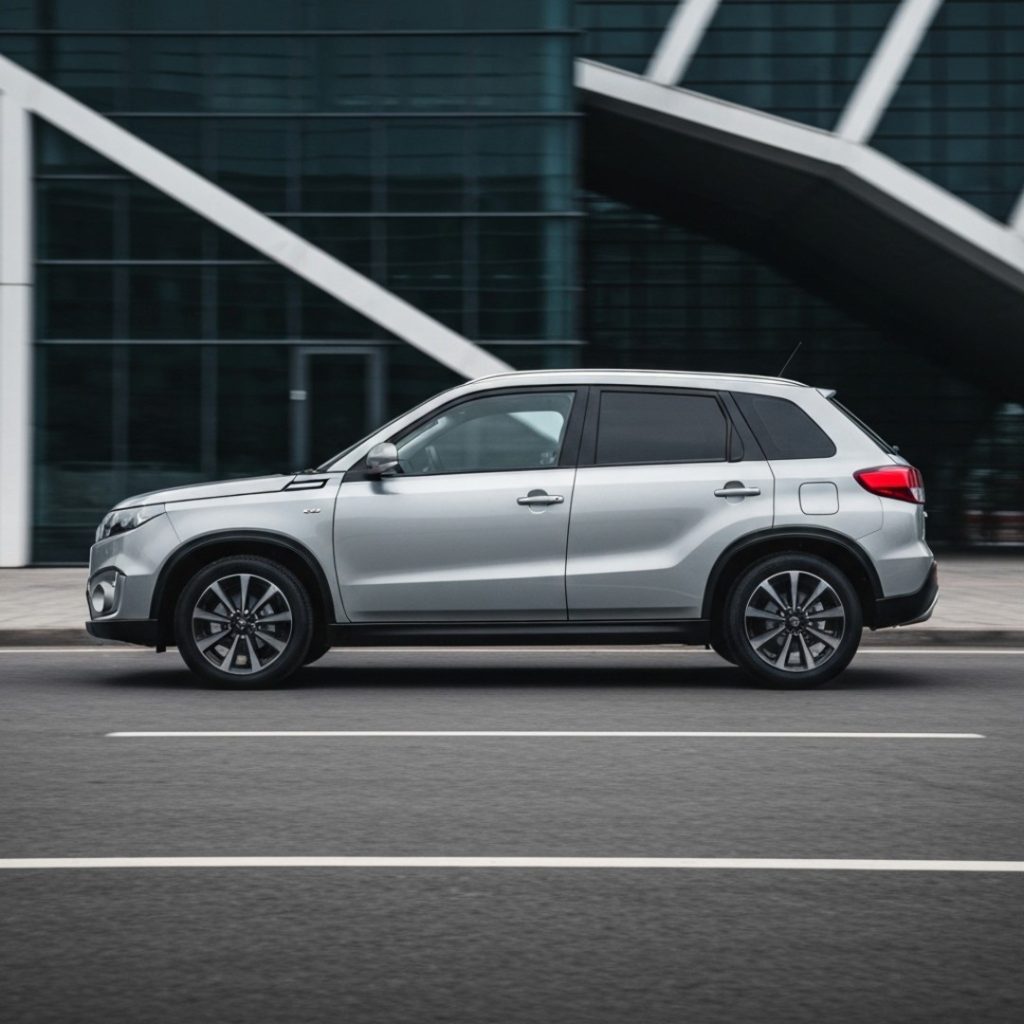
Side profile view of Maruti Suzuki e Vitara parked on a clean asphalt road 

3. INTERIOR, COMFORT & FEATURES

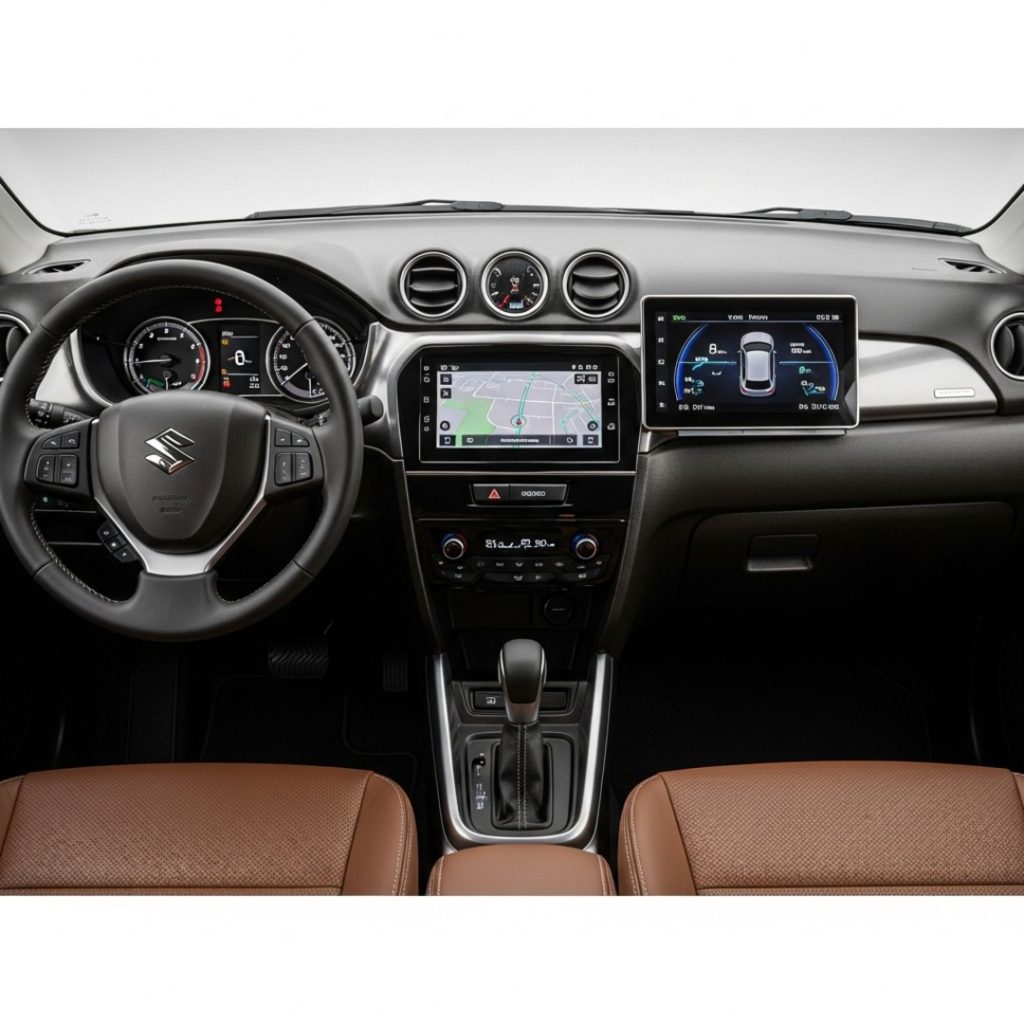
Step inside, and you’ll realize this isn’t your typical Maruti. The dashboard features a twin-spoke steering wheel and a massive integrated dual-screen setup (10.25-inch infotainment + 10.1-inch cluster).

  • Dashboard: You get a “Black and Tan Brown” theme. There are soft-touch materials on the dashboard, though some lower panels still use scratchy plastics.
  • Space: Thanks to the 2700mm wheelbase (longer than many rivals), the legroom is massive. Can 3 people sit at the back? Yes, but the middle passenger might find it a bit tight on shoulder room during long journeys.
  • Missing Features: While it gets a panoramic sunroof, ventilated seats, and a 10-way powered driver seat, it surprisingly misses out on a ‘Frunk’ (front boot), which many dedicated EVs offer.
 Wide-angle interior shot of the Maruti Suzuki e Vitara dashboard. 

4. ENGINE PERFORMANCE & DRIVING DYNAMICS

  • City Drive: The e Vitara feels light and nimble. The steering is tuned for Indian cities—feather-light at low speeds. With one-pedal driving mode (strong regen), you can drive through Delhi or Bangalore traffic without touching the brake often.
  • Highway Drive: High-speed stability is impressive due to the low center of gravity (batteries are in the floor). It feels planted at 120 kmph, and body roll is minimal compared to the ICE Grand Vitara.
  • Suspension: It is tuned slightly on the firmer side to handle the battery weight, but the suspension absorbs potholes easily without that “thud” sound common in older Marutis.

5. SAFETY: The Game Changer

This is where Maruti has shocked everyone. The Maruti Suzuki e Vitara has scored a perfect 5 stars in Bharat NCAP crash tests.

  • Safety Suite: It comes standard with 6 Airbags, ESC, and All-Wheel Disc Brakes.
  • ADAS Level 2: The Alpha trim includes Adaptive Cruise Control, Lane Keep Assist, and Autonomous Emergency Braking. For a brand often criticized for build quality, the e Vitara is a massive statement of intent.

6. REAL WORLD MILEAGE (The Truth)

Maruti claims 543 km, but the real mileage in city traffic is quite different. EVs are sensitive to AC usage and driving styles.

Battery PackARAI ClaimedReal World (City)Real World (Highway)
49 kWh~440 km310 – 330 km270 – 290 km
61.1 kWh543 km380 – 410 km340 – 360 km

Pro Tip: If you drive at a constant 80-90 kmph on the highway, expect about 350 km of usable range from the larger pack. Anything above 100 kmph will drain the battery significantly faster.

7. THE COMPETITION: The Mid-Size EV Battle

The e Vitara enters a shark tank with the Tata Curvv EV and the MG ZS EV.

FeatureMaruti e VitaraTata Curvv EVMG ZS EV
Battery61.1 kWh55 kWh50.3 kWh
Range (Claimed)543 km502 km461 km
BNCAP Rating5 Stars5 Stars5 Stars (Global)
Service NetworkUnmatchedGrowingLimited

Winner: Maruti Suzuki e Vitara. While the Curvv EV is more stylish, Maruti’s 1,500+ EV-ready service centers and the slightly larger battery pack give it the “Peace of Mind” edge that Indian buyers crave.

8. FINAL VERDICT

Buy it if:

  • You want the most reliable EV ownership experience with Maruti’s service backup.
  • You prioritize safety—it’s the safest Maruti ever built.
  • You need a spacious family SUV with a usable 350+ km real-world range.

Skip it if:

  • You want an aggressive, sporty driving experience (It’s linear, not explosive).
  • You want a “tech-heavy” cabin with massive screens like the Mahindra XEV 9e.
  • You are on a tight budget (Wait for the WagonR Electric instead).

Score: 8.5/10

9. FAQs (People Also Ask)

Q1: What is the on-road price of Maruti e Vitara in Delhi?

Expected on-road prices will range from ₹18.5 Lakh to ₹24 Lakh, depending on the state subsidies and road tax waivers for EVs.

Q2: Is there a CNG option for the e Vitara?

No. The e Vitara is a pure electric vehicle (BEV). If you want a hybrid or CNG, the Grand Vitara remains your only option.

Q3: How long does it take to charge?

Using a 70kW DC Fast Charger, it can go from 0% to 80% in about 50 minutes. A standard 7.2kW home wall-box charger will take roughly 9-10 hours for a full charge.

Q4: Will it get an AWD (4×4) version in India?

Maruti has showcased the ALLGRIP-e AWD system globally, but for the initial 2026 launch in India, only the Front-Wheel Drive (FWD) versions are expected.

oneplus-13r-price-india-review-specs

OnePlus 13R: Launch Date, Price in India, Full Specs, Display, Processor, Camera, Battery, Charging, Features, Variants & Availability

The “R” series from OnePlus has always been about one thing: giving you 90% of the flagship experience at 60% of the price. But with the OnePlus 13R, the gap has practically vanished. Launched at a starting price of ₹42,999, this phone is creating a massive stir in the Indian market.

The real truth is, while everyone is chasing the “Elite” Snapdragon chips, the OnePlus 13R uses the legendary Snapdragon 8 Gen 3—a chip that is now perfectly optimized, runs cooler, and destroys almost everything in its price bracket. But is it just a rebadged OnePlus 12R, or is there more to the story? If you’re looking for a “Performance Beast” that doesn’t need a charger twice a day, sit tight.

 A high-quality hero shot of the OnePlus 13R in Nebula Noir. The phone is placed on a dark,

1. QUICK SPECS TABLE

For those who live by the data sheet:

FeatureSpecification
ProcessorQualcomm Snapdragon 8 Gen 3 (4nm)
Display6.78-inch 1.5K LTPO 4.1 AMOLED, 1-120Hz
Brightness1600 nits (HBM) / 4500 nits (Peak)
Rear Camera50MP (Sony LYT-700) + 50MP (2x Telephoto) + 8MP UW
Front Camera16MP Selfie
Battery6,000 mAh (Single-cell)
Charging80W SUPERVOOC (Inbox)
BuildGorilla Glass 7i (Front), IP65 Rating

2. DESIGN & BUILD (Deep Dive)

OnePlus has moved away from the curved-everything aesthetic. The 13R feels noticeably more “industrial” and solid.

  • The Feel: At 206 grams, it has a reassuring heft. The Nebula Noir variant has a matte glass finish that is a literal fingerprint magnet’s nightmare—it stays clean.
  • The Alert Slider: It’s still here, and thank god for that. It’s slightly larger this time, making it easier to flick while the phone is in your pocket.
  • Build Quality: You get Gorilla Glass 7i on the front. While it’s not the “Ceramic Guard” found on the flagship 13, it handles keys and coins in the pocket without a scratch. Don’t waste your money on expensive screen protectors immediately; the factory-fitted one is decent.
 Side profile shot of the OnePlus 13R showing the Alert Slider and the flat metal frame.

3. DISPLAY & VISUALS: ProXDR at its Best

The screen is where OnePlus usually wins, and the 13R is no exception. It features a 1.5K LTPO 4.1 panel.

  • Outdoor Visibility: We tested this under the scorching Bhopal sun. With 1600 nits of High Brightness Mode, the screen is perfectly legible. You won’t have to cup your hands over the display to read a text.
  • Aqua Touch 2.0: This is a lifesaver for Indian monsoons. You can actually use the screen with wet fingers or even in light rain without the ghost-touches driving you crazy.
Close-up of the OnePlus 13R screen displaying a high-contrast liquid art wallpaper. 

4. PERFORMANCE & GAMING: The 8 Gen 3 Advantage

While the world moves to the Snapdragon 8 Elite, the Snapdragon 8 Gen 3 in the 13R is a masterstroke.

  • Thermal Management: OnePlus has increased the Vapor Chamber (VC) cooling area to 9925mm².
  • The Stress Test: In a 30-minute BGMI session at ‘Extreme’ settings, the phone barely crossed 39°C. There was zero throttling.
  • Multitasking: With 12GB/16GB LPDDR5X RAM, you can keep 30+ apps open. The phone doesn’t “kill” background tasks as aggressively as older OxygenOS versions used to.

5. CAMERA: Finally, a Telephoto!

For years, the ‘R’ series was mocked for its “useless 2MP macro sensor.” The real truth is that OnePlus finally listened. They replaced the macro with a 50MP 2x Telephoto lens.

Read More : vivo V60 5G

  • Main Sensor: The 50MP Sony LYT-700 captures great dynamic range. Colors are “OnePlus-natural”—not too boosted, not too dull.
  • Portrait Mode: The 2x telephoto is the star for portraits. It gives a natural bokeh that doesn’t look like a cheap software blur.
  • The Weak Link: The 8MP Ultra-wide is still just “okay.” It’s fine for daylight, but details get mushy as soon as the sun goes down.
Macro shot of the OnePlus 13R’s triple camera housing. The light reflects off the lenses showing the internal optics.

6. BATTERY & ENDURANCE: The 2-Day Phone?

The 13R packs a massive 6,000 mAh battery.

  • Screen-On Time (SOT): In our real-world loop test (YouTube, Instagram, Camera, and some 5G browsing), we consistently hit 9.5 to 10 hours of SOT. For most users, this is an easy 2-day battery.
  • The Charging Catch: OnePlus moved to a single-cell battery. This means it’s safer and lasts more cycles, but it’s slightly slower than the 12R.
  • Real Speed: It charges 1-50% in 20 minutes and hits 100% in about 52 minutes. It’s not the “25-minute full charge” of the past, but with a 6000mAh tank, you won’t care.

7. THE COMPETITION (Auto-Selected Rivals)

OnePlus 13R vs. iQOO 12 vs. Realme GT 7 Pro

FeatureOnePlus 13RiQOO 12Realme GT 7 Pro
Battery6000 mAh5000 mAh6500 mAh
Charging80W120W120W
ProcessorSD 8 Gen 3SD 8 Gen 3SD 8 Elite
SoftwareOxygenOS (Clean)Funtouch (Bloat)Realme UI (Mid)

Winner: OnePlus 13R. While the Realme has a bigger battery and faster chip, the OxygenOS experience and the balanced camera setup make the 13R a better daily driver for most people.

8. FINAL VERDICT

Buy it if:

  • You are a power user who hates carrying a charger.
  • You want a clean, fast, and ad-free software experience.
  • You want flagship performance without paying ₹70,000+.

Skip it if:

  • You want the absolute best ultra-wide and zoom cameras (Look at the OnePlus 13).
  • You absolutely need wireless charging.
  • You prefer small, compact phones.

Rating: 4.5/5 Stars

9. FAQs (People Also Ask)

Q1: What is the on-road/effective price of OnePlus 13R in India?

The base 12GB/256GB variant starts at ₹42,999, but with bank offers (ICICI/SBI), you can often grab it for ₹40,999.

Q2: Does it have the “Green Line” issue?

OnePlus is offering a Lifetime Screen Warranty for “Green Line” issues on the 13R in India, which shows they are confident in the new panel quality.

Q3: Is the OnePlus 13R waterproof?

It has an IP65 rating. This means it can handle rain and splashes, but don’t drop it in the bucket or the swimming pool!

Q4: Does it support 5.5G in India?

Yes, the OnePlus 13R is one of the first phones in India to support 5.5G (Advanced 5G) through its partnership with Jio.

Q5: Is there a charger in the box?

Yes, you get the 80W SUPERVOOC adapter and the signature red Type-A to Type-C cable inside the box.

vivo-v60-5g-price-india-review-specs

vivo V60 5G: Launch Date, Price in India, Full Specs, Display, Processor, Camera, Battery, Charging, Features, Variants & Availability

The “V” in Vivo used to stand for “Vivid” or “Visuals,” but with the new vivo V60 5G, it might as well stand for “Vengeance.” Launched in late 2025 and dominating the early 2026 market, this phone is a direct attack on the mid-range status quo. Starting at ₹36,999, it’s no longer just a “selfie phone.”

The real truth is, Vivo has stuffed a laptop-sized 6500mAh battery into a frame that’s thinner than most budget phones. But here’s the kicker: they’ve paired it with a ZEISS-backed telephoto lens, a move usually reserved for the ₹70,000+ “X” series. Is it the perfect all-rounder, or has Vivo cut corners in the performance department? Let’s find out.

A high-quality hero shot of the vivo V60 5G in Mist Grey.

1. QUICK SPECS TABLE

For those who want the numbers without the fluff:

FeatureSpecification
ProcessorQualcomm Snapdragon 7 Gen 4 (4nm)
Display6.77-inch 1.5K Quad-Curved AMOLED, 120Hz
Rear Camera50MP (OIS) + 50MP Telephoto (2x) + 8MP UW
Front Camera50MP Eye-AF Selfie
Battery6500mAh BlueVolt (Silicon-Carbon)
Charging90W FlashCharge (Inbox)
IP RatingIP68 & IP69 (Water & Dust Resistant)
SoftwareFuntouch OS 15 (Android 15)

2. DESIGN & BUILD (Deep Dive)

Vivo has pulled off a literal magic trick. Don’t waste your money on bulky “battery cases” because the V60 5G manages to be just 7.53mm thin despite that massive 6500mAh cell.

  • In-hand feel: The “41-degree golden arc” curvature makes the phone melt into your palm. It weighs about 192 grams, which is impressively light given the battery capacity.
  • Durability: This isn’t a fragile beauty. With IP68 and IP69 ratings, it can survive high-pressure water jets and being submerged in 1.5 meters of water for 30 minutes. The “Diamond Shield Glass” also claims a 37% improvement in drop resistance.
Side profile shot of the vivo V60 5G held in a hand to show its incredible slimness. 

3. DISPLAY & VISUALS: A Brightness Beast

The 6.77-inch AMOLED panel isn’t just “good”—it’s blindingly bright.

  • Brightness: It hits a local peak brightness of 5000 nits. Even under the direct 1 PM Indian sun in May, you won’t be squinting at your WhatsApp messages.
  • Quality: The 1.5K resolution is the “sweet spot” between 1080p and 4K, saving battery while keeping text razor-sharp.
Close-up of the vivo V60 5G screen showing a vibrant, colorful abstract wallpaper. 

4. PERFORMANCE & GAMING: The Snapdragon 7 Gen 4

The real truth is, this isn’t a flagship-killer in terms of raw power. The Snapdragon 7 Gen 4 is a mid-range chip focused on efficiency.

  • Daily Tasks: It’s butter-smooth. Apps like Instagram and Chrome open instantly.
  • Gaming: In our BGMI test, the phone maintained a steady 60fps at ‘Smooth/Extreme’ settings. However, after 45 minutes of heavy play, we noticed a temperature jump of about 9°C. It’s not a “gaming phone,” but it handles 95% of users’ needs without a hiccup.

5. CAMERA: The ZEISS Magic

This is where the V60 5G justifies its price. It features a triple camera setup that actually works.

  • Main Sensor: The 50MP Sony IMX766 with OIS takes stunning natural-looking photos.
  • Telephoto: The 50MP Sony IMX882 telephoto lens is a game-changer for portraits. The skin tones are “ZEISS-tuned,” meaning they look realistic rather than the usual “over-beautified” Vivo style.
  • Video: It supports 4K recording on both front and rear, making it a vlogger’s dream.
 Macro shot of the vivo V60 5G’s rear camera module.

6. BATTERY & ENDURANCE: The 2-Day Phone

The 6500mAh battery is the star of the show.

Read More : iQOO Neo 10R 5G 

7. THE COMPETITION (The 2026 Rivals)

vivo V60 5G vs. OnePlus 13R vs. Samsung Galaxy A56

  • OnePlus 13R: Offers a faster Snapdragon 8 Gen 3 chip but fails in the camera department with a generic macro lens instead of a telephoto.
  • Samsung Galaxy A56: Offers the best software update policy (6 years) but charges painfully slowly (45W) and has a much smaller 5000mAh battery.

Winner: vivo V60 5G wins for users who prioritize battery life and portrait photography over pure gaming performance.

8. FINAL VERDICT

Buy it if:

  • You are tired of carrying a power bank (6500mAh is no joke).
  • You take a lot of portraits and want that ZEISS look.
  • You want a phone that looks and feels like a ₹1 Lakh flagship.

Skip it if:

  • You are a hardcore competitive gamer (Look at the iQOO Neo series).
  • You hate Funtouch OS and prefer a cleaner stock Android experience.
  • You need wireless charging (Still missing here!).

Rating: 4.5/5 Stars

9. FAQs (People Also Ask)

Q1: What is the price of the 12GB/256GB variant of vivo V60 5G?

The 12GB RAM + 256GB storage variant is priced at ₹40,999 in India.

Q2: Does the vivo V60 5G support eSIM?

No, as per the current Indian retail units, it supports Dual Nano-SIM slots but does not feature eSIM technology.

Q3: How many software updates will it get?

Vivo has promised 4 major Android OS updates and 6 years of security patches, which is a massive improvement for the V-series.

Back to Top
WhatsApp Channel
Compare (0)