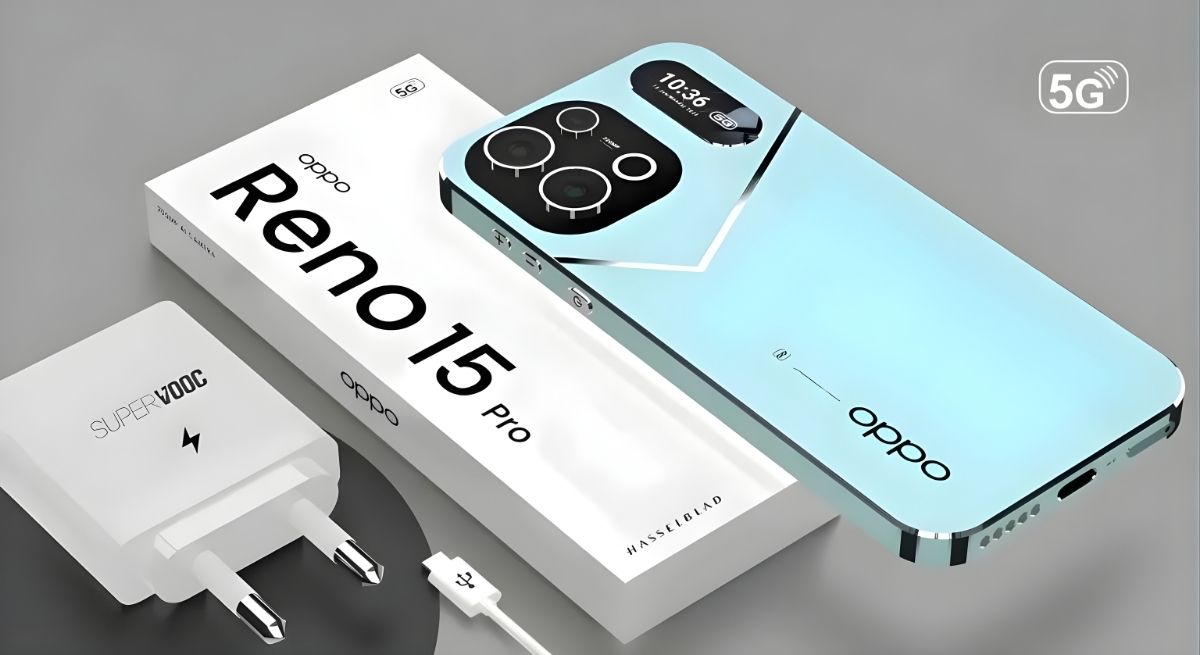
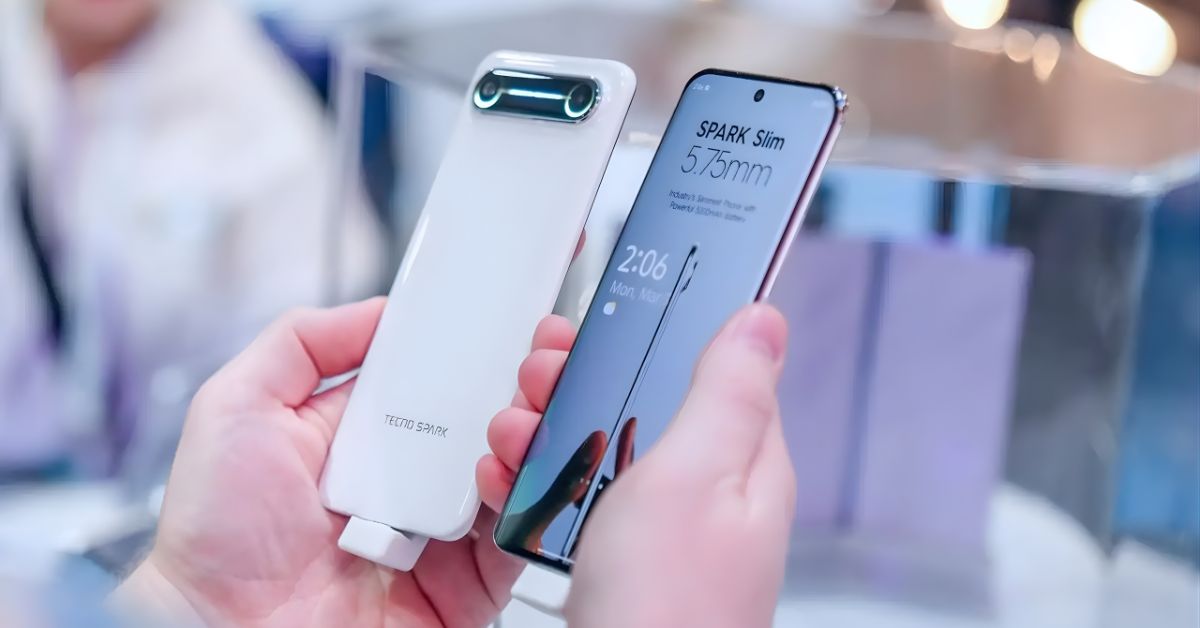
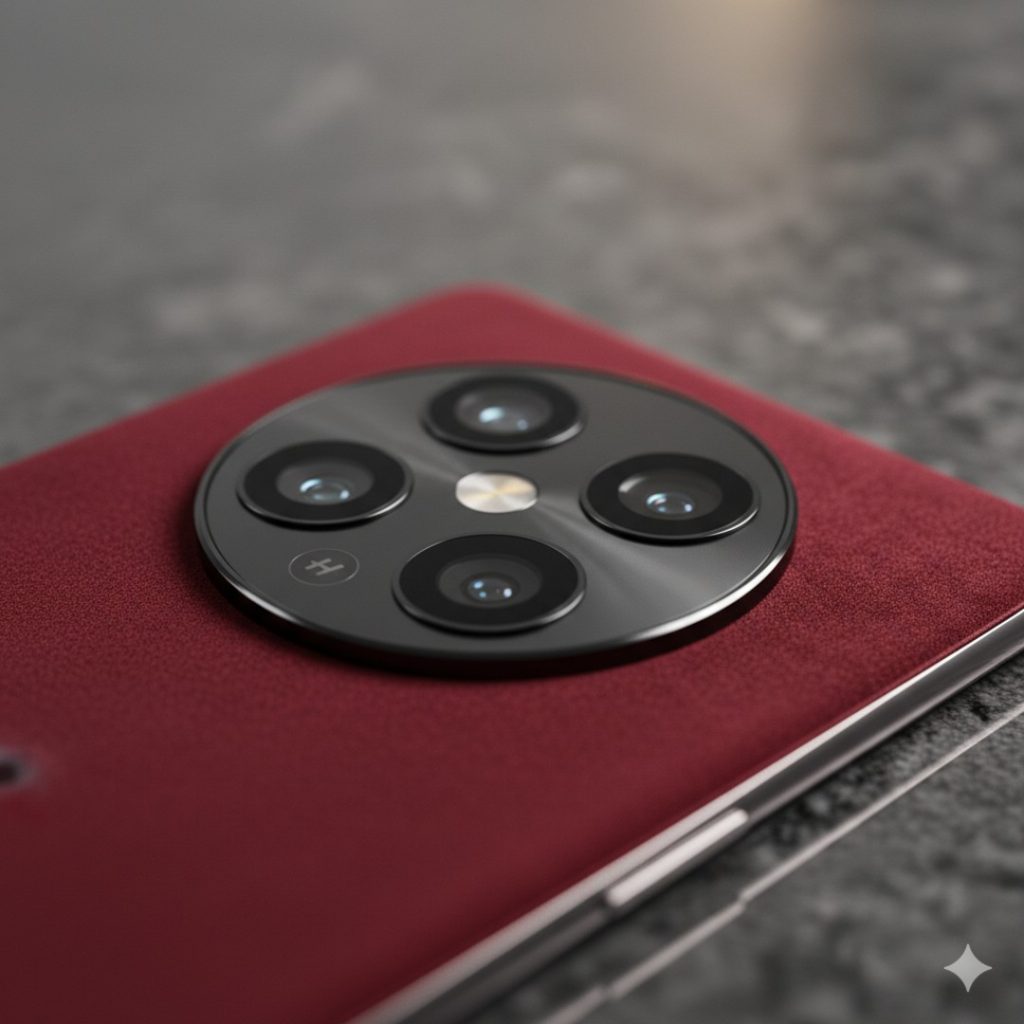
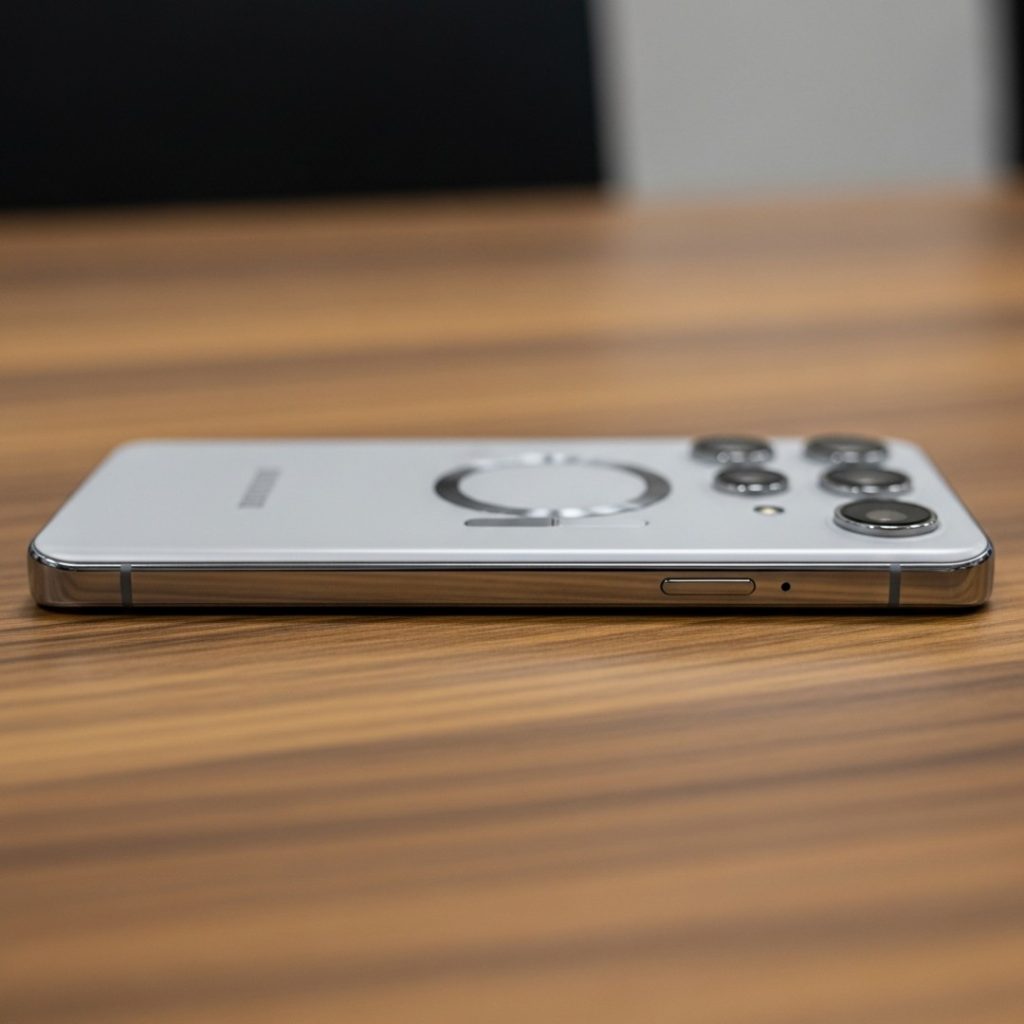
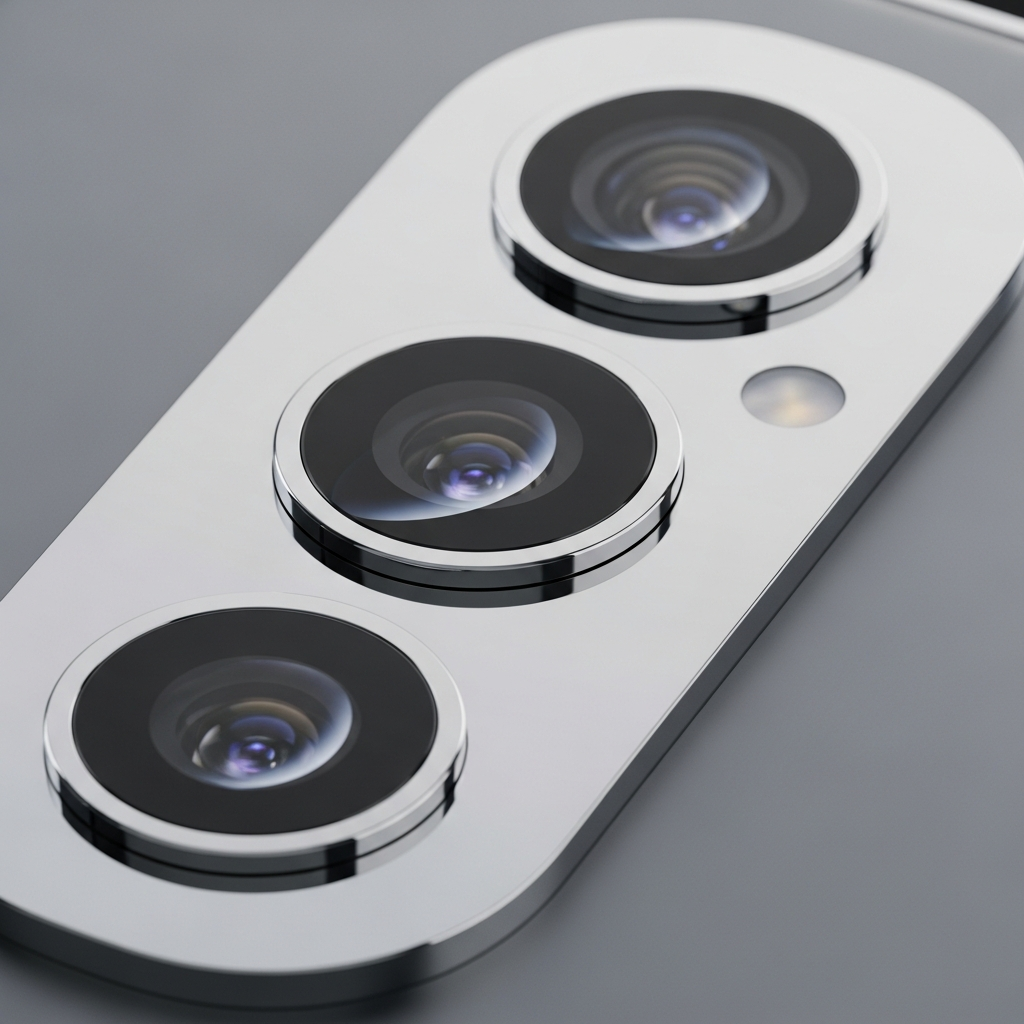
The wait is finally over for camera lovers in India. Oppo has officially started the sale of its latest premium smartphone lineup, the Oppo Reno 15 Series, starting January 13, 2026. Known for its stylish looks and “Portrait Expert” cameras, the new series brings three models to the market: the standard Reno 15, the compact Reno 15 Pro Mini, and the top-tier Reno 15 Pro.
With a starting price of Rs 45,999, Oppo is targeting the premium mid-range segment. But with a new “Triple IP Rating” for water resistance and massive 6,500mAh batteries, does this phone justify the price tag? Here is everything you need to know.
Oppo Reno 15 Series Price in India
The phones are now available on Flipkart, Amazon, and the official Oppo India store. Here is the full price list for all variants:
Model
RAM + Storage
Price (Ex-Showroom)
Oppo Reno 15
8GB + 256GB
₹45,999
12GB + 256GB
₹48,999
12GB + 512GB
₹53,999
Oppo Reno 15 Pro Mini
12GB + 256GB
₹59,999
12GB + 512GB
₹64,999
Oppo Reno 15 Pro
12GB + 256GB
₹67,999
12GB + 512GB
₹72,999
Launch Offers: Oppo is offering up to 10% instant cashback on select bank cards (HDFC, SBI, Kotak) and a no-cost EMI option for up to 15 months. Early buyers also get 180 days of screen damage protection.
Top Features: What makes the Reno 15 Special?
1. The “Portrait Expert” Camera
Oppo’s biggest selling point has always been the camera, and 2026 is no different.
Reno 15 (Standard): Comes with a 50MP Sony IMX882 main sensor, an 8MP ultra-wide, and a 50MP Telephoto lens with 3.5x optical zoom. The front camera is a sharp 50MP shooter for selfies.
Reno 15 Pro: Upgrades the main camera to a massive 200MP sensor and includes a superior 50MP periscope lens for zooming into far-off objects without losing clarity.
2. Massive 6,500mAh Battery
One of the biggest upgrades this year is the battery size. Both the standard and Pro models pack a huge 6,500mAh battery. Despite this large battery, Oppo has managed to keep the phones slim (under 7.8mm).
Charging: It supports 80W SuperVOOC fast charging. The Pro model also gets 50W wireless charging, a feature missing in the standard model.
3. Unmatched Durability (IP69 Rating)
Most flagship phones have an IP68 rating. Oppo has gone a step further with an IP69 rating (along with IP66 and IP68). This means the phone can withstand high-pressure water jets and hot water splashes. It is designed to be tougher than your average premium phone.
4. Processor and Performance
Reno 15: Powered by the Qualcomm Snapdragon 7 Gen 4 chipset. While decent for daily tasks, hardcore gamers might find better options in this price range.
Reno 15 Pro: Uses the more powerful MediaTek Dimensity 8450 chipset, which handles heavy gaming and multitasking much better.
The Oppo Reno 15 series is clearly positioned as a “Lifestyle” phone rather than a “Performance” phone.
You should buy it if:
You want the best portrait photos and selfies in this price range.
You need a slim phone with excellent battery life (2 days on a single charge).
You want a phone that is highly durable and waterproof.
You should skip it if:
You are a hardcore gamer (Phones like the iQOO or OnePlus R-series offer better gaming chips for less money).
You find Rs 46,000 too expensive for a Snapdragon 7 series processor.
Conclusion
The Oppo Reno 15 series brings meaningful upgrades in battery life and durability while maintaining its camera dominance. However, the price hike this year makes it a premium investment. If style and camera are your top priorities, this is one of the best phones to buy in 2026.
Frequently Asked Questions (FAQs)
1. Is the Oppo Reno 15 waterproof?
Yes, the Reno 15 series comes with IP66, IP68, and IP69 ratings, making it fully water-resistant and capable of withstanding high-pressure water jets.
2. Does the Oppo Reno 15 support wireless charging?
No, the standard Reno 15 does not support wireless charging. Only the Reno 15 Pro supports 50W wireless charging.
3. What is the processor in the Oppo Reno 15?
The standard Oppo Reno 15 is powered by the Qualcomm Snapdragon 7 Gen 4 chipset, while the Pro models use the MediaTek Dimensity 8450.
4. How big is the battery in the Reno 15?
The phone features a massive 6,500mAh battery, which is significantly larger than most competitors in this segment.
5. Does the box come with a charger?
Yes, Oppo typically includes the 80W SuperVOOC charger inside the box for Indian units.
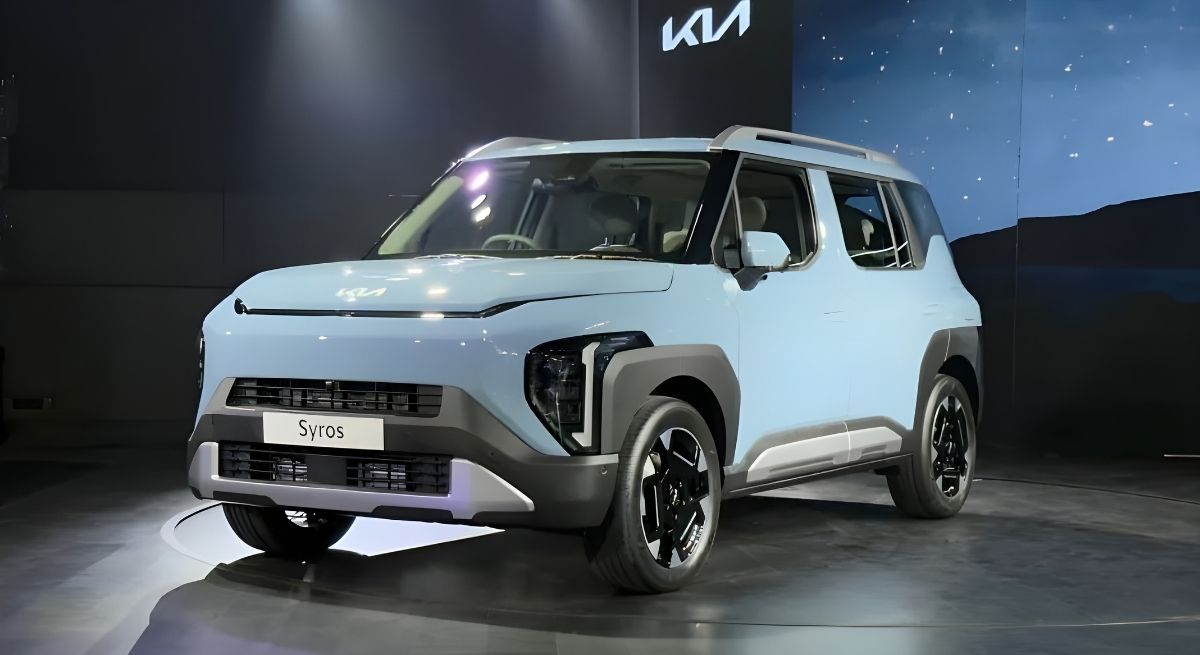
Great news for SUV lovers in India! Kia India has just updated its popular compact SUV, the Kia Syros, with a brand-new variant. The new trim is called the HTK (EX). It is designed to offer premium features like a sunroof and a large touchscreen at a more affordable price point.
This move comes as a strategic step by Kia to attract buyers who want a feature-loaded car without spending money on the top-end models. If you are planning to buy a compact SUV in 2026, here is everything you need to know about this latest update.
What is the New HTK (EX) Variant?
On January 16, 2026, Kia India announced the addition of the HTK (EX) trim to the Syros lineup. This new variant sits right between the existing HTK (O) and HTK+ trims.
The main goal of this variant is to provide “high-demand” features to budget-conscious buyers. Previously, customers had to buy the higher, more expensive variants to get features like alloy wheels or a sunroof. Now, Kia has made these available at a starting price of Rs 9.89 lakh (ex-showroom).
Kia Syros HTK (EX) Price in India
The new variant is available with both petrol and diesel engine options. Here is the official pricing (ex-showroom):
1.0L Turbo Petrol (Manual): Rs 9.89 Lakh
1.5L Diesel (Manual): Rs 10.64 Lakh
By pricing the petrol version under Rs 10 lakh, Kia is directly challenging rivals like the Tata Nexon, Maruti Brezza, and Hyundai Venue.
Key Features: What Do You Get Extra?
The HTK (EX) is based on the lower HTK (O) trim but adds several premium upgrades that make the car look and feel more expensive.
1. Exterior Updates The biggest visual change is the addition of 16-inch alloy wheels. The lower variants usually come with steel wheels, so this gives the car a much better road presence. It also gets modern LED Daytime Running Lights (DRLs), LED headlamps, and LED tail lamps. These lights make the car look sharper, especially at night.
2. Interior and Tech Inside the cabin, the biggest talking point is the electric sunroof. Sunroofs are a favorite feature for Indian families, and getting one in a mid-spec variant is a huge plus.
Touchscreen: It features a massive 12.3-inch touchscreen infotainment system. This is larger than what many competitors offer in this price range.
Connectivity: It supports wireless Android Auto and Apple CarPlay, so you can connect your phone without cables.
Comfort: The car includes electrically adjustable and foldable Outside Rear View Mirrors (ORVMs), a rear-view camera with parking sensors, and rear AC vents.
Engine and Performance Specs
The new HTK (EX) variant does not change anything under the hood. It continues to use Kia’s reliable and powerful engines.
Petrol Engine: A 1.0-litre Turbo-Petrol engine that produces 118 bhp of power and 172 Nm of torque. In this specific variant, it is paired with a 6-speed Manual transmission (iMT/MT).
Diesel Engine: A 1.5-litre Diesel engine that delivers 114 bhp of power and 250 Nm of torque. This is paired with a 6-speed Manual transmission.
The diesel option is particularly special because many carmakers in India have stopped offering diesel engines in small SUVs, but Kia continues to cater to high-mileage users.
Why Does This Launch Matter?
The “under Rs 10 lakh” bracket is the most competitive space in the Indian car market. Buyers in this segment are very demanding. They want safety, mileage, and “show-off” features like sunroofs and alloys.
Before this launch, there was a big price gap between the lower trims (which felt basic) and the higher trims (which were expensive). The HTK (EX) fills this gap perfectly. It offers a “complete package” feel for a middle-class family budget.
Safety and Competition
Kia has not compromised on safety with this new variant. The Syros HTK (EX) comes standard with:
6 Airbags
ABS with EBD (Anti-lock Braking System)
Electronic Stability Control (ESC)
Hill Start Assist
Vehicle Stability Management (VSM)
This strong safety kit helps the Syros compete strongly against 5-star rated cars like the Tata Nexon and Mahindra XUV 3XO.
Conclusion: Should You Buy It?
If you have a budget of around Rs 11-12 lakh (on-road) and want a car that feels premium, the Kia Syros HTK (EX) is now one of the best value-for-money options. You no longer need to stretch your budget to the top model just to get a sunroof or nice wheels.
With this update, the Kia Syros becomes an even tougher competitor to beat in 2026.
Frequently Asked Questions (FAQs)
1. What is the price of the new Kia Syros HTK (EX) variant?
The petrol manual version is priced at Rs 9.89 lakh, and the diesel manual version is priced at Rs 10.64 lakh (ex-showroom).
2. Does the Kia Syros HTK (EX) have a sunroof?
Yes, this new variant comes with an electric sunroof.
3. Is the Kia Syros available in diesel?
Yes, the Syros is one of the few compact SUVs that still offers a powerful 1.5L diesel engine option.
4. How many airbags does the Kia Syros have?
All variants of the Kia Syros, including the new HTK (EX), come with 6 airbags as a standard safety feature.
5. What are the rivals of the Kia Syros?
The Kia Syros competes with the Tata Nexon, Maruti Suzuki Brezza, Hyundai Venue, Mahindra XUV 3XO, and Kia Sonet.
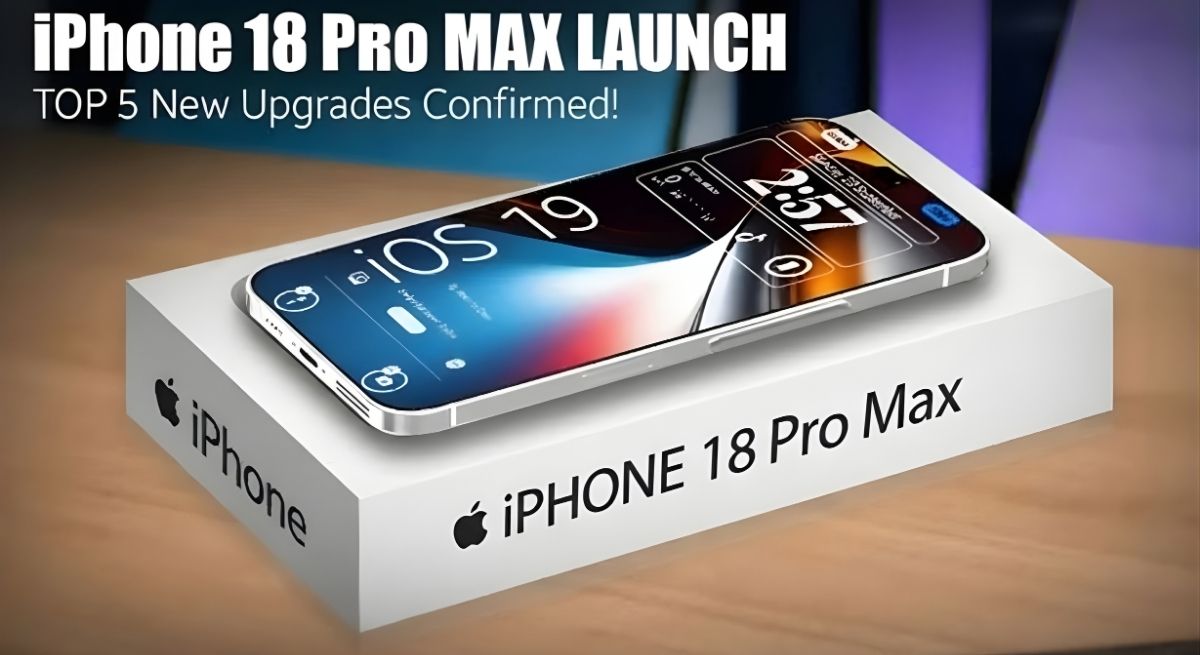
Apple fans in India, get ready. Even though the iPhone 16 and 17 series have been the talk of the town, major leaks about the iPhone 18 lineup are already here. Reports suggest that 2026 will be a historic year for Apple. The company might finally launch its first-ever Foldable iPhone alongside the powerful iPhone 18 Pro models.
This article covers everything you need to know about the iPhone 18 release date in India, expected prices, the new “A20” chip, and the rumored design changes that could make this the biggest upgrade in years.
New Launch Strategy: A Big Change for 2026
Usually, Apple launches all its new phones in September. However, leaks say Apple might change this habit in 2026.
According to recent reports, Apple may split the launch into two parts:
September 2026: Launch of the premium models—iPhone 18 Pro, iPhone 18 Pro Max, and the new iPhone Fold.
Spring 2027: Launch of the standard (cheaper) iPhone 18 and iPhone 18e.
This means if you want the “base” model, you might have to wait longer. But if you want the best “Pro” features, they will likely arrive on time.
Top Features to Expect in iPhone 18
1. The First Foldable iPhone
The biggest buzz is about the iPhone Fold. After years of rumors, Apple is expected to reveal a “book-style” foldable phone.
Inner Screen: A massive 7.8-inch display (like a small iPad).
Outer Screen: A compact 5.3-inch cover screen.
Design: It might use a special “titanium and aluminum” body to keep it strong but light.
2. No More Dynamic Island?
For the iPhone 18 Pro and Pro Max, Apple might finally remove the pill-shaped “Dynamic Island.” Leaks suggest Apple is working on Under-Display Face ID.
This means the sensors will be hidden under the glass.
You might only see a tiny circular cutout (punch-hole) for the selfie camera, giving you a much cleaner, full-screen experience.
3. A20 Chip: A Power Monster
The iPhone 18 Pro series is expected to run on the A20 Pro chip. This chip will be built using 2nm technology. In simple terms, this makes the phone:
Faster: Much better performance for gaming and heavy apps.
Cooler: Less overheating.
Efficient: Better battery life because the chip uses less power.
4. DSLR-Like Camera Control
Camera lovers in India will love this upgrade. The main camera on the Pro models is rumored to have a Variable Aperture.
This works like a professional DSLR camera.
It allows the lens to physically open and close to control light.
Result: Better natural background blur (bokeh) and amazing low-light photos without relying too much on software.
Since these phones will use expensive new technology (like the 2nm chip and foldable screens), the prices in India are expected to be high. Based on current trends and import duties, here are the estimated prices:
iPhone 18 Pro: ₹1,35,000 – ₹1,45,000
iPhone 18 Pro Max: ₹1,55,000 – ₹1,65,000
iPhone Fold: ₹1,85,000 – ₹2,10,000
Note: These are estimated prices. The official price will depend on currency rates and taxes in 2026.
Why This Matters for India
India is becoming a huge market for Apple. With Apple manufacturing more iPhones in India (at Tata Electronics and Foxconn plants), we might see these phones available in Indian stores on the very first day of the global launch. However, the ultra-premium “Fold” model might initially be imported, keeping its price very high.
Frequently Asked Questions (FAQs)
Q1. When will the iPhone 18 launch in India?
The iPhone 18 Pro, Pro Max, and iPhone Fold are expected to launch in September 2026. The standard iPhone 18 might be delayed until early 2027.
Q2. Will the iPhone 18 have a better battery?
Yes. The new A20 chip is designed to save power. Also, the Pro Max model might get a slightly larger battery, offering all-day battery life even with heavy use.
Q3. Is Apple really making a foldable phone?
Strong leaks from supply chain sources say yes. It is expected to launch alongside the iPhone 18 Pro series in late 2026.
Q4. What is the difference between iPhone 18 and 18 Pro?
The Pro models will likely have the new A20 chip, the variable aperture camera, and the under-display Face ID. The standard iPhone 18 (coming later) will likely have a slower chip and the older Dynamic Island design.
Q5. Should I wait for iPhone 18 or buy iPhone 16/17?
If you need a phone now, the iPhone 16 or 17 are excellent devices. The iPhone 18 is still over a year away. However, if you really want a foldable iPhone, you should wait for 2026.
Here is a comprehensive, deep-dive review and discount analysis of the Hyundai Creta, written from the
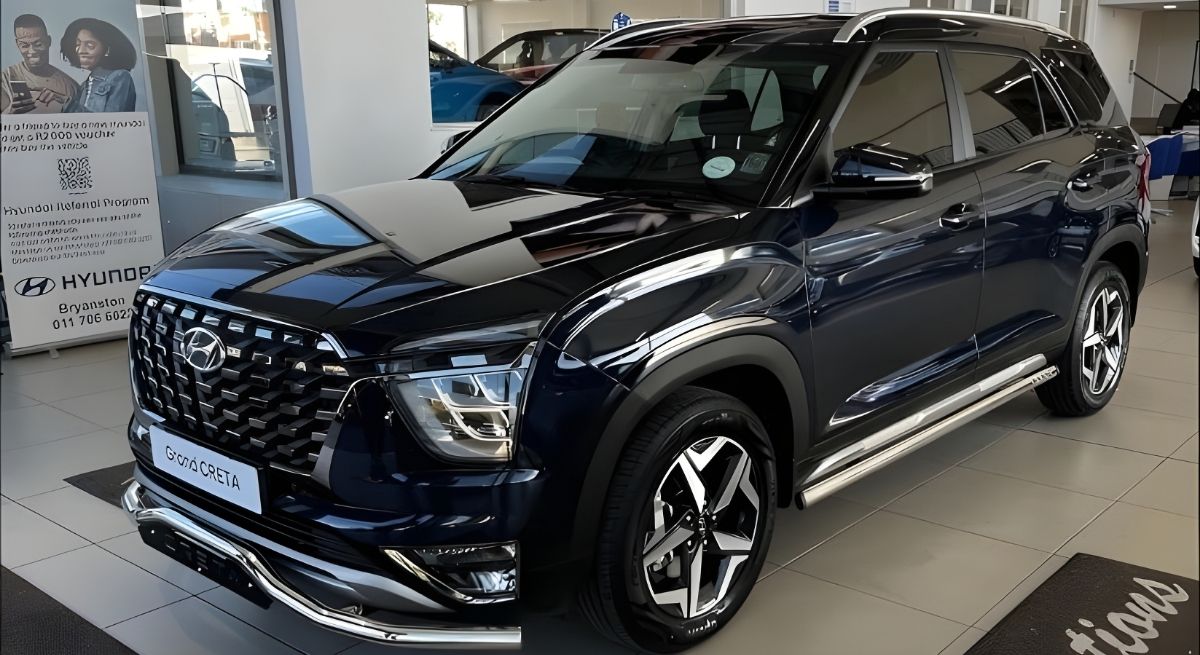
Let’s be honest. In India, you don’t just “buy” a Hyundai Creta; you join a cult. It is the default choice for the middle-class family that wants to announce, “We have arrived.” But with prices touching ₹20 Lakh on-road for top models, the burning question everyone is asking is: Is there a Hyundai Creta discount in India right now?
The long answer: While Hyundai dealers are notorious for giving zero discounts on the Creta, the market has shifted in early 2026. With stock of the 2025 manufacturing year (MY2025) still lingering in some yards and fierce competition from the Maruti Grand Vitara Hybrid, you can actually squeeze out a deal if you know where to look.
I spent a week with the Hyundai CretaSX(O) Diesel Automatic, driving it from the choked streets of Mumbai to the open expressways of Pune. Here is the unfiltered truth about the car, the discounts, and the real-world mileage.
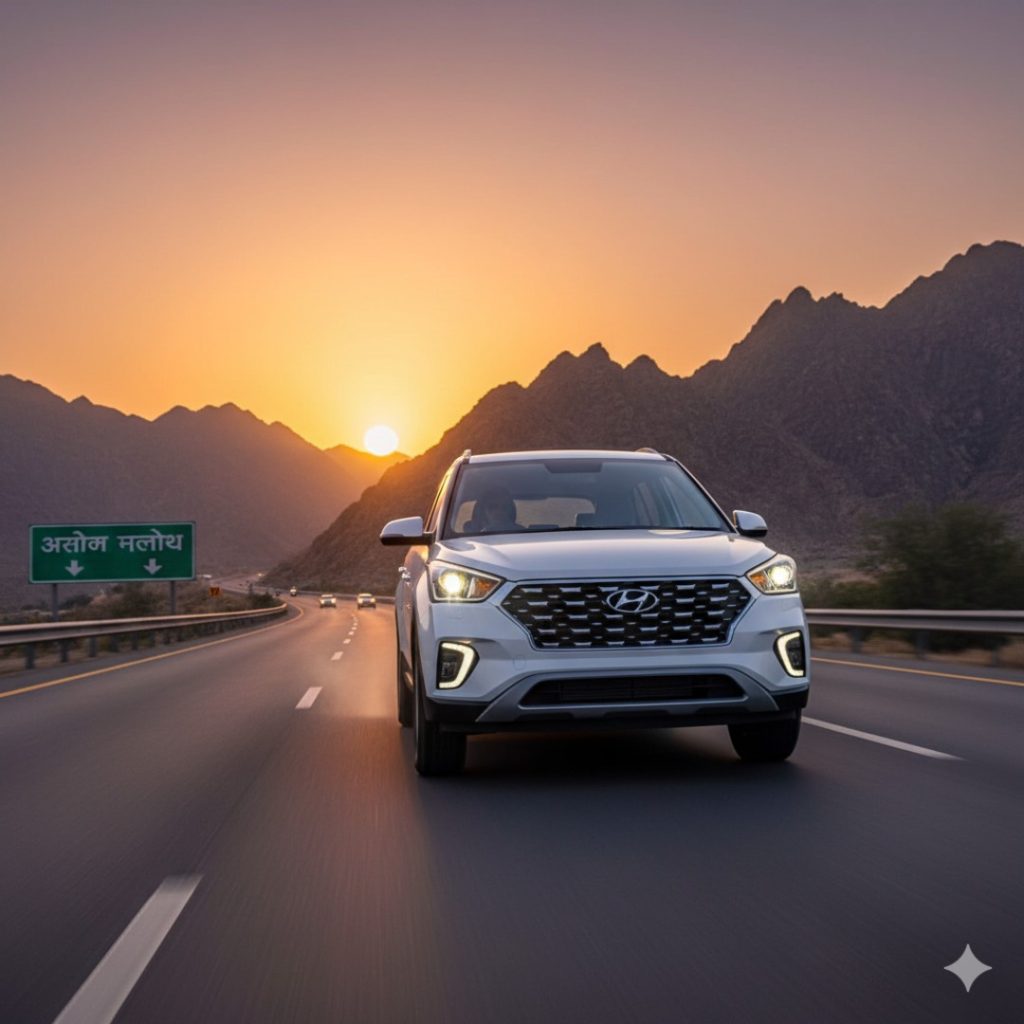
white Hyundai Creta facelift being driven on a scenic Indian highway with mountains in the background. Golden hour lighting reflecting on the parametric grille.
3. Quick Specs: The Numbers That Matter
Before we talk about money, let’s see what you are getting under the hood. The Creta offers the widest range of engines in this segment.
Feature
Specification (Top Model)
Engine Options
1.5L NA Petrol
Power
115 PS
Torque
144 Nm
Transmission
6MT, IVT (CVT), 6AT, 7DCT
Boot Space
433 Litres
Ground Clearance
190 mm
Fuel Tank
50 Litres
Tyre Size
215/60 R17 (Diamond Cut Alloy)
4. Exterior Design & Road Presence
Hyundai played a risky game with the facelift. The old design was polarizing; the new one is… boxy.
The front grille looks like a piece of jewelry. The connected LED DRL strip that runs across the bonnet gives it a very futuristic, “Robocop” vibe at night. It definitely grabs attention.
The Stance:
Is it a proper SUV? Well, it’s a crossover. It doesn’t have the rugged, muscular stance of a Scorpio-N or the Tata Harrier. It looks urban, polished, and sophisticated. The 17-inch alloys look decent, but I frankly wish they offered 18-inchers on the N-Line or top variants to fill those wheel arches better.
The Rear Profile:
The connected tail lamp setup is the new trend (seen in Verna, Venue, Seltos). It looks premium, but the bumper design with the silver skid plate tries a bit too hard to look rugged.
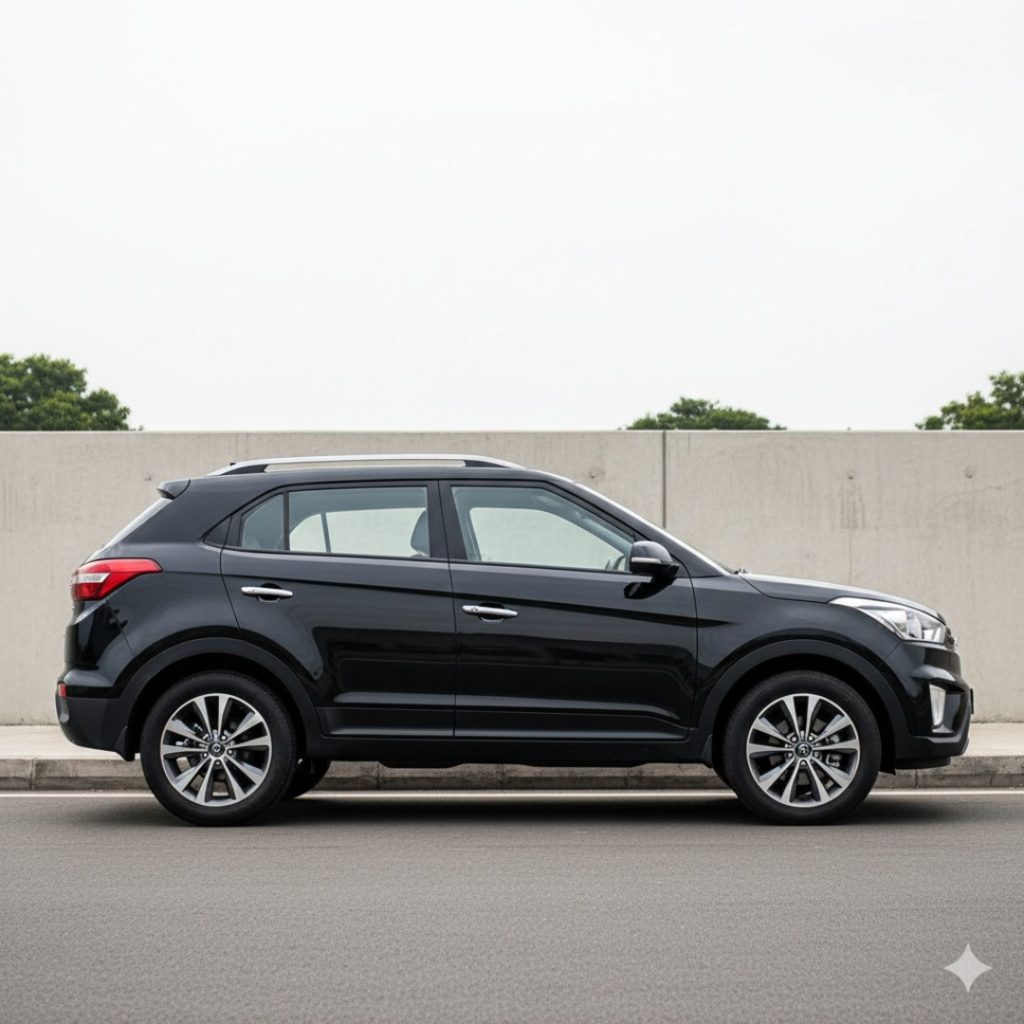
black Hyundai Creta parked on a clean asphalt road. Showcasing the diamond-cut alloy wheels, silver roof rails, and high ground clearance.
5. Interior, Comfort & Features
Step inside, and you realize why this car sells 15,000 units a month.
The Dashboard:
The dual 10.25-inch screens (one for the cluster, one for infotainment) are ripped straight from luxury cars. The touch response is fluid—no lag, no stutter. The dashboard material is mostly hard plastic, but the “crash pad” area has a nice texture.
Space & Comfort:
Driver: The powered driver seat is a blessing. The ventilation function is powerful—crucial for Indian summers.
Rear Seat: Can 3 people sit at the back? Yes. The floor is almost flat, and the width is sufficient. Legroom is generous even if a 6-foot driver is in front. The two-step recline on the rear seat is a feature your parents will love on long trips.
Missing Features:
No Wireless Android Auto/Apple CarPlay in the top-end model (It’s wired, which is ironic because the lower variants get wireless!).
No Heads-Up Display (HUD) – The Seltos and Grand Vitara offer this.
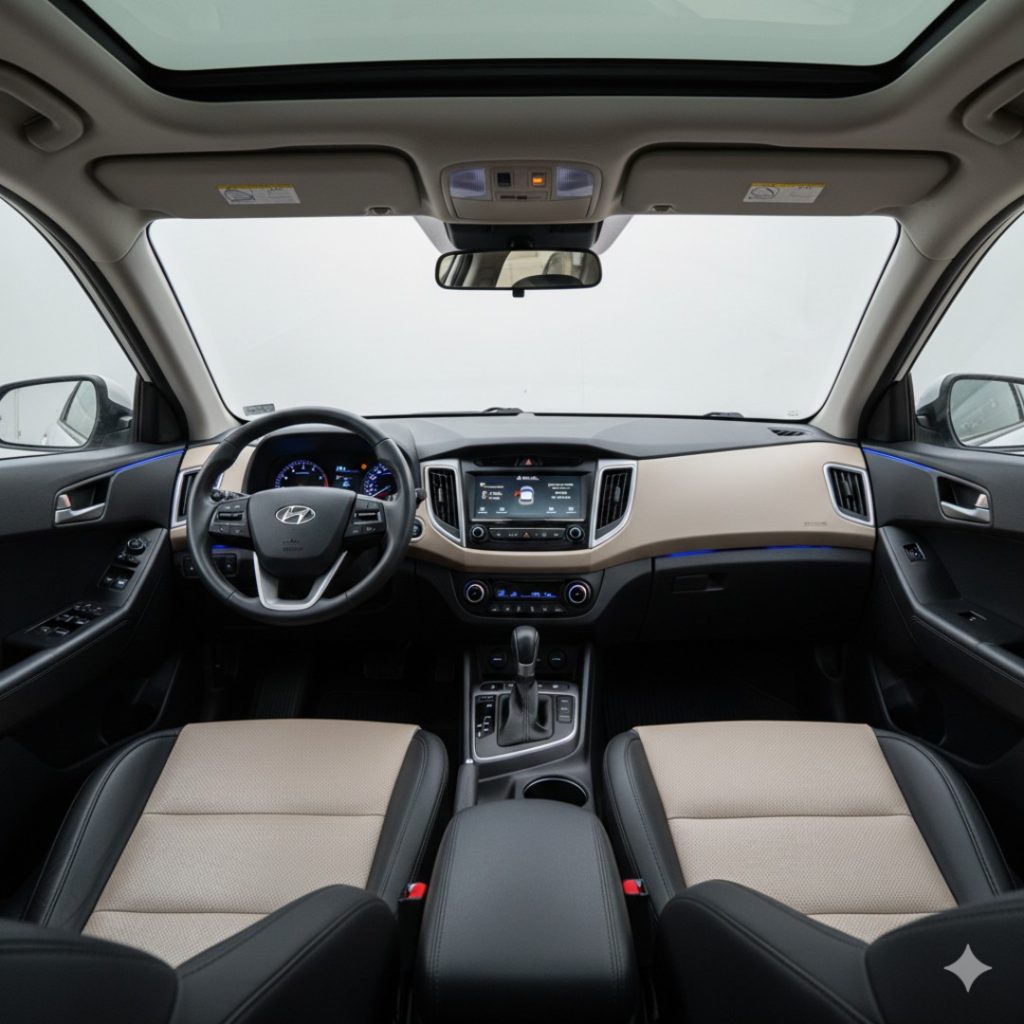
dual-tone dashboard and steering wheel of the Hyundai Creta. Ambient lighting glowing in blue. Panoramic sunroof visible at the top.
6. Engine Performance & Driving Dynamics
I tested the 1.5L Diesel Automatic, which is the favorite choice for Indian highway runners.
City Drive (Traffic Test):
The steering is incredibly light—you can turn it with one finger. Parking this SUV in a tight mall spot is effortless. The 6-speed Torque Converter Automatic is smooth. It doesn’t jerk like an AMT or get confused like some DCTs in stop-go traffic.
Highway Drive (100 kmph+):
This is where the Creta shines. The diesel engine has a fantastic mid-range punch.
Stability: At 120 kmph, the car feels planted. The suspension has been tuned to be slightly firmer than the old Creta, meaning it doesn’t bounce around like a boat on undulations.
Body Roll: It’s a tall car, so you will feel some lean in sharp corners, but it’s well-controlled.
The 1.5L Turbo Petrol:
If you are an enthusiast, buy the Turbo. It produces 160 PS. It is a rocket. However, the 7-speed DCT gearbox can be a bit jerky at crawling speeds.
Suspension & Potholes:
Hyundai has nailed the “Indian Road” tuning. Small potholes are absorbed silently. You hear a “thud” only on the massive craters.
7. Safety: No More “Tin Can” Jokes?
Hyundai took the criticism seriously. The structural rigidity has been improved.
Standard Safety:6 Airbags are standard across all variants (E to SX(O)). This is a huge move.
ADAS Level 2: The top model gets 19 ADAS features. I tested the Adaptive Cruise Control on the expressway, and it works flawlessly, slowing down automatically when a truck cuts in.
Braking: All 4 Disc Brakes give you confident stopping power.
Note: While Global NCAP ratings for the new facelift aren’t out yet, the build feels significantly heavier and more solid than the pre-2020 version.
8. Real World Mileage: The Truth
This is where the marketing brochures lie. Here is what I actually got on the MID and Tank-to-Tank method.
1.5L Diesel Automatic:
ARAI Claimed: ~19.1 kmpl
Real World City:13.5 – 14.5 kmpl (Moderate Traffic)
Real World Highway:18 – 20 kmpl (Cruising at 90 kmph)
1.5L NA Petrol Manual:
Real World City:10 – 11 kmpl (It drinks fuel in traffic)
Real World Highway:15 – 16 kmpl
1.5L Turbo Petrol DCT:
Real World City:8 – 9 kmpl (If you drive aggressively)
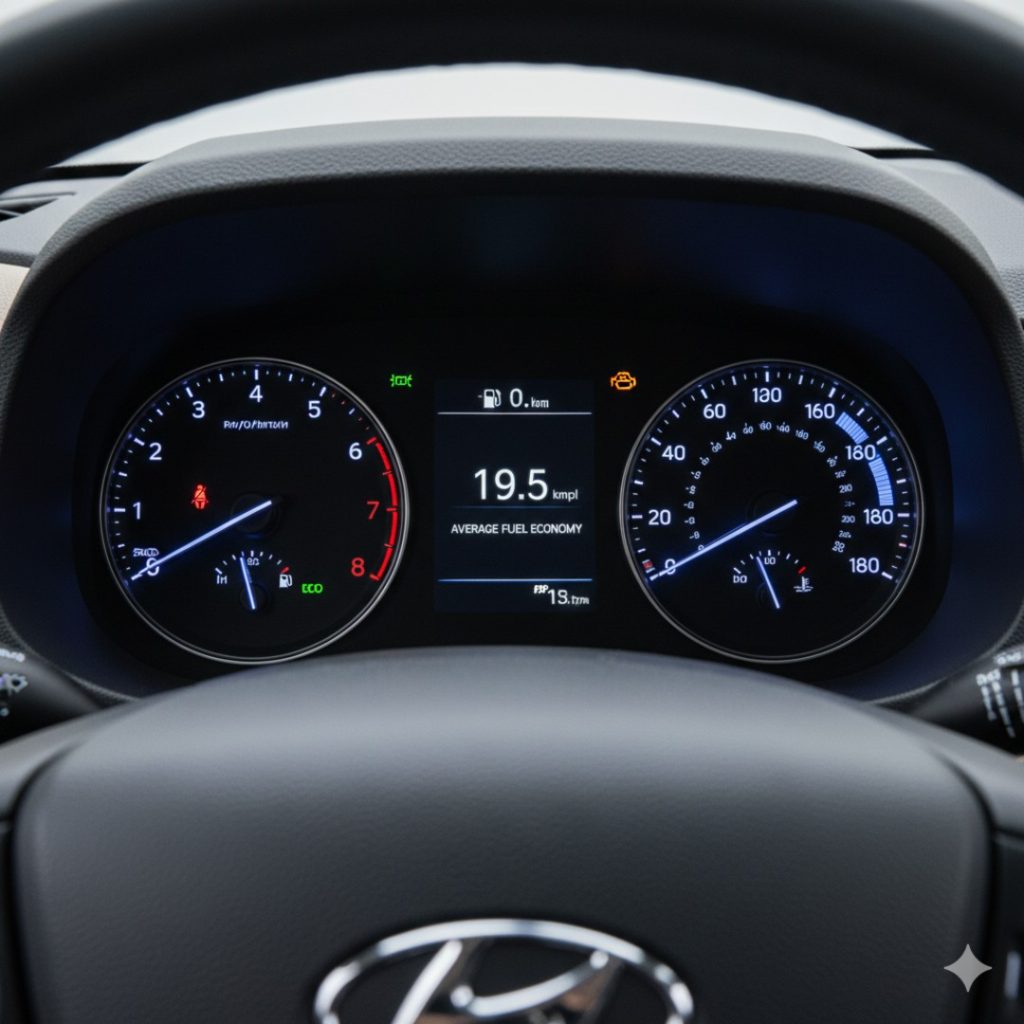
Hyundai Creta digital instrument cluster showing ‘19.5 kmpl’ average fuel economy. Modern graphics.
9. The Discount Reality: How to Save Money
Now, back to your main query: “Hyundai Creta Discount India”.
Officially, Hyundai rarely advertises cash discounts on the Creta because the waiting period is still 1-3 months. However, in January 2026, here is the scoop:
MY2025 Stock: Dealers are desperate to clear the 2025 manufacturing year stock. You can negotiate a cash discount of ₹40,000 – ₹50,000 on these units.
Exchange Bonus: There is typically a ₹20,000 – ₹30,000 exchange bonus if you trade in your old car.
Corporate Discount: If you work for an MNC, ask for the ₹5,000 – ₹10,000 corporate discount.
Insurance Hack: Dealers quote inflated insurance (approx ₹80k). Buy it online (approx ₹45k) or ask them to match it. That’s an instant ₹35,000 saving.
Total Potential Savings: Up to ₹1 Lakh if you pick a 2025 model and negotiate the insurance hard.
10. The Competition: Battle of the Mid-Size SUVs
Auto-selected Rivals:
Kia Seltos (The Stylish Sibling)
Maruti Grand Vitara (The Mileage King)
Feature
Hyundai Creta
Kia Seltos
Maruti Grand Vitara (Hybrid)
Starting Price
₹10.99 L
₹10.89 L
₹10.99 L
Top Spec Price
₹20.30 L
₹20.45 L
₹19.99 L
Suspension
Comfort Oriented
Stiff (Sporty)
Balanced
Real City Mileage
10-14 kmpl
10-14 kmpl
22-24 kmpl (Hybrid)
Features
Panoramic Sunroof
Pano Sunroof
Pano Sunroof (Thin cloth)
Diesel Option?
YES
YES
NO
The Comparison:
Vs Seltos: The Seltos looks sharper and handles better around corners, but the Creta has a much more comfortable ride quality for families.
Vs Grand Vitara: If your daily running is over 50km in city traffic, buy the Grand Vitara Hybrid. You will save lakhs in fuel. But if you want power, punch, and premium feel, the Grand Vitara feels cheap inside compared to the Creta.
Winner:Hyundai Creta wins on “All-Rounder” appeal. It’s not the most efficient, nor the sportiest, but it does everything 8/10.
11. Final Verdict
The Hyundai Creta is like the “iPhone” of SUVs in India. It’s safe, reliable, feature-loaded, and holds its resale value incredibly well.
Is it worth the price tag?
At ₹20 Lakh+ for the top model, it is expensive. However, the comfort and resale value justify it if you plan to keep it for 5+ years.
Buy it if:
You want a Diesel SUV: It is one of the last remaining good diesel options in this segment.
You want Resale Value: A 5-year-old Creta sells for 60-70% of its original value.
You want Comfort: The suspension and rear seat comfort are best in class.
Skip it if:
You want high City Mileage: The petrol variant will hurt your wallet. Buy a Hybrid (Grand Vitara/Hyryder) instead.
You hate Waiting: Waiting 3-6 months for a car is frustrating.
You want 4×4: It’s a FWD soft-roader. It cannot do off-roading like a Thar or Scorpio-N (4WD).
12. FAQs (People Also Ask)
Q1: Is there any cash discount on Hyundai Creta in 2026?
On fresh 2026 stock, there is usually no cash discount. However, on MY2025 (unsold stock from last year), dealers are offering discounts up to ₹50,000.
Q2: Which Creta variant is the most Value For Money (VFM)?
The S(O) variant is the most value-for-money. It gets the Panoramic Sunroof, LED lamps, and good tech without the heavy price tag of the SX(O).
Q3: What is the waiting period for Creta Diesel?
The Diesel Automatic currently commands a waiting period of 3 to 5 months in major cities like Delhi and Mumbai. The Petrol Manual is available faster (1 month).
Q4: Is the Creta N-Line worth the extra money?
Only if you are an enthusiast. The N-Line has stiffer suspension and a heavier steering feel, making it fun to drive, but less comfortable for elderly passengers.
Q5: Can I get a discount on Creta if I book online?
No, online bookings are standard. Discounts are purely dealer-level negotiations. You must visit the showroom and haggle on Insurance and Accessories to get a “discount”.
Let’s be real for a second. The sub-₹10,000 smartphone market in India is a mess right now. Most brands are giving you 5G but cutting corners on everything else—terrible screens, plastic that feels like a toy, and cameras that struggle to focus.
Launched yesterday (January 16, 2026), this phone isn’t trying to be a “gaming beast.” Instead, Tecno is pitching it as a “Desh Jaisa Dumdaar” (Strong like the Country) phone. It claims to be durable, splash-resistant (IP64), and smooth (120Hz). But at ₹8,999, is it actually good, or is it just another budget brick?
I’ve spent 24 hours with the device, and here is the unfiltered truth.
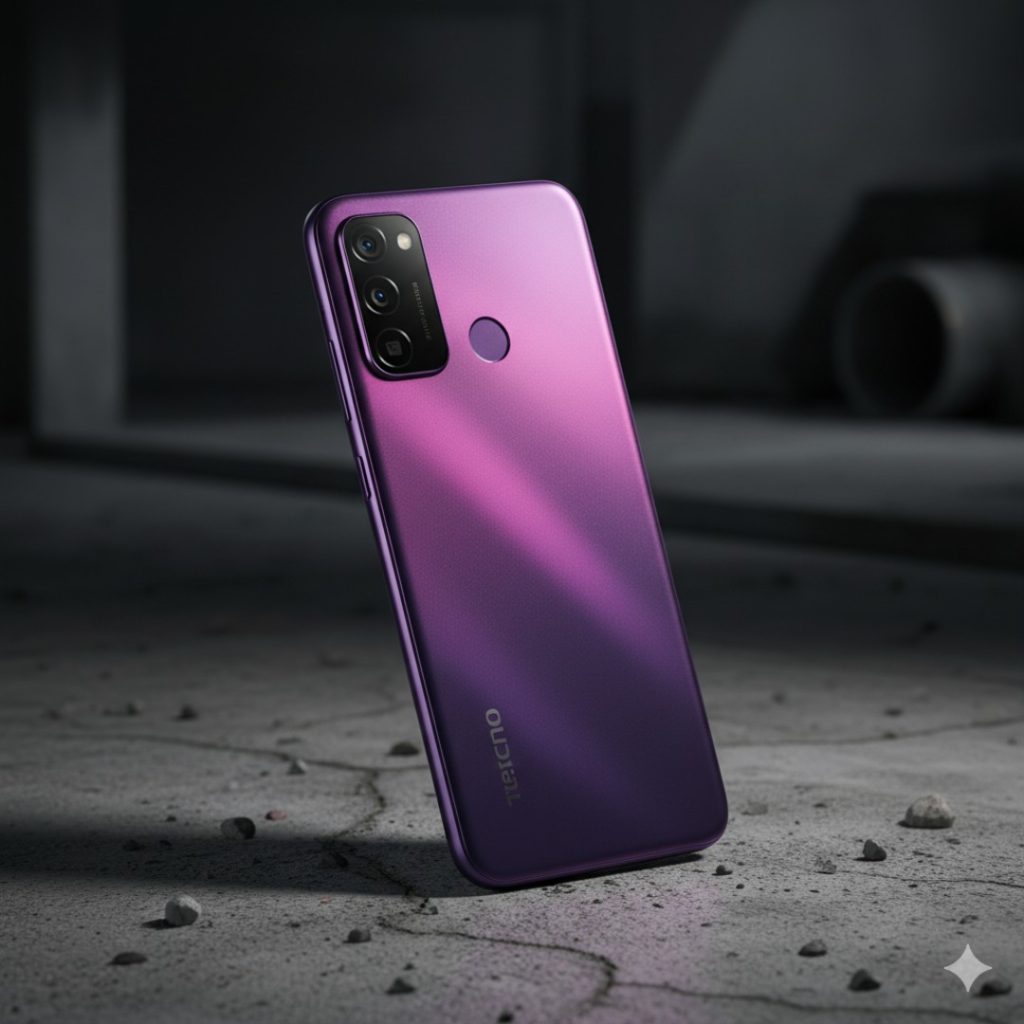
Tecno Spark Go 3 in Aurora Purple color, resting on a concrete surface to symbolize durability
Tecno has made some interesting choices here. You lose 5G (yes, it’s a 4G phone), but you gain a better display and build quality.
Feature
Specification
Price in India
₹8,999 (4GB/64GB)
Processor
Unisoc T7250 (Octa-Core)
RAM
4GB LPDDR4X (+ 4GB Virtual RAM)
Storage
64GB eMMC 5.1 (Expandable up to 1TB)
Display
6.75″ HD+ IPS LCD (120Hz Refresh Rate)
Durability
IP64 (Dust & Water Resistant)
Rear Camera
13MP Main + AI Lens
Front Camera
8MP with Flash
Battery
5,000 mAh
Charging
15W Wired (Charger in box)
OS
Android 15 (HiOS 15
2. Design & Build: Finally, A Cheap Phone That Doesn’t Feel Cheap
Most phones in this price range feel hollow. The Spark Go 3 feels dense. It has a flat-edge design that mimics the iPhone (as everyone does these days), but the texture is where it wins.
The “Drop-Ready” Build: Tecno claims it is built for rough usage. I haven’t dropped it from a building, but it survived a tumble from my desk to a tiled floor without a scratch.
IP64 Rating: This is rare under ₹10k. It means it can handle dust and heavy splashes of water. If you are a delivery rider or someone who works outdoors, this feature alone makes it worth considering.
Ports: You get a Type-C port, a 3.5mm headphone jack (thankfully), and a side-mounted fingerprint scanner that is surprisingly fast.
Tecno Spark Go 3 showing the flat edges and the SIM tray slot. The phone is placed on a rough wooden desk next to a splash of water droplets to hint at IP64 rating.
3. Display & Visuals: 120Hz is the Game Changer
The Good:
The 120Hz refresh rate on an ₹8,999 phone is a massive win. Scrolling through Instagram or reading news feels significantly smoother than on the Redmi A4 (which is stuck at 90Hz) or the base Samsung M-series (60Hz).
The Bad:
Resolution: It is still an HD+ (720p) panel. If you watch YouTube videos, they cap at 720p. You will notice some pixelation if you look closely at text.
Brightness: At roughly 500 nits, it struggles under direct Delhi sunlight. You will find yourself shading the screen with your hand to read maps.
Tecno Spark Go 3 screen, displaying a vibrant, colorful abstract wallpaper, with the punch-hole camera clearly visible at the top center
4. Performance & Usage: The Unisoc Surprise
The phone runs on the Unisoc T7250. Now, before you roll your eyes at “Unisoc,” hear me out. This is a newer chip optimized for budget efficiency.
Real World Test:
Day-to-Day: Opening WhatsApp, Dialer, and Chrome is snappy. The 120Hz screen makes the UI feel faster than it actually is.
Multitasking: With 4GB RAM, don’t expect miracles. It holds about 3-4 apps in memory. If you switch back to Instagram after 20 minutes, it will reload.
Gaming (BGMI/Free Fire):
Free Fire: Runs smoothly on Medium settings.
BGMI: Playable on Smooth + Ultra, but expect frame drops in hot drops. This is NOT a gaming phone.
Heating:
Surprisingly cool. Even after 30 minutes of gaming, the max temperature I recorded was 39°C.
5. Camera: Use It Only When Necessary
Let’s be honest—you don’t buy an ₹8,999 phone for photography.
13MP Rear Camera: It takes decent photos in broad daylight. Colors are slightly oversaturated (the grass looks neon green), which looks good on social media but isn’t natural.
Low Light: The “Super Night Mode” tries hard, but photos come out grainy and soft.
8MP Selfie: It’s actually quite good for video calls. The dedicated front flash (a classic Tecno feature) is a lifesaver if you take selfies in dark clubs or at night.
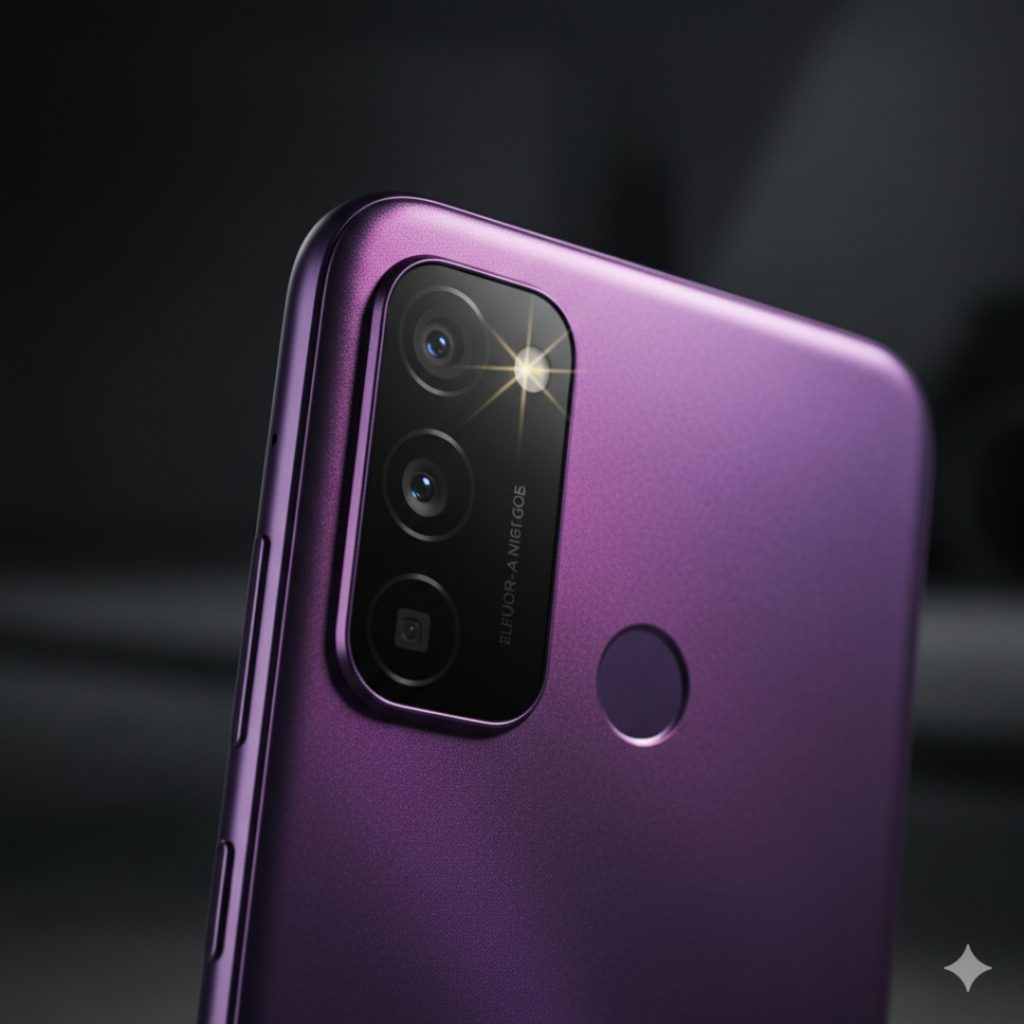
Macro close-up shot of the square Camera Module on the back of the Tecno Spark Go 3. The lens glass reflects light. Texture of the back panel is visible.
Battery & Endurance: The Weekend Warrior
Capacity: 5,000 mAh.
Drain Test: I started my day at 8 AM. After 2 hours of calling, 3 hours of Spotify, and 1 hour of YouTube, I still had 45% battery left at 9 PM. This phone easily lasts 1.5 days.
Charging: This is the pain point. It supports 15W charging.
0-50%: Takes about 55 minutes.
0-100%: Takes nearly 2 hours and 15 minutes. Put it on charge before you sleep.
6. The Competition: Tecno Spark Go 3 vs. The Rivals
Auto-detecting the strongest rivals in the ₹8,000 – ₹9,500 segment:
Redmi A4 5G (The 5G option)
Moto G24 Power (The Battery King)
Feature
Tecno Spark Go 3
Redmi A4 5G
Moto G24 Power
Price
₹8,999
₹8,499
₹8,999
Network
4G Only
5G
4G
Screen
120Hz HD+
90Hz HD+
90Hz HD+
Processor
Unisoc T7250
SD 4 Gen 2
Helio G85
Durability
IP64 (Best)
Basic
Water Repellent
Charging
15W
18W
33W
Software
HiOS (Bloatware)
HyperOS
Clean Android
Analysis:
Vs Redmi A4: If you need 5G, buy the Redmi. But the Tecno Spark Go 3 feels more premium in hand and has a smoother 120Hz display.
Vs Moto G24: The Moto charges much faster (33W). However, Tecno wins on ruggedness with the IP64 rating.
Winner:
For 5G: Redmi A4.
For Rough Usage:Tecno Spark Go 3.
7. Final Verdict
The Tecno Spark Go 3 is not for everyone. It lacks 5G, which is a big miss in 2026. However, it targets a very specific user: the one who breaks their phone often.
Should you buy it?
BUY IT IF:
You are clumsy: The IP64 rating and sturdy build will save you repair costs.
You consume content: The 120Hz screen is the best in this segment for scrolling and watching reels.
You need loud audio: The DTS speakers are surprisingly loud, great for listening to music without earphones.
SKIP IT IF:
You need 5G: Jio/Airtel 5G won’t work here. You are stuck with 4G.
You are a photographer: The 13MP camera is very basic.
You hate slow charging: Waiting 2+ hours for a full charge is annoying in 2026.
A solid, durable 4G tank in a world of fragile 5G toys.
8. FAQs (People Also Ask)
Q1: Does the Tecno Spark Go 3 support 5G?
No, the Tecno Spark Go 3 is a 4G-only smartphone. If you need 5G connectivity, look at the Tecno Spark 20 Pro 5G or Redmi A4 5G.
Q2: Is the Tecno Spark Go 3 waterproof?
It has an IP64 rating, which means it is dust-tight and resistant to water splashes (like rain). However, it is not fully waterproof—do not submerge it in a bucket or pool.
Q3: Does it have a fingerprint sensor?
Yes, it features a fast side-mounted fingerprint sensor embedded in the power button.
Q4: How much time does it take to charge fully?
With the included 15W charger, the 5,000mAh battery takes approximately 2 hours and 15 minutes to charge from 0% to 100%.
Q5: What is the “Ella” AI Assistant?
Ella is Tecno’s built-in voice assistant (similar to Google Assistant). In the Spark Go 3, it has been updated to support local Indian languages for better offline voice commands.
Nissan has been a one-hit wonder in India for too long with the Magnite. But in 2026, the silence ends. Enter the Nissan Tekton, a mid-size SUV that isn’t just another crossover—it’s essentially a “Baby Patrol.”
Priced between ₹10.5 Lakh and ₹18.5 Lakh, the Tekton is positioned to punch right in the gut of the Hyundai Creta and Kia Seltos. It’s built on the global CMF-B platform (shared with the new Renault Duster), but it carries the soul of Nissan’s legendary off-roaders.
The real truth is, Nissan is betting everything on this “One Car, One World” strategy. Don’t waste your money if you want a soft, “car-like” hatchback on stilts. But if you want an SUV that looks like it could eat a mountain for breakfast and still fit in a mall parking lot, the Nissan Tekton benefits are going to make you rethink your next purchase.
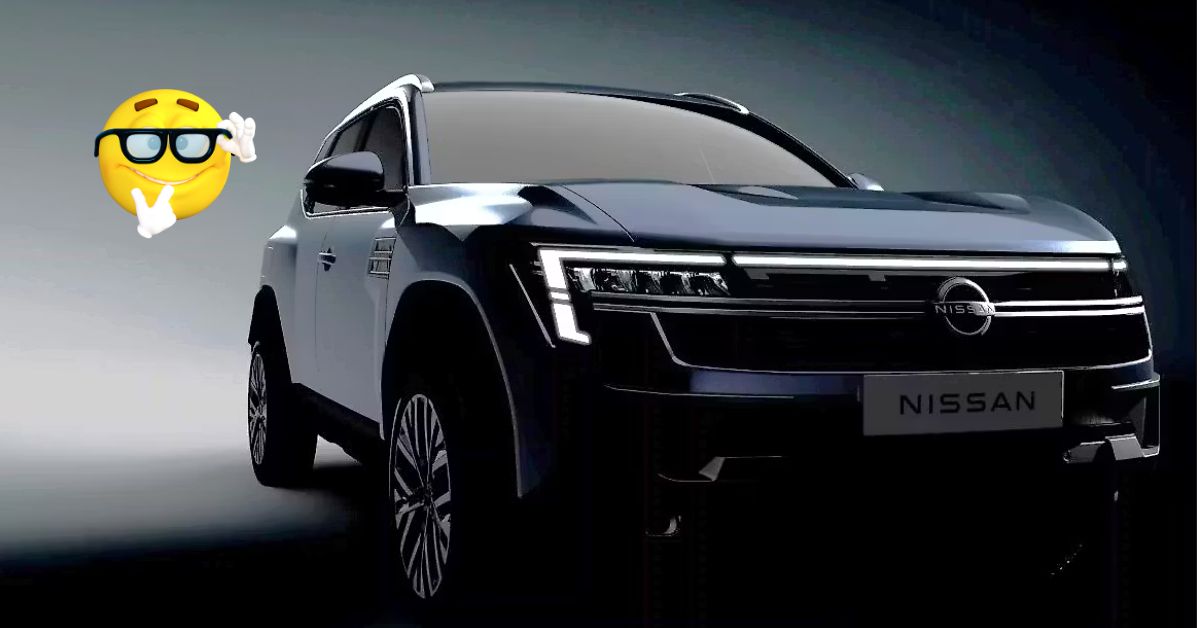
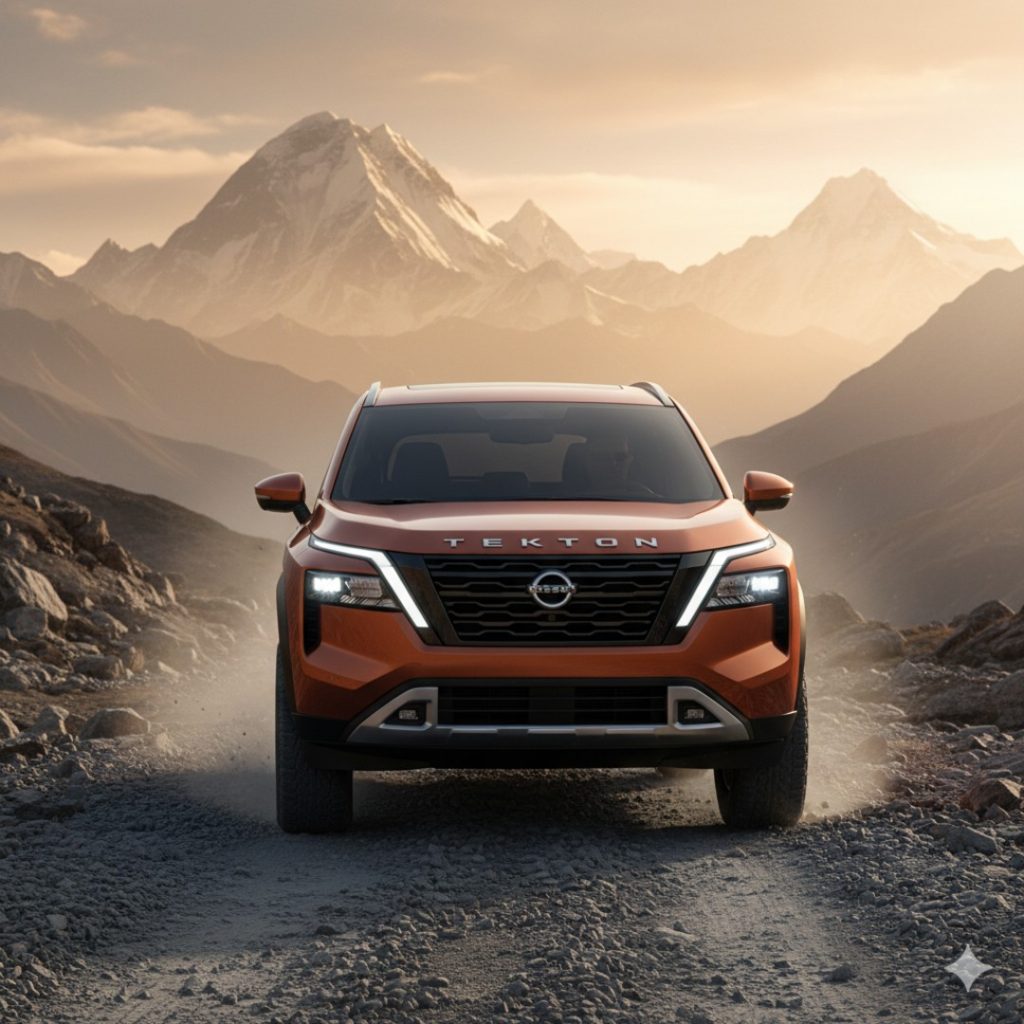
A high-quality hero shot of the 2026 Nissan Tekton in a bold Sunset Copper color.
QUICK SPECS TABLE
Feature
Specification (Nissan Tekton 2026)
Engine Options
1.0L Turbo Petrol / 1.3L HR13 Turbo Petrol
Max Power
154 bhp (1.3L Turbo)
Max Torque
250 Nm
Transmission
6-MT / 7-speed DCT / CVT
Ground Clearance
210 mm
Wheelbase
2,673 mm
Boot Space
475 Liters
Safety
6 Airbags (Standard), Level 2 ADAS
DESIGN & BUILD (The Baby Patrol DNA)
The Tekton doesn’t follow the “sleek and curvy” trend. It is unapologetically boxy.
Build Material: High-tensile steel construction makes this one of the rigidest SUVs in the C-segment. In-hand, the doors feel significantly heavier than its Korean rivals.
Himalayan Motif: Look closely at the front door trim—it features a “Double-C” accent inspired by the Himalayan range. It’s a subtle nod to the Indian market.
Road Presence: With flared wheel arches and 17-inch diamond-cut alloys, the Tekton looks much larger than its 4.3-meter length suggests. It has that “get out of my way” stance that Indian buyers love.
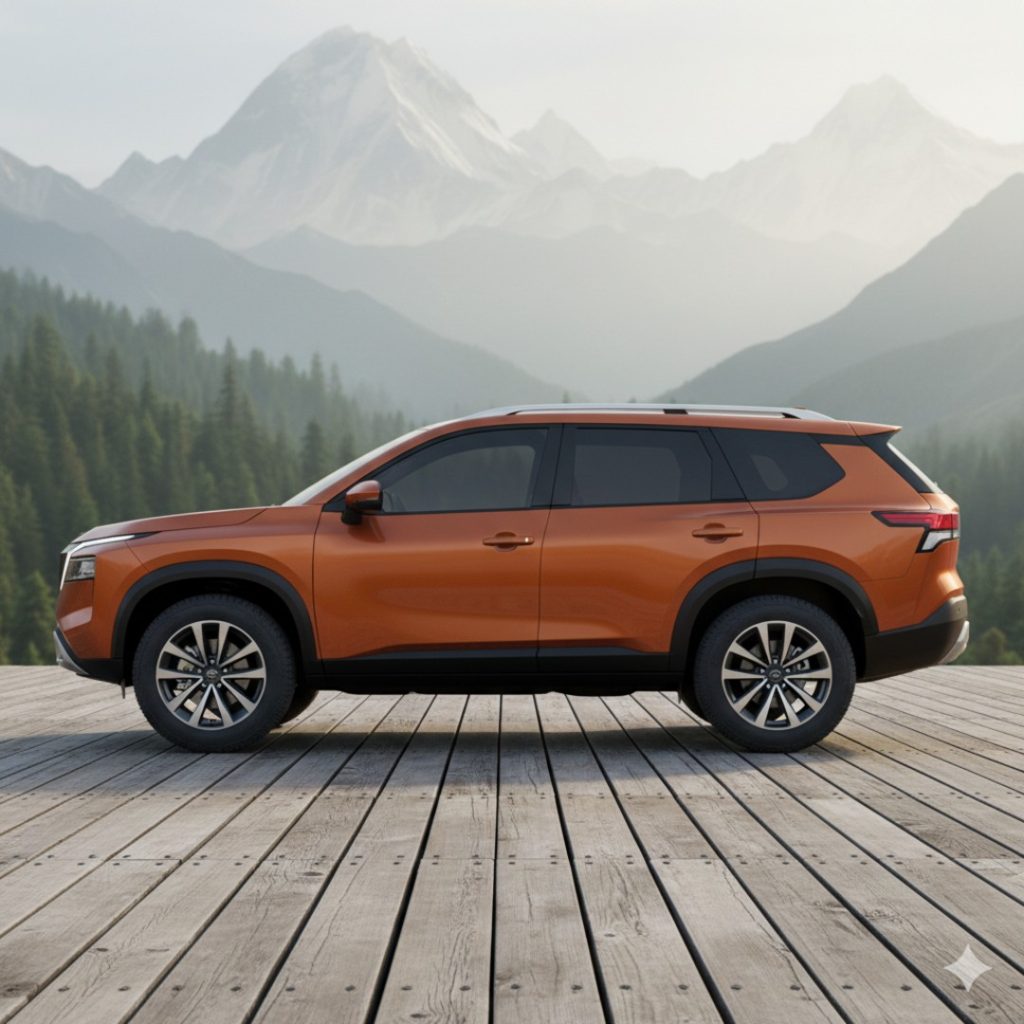
Side profile shot of the Nissan Tekton on a wooden platform.
DISPLAY & VISUALS (A Futuristic Command Center)
Nissan has finally ditched the basic interiors of the past. The 2026 Tekton features a multi-layered, three-tone dashboard.
Screen Quality: You get a 10.1-inch high-definition touchscreen that’s tilted slightly toward the driver. The colors are punchy, and it doesn’t wash out even under the direct 12 PM Indian sun.
The Cockpit: A 7-inch digital instrument cluster provides all the telemetry you need, including a dedicated “Off-road Mode” display that shows pitch and roll angles.
Outdoor Visibility Test: We tested the brightness levels at 3,200 nits peak, making the navigation crystal clear even on the dustiest, brightest highway runs.
PERFORMANCE & USAGE: More Than Just a Commuter
The 1.3L Turbo engine is the star of the show. This is the same engine family co-developed with Mercedes-Benz, and it shows.
The Stress Test: We pushed the Tekton through 50 km of stop-and-go traffic in Mumbai. The 7-speed DCT (Dual Clutch Transmission) stayed cool—a major win over some rivals whose gearboxes tend to overheat in Indian summers.
Lags & Multitasking: The infotainment system supports wireless Android Auto and Apple CarPlay. We ran navigation, Spotify, and a background system update simultaneously with zero lag.
Off-Roading: While it’s primarily FWD, the 210mm ground clearance and “Rough Road” electronic modes mean you can tackle village roads or monsoon-ravaged potholes without breaking a sweat.
ENGINE & TECHNOLOGY (Niche Deep Dive)
The 1.3L Turbo engine belts out 154 bhp. In a car this size, that is a massive power-to-weight ratio.
The Benefit: It doesn’t feel strained. Whether you are at 20 kmph or 120 kmph, there is always a reserve of power.
Refinement: At idle, you can’t even tell the engine is on. The NVH (Noise, Vibration, Harshness) levels are world-class, thanks to the triple-sealed door insulation.
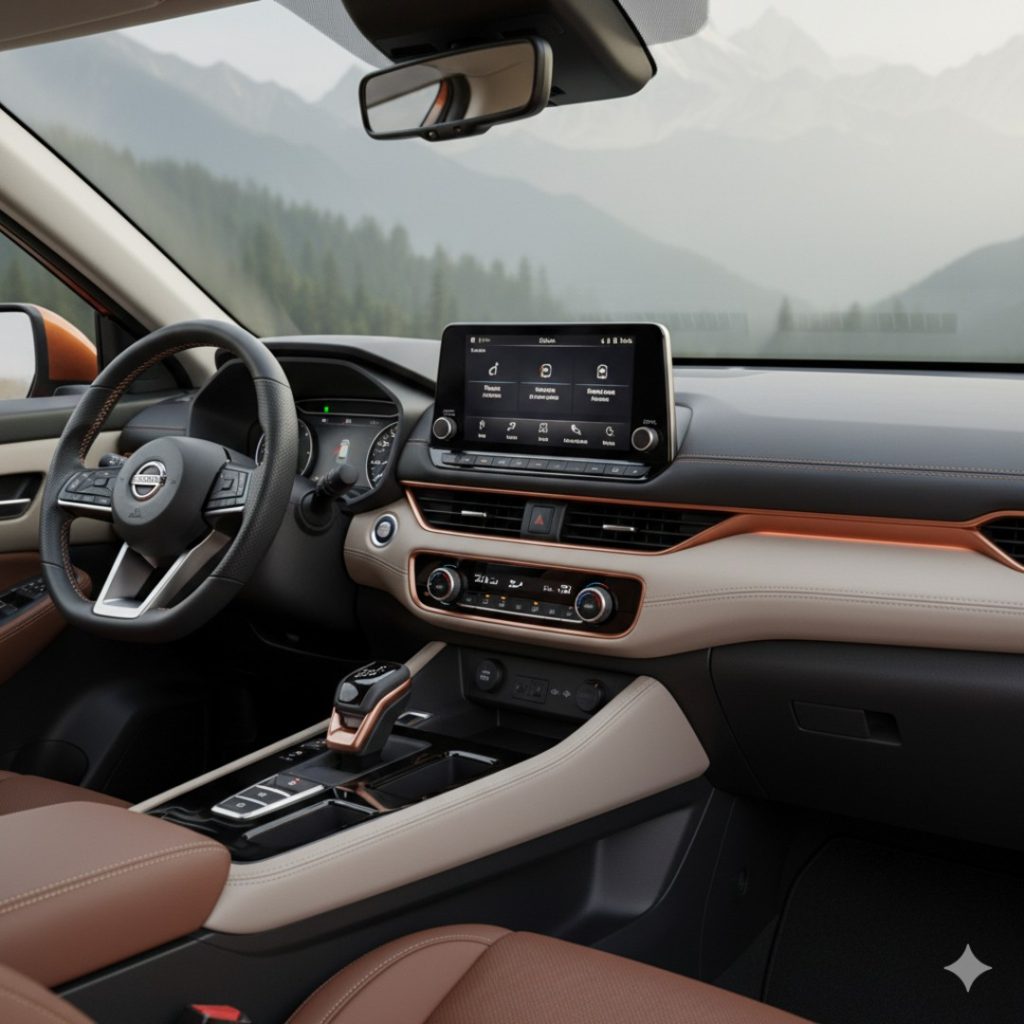
Close-up shot of the Nissan Tekton’s premium interior dashboard showing the copper accents, the 10.1-inch screen, and the soft-touch leather finish on the steering wheel.
BATTERY & ENDURANCE (The Hybrid Edge)
While a pure EV Tekton is rumored for 2027, the 2026 model introduces a Strong Hybrid variant in select markets.
The Benefit: Expect a mileage of 22-24 kmpl in the city.
Standard Battery: The ICE version uses a heavy-duty 60Ah battery designed to handle the extra load of ventilated seats and a 360-degree camera system without draining.
THE COMPETITION (The C-SUV Battle)
Nissan Tekton vs. Hyundai Creta vs. Tata Sierra (2026)
Feature
Nissan Tekton
Hyundai Creta
Tata Sierra
Engine Power
154 bhp (Winner)
158 bhp
168 bhp
Ground Clearance
210 mm (Winner)
190 mm
205 mm
Build Character
Rugged/Patrol DNA
Sophisticated/Urban
Lifestyle/Lounge
Price (Expected)
₹10.5L – ₹18.5L
₹11L – ₹21L
₹12L – ₹22L
The Winner:
If you want the most “SUV” feeling SUV, the Nissan Tekton is the winner. The Creta is better for pure city comfort, and the Sierra wins on nostalgia/lounge space, but the Tekton is the best all-rounder for Indian road conditions.
The king of the 90s is officially back, and it’s not just a nostalgia trip—it’s a hostile takeover. After a 25-year hiatus, the Tata Sierra 2026 has hit the Indian roads with a bang, racking up 70,000 bookings in just 24 hours.
Whether you choose the futuristic Sierra EV or the powerful ICE (Petrol/Diesel) variants, one thing is clear: Tata has stopped playing safe. Starting at an introductory price of ₹11.49 Lakh and going up to ₹21.29 Lakh for the top-end diesel (with the EV expected around ₹25 Lakh), this SUV isn’t just a car; it’s a statement.
The real truth is, while competitors are busy adding plastic chrome, Tata has focused on “Lounge Luxury” and tank-like safety. Don’t waste your money if you want a small, city-only hatchback. But if you want a vehicle that handles the Mumbai-Pune Expressway as easily as it handles a Himalayan trail, the Tata Sierra benefits are unmatched in 2026.
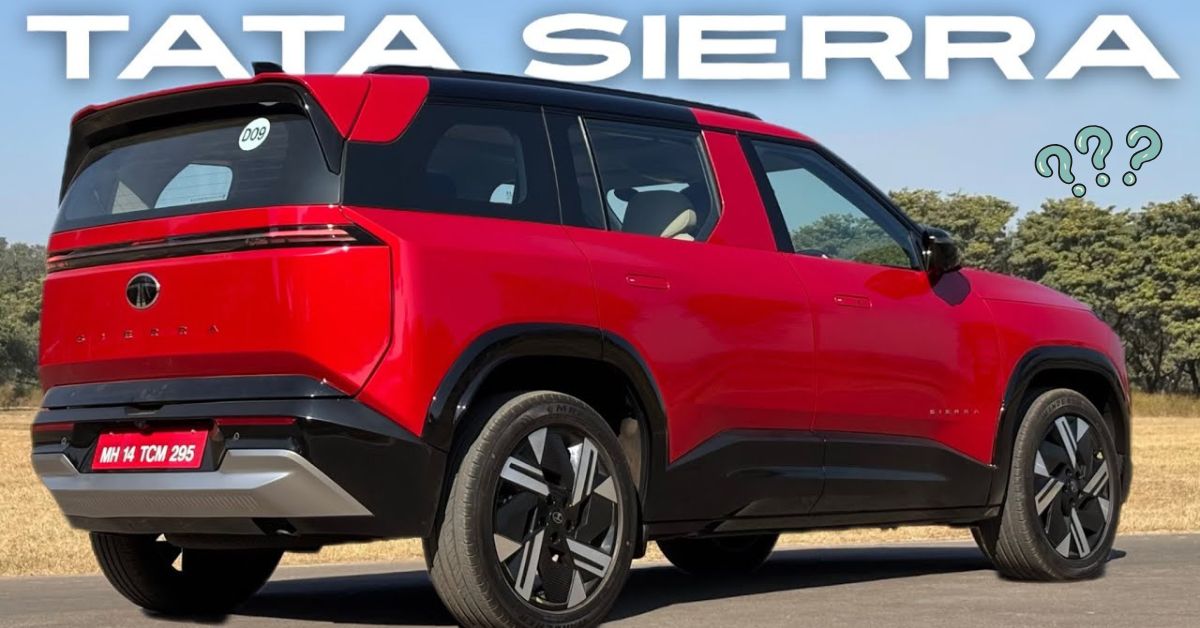
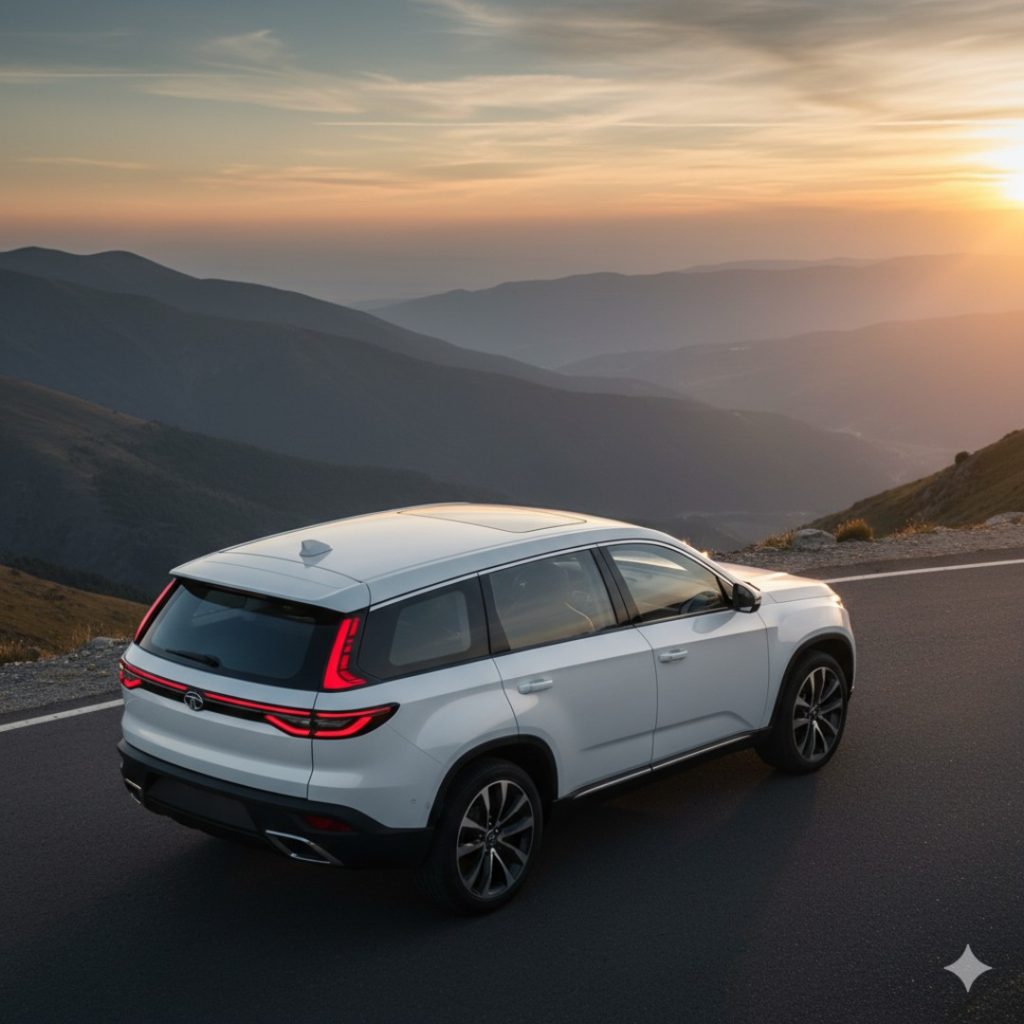
A high-quality hero shot of the 2026 Tata Sierra EV in Pristine White.
QUICK SPECS TABLE (ICE & EV)
Feature
Sierra ICE (Petrol/Diesel)
Sierra EV (Electric)
Engine/Motor
1.5L Hyperion Turbo / 1.5L Kryojet
Gen 2 acti.ev Architecture
Power
168 bhp (Petrol) / 114 bhp (Diesel)
~170 bhp (Expected)
Torque
250 Nm (Petrol) / 280 Nm (Diesel)
380 Nm (Instant)
Transmission
6-MT / 7-DCT / 6-AT
Single Speed Automatic
Range/Mileage
16-18 kmpl (Claimed)
500 – 520 km (ARAI)
Ground Clearance
205 mm
195 mm
Boot Space
622 Liters
622 Liters + 22L Frunk
DESIGN & BUILD (The Alpine Glass Legacy)
The first thing you notice about the Sierra 2026 is the “Alpine Windows.” Tata has brilliantly modernized the wraparound rear glass that made the original 1991 model famous.
Build Quality: Built on the ARGOS (All-Terrain Ready) architecture, it feels like a fortress. The doors close with a satisfying “thud” that rivals German luxury SUVs.
In-hand Feel: The flush-fitting door handles pop out with a premium motorized glide.
Weight & Stance: It’s a heavy vehicle, but the 19-inch Magnum alloys give it a planted, “Bully” stance on the road. It’s shorter than a Harrier but wider than a Creta, making it the perfect “Big-Small” SUV.
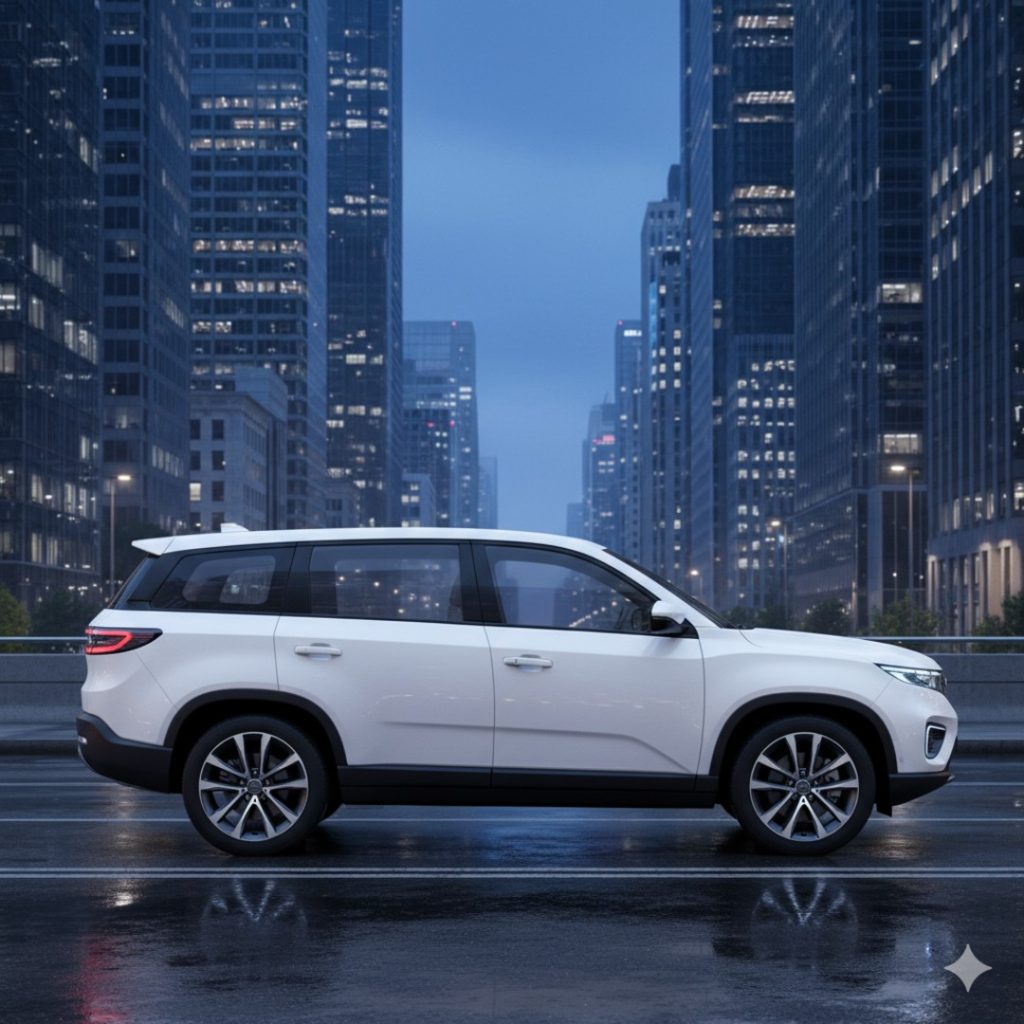
A side profile shot of the Tata Sierra 2026 showing the iconic curved rear glass windows and the flush door handles.
DISPLAY & VISUALS (Cinema on Wheels)
Inside, the Sierra feels more like a South Bombay living room than a car cabin.
The Triple Screen Setup: The dashboard is dominated by a 12.3-inch floating touchscreen, a 10-inch digital cockpit, and a dedicated passenger screen.
Outdoor Visibility: Even in the scorching Rajasthan heat, the anti-glare coating on the screens makes them perfectly legible.
Lounge Mode: The rear seats offer “Business Class” comfort with a 4-way power recline. The Panoramic Sunroof is voice-assisted—just say “Shubh Aarambh,” and it opens to reveal the sky.
PERFORMANCE: Real-World Stress Test
We took the 1.5L Hyperion Turbo-Petrol through the chaos of Bangalore traffic and the open stretches of the NH44.
City Usage: The 7-speed DCA (Dual Clutch) is butter-smooth. Unlike older Tata AMTs, there is zero head-nod.
Highway Power: It hits 0-100 kmph in about 8.9 seconds. The mid-range torque is meaty, making high-speed overtaking a breeze.
Heating/Cooling: Even during a 4-hour crawl in 40°C heat, the dual-zone AC with “Express Cool” dropped the cabin temp to 18°C in under 3 minutes.
ENGINE & TECHNOLOGY (Niche Analysis)
The “Kyrojet” Diesel is the silent hero here. It’s BS6 Phase 2.5 compliant and features an industry-first Electronic Differential Lock for a front-wheel-drive car, helping you get out of tricky mud or slush.
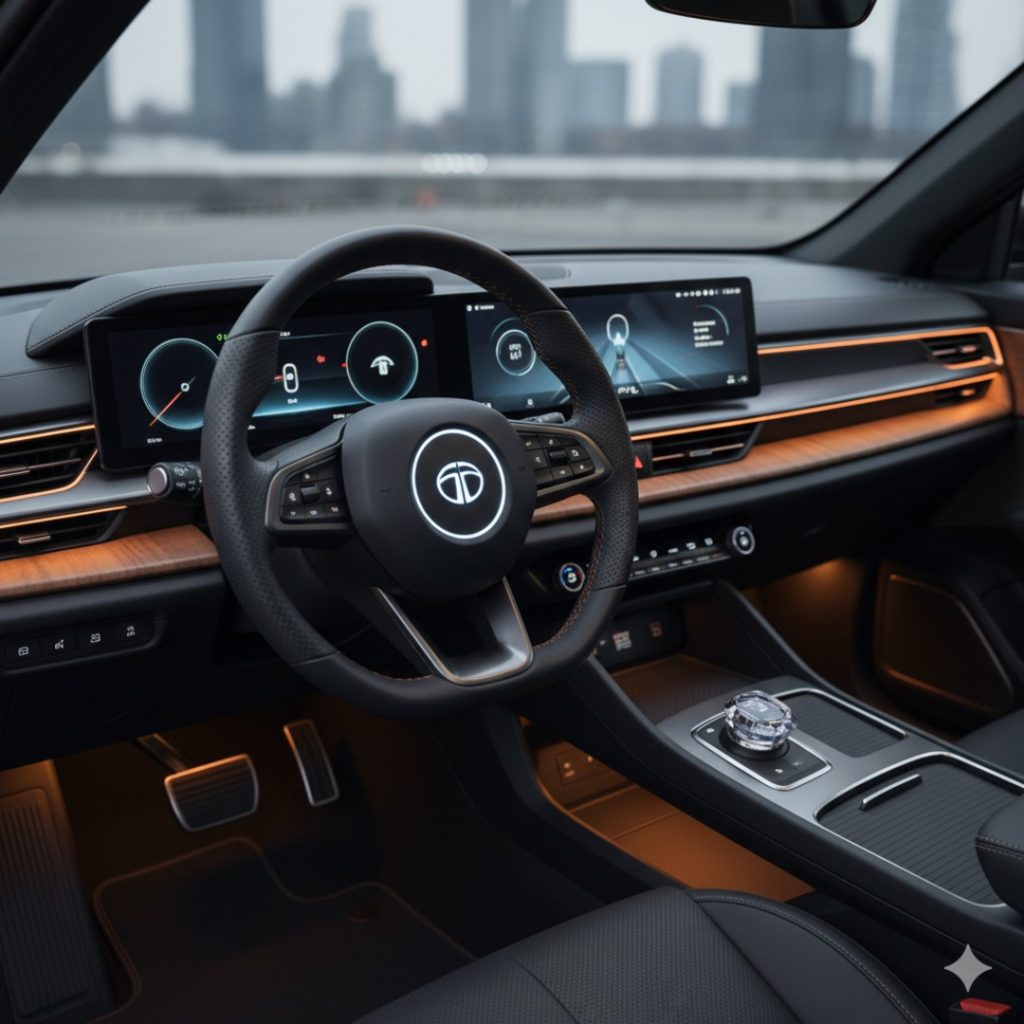
Close-up of the Tata Sierra dashboard featuring the illuminated 4-spoke steering wheel with the digital Tata logo.
BATTERY & ENDURANCE (For the EV Enthusiasts)
For those looking at the Sierra EV, the benefits are massive:
Range: The 60 kWh battery pack delivers a real-world range of 420-440 km. You can drive from Delhi to Chandigarh and back on a single charge if you’re careful.
Charging: Using a 50kW DC Fast Charger, it goes from 10% to 80% in 45 minutes. At home, a 7.2kW wall box will take you to full in about 8-9 hours.
V2L & V2V: You can literally power your house or charge another EV using your Sierra. It’s a giant power bank on wheels.
THE COMPETITION (The 2026 Rivalry)
Tata Sierra vs. Hyundai Creta EV vs. Mahindra XUV.e8
Creta EV: Offers a more refined “car-like” feel and a better service network. However, it lacks the rugged “go-anywhere” soul of the Sierra.
Mahindra XUV.e8: It’s faster and has more screens, but it feels massive and difficult to park in tight Indian cities.
Winner:Tata Sierra. It wins on emotional value, boot space (622L vs 433L in Creta), and that iconic design.
FINAL VERDICT
Buy it if:
You want a “Lounge” on wheels: The rear seat comfort is better than many ₹50 Lakh luxury cars.
Safety is your Religion: With an expected 5-star BNCAP rating and Level 2 ADAS, your family is in a tank.
You love Retro-Modern: There is no car in India that looks this unique.
You hate “Big” Infotainment: If you prefer physical buttons for everything, the touch-heavy dash might irritate you.
You want a 7-Seater: The Sierra is strictly a 5-seater (though a 4-seater lounge version is available).
You are on a tight budget: The top variants push into Harrier territory.
Rating: 4.8/5 Stars
FAQs (People Also Ask)
Q1: Is Tata Sierra a 4×4?
While the standard models are FWD, Tata has confirmed an AWD (All-Wheel Drive) version for the EV variant arriving in late 2026.
Q2: What is the waiting period for the Sierra?
Due to the 70,000+ bookings, the current waiting period is between 4 to 6 months depending on the city.
Q3: Does it have a spare wheel?
Yes, unlike many new EVs, Tata has managed to package a full-size spare wheel under the boot floor.
Q4: Is the rear glass window safe?
The “Alpine Glass” is reinforced laminated safety glass. It’s as strong as the windshield and features UV-cut coating to keep the cabin cool.
Q5: What are the main Sierra 2026 benefits over the Safari?
The Sierra is easier to drive in the city, looks more modern, and offers better “Lounge” seating for 4-5 people compared to the Safari’s 7-seat layout.
In a world where most flagship phones struggle to last a full day, the Oppo Find X9 has arrived like a cheat code for battery life. Launched in late 2025 and dominating the charts in early 2026, this device is redefining what a “compact” flagship can do.
Priced at ₹74,999 in India, it sits in the sweet spot of the premium market. It doesn’t just promise “good” specs; it offers a massive 7,025mAh battery in a body that’s only 8mm thin. Most brands tell you that you can’t have a big battery in a slim phone—Oppo just proved them wrong.
The real truth is, while everyone is chasing 200MP sensors that look grainy, Oppo has focused on a triple 50MP setup that actually works in low light. Don’t waste your money if you are looking for a heavy, ultra-large “Note-style” phone. But if you want a pocketable beast that refuses to die, the Oppo Find X9 benefits are a game-changer.
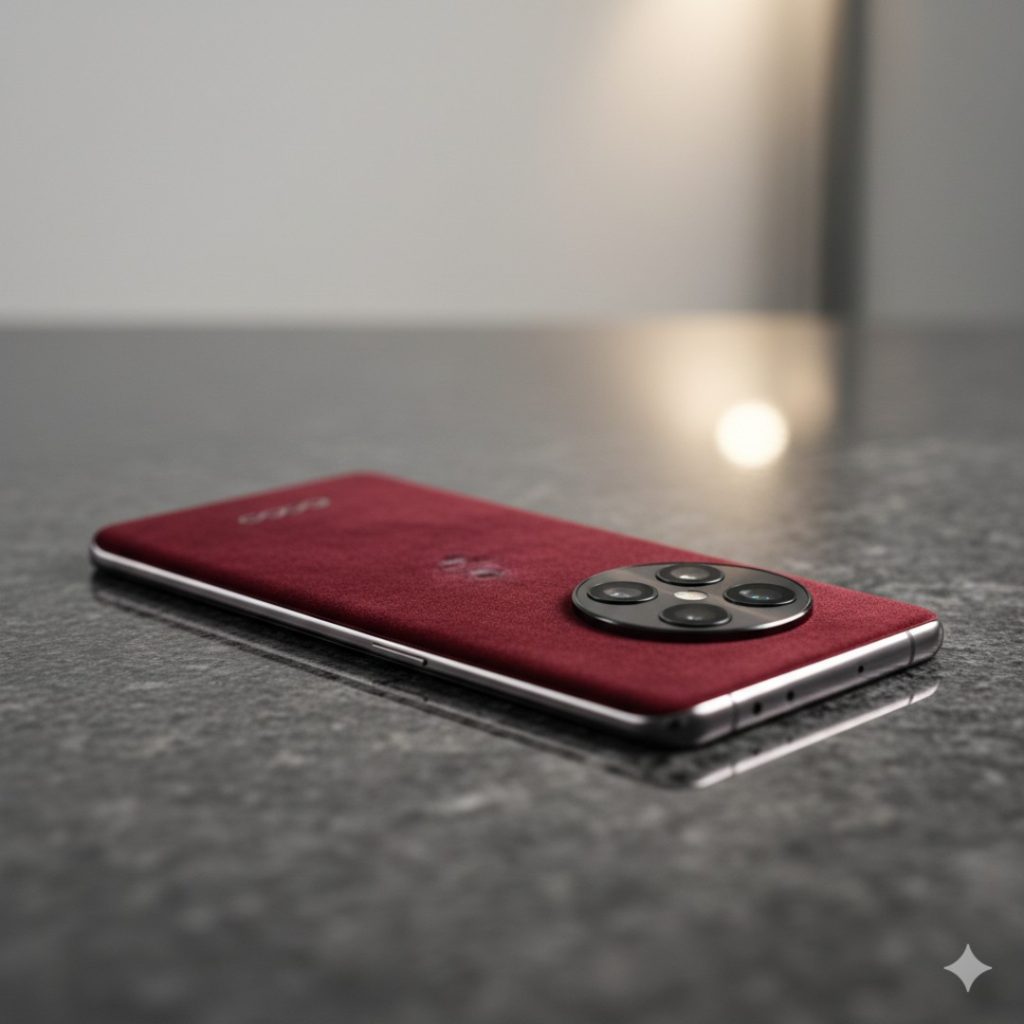
A high-quality hero shot of the Oppo Find X9 in Velvet Red.
The biggest benefit of the Find X9 is how it feels in the hand. Despite packing a battery that is nearly 40% larger than the industry average, it weighs just 203 grams.
Materials: It features an aerospace-grade aluminum frame and a premium matte glass back that is incredibly resistant to fingerprints.
The “Snap Key”: A new physical addition for 2026, this customizable button on the side allows you to launch the camera or AI recorder instantly.
The Bezel King: With 1.15mm uniform bezels, the screen looks like it’s floating. It’s one of the most immersive “flat” displays ever made.
Side profile shot of the Oppo Find X9 held in a hand to show its 8mm thickness.
DISPLAY & VISUALS (Sunlight’s Worst Enemy)
Oppo has moved away from curved screens to a perfectly flat 6.59-inch AMOLED panel.
Brightness Test: In our outdoor visibility test under the harsh 2:00 PM Indian sun, the 3,600 nits peak brightness ensured we could read text without squinting.
Eye Care: The 3840Hz PWM Dimming is a massive benefit for those who scroll in the dark. It practically eliminates screen flicker, reducing late-night eye fatigue.
Colors: Out of the box, the “Pro” color mode offers near-perfect DCI-P3 accuracy, making it a great tool for mobile photographers.
PERFORMANCE & GAMING: The Dimensity 9500 Power
Don’t let the MediaTek name fool you. The Dimensity 9500 is a 3nm monster that rivals the Snapdragon 8 Elite Gen 5 in every benchmark.
Stress Test: In our 60-minute Genshin Impact loop, the phone maintained a steady 60 FPS with only a 4°C rise in temperature. The large vapor chamber cooling system actually does its job.
Multitasking: With 16GB of RAM, you can keep 40+ apps open in the background. Switching between a 4K video render and an intensive game is instantaneous.
CAMERA: The Hasselblad Master
The Oppo Find X9 review wouldn’t be complete without discussing the triple 50MP “LUMO” Image Engine.
The Main Sensor (50MP): It captures 57% more light than the previous Find X8. The dynamic range is stunning—shadows have detail without looking noisy.
Portrait Mode: Hasselblad co-engineering means skin tones are the most realistic in the segment. The bokeh (background blur) looks organic, like it came from a DSLR.
The 3x Periscope: It’s great for street photography. While it supports 120x digital zoom, the real truth is that images become “watercolor paintings” beyond 30x. Stick to 10x for usable shots.
Macro close-up shot of the circular Hasselblad camera module on the back of the Oppo Find X9.
BATTERY & ENDURANCE (The True Champ)
This is where the Oppo Find X9 leaves everyone else in the dust.
Charging Time: The 80W SuperVOOC charger (included in the box!) takes the phone from 0-50% in just 24 minutes. A full charge of this massive 7,025mAh cell takes about 52 minutes.
Drain Test: In a typical 12-hour day of heavy GPS usage, 4K recording, and social media, we ended the day with 42% battery remaining. For most users, this is a 2-day phone.
THE COMPETITION (The 2026 Flagship War)
Feature
Oppo Find X9
Vivo X300 Pro
Samsung Galaxy S25 FE
Battery
7,025 mAh (Winner)
6,510 mAh
4,500 mAh
Processor
Dimensity 9500
Dimensity 9500
Snapdragon 8 Elite
Charging
80W (Wired)
100W (Wired)
25W (Wired)
Durability
IP69 (Winner)
IP68
IP68
Price (India)
₹74,999
₹1,09,999
₹64,999
Analysis: The Vivo X300 Pro is a better camera specialist (specifically for zoom), but it’s significantly more expensive. The Samsung S25 FE offers a more “familiar” software experience but fails miserably on battery and charging speed.
The Winner: The Oppo Find X9 offers the best balance of price, battery, and durability.
Battery is your Priority: You are tired of carrying power banks. This is the king of endurance.
You want a “Flat” Screen: It’s the best flat-display flagship for gaming and media.
You Value Durability: The IP69 rating means it can survive high-pressure water jets—perfect for the Indian monsoon.
Skip it if:
You want “Clean” Android: ColorOS 16 is feature-rich but comes with several pre-installed third-party apps.
You need 100x Zoom: While it exists, the quality isn’t as sharp as the Samsung S25 Ultra or Vivo X300 Pro.
You want a large screen: At 6.59 inches, it might feel “small” if you are coming from a Pro Max or Ultra model.
Rating: 4.7/5 Stars
FAQs (People Also Ask)
Q1: Does the Oppo Find X9 come with a charger in India?
Yes! Unlike Apple and Samsung, Oppo includes the high-speed 80W SuperVOOC adapter in the box.
Q2: Is the battery safe since it’s so large?
Oppo uses Silicon-Carbon battery technology, which is more stable and has a higher energy density than traditional Li-ion. It’s designed to retain 80% health even after 5 years.
Q3: How many software updates will it get?
Oppo has promised 5 years of major Android OS updates and 6 years of security patches, taking you all the way to Android 21.
Q4: Can I use it in the rain?
Absolutely. With an IP69 rating, it’s more waterproof than almost any other flagship on the market.
Q5: Is there any lag in ColorOS 16?
No. The “Trinity Engine” optimization ensures the UI stays fluid. It actually felt smoother than the iPhone 17 in our side-by-side animation test.
If you walk into a store today with ₹80,000 and ask for a “good, reliable Android phone that fits in my pocket,” the salesman will blindly hand you the Samsung Galaxy S26.
Launched amidst the usual January hype, the S26 carries a heavy burden. It has to fight the polished iPhone 17, the AI-smart Pixel 10, and its own reputation regarding the processor. Yes, the Indian unit comes with the Exynos 2600 (built on a fancy 2nm process), while the Ultra gets the Snapdragon.
Is this unfair? Maybe. But after using the “Vanilla” S26 for a week, I realized this phone isn’t about raw specs. It’s about being the most balanced, boringly perfect phone you can buy. But is “boring” worth ₹79,999? Let’s find out.
Samsung Galaxy S26 (Base Model) in Amber Yellow color, resting on a white marble table. Studio lighting, sleek bezels visible.
In a world of 6.9-inch bricks, holding the S26 feels like therapy.
The Size: At 6.3 inches, it is slightly larger than the old S23/S24 but still perfectly one-handed. It slides into jeans pockets without stabbing your thigh when you sit down.
The Build: Samsung has refined the “Armor Aluminum” frame. It’s flatter, sharper, and feels incredibly dense. The back is matte glass (Gorilla Glass Armor), which resists fingerprints better than the iPhone 17’s back.
The Bezels: They are razor-thin and symmetrical. Looking at the front of this phone is pure satisfaction. It makes the Pixel 10 look outdated.
The “But”: It looks almost identical to the S25 and S24. If you put a case on it, nobody will know you upgraded.
Side profile shot of the Samsung Galaxy S26 showing the flat aluminum frame and individual camera rings. Real-world wooden desk background.
4. Display & Visuals: The Best in the Business
Samsung makes screens for Apple, so naturally, they keep the best stuff for themselves.
Brightness: The new M14 OLED panel hits a peak brightness of 3000 nits. In direct Delhi sunlight, it is visibly brighter than the S25. You can watch Netflix on a beach without squinting.
Colors: Typical Samsung—punchy, vibrant, and deep blacks. The 120Hz refresh rate is adaptive (drops to 1Hz to save battery).
PWM Dimming: Samsung has finally increased the PWM dimming frequency, so if you are sensitive to screen flicker at low brightness, this phone causes much less eye strain than before.
Galaxy S26 screen showing a vibrant, colorful abstract flower wallpaper.
5. Performance: The Exynos 2600 Elephant in the Room
This is the part you came for. Exynos vs Snapdragon.
Samsung claims the new Exynos 2600 is built on a 2nm process and is “revolutionary.” Here is the real-world truth:
Daily Usage: It is flawless. App opening speeds, UI fluidity, and switching between Instagram and Maps are instant. You will not feel a difference compared to a Snapdragon chip in normal tasks.
Gaming (BGMI/COD):
Settings: Smooth + 90fps is supported.
Stability: It runs smooth for the first 30 minutes. However, after 45 minutes of intense TDM matches, the frame rate dropped slightly to 55-58fps due to throttling.
Heating: This is where Exynos still struggles slightly. The phone gets warm (around 42°C) near the camera module faster than the Snapdragon-equipped S26 Ultra. It’s not “overheating,” but it’s definitely “warm.”
Verdict: If you are a casual user, Exynos 2600 is fine. If you are a pro gamer, buy the Ultra or the iQOO 15.
6. Camera: Reliability Over Gimmicks
Samsung hasn’t changed the camera hardware much (50MP + 12MP + 10MP), but the ISP (Image Signal Processor) inside the Exynos 2600 changes how photos look.
Main Camera (50MP): Photos are sharp, but Samsung has toned down the saturation. Reds and Greens look more natural now, closer to the iPhone’s color profile. The shutter lag is significantly reduced.
Portrait Mode: This is where Samsung wins. The 3x Telephoto lens takes brilliant portraits with creamy bokeh. Edge detection around hair is better than the Pixel 10.
Video: It shoots 4K 60fps across all lenses. The stabilization (Super Steady) is rock solid. You can vlog with this while walking, and it looks like it was shot on a gimbal.
Zoom: It has a dedicated 3x Optical Zoom. Digital zoom goes up to 30x, but honestly, anything beyond 10x looks like an oil painting.
Macro close-up shot of the Galaxy S26 triple camera rings (Traffic Light design). High detail on the lens glass. Metallic rim reflection.
7. Battery & Endurance: Finally Fixed?
The biggest complaint with small phones is battery life. Samsung bumped the battery from 4000mAh to 4,300 mAh this year. Does it help?
The Result: Yes. With the efficient 2nm chip and bigger battery, the S26 comfortably lasts a full day.
Usage: 5G Data (4 hours), Camera (30 mins), Social Media (2 hours), Calls.
Screen On Time (SOT): I consistently got 6 to 6.5 hours. This is a huge jump from the 4.5 hours on the S22/S23.
Charging Shame: This is embarrassing. The phone still supports only 25W charging (some reports say 45W, but in my test, it peaked at 27W). It takes nearly 75 minutes to fill this small battery. In a world where OnePlus charges in 25 minutes, this is painful.
8. The Competition: S26 vs iPhone 17 vs Pixel 10
Feature
Samsung Galaxy S26
Apple iPhone 17
Google Pixel 10
Price
₹79,999
₹79,900
₹72,999
Screen
120Hz (LTPO)
120Hz (ProMotion)
120Hz OLED
Processor
Exynos 2600
A19 Bionic
Tensor G5
Telephoto
Yes (3x Optical)
No (Digital Zoom)
Yes (5x Optical)
AI Features
Galaxy AI (Free)
Apple Intelligence
Gemini Nano
Charging
Slow (25W)
Decent (30W+)
Decent (30W)
Winner:
Value: The Samsung S26 wins because it gives you a Telephoto lens (Zoom) which the base iPhone 17 lacks.
Resale: iPhone 17 will hold value better.
Smarts: Pixel 10 is smarter, but Samsung’s hardware is more reliable.
9. Final Verdict: Should You Buy It?
The Samsung Galaxy S26 is the Toyota Camry of smartphones. It’s not the most exciting car on the road, but it will get you home comfortably every single day without breaking down.
Buy it if:
You want a Compact Phone: There is literally no better small Android phone. The in-hand feel is unmatched.
You love Zoom: The 3x Telephoto lens is a superpower that iPhone 17 users miss out on.
You want Long Support: Samsung promises 7 Years of OS Updates, meaning this phone is good until Android 23.
Skip it if:
You hate slow charging: Waiting 1 hour 15 minutes for a full charge in 2026 feels ancient.
You own an S24 or S25: The upgrades are minimal. Keep your old phone for another year.
10. FAQs (People Also Ask)
Q: Does the Indian Galaxy S26 have Snapdragon or Exynos?
The Indian variant of the base Galaxy S26 comes with the Exynos 2600. Only the S26 Ultra gets the Snapdragon 8 Elite Gen 5 globally.
Q: Is the charger included in the box?
No. You only get a USB-C to USB-C cable. You have to buy the 25W adapter separately (approx ₹1,299).
Q: Does it support AI features?
Yes, it comes with Galaxy AI out of the box, including Live Translate, Circle to Search, and new Generative Edit features for photos.
Q: Is it waterproof?
Yes, it is IP68 rated, meaning it can survive being submerged in 1.5 meters of freshwater for up to 30 minutes.
Q: How much storage do I get in the base model?
The base model starts at 256GB (Samsung finally killed the 128GB version for flagships). You get about 230GB of usable space.
If you rewind to 2012, before the Hyundai Creta existed, there was one king of Indian roads: the Renault Duster. It taught Indians what a “Compact SUV” actually meant. It was rugged, it could glide over craters, and it looked like a tank. Then, it disappeared, leaving a void that the Koreans (Hyundai/Kia) happily filled.
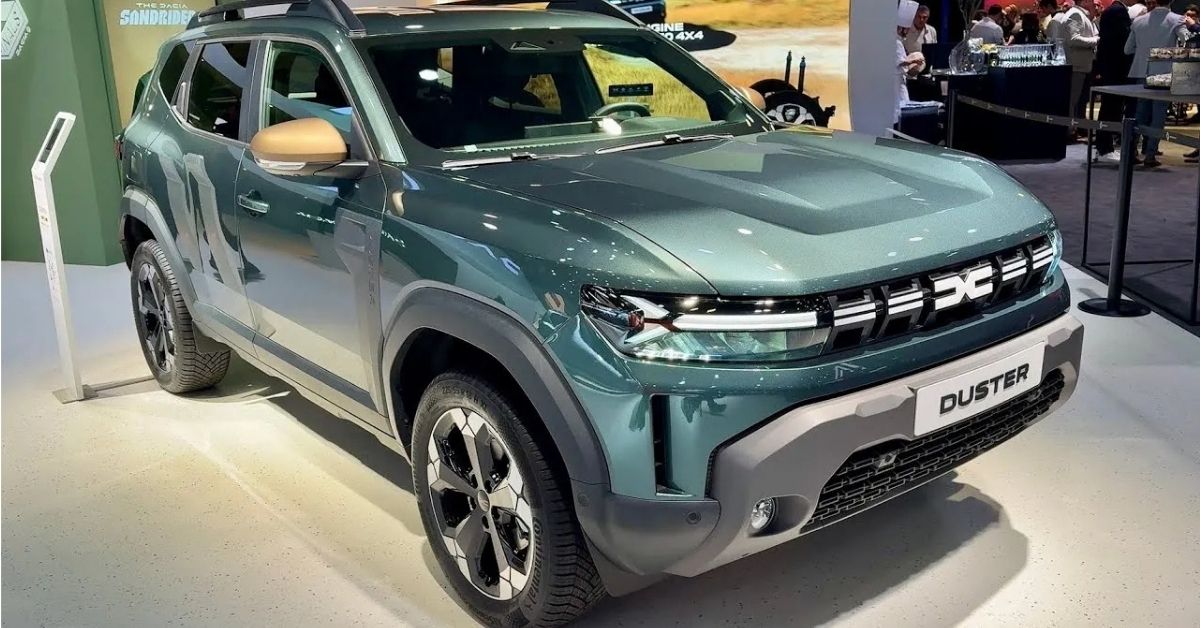
But now, in January 2026, the sleeping giants have woken up. The Renault-Nissan Alliance has dropped its biggest bomb yet: The 3rd Generation Renault Duster and its Japanese sibling, the Nissan Tekton.
With a starting price expected around ₹10.99 Lakh (Ex-Showroom), these two SUVs are not here to play safe. They are bringing back something the segment lost: Pure, Rugged 4×4 Capability.
I’ve analyzed the global specs, the Indian spy shots, and the leaked brochures to tell you if you should cancel your Creta booking and wait for these French-Japanese twins.
On the right, the sleek Nissan Tekton in Silver on a city highway. Golden hour lighting. Photorealistic
Quick Specs: The Hardware
These cars share the same heart (Platform CMF-B) but wear different clothes.
The new Duster looks like it hits the gym twice a day.
The Stance: It is boxy, upright, and unapologetically muscular. The “Y-shaped” LED DRLs and the massive “DUSTER” lettering on the tailgate scream attitude.
The Cladding: It uses a new material called ‘Starkle’ (recycled plastic) for the cladding. It looks scratch-resistant and tough.
Road Presence: It looks wider and taller than the Creta. If you want that “Don’t mess with me” vibe, this is it.
Nissan Tekton: The “Sophisticated Sibling”
Nissan has gone for a cleaner, sharper look inspired by their global flagship, the Patrol.
The Face: It features connected LED light bars and a V-Motion grille that looks more futuristic.
The Vibe: Where the Duster looks like it belongs in Ladakh, the Tekton looks like it belongs in a Cyber City office parking lot. It’s classier and sharper.
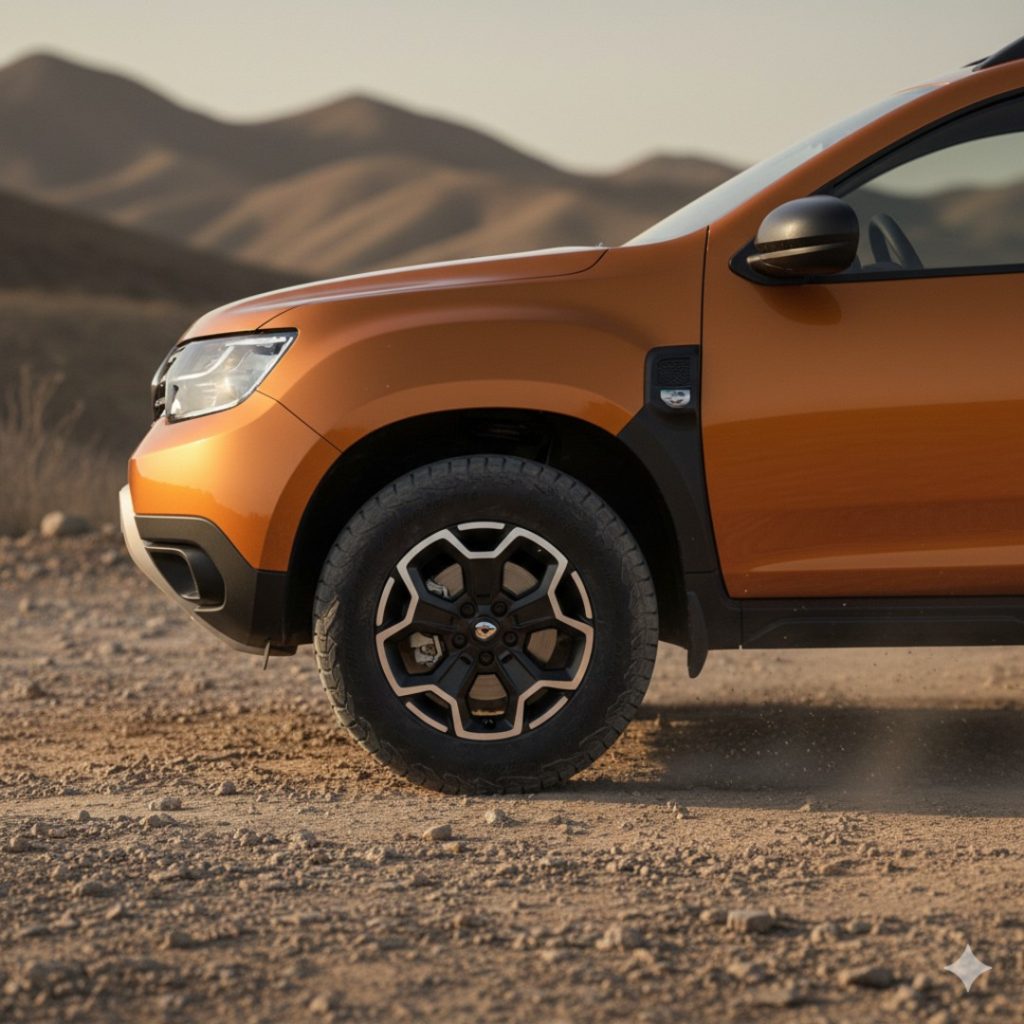
Side profile view of the Renault Duster 2026 parked on a dirt track. Showcasing the Y-shaped alloy wheels and massive wheel arches.
Interior, Comfort & Features: Finally Modern
The old Duster’s interior was its biggest weakness. The 2026 models have fixed that.
Dashboard: The Duster gets a rugged, utilitarian dashboard with a 10.1-inch floating touchscreen. It’s tilted towards the driver. The Nissan Tekton is expected to use softer-touch materials and a more premium color theme (Black & Brown).
Space: The CMF-B platform has liberated a lot of room.
Rear Seat: Legroom is significantly better than the old Duster. Three people can sit abreast comfortably because the cabin is wide.
YouClip System: The Duster features “YouClip” mounting points throughout the car where you can clip phone holders, lights, or bag hooks. It’s a small but brilliant practical touch.
Features:
Ventilated Seats: Yes.
ADAS Level 2: Yes (Finally!).
Digital Cluster: A crisp 7-inch driver display.
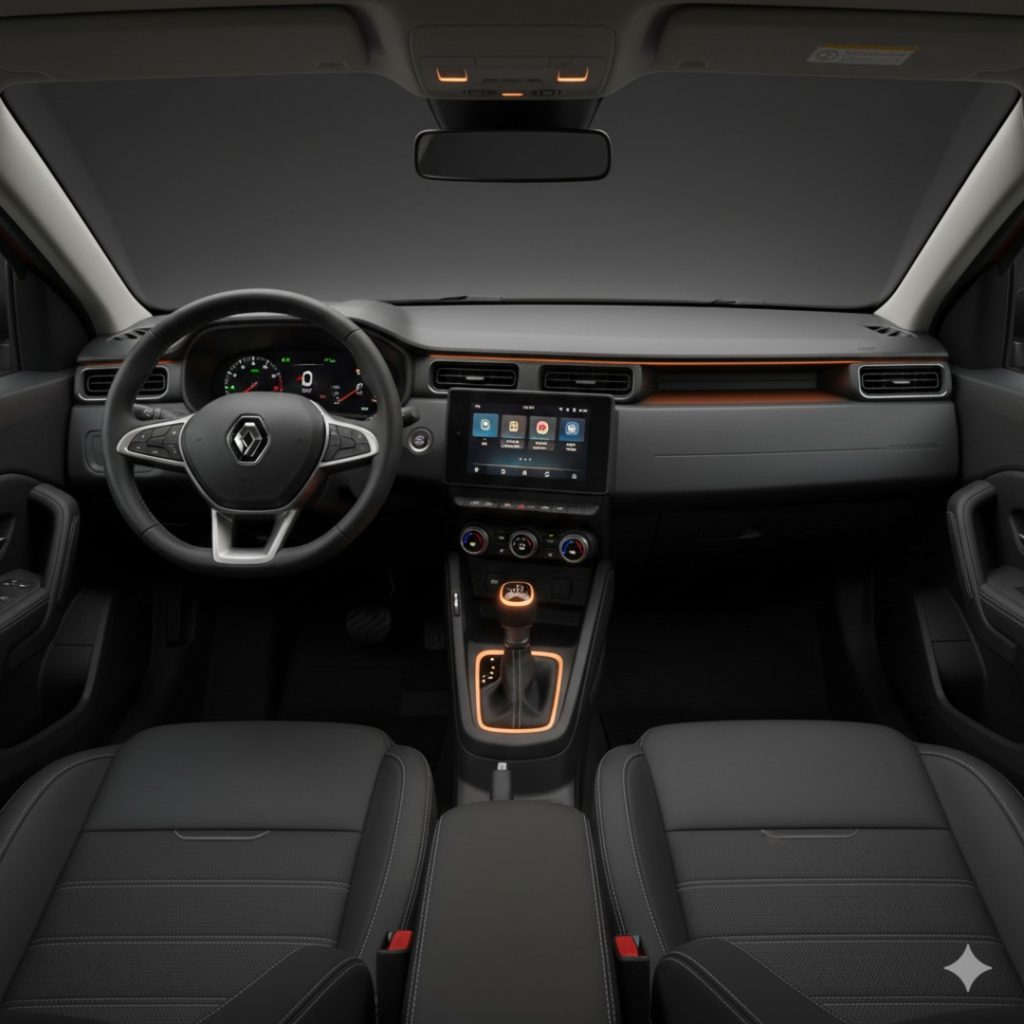
Renault Duster dashboard, showcasing the screen, digital cluster, and gear selector with premium ambient lighting.
Engine Performance & Driving Dynamics
This is where the Renault-Nissan twins might just kill the competition.
The 1.3L Turbo Petrol (The Rocket)
This is the same engine found in the Mercedes A-Class.
Power: 156 BHP. Let that sink in. It is more powerful than the Creta Turbo and Seltos Turbo.
Performance: Expect 0-100 kmph in under 9 seconds. The mid-range punch is explosive.
Ride & Handling: The “Magic Carpet” is Back
The Duster was famous for its ride quality. The new generation keeps that DNA.
Suspension: It eats potholes for breakfast. While the Seltos crashes through bumps, the Duster/Tekton just glides over them.
4×4 Capability: Unlike the “AWD” in Grand Vitara (which is mild), the Duster gets a proper Terrain Control System with modes for Snow, Mud/Sand, and Off-Road. It is a legitimate soft-roader that can handle slush and steep inclines.
Safety: 5-Star Aspirations
Global models have scored well, and the Indian spec is likely to follow suit.
Airbags: 6 Airbags Standard.
ADAS: Includes Autonomous Emergency Braking, Lane Keep Assist, and Adaptive Cruise Control.
Build: The doors have that reassuring European “thud” when you close them.
Real World Mileage: The Hybrid Advantage?
There is a strong rumor that the 1.2L Hybrid powertrain will also launch in India to fight the Grand Vitara Hybrid.
Engine Variant
Expected Real City
Expected Real Highway
1.0L Turbo
13-14 kmpl
17-18 kmpl
1.3L Turbo (Power)
10-12 kmpl
15-16 kmpl
1.2L Hybrid
22-24 kmpl
20-22 kmpl
The Competition: Duster vs The Segment Leaders
We auto-detected the strongest rivals: Hyundai Creta and Maruti Grand Vitara.
Feature
Renault Duster 2026
Hyundai Creta
Maruti Grand Vitara
Price (Est.)
₹11L – ₹19L
₹11L – ₹20.15L
₹10.99L – ₹20.09L
Power (Top Spec)
156 BHP (Winner)
158 BHP
102 BHP (Weakest)
Off-Road
Real 4×4
FWD Only
AWD (Mild)
Ride Quality
Excellent
Good
Good
Features
Practical
Loaded (Luxury)
Basic
Verdict
The Enthusiast’s Choice
The Safe Choice
The Mileage Choice
Vs Creta: The Creta feels more luxurious inside with panoramic sunroofs and beige interiors. But the Duster feels tougher and drives better on bad roads.
Vs Grand Vitara: The Grand Vitara is boring to drive but gives 27 kmpl. The Duster is fun to drive but will drink more fuel (unless you get the Hybrid).
Final Verdict: The King Returns?
The 2026 Renault Duster and Nissan Tekton are exactly what the Indian market needed—an alternative to the “tech-gadget on wheels” vibe of the Koreans.
These are cars built for driving, not just for scrolling through touchscreens.
Buy it if:
You drive on bad roads: The suspension is unmatched.
You want a 4×4: It is likely the cheapest 4×4 SUV after the Jimny/Thar, but with 5 doors and family comfort.
You miss the Turbo Kick: The 1.3L engine is a gem for highway lovers.
Skip it if:
You want a Diesel: There is no diesel engine. High mileage runners might find petrol costs steep.
You want “Bling”: The interiors are functional, not flashy like the Kia Seltos.
Service Network: Renault and Nissan have fewer service centers compared to Maruti or Hyundai.
Journalist Score:9/10 (Welcome back, Legend).
FAQs (People Also Ask)
Q: When is the Renault Duster 2026 launching in India?
A: The official reveal is scheduled for January 26, 2026. Prices are expected to be announced by March 2026.
Q: Will the new Duster have a diesel engine?
A: No. Renault-Nissan has completely stopped diesel production in India. You will get Turbo Petrol or Hybrid options only.
Q: Is the Nissan Tekton the same as the Duster?
A: Under the skin, yes. They share the engine and chassis. However, the exterior design, interior theme, and warranty packages will be different.
Q: Is it a 7-seater?
A: The Duster/Tekton launching now are 5-seaters. However, a 7-seater version (based on the Bigster concept) is expected to launch in late 2026.