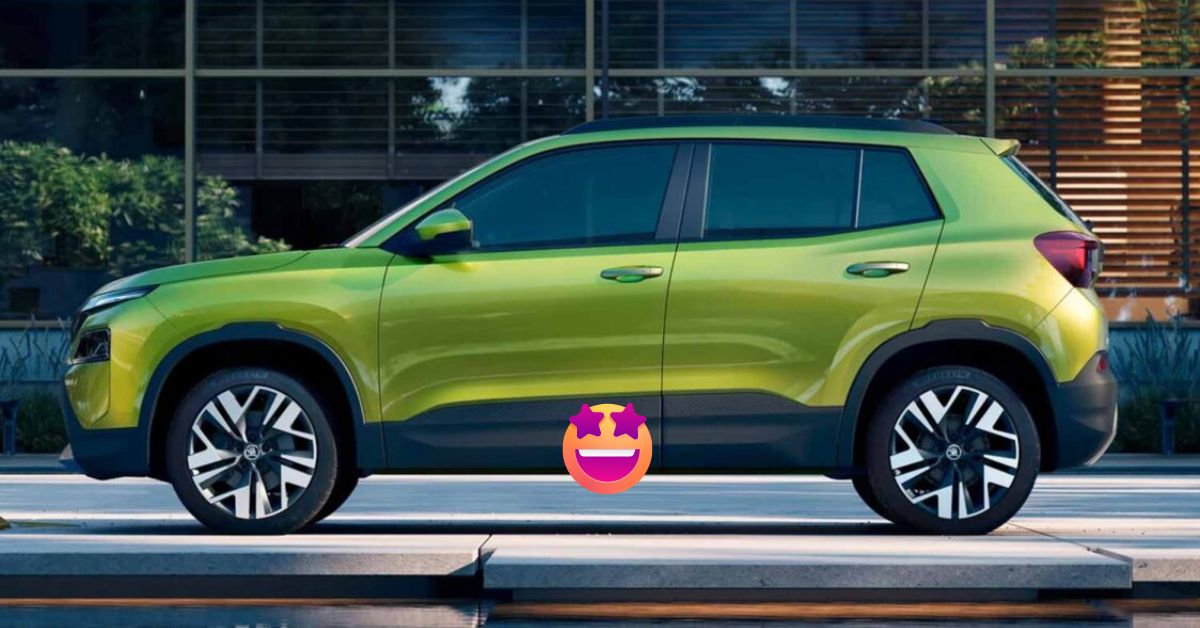
Only COD || Advance में ₹1 भी नहीं देना है
volkswagen-tera-suv

Volkswagen Tera Full Specifications: 114bhp Turbo Engine, ADAS, and Safety Rating.

For years, Volkswagen fans in India have been asking for one thing: a compact SUV that doesn’t cost a fortune but still feels like a “proper” German car. While the Taigun and Virtus satisfied the premium crowd, the entry-level segment was left wide open for rivals like the Tata Nexon and Maruti Brezza.

Enter the Volkswagen Tera SUV. Revealed globally in late 2024 and expected to hit Indian showrooms by March 2026, this sub-4-meter crossover is Volkswagen’s biggest bet yet for the Indian mass market. With an expected starting price of ₹8.90 Lakh (Ex-showroom), the Tera is built on the heavily localized MQB-A0-IN platform—the same foundation that made the Skoda Kylaq possible.

The real truth is, Volkswagen is no longer playing the “luxury-only” card. They want your family’s first SUV to be a VW. But with heavy competition and a price tag that sits slightly above its rivals, the question remains: Is it worth the price tag? Don’t waste your money if you are looking for a soft, pillowy ride—the Tera is built for the driver who loves to take corners.
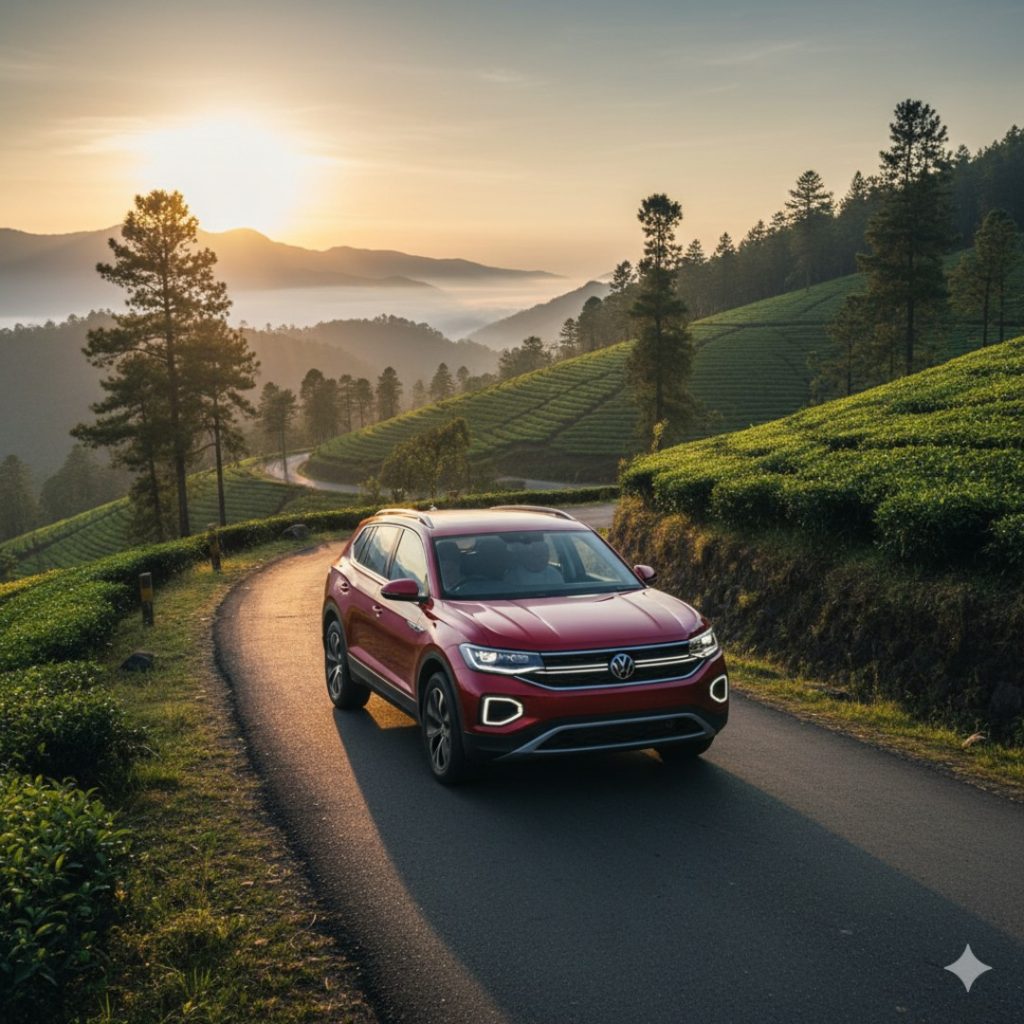
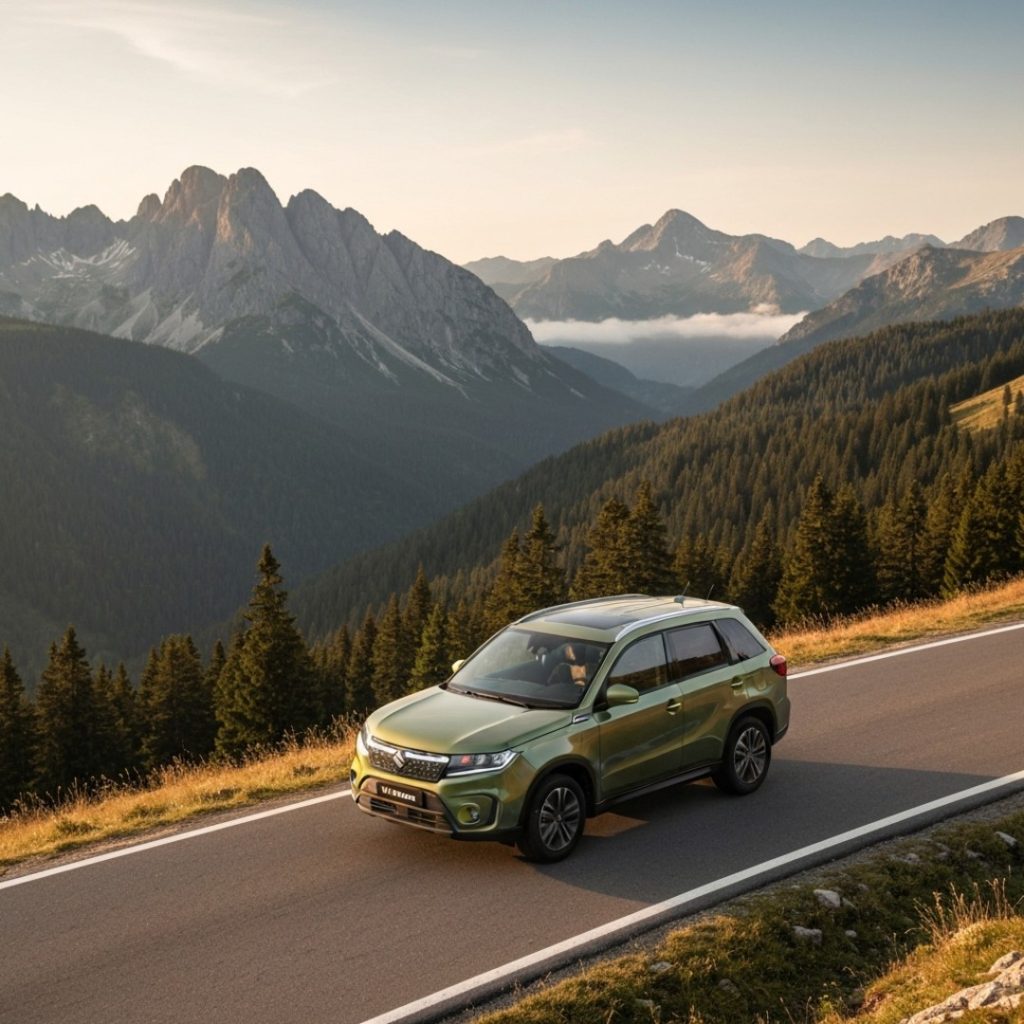
A cinematic front-angle shot of the Volkswagen Tera SUV in a deep ‘Lava Red’ color being driven on a winding scenic road in the Western Ghats

1. QUICK SPECS TABLE (Key Highlights)

FeatureDetails (Expected India Spec)
Engine1.0L 3-Cylinder TSI (Turbocharged)
Power114 BHP @ 5000-5500 rpm
Torque178 Nm @ 1750-4500 rpm
Transmission6-Speed Manual / 6-Speed Torque Converter
Boot Space350 – 380 Litres
Ground Clearance189 mm
Fuel Tank Capacity45 Litres

2. EXTERIOR DESIGN & ROAD PRESENCE

Volkswagen has kept the Tera’s design “clean and timeless,” which is a polite way of saying it doesn’t look like a Christmas tree.

  • Front Profile: It features a slim, horizontally slatted grille that connects seamlessly to the LED headlamps. It looks like a “Mini-Tiguan,” which gives it a more mature road presence than the quirky Kia Sonet.
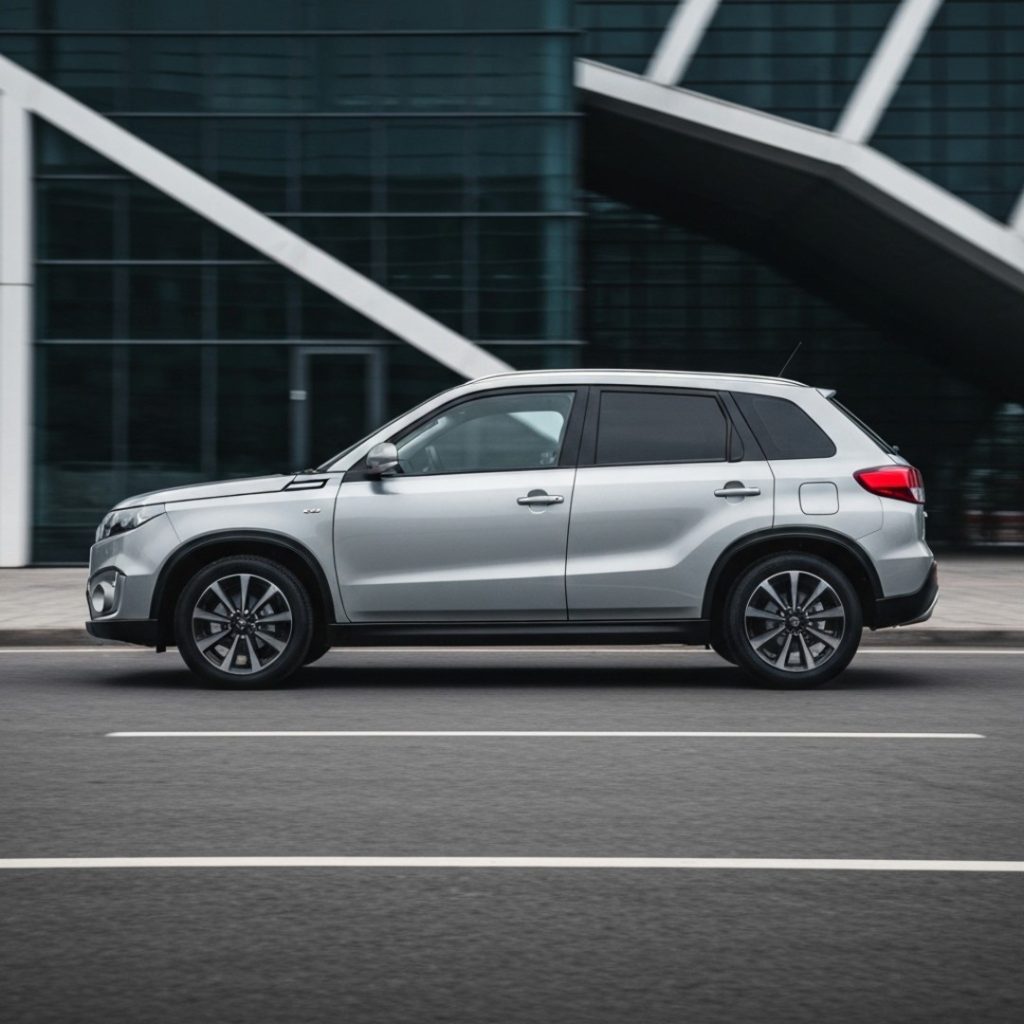
  • Side Profile: The 189mm ground clearance is evident, and the 16-inch (or 17-inch on top trims) alloy wheels fill the arches well. The sharp character line running from the fender to the taillight is a classic VW touch.
  • Rear Design: You get a full-width LED light bar, similar to the Taigun, which looks stunning at night. Does it turn heads? Maybe not like a flashy Mahindra, but it exudes a “silent wealth” vibe that many Indian professionals prefer.

3. INTERIOR, COMFORT & FEATURES

If you’ve sat in a Taigun, you’ll feel right at home here. The layout is minimalist and driver-centric.

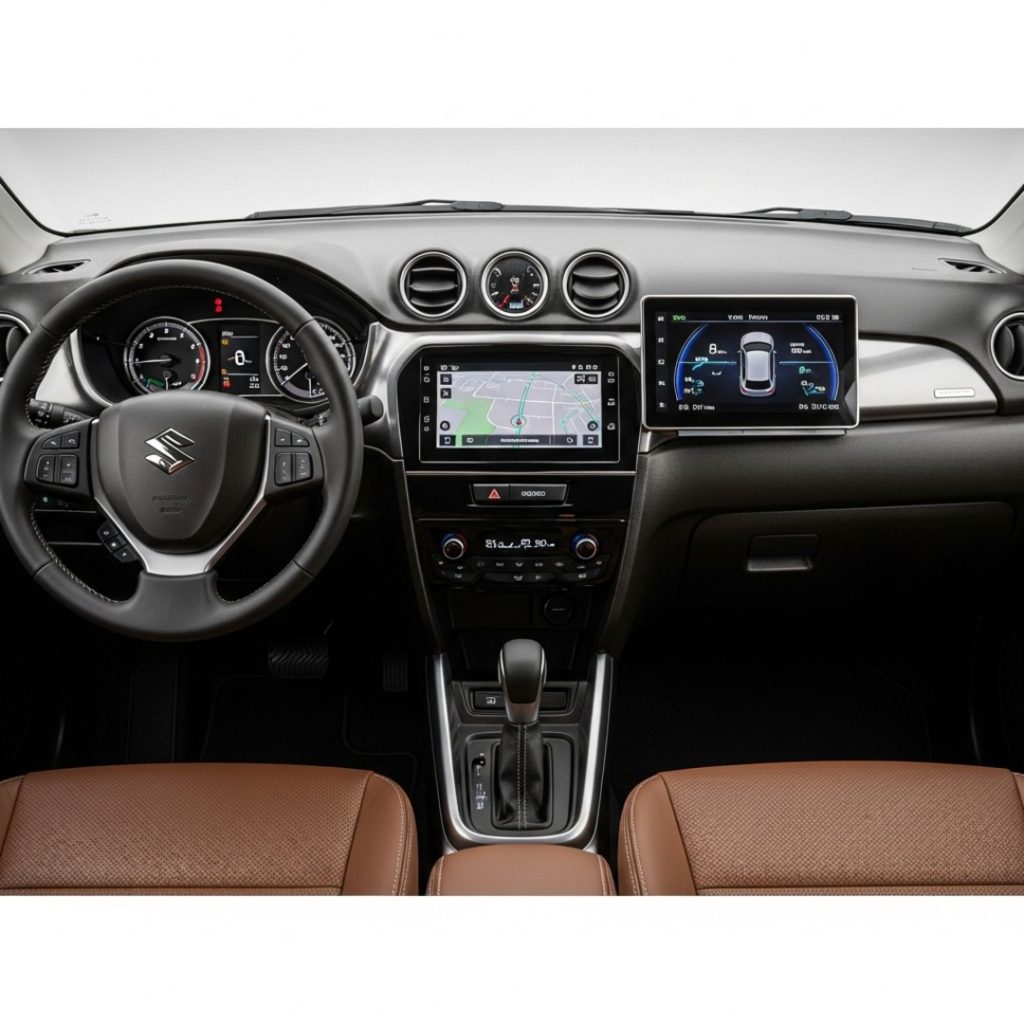
  • Dashboard: You get a 10-inch Play infotainment system that is incredibly smooth. The material quality is top-notch in terms of fit and finish, though you will find hard plastics on the lower half of the dashboard to keep costs down.
  • Space: The wheelbase is generous for a sub-4m car. Legroom at the back is decent, but seating three adults is a squeeze. It’s perfect for a family of four.
  • The Feature List:
    • Included: Wireless Android Auto/Apple CarPlay, Ventilated Seats (Top Trim), Electric Sunroof, and Digital Cockpit.
    • Missing: 360-degree camera (expected only in a future facelift) and a powered tailgate.
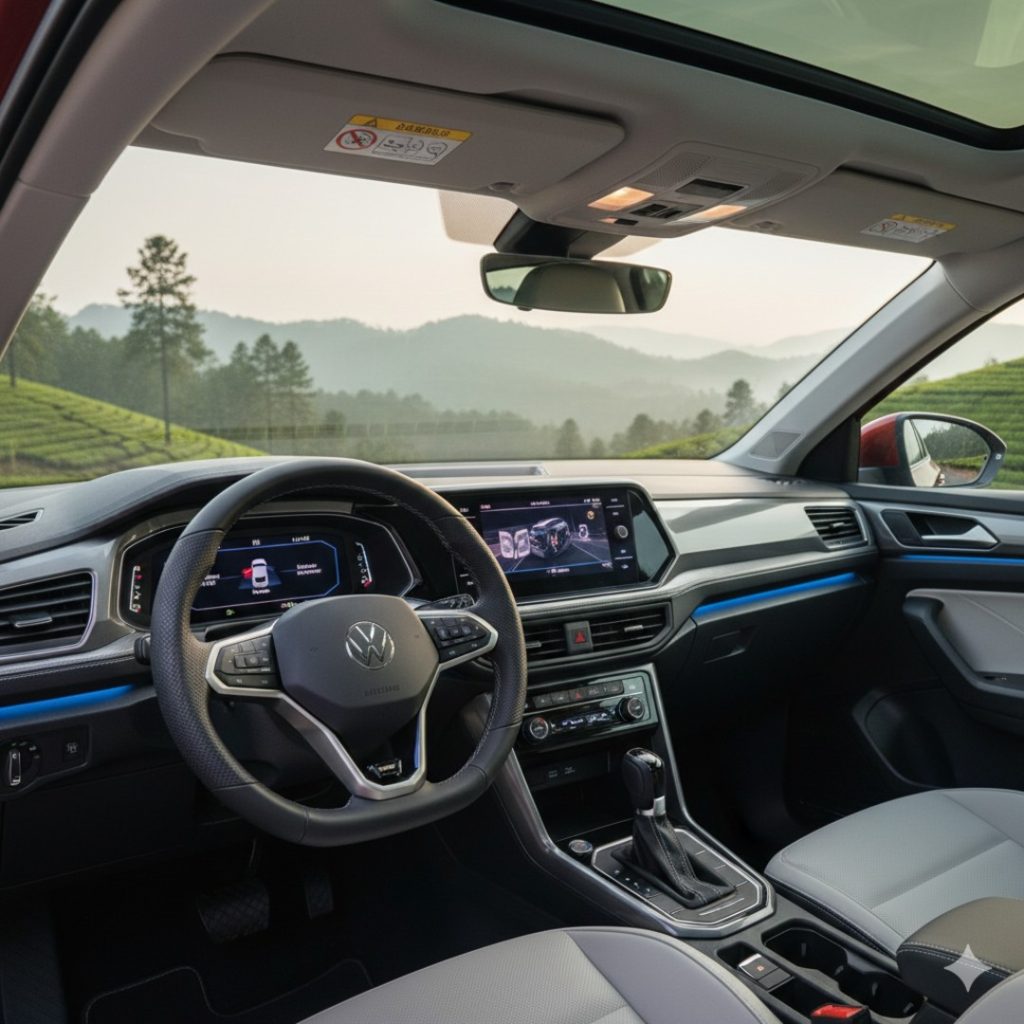
A wide-angle interior shot of the Volkswagen Tera SUV’s dashboard. Highlighting the digital instrument cluster and the large touchscreen infotainment.

4. ENGINE PERFORMANCE & DRIVING DYNAMICS

This is where the Volkswagen Tera SUV justifies its price.

  • The 1.0L TSI Magic: Don’t let the small displacement fool you. The 1.0L Turbo Petrol produces 114 BHP and feels incredibly punchy on highways once the turbo kicks in at 1750 rpm.
  • City Drive: The steering is light and precise. However, the real truth is, there is a slight turbo lag below 1500 rpm. You might find yourself shifting down a gear in heavy Mumbai or Bangalore traffic.
  • Highway Drive: It stays glued to the road at 100kmph+. There is minimal body roll, and the brakes provide excellent “bite” and confidence.
  • Suspension: The suspension is tuned on the firmer side. The suspension absorbs potholes easily at high speeds, but you will feel the sharper bumps at low speeds. It’s a trade-off for that legendary German handling.

5. SAFETY (The German Fortress)

Safety is the Tera’s strongest selling point. The global model recently scored a 5-star rating in Latin NCAP, and the India-spec version is expected to follow suit in Bharat NCAP.

  • Standard Safety: Even the base variant is expected to come with 6 Airbags, ESC (Electronic Stability Control), and Multi-Collision Braking.
  • Build Quality: The “thud” when you close the doors is reassuring. It feels far more solid than the Korean rivals in this segment.

6. REAL WORLD MILEAGE (The Truth)

TSI engines are sensitive to driving style. If you have a “heavy foot,” the mileage will drop significantly.

  • ARAI Claimed Mileage: 19.2 kmpl (Manual)
  • Real World City Mileage: 11 – 13 kmpl
  • Real World Highway Mileage: 16 – 18 kmpl (Driving at 80-90 kmph)

7. THE COMPETITION

Volkswagen Tera vs Tata Nexon vs Maruti Brezza

FeatureVW TeraTata NexonMaruti Brezza
Engine1.0L Turbo (114 BHP)1.2L Turbo (118 BHP)1.5L NA (101 BHP)
Driving FeelSporty & PreciseSolid & HeavySmooth & Easy
Safety5-Star (Expected)5-Star (Global/Bharat NCAP)4-Star (Previous GNCAP)
Value (VFM)Premium BuildHigh Feature CountReliability & Service

The Winner: If you are a driving enthusiast, the VW Tera is the clear winner. For features and ruggedness, the Nexon takes the lead. For peace of mind and resale, the Brezza is still king.

Read More : Nissan Gravite

8. FINAL VERDICT

Buy it if:

  • You want German engineering and safety at a sub-4m price point.
  • You enjoy driving and want a car that feels stable at high speeds.
  • You prefer a clean, minimalist design over “busy” futuristic styling.

Skip it if:

  • You want the cheapest maintenance (VW parts are still pricier than Maruti/Tata).
  • You need a soft, cushy ride for purely city use.
  • You need a wide rear seat for three healthy adults.

Score: 8.5/10

9. FAQs (People Also Ask)

What is the expected launch date of the Volkswagen Tera in India?

It is expected to launch around March 27, 2026, with bookings likely opening a month prior.

Will there be a diesel option?

No, Volkswagen has moved away from diesel in India. The Tera will only be available with the 1.0L TSI petrol engine.

Is the VW Tera a 5-seater or 7-seater?

The Tera is strictly a 5-seater compact SUV.

What is the estimated on-road price?

While the ex-showroom might start at ₹8.90 Lakh, the top-end automatic variant could go up to ₹16 Lakh on-road in most cities.

How is the maintenance cost compared to Maruti?

Under VW’s “4EVER Care” program, maintenance has become more affordable, but it will still be 20-30% higher than a Maruti Brezza over a 5-year period.
nissan-gravite

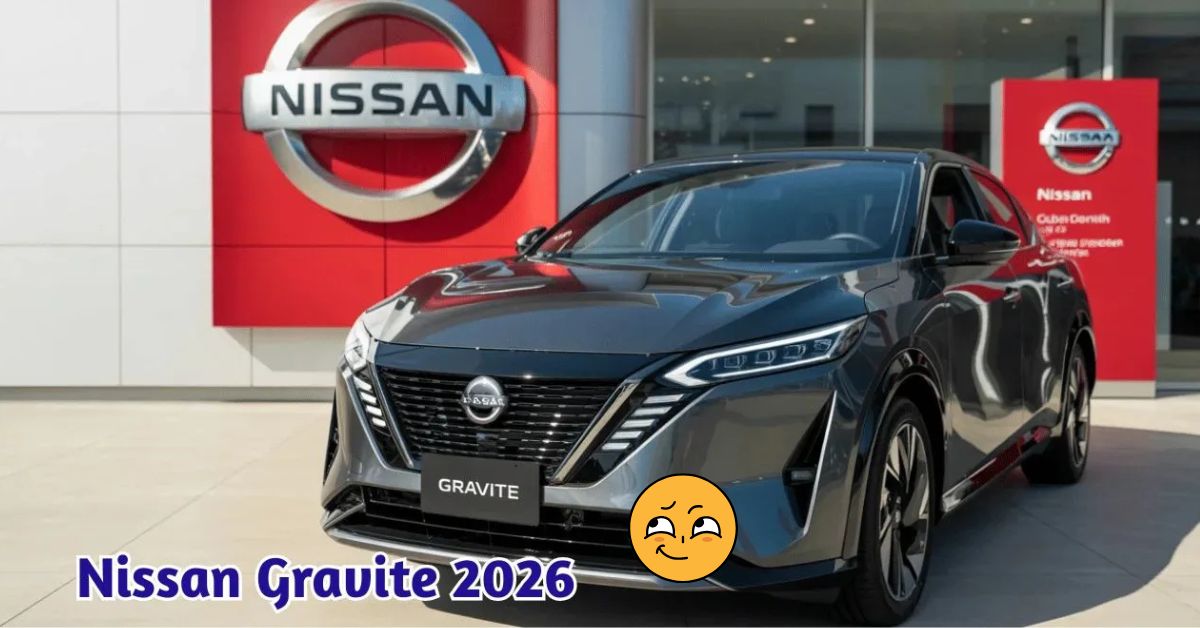
Nissan Gravite 2026 Review: The Most Affordable 7-Seater MPV in India?

The Indian family car market is about to get a serious “Gravity” pull. After the massive success of the Magnite, Nissan is finally expanding its portfolio with a car that 1.4 billion people have been asking for: an affordable, stylish, and practical 7-seater. Say hello to the Nissan Gravite.

Expected to debut on January 21, 2026, with an aggressive starting price of ₹6.20 Lakh (Ex-showroom), the Gravite is not just a “badge-engineered” twin of the Renault Triber. It is a strategically designed B-MPV aimed at middle-class Indian households who need the space of an Ertiga but have the budget of a hatchback. The real truth is, Nissan is betting everything on this “resurgence” strategy. If you’ve been looking for a car that fits your entire “Tribe” without breaking the bank, this might be your next ride. But is it worth the price tag when compared to established rivals? Let’s peel back the layers.

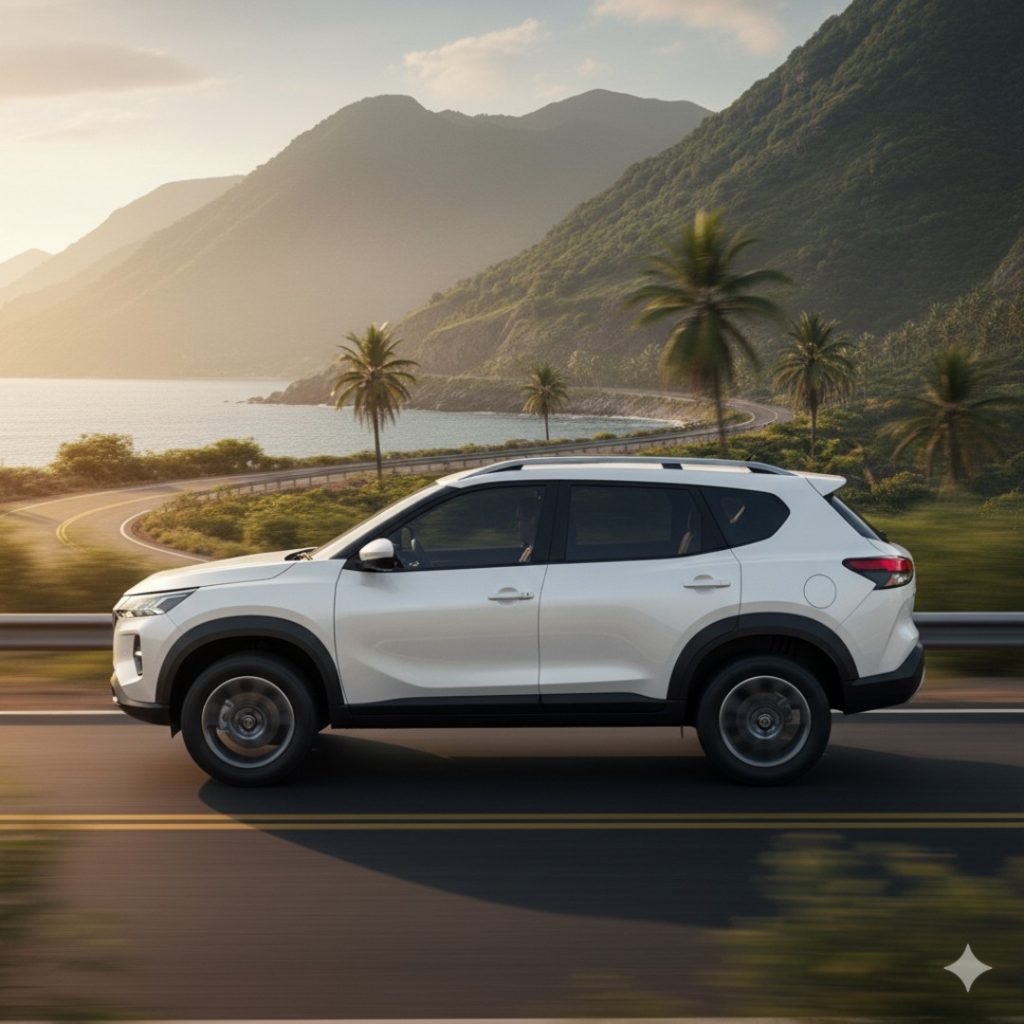
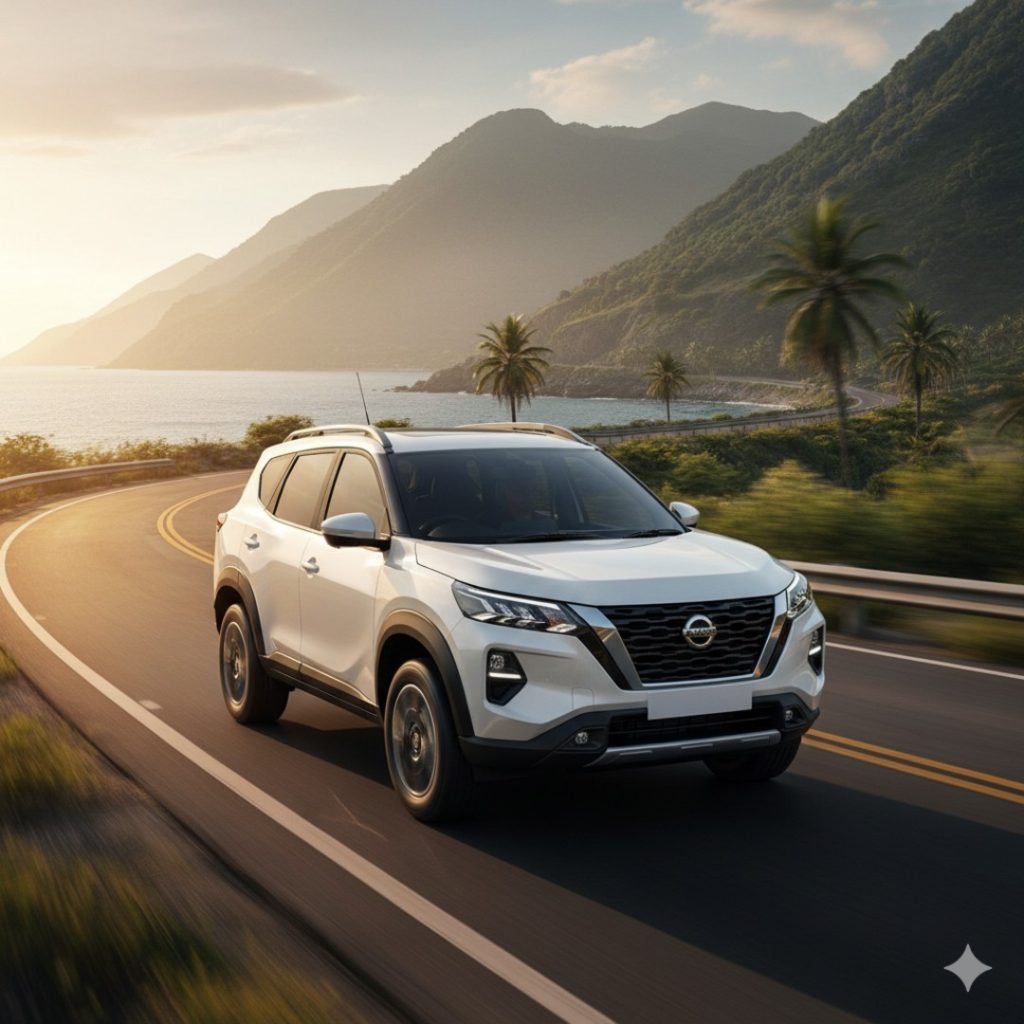
A cinematic front-angle shot of the Nissan Gravite in a vibrant Pearl White color being driven on a scenic Indian coastal highway.

2. QUICK SPECS TABLE (Key Highlights)

FeatureSpecification Details
Engine1.0L BR10 3-Cylinder Petrol
Power72 PS @ 6250 rpm
Torque96 Nm @ 3500 rpm
Transmission5-speed Manual / 5-speed AMT
Seating Capacity7-Seater (Modular)
Ground Clearance182 mm
Fuel Tank40 Litres
Boot Space84L (All seats up) / 625L (3rd row removed)

3. EXTERIOR DESIGN & ROAD PRESENCE

Nissan has a knack for making budget cars look expensive. The Gravite follows the design language of its big brother, the X-Trail, and the global Ariya.

  • The Front Fascia: Unlike the Triber’s curvy look, the Gravite gets a bold, upright C-shaped grille. The “GRAVITE” lettering is embossed right on the bonnet, giving it a very “Land Rover-esque” premium vibe.
  • Lighting: You get sleek horizontal LED DRLs and segmented headlamps that look futuristic. Does it turn heads? Absolutely. Especially in the new signature “Sunset Orange” or “Nebula Blue” shades.
  • Stance: For a sub-4-meter car, it looks surprisingly muscular. The 182mm ground clearance and tall roof rails give it an SUV-inspired silhouette that Indian buyers love.
Side profile view of the Nissan Gravite parked on a clean asphalt mountain road.

4. INTERIOR, COMFORT & FEATURES

Step inside, and you’ll notice that Nissan has worked hard to move away from the “budget” feel of its platform-mate.

  • Dashboard & Tech: You are greeted by an 8-inch floating touchscreen with wireless Android Auto and Apple CarPlay. The instrument cluster is a 7-inch digital unit that looks much cleaner than the Magnite’s old-school graphics.
  • Seating Modularity: This is the Gravite’s superpower. You can fold, slide, or completely remove the third-row seats.
  • Space: * Front/Middle Row: Excellent legroom. Two adults can sit comfortably in the middle row, and a child can squeeze in the center.
    • Third Row: Strictly for kids or short city trips. Don’t waste your money if you plan to seat seven tall adults for long highway journeys.
  • Missing Features: While it gets a wireless charger and rear AC vents, it misses out on a sunroof and ventilated seats—features that are becoming common even in this segment.

5. ENGINE PERFORMANCE & DRIVING DYNAMICS

Under the hood lies the familiar 1.0L Naturally Aspirated petrol engine.

  • City Drive: The steering is light, making it a breeze to park in tight spots like Karol Bagh or T. Nagar. The 1st and 2nd gears are short, so you won’t feel underpowered in “stop-and-go” traffic.
  • Highway Drive: This is where the 72 PS engine shows its limits. The real truth is, with 7 people and luggage, overtakes require careful planning. It feels most comfortable cruising at 80-90 kmph. At 120 kmph, the 3-cylinder engine starts to feel buzzy.
  • Suspension: This is a highlight. The suspension absorbs potholes easily, a typical trait of the CMF-A platform. Whether it’s a broken village road or a speed breaker, the Gravite stays composed without much bounciness.

6. SAFETY (The Nissan Shield)

Nissan isn’t taking safety lightly in 2026.

  • Airbags: 6 Airbags are expected as standard across top variants.
  • Build: While the Global NCAP rating isn’t out yet, its sibling (Triber) scored 4 stars. Nissan claims the Gravite uses reinforced steel in the A and B pillars for better crash protection.
  • Features: It comes with ABS with EBD, Electronic Stability Control (ESC), and Hill Start Assist.

7. REAL WORLD MILEAGE (The Truth)

Fuel prices are no joke, and Nissan knows it.

  • ARAI Claimed: 19.5 kmpl (Manual) / 18.2 kmpl (AMT).
  • Real World City: Expect 12-14 kmpl in heavy bumper-to-bumper traffic with the AC on full blast.
  • Real World Highway: You can easily achieve 16-18 kmpl if you maintain a steady foot.

8. THE COMPETITION: Nissan Gravite vs Rivals

FeatureNissan GraviteRenault TriberMaruti Ertiga
Engine1.0L (72 PS)1.0L (72 PS)1.5L (103 PS)
Price (Starting)₹6.20 Lakh₹6.00 Lakh₹8.80 Lakh
Safety6 Airbags (Top)4 Airbags4 Airbags
VFM FactorHigh (Design/Tech)High (Price)Medium (High Entry Price)

The Winner: If you want a car that looks modern and premium, the Nissan Gravite wins. If you want the absolute cheapest 7-seater, stick with the Triber. If you have a bigger budget and need more power, the Ertiga remains the king.

Read More : Skoda Kushaq Facelift

9. FINAL VERDICT

Buy it if:

  • You need a versatile 7-seater on a strict budget of under ₹9 Lakh (on-road).
  • You want a car with excellent ground clearance for rough roads.
  • You prioritize modern looks and a digital-first cabin.

Skip it if:

  • You do a lot of fully-loaded highway driving (The engine will feel underpowered).
  • You want a premium automatic (The AMT is convenient but jerky).
  • You are a speed enthusiast.

Score: 8/10

10. FAQs (People Also Ask)

What is the on-road price of Nissan Gravite in Delhi?

The expected on-road price for the base variant will be around ₹6.90 Lakh, while the top-end Tekna AMT could touch ₹10.5 Lakh.

Is there a CNG option available?

Yes, Nissan is expected to launch a factory-fitted Gravite CNG by mid-2026 to compete with Maruti’s S-CNG range.

What is the waiting period for Nissan Gravite?

Given the hype, expect a waiting period of 2 to 4 months post-launch in major cities like Mumbai and Bangalore.

Does it have an automatic transmission?

Yes, it comes with a 5-speed Easy-Shift AMT which is great for city commutes.

Is Nissan Gravite better than Magnite?

They serve different needs. Magnite is a 5-seater SUV for those who want style and turbo power. Gravite is for the family man who needs extra seats.

skoda-kushaq-facelift

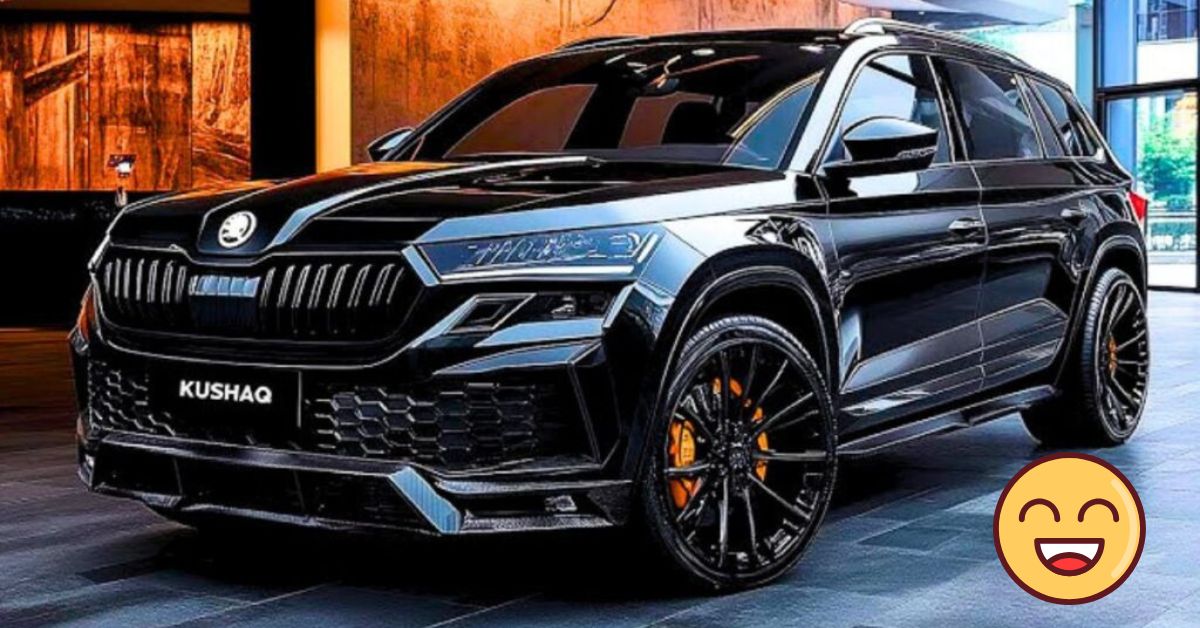
Skoda Kushaq Facelift (2026): Launch Date, Expected Price in India, New Design & Interior Updates, Engine Options, Mileage, Features, Safety, Variants, Colours, Booking & On-Road Details

In the Indian mid-size SUV segment, there are cars that sell on “features” and then there are cars that sell on “feeling.” The Skoda Kushaq Facelift, expected to launch in mid-2026, is attempting to master both. Since its 2021 debut, the Kushaq has been the darling of driving enthusiasts, but it often faced criticism for a “simple” interior and missing features like a panoramic sunroof.

The real truth is: Skoda has finally listened. The 2026 Facelift isn’t just a bumper job; it’s a strategic upgrade designed to take back the throne from the tech-heavy Hyundai Creta and the stylish Kia Seltos. With an expected ex-showroom starting price of ₹11.11 Lakh, it remains one of the most accessible ways to enter the world of European engineering.

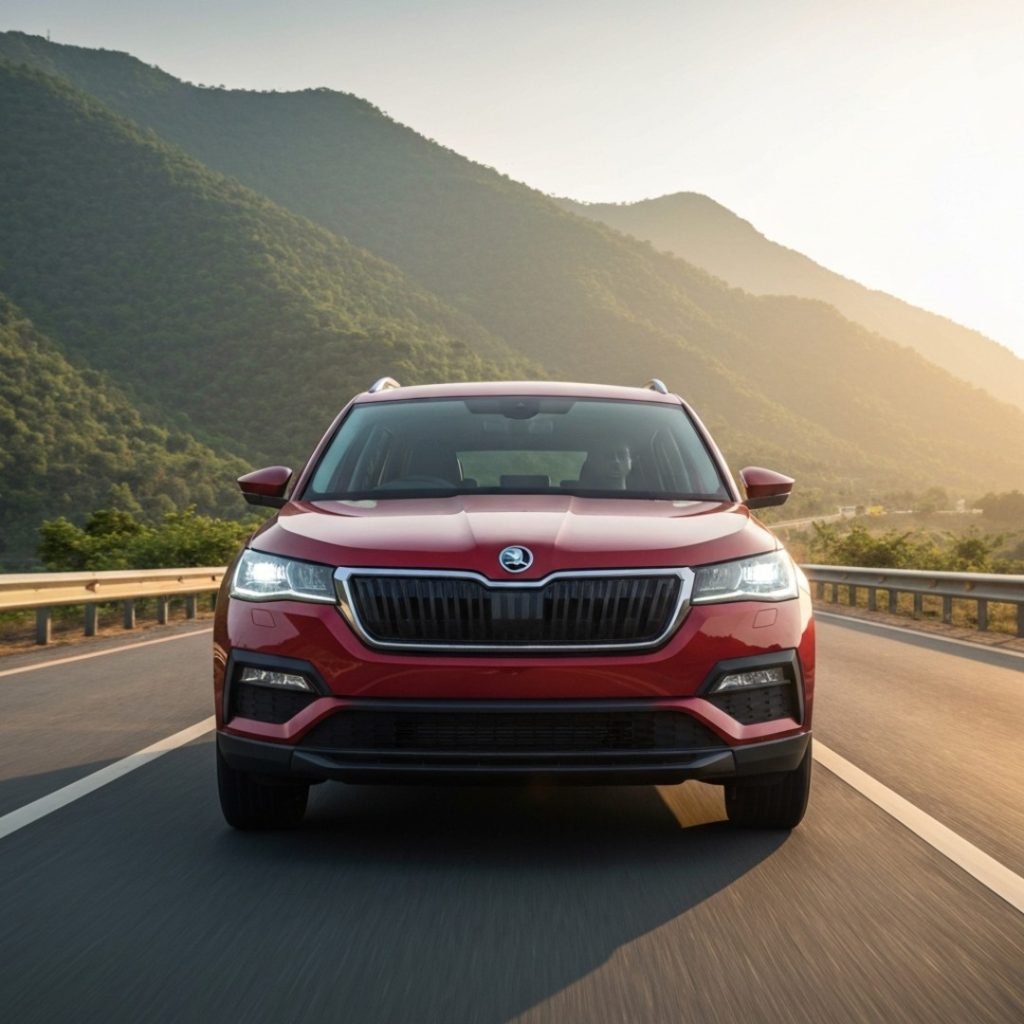
A cinematic front-angle shot of the Skoda Kushaq Facelift being driven on a scenic Indian highway with lush green mountains in the background.

1. QUICK SPECS TABLE (Key Highlights)

Feature1.0L TSI Petrol1.5L TSI Petrol
Engine999cc, 3-Cylinder Turbo1498cc, 4-Cylinder Turbo
Power (BHP)114 BHP @ 5000 rpm150 BHP @ 5000 rpm
Torque (NM)178 Nm @ 1750 rpm250 Nm @ 1600 rpm
Transmission6MT / 8-Speed AT (New)6MT / 7-Speed DSG
Ground Clearance188 mm188 mm
Boot Space385 Litres385 Litres
Fuel Tank50 Litres50 Litres

2. EXTERIOR DESIGN & ROAD PRESENCE

Skoda has adopted its new “Modern Solid” design language for this facelift. While the silhouette remains familiar, the details are far sharper.

  • The Grille: The signature butterfly grille now features a more 3D effect with chrome or piano black surrounds depending on the variant.
  • Lighting: You get the new “Crystalline” LED headlamps. Raat mein rasta bilkul din jaisa dikhta hai. The rear features a connected LED tail-lamp strip, which is the current trend in India.
  • Wheels: The 17-inch alloy wheels have a new “Aero” design that looks premium and helps slightly with fuel efficiency.
  • Road Presence: It still isn’t the biggest SUV in its class (the Creta and Elevate look bulkier), but it looks the most “planted” and athletic. It turns heads because of its clean, sophisticated lines, not loud styling.
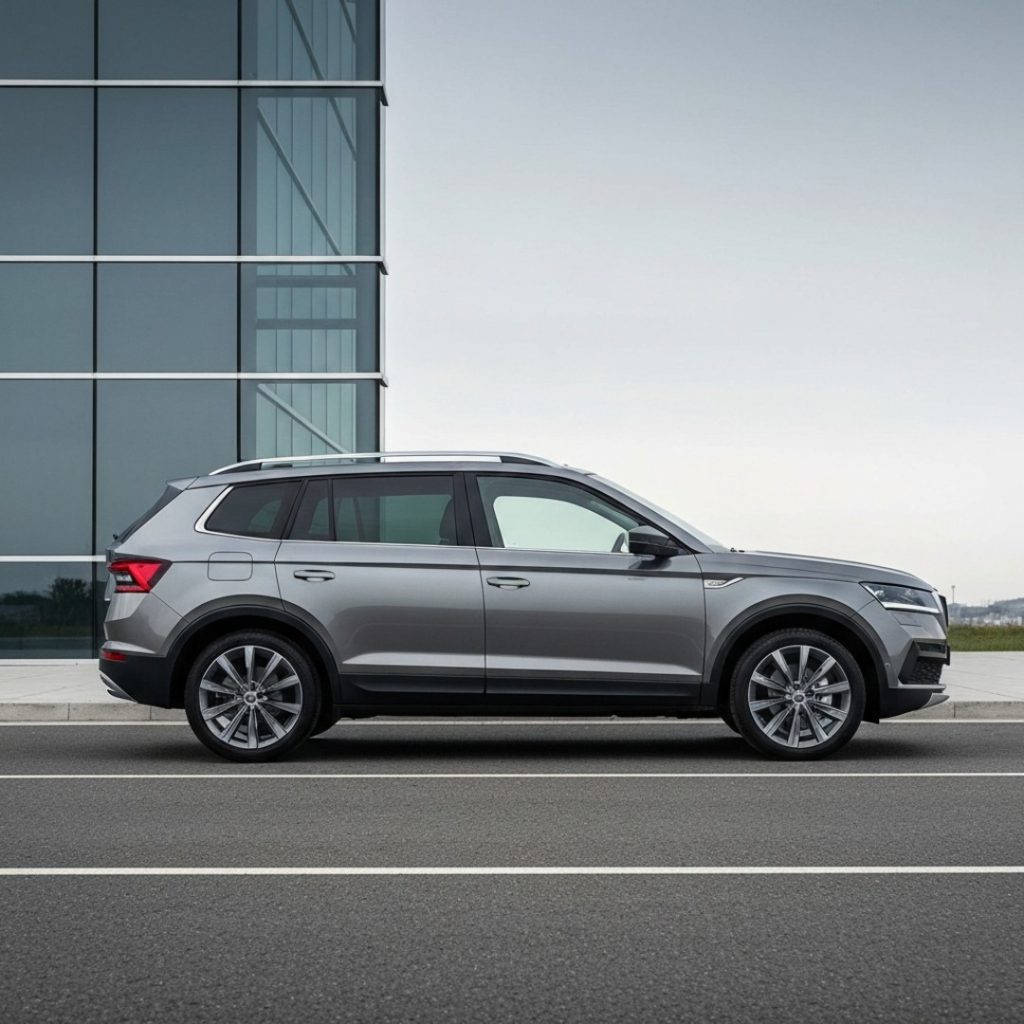
Side profile view of the Skoda Kushaq Facelift parked on a clean asphalt road near a modern glass building.

3. INTERIOR, COMFORT & FEATURES

If you found the old Kushaq cabin a bit “plain,” the facelift will surprise you.

  • Dashboard: The 10-inch touchscreen now features smoother graphics and integrated wireless Apple CarPlay/Android Auto. The plastic quality has improved, with more soft-touch materials on the mid-dash.
  • Space: The 2651mm wheelbase ensures excellent legroom. However, the real truth is: the Kushaq is still a 4-seater + 1 child car. Three healthy adults at the back will be a tight squeeze.
  • The “Big” Additions:
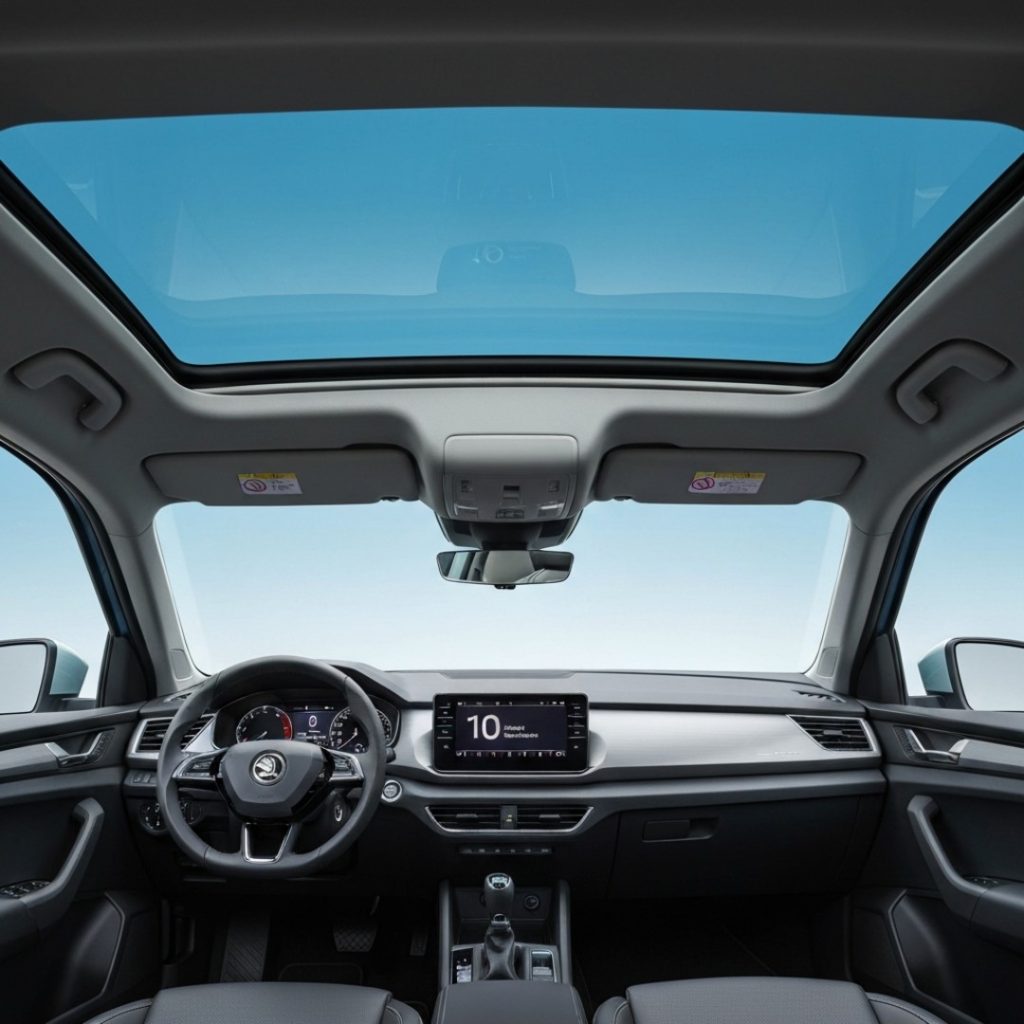
    • Panoramic Sunroof: Finally! The single-pane unit is gone.
    • Massage Seats: A segment-first massage function for the rear seats is rumored for the top-end Monte Carlo trim.
    • ADAS Level 2: Includes Adaptive Cruise Control and Lane Keep Assist for those long highway runs.
    • 360-Degree Camera: Making parking in tight Indian alleys much easier.
Wide-angle interior shot of the Skoda Kushaq Facelift dashboard. 

4. ENGINE PERFORMANCE & DRIVING DYNAMICS

Is it worth the price tag? For a driver, the answer is a resounding YES.

  • City Drive: The 1.0L TSI is surprisingly punchy. The new 8-speed automatic (replacing the old 6-speed) makes crawling in Mumbai or Bangalore traffic much smoother. The steering is light at low speeds, making U-turns effortless.
  • Highway Drive: This is where the 1.5L TSI shines. It produces 150 BHP and 250 NM of torque. You can cruise at 100-120 km/h all day without the engine feeling stressed. Body roll is minimal compared to the softer-sprung rivals.
  • Suspension: The suspension is tuned for Indian roads. It’s slightly on the firmer side, which means it doesn’t “float” like a boat, but it absorbs potholes easily with a muted “thud” rather than a bone-jarring rattle.

5. SAFETY (The Gold Standard)

Safety is the Kushaq’s strongest card.

  • NCAP Rating: The Kushaq holds a 5-star Global NCAP rating for both adult and child occupants.
  • Build: The MQB-A0-IN platform is built with high-strength steel. The doors close with that reassuring European “thud.”
  • Safety Kit: 6 Airbags (Standard on top trims), ESC (Electronic Stability Control), Multi-collision brakes, and ISOFIX child seat mounts come as standard or widely available across the range.

6. REAL WORLD MILEAGE (The Truth)

Don’t go blindly by the brochures. Here is what you will actually get in Indian conditions:

Engine / VariantARAI ClaimedReal World (City)Real World (Highway)
1.0L TSI Manual19.76 kmpl11-12 kmpl15-16 kmpl
1.0L TSI Auto18.09 kmpl9-10 kmpl14-15 kmpl
1.5L TSI DSG18.86 kmpl8.5-10 kmpl16-17 kmpl*

*The 1.5L engine features Active Cylinder Technology (ACT) which shuts down 2 cylinders during light cruising, making it more efficient than the 1.0L on highways!

7. THE COMPETITION (Auto-Selected Rivals)

Skoda Kushaq vs Hyundai Creta vs Kia Seltos

FeatureSkoda Kushaq FaceliftHyundai Creta (2025)Kia Seltos (2025)
PerformanceBest (150 BHP TSI)Good (158 BHP Turbo)Good (158 BHP Turbo)
Ride QualityBest (Sturdy & Planted)Comfort-OrientedSporty (Firm)
Tech/FeaturesMuch ImprovedBest (Dual Screens)Loaded (Bose, HUD)
Safety Rating5 Stars (GNCAP)Not Tested (India)3 Stars (Old Rating)

Winner: If you love driving and want the safest car for your family, the Kushaq wins. If you want a mobile “gadget” on wheels with a diesel option, the Creta is the better VFM.

Read More : Toyota RAV4 6th Gen 

8. FINAL VERDICT

Buy it if:

  • You prioritize safety above all else.
  • You want an SUV that feels like a driving machine on the highway.
  • You appreciate a timeless design and European build quality.

Skip it if:

  • You frequently travel with three adults in the rear.
  • You want the highest possible resale value (Maruti/Hyundai still lead here).
  • You want a Diesel engine for very high monthly running.

Score: 8.5/10

9. FAQs (People Also Ask)

What is the on-road price of Skoda Kushaq Facelift in Delhi?

The expected ex-showroom price starts at ₹11.11 Lakh. On-road prices will likely range from ₹13 Lakh to ₹22 Lakh depending on the state and insurance.

Does Kushaq Facelift have a CNG option?

No, Skoda focuses purely on TSI turbo-petrol engines. There is no CNG or Diesel variant planned.

What is the waiting period?

Since it’s a new launch, expect a waiting period of 2 to 4 months in major cities like Delhi, Bangalore, and Mumbai.

Is the DSG gearbox reliable now?

Skoda has improved the DQ200 DSG unit with better cooling and hardware. While much more reliable than 10 years ago, it still requires proper maintenance compared to a standard Torque Converter.

toyota-rav4-6th-gen-review-india-price-mileage

Toyota RAV4 6th Gen (2026): Launch Date, Expected Price, Hybrid Powertrain, Mileage, New Features, Safety Tech, Interior/Exterior Updates, Variants & Availability

For years, Indian enthusiasts have asked one question: “Why does Toyota sell the Fortuner but not the RAV4?”

Well, the wait is technically over. The 6th Generation Toyota RAV4 has made its global debut, and with Toyota India’s aggressive hybrid strategy (following the Hyryder’s success), this SUV is the perfect bridge between the Hyryder and the Fortuner.

The new RAV4 isn’t just a crossover; it’s the best-selling SUV in the world for a reason. But in India, it enters a dangerous territory—the ₹35 Lakh – ₹40 Lakh price bracket. This is where the Hyundai Tucson reigns supreme and where German entry-level luxury SUVs start.

Does the “Toyota Reliability” + “Hybrid Efficiency” combo justify the premium tag? I drove the 2.5L Hybrid AWD variant to find out.

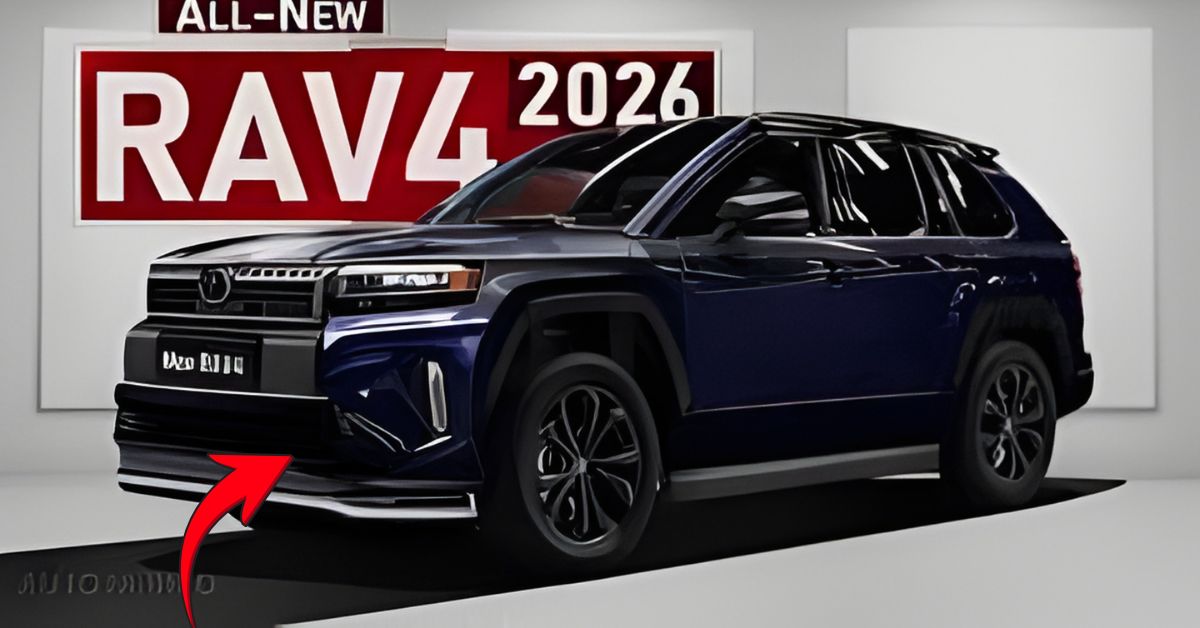
A cinematic front-angle shot of the 2026 Toyota RAV4 being driven on a scenic Indian coastal road.

1. QUICK SPECS TABLE (Key Highlights)

ParameterSpecification
Engine2.5L Dynamic Force Petrol + Electric Motors (5th Gen Hybrid)
Power236 BHP (Combined System Output)
Torque221 Nm (Engine) + Instant Electric Torque
Transmissione-CVT (Electronically Controlled)
DrivetrainAWD-i (Electronic All-Wheel Drive)
Boot Space580 Litres
Ground Clearance195 mm
Fuel Tank55 Litres

2. EXTERIOR DESIGN & ROAD PRESENCE

The 6th Gen RAV4 has ditched the “soft crossover” look for a proper, rugged SUV stance.

  • The Face: It borrows heavily from the US-spec Toyota Tacoma trucks. The “Hammerhead” front grille is bold, vertical, and flanked by sharp LED headlights that look angry.
  • The Profile: The wheel arches are geometric (square-ish), giving it an off-road vibe. It sits on 19-inch alloy wheels that fill the arches well.
  • The Rear: The tail lamps are sleeker, and dual exhaust tips (real ones!) give it a sporty character.
  • Does it turn heads? Yes, but not because it’s flashy. It turns heads because it looks “tough.” It doesn’t look like a fragile city car; it looks like it can take a beating.
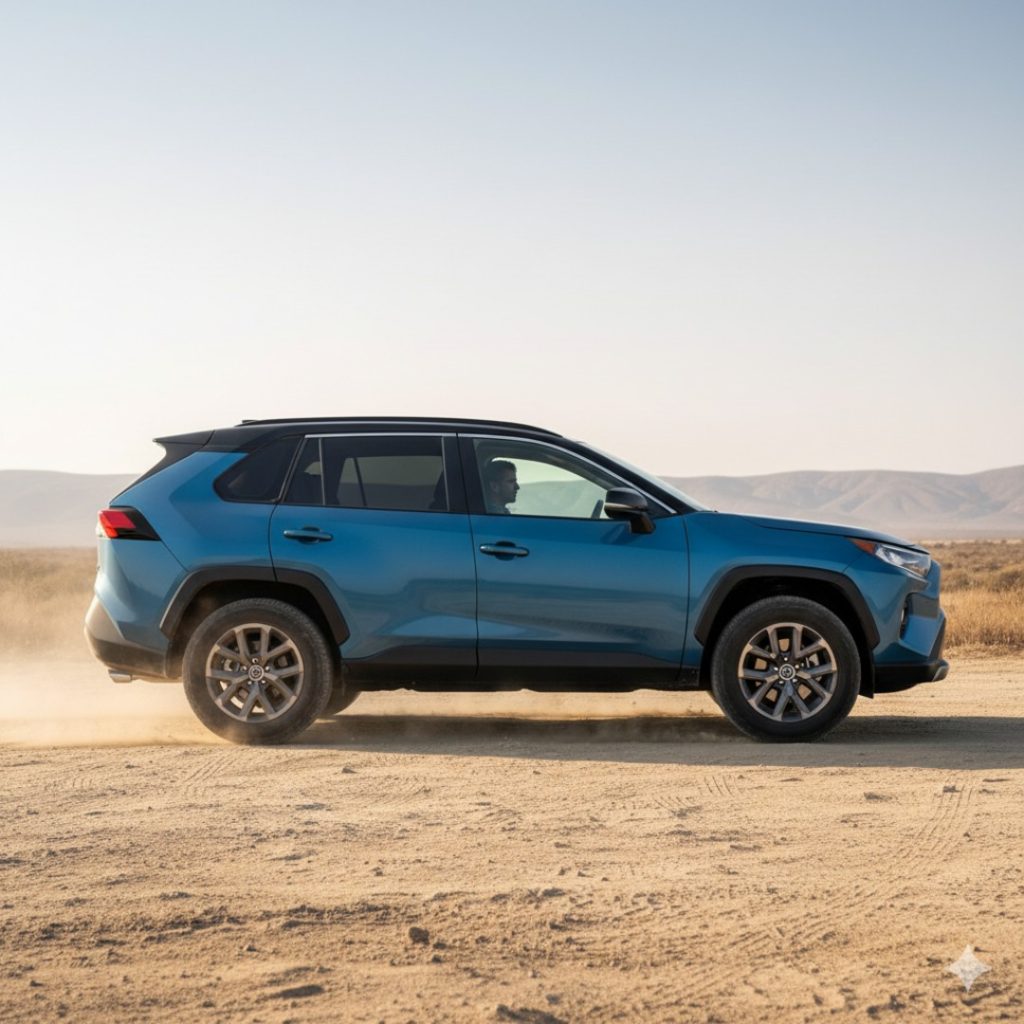
Side profile view of Toyota RAV4 6th Gen parked on a dusty trail.

3. INTERIOR, COMFORT & FEATURES

Toyota interiors used to be boring. The RAV4 6th Gen changes that narrative—mostly.

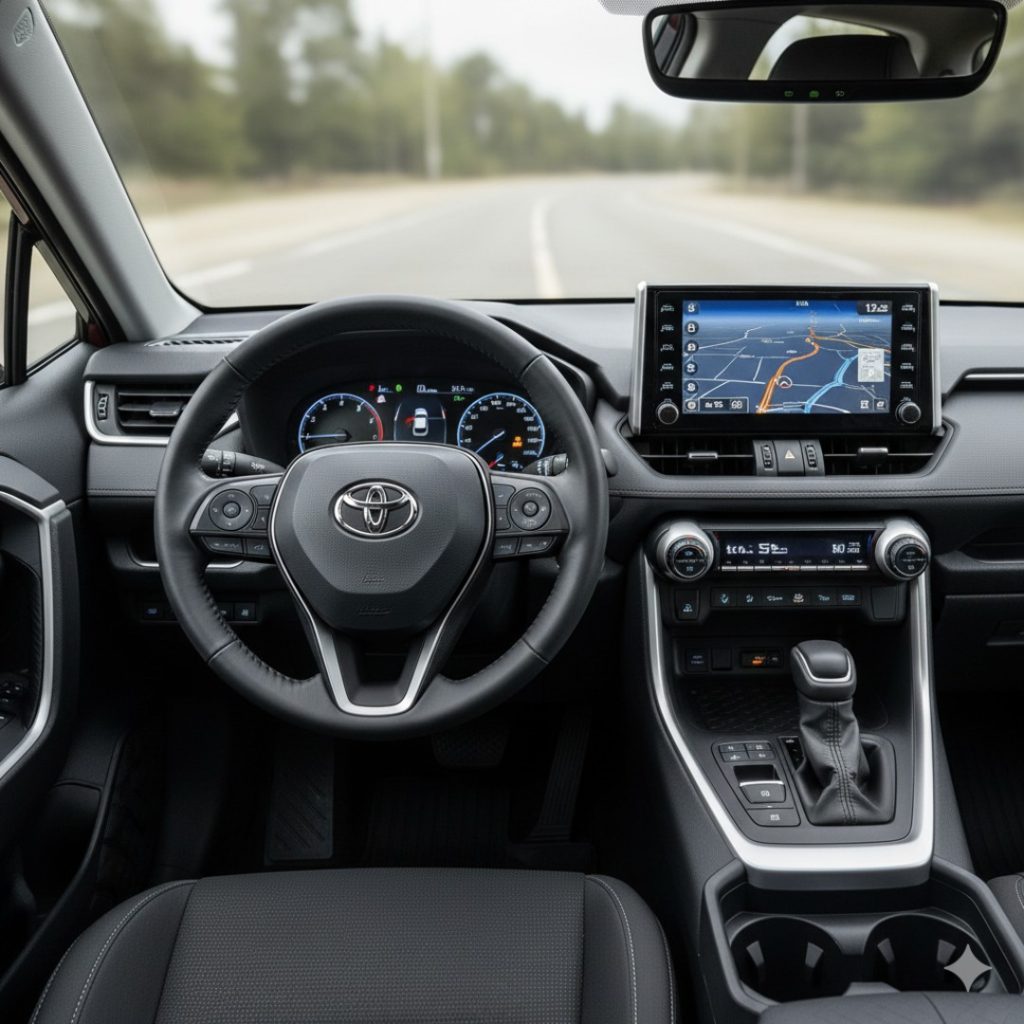
  • Dashboard: The centerpiece is a massive 12.9-inch infotainment screen running the new ‘Arene’ OS. It’s fluid, supports Wireless Android Auto/Apple CarPlay, and finally has high-resolution graphics.
  • Material Quality: It’s built to last. Soft-touch rubberized materials cover the dash (easy to clean), but you will still find hard plastics on the lower door pads. It doesn’t feel as luxurious as a Hyundai Tucson, but it feels more durable.
  • Space:
    • Rear Seat: Excellent legroom. The floor is nearly flat, so the middle passenger stays happy. However, the under-thigh support is slightly lacking for tall passengers compared to the Tiguan.
  • Features:
    • JBL Premium Audio: 11 Speakers (Bass is punchy).
    • Ventilated Seats: A must for India.
    • Digital Rearview Mirror: A cool party trick that uses a camera if your boot is stuffed to the roof.
Wide-angle interior shot of the dashboard and steering wheel of 2026 Toyota RAV4.

4. ENGINE PERFORMANCE & DRIVING DYNAMICS

This is the ace up Toyota’s sleeve. The 2.5L Hybrid powertrain is a masterpiece of efficiency and smoothness.

City Drive (The EV Mode)

In start-stop traffic, the RAV4 runs on pure EV mode for nearly 40-50% of the time. It is silent, vibration-free, and incredibly relaxing. The e-CVT has no gear shifts—just a seamless wave of power.

Read More: Kia Seltos 2026

Highway Drive

Step on the gas, and the petrol engine wakes up. With 236 BHP, it is fast.

  • 0-100 kmph: It does it in roughly 7.8 seconds. That is faster than the Fortuner!
  • Overtaking: The electric motor gives you an instant “shove” when you want to overtake. No lag, no waiting for turbo spool.
  • Stability: It handles like a car, not a truck. The TNGA-K platform is stiff. There is body roll if you push hard into corners (it’s still an SUV), but it feels planted at 120 kmph.
  • Suspension: It’s tuned for comfort. It glides over small potholes. Sharp bumps do filter through, but it never feels “crashy.”

5. SAFETY (Crucial Section)

Toyota doesn’t skip on safety.

  • TSS 4.0 (Toyota Safety Sense): This is the next-gen ADAS.
    • Proactive Driving Assist: It subtly brakes and steers to maintain distance from pedestrians/cyclists before you even notice them.
    • Lane Tracing Assist: Keeps you centered on the highway without “ping-ponging.”
  • Build: 8 Airbags are standard. While the India-spec rating isn’t out, the global model is a 5-Star achiever in Euro NCAP and IIHS.

6. REAL WORLD MILEAGE (The Truth)

This is why you buy a RAV4 over a Tiguan or Compass.

  • ARAI Claimed (Est): ~24 kmpl
  • Real World (City Traffic): 19 – 21 kmpl. (Yes, you read that right. An SUV this big delivering hatchback mileage).
  • Real World (Highway): 17 – 18 kmpl. (Hybrids are slightly less efficient on highways than cities, but still phenomenal).

Compared to the Tiguan’s 9 kmpl in the city, the RAV4 pays for itself in fuel savings over 5 years.

7. THE COMPETITION: RAV4 vs The World

Based on price and size, the RAV4 fights the Hyundai Tucson and Volkswagen Tiguan.

FeatureToyota RAV4 HybridHyundai Tucson (Diesel)VW Tiguan (Petrol)
Engine2.5L Hybrid (Petrol+Electric)2.0L Turbo Diesel2.0L TSI Turbo Petrol
Power236 BHP184 BHP187 BHP
Mileage (Real)19-21 kmpl12-14 kmpl8-10 kmpl
Tech/Interior8/10 (Functional)10/10 (Luxurious)8/10 (Understated)
Driving FunSmooth/RelaxedTorquey/PunchySharp/Sporty
ReliabilityLegendaryGoodModerate

The Comparison Verdict:

  • Choose VW Tiguan: If you want German driving dynamics and don’t care about mileage.
  • Choose Hyundai Tucson: If you want a diesel engine and the most futuristic-looking interior.
  • Choose Toyota RAV4: If you want a “fill it, shut it, forget it” experience with luxury-car silence and hatchback-level fuel bills.

8. FINAL VERDICT

Score: 9/10

The 2026 Toyota RAV4 is the most sensible luxury SUV in India. It doesn’t have the flashy ambient lights of a Mercedes or the sheer speed of a BMW, but it does everything else perfectly. It is spacious, safe, and unbelievably fuel-efficient.

Buy it if:

  • You hate visiting fuel pumps: The 900 km+ tank range is liberating.
  • You want reliability: It’s a Toyota. It will likely outlast you.
  • You want a sleeper: It’s powerful (236 BHP) but doesn’t shout about it.

Skip it if:

  • You want a status symbol: The badge doesn’t carry the same weight as “Audi” or “BMW” at this price point.
  • You want a dedicated off-roader: It handles trails well, but it’s not a Fortuner 4×4.
  • Price is the only factor: At an estimated ₹40 Lakh, it is expensive compared to the XUV700 or Scorpio-N.

9. FAQs (People Also Ask)

Q: What is the estimated price of the Toyota RAV4 in India?

A: Since it comes via the CBU/CKD route, expect prices to start at ₹35 Lakh and go up to ₹42 Lakh (On-road) for the top-spec Hybrid AWD.

Q: Is the RAV4 Hybrid better than the Fortuner?

A: They are different beasts. The Fortuner is a ladder-frame truck for hardcore off-roading. The RAV4 is a monocoque SUV for comfort, city driving, and efficiency. The RAV4 is much more comfortable than the Fortuner.

Q: Does the RAV4 require charging?

A: No. The standard RAV4 Hybrid is “self-charging.” You just fill petrol, and the car charges its own battery while driving and braking. (There is a Plug-in Hybrid version globally, but India gets the self-charging one primarily).

Q: What is the waiting period?

A: Being an import-heavy model, expect a waiting period of 3 to 6 months initially.

kia-seltos-new-gen-review-mileage-price-india

Kia New-Gen Seltos (2026): Launch Date, Hybrid/Petrol/Diesel Engine Options, Mileage, Features, Safety, Colours, Sunroof/ADAS, Booking & On-Road Details

When Kia first launched the Seltos in India, it didn’t just enter the market; it kicked the door down. It taught us that “premium” doesn’t have to mean “expensive European car.” Now, the New-Gen Kia Seltos (technically a massive facelift) is here to reclaim its throne from the Hyundai Creta.

Is it just a cosmetic job? Absolutely not. With a new 160 BHP Turbo engine, Level 2 ADAS, and a panoramic sunroof, Kia has thrown the kitchen sink at this car.

The Price: It starts at an aggressive ₹10.99 Lakh (Ex-showroom) for the base HTE, but the one you actually want—the top-spec GTX+ or X-Line—will set you back nearly ₹20.30 Lakh (Ex-showroom). That puts it deep into XUV700 territory. Is it worth it? I drove the GTX+ Turbo DCT for 500 km to find out.

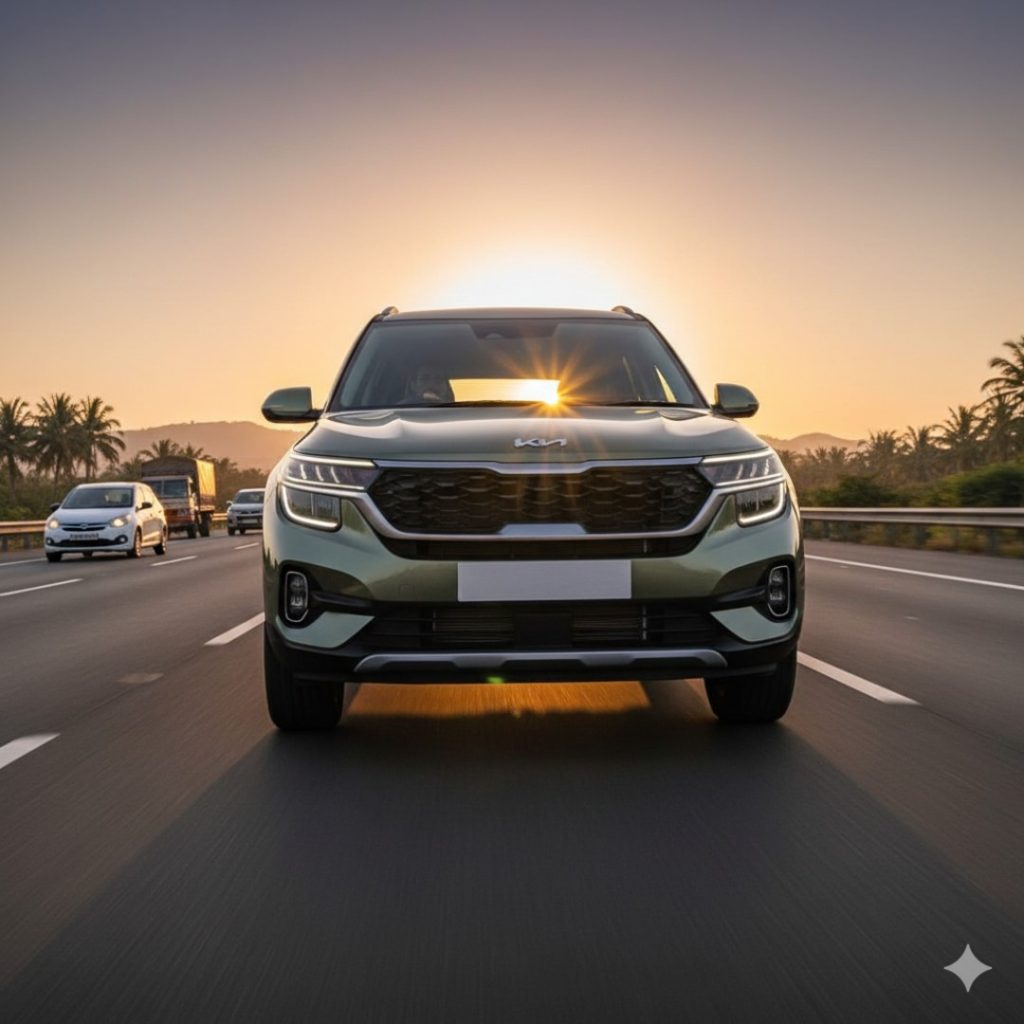
A cinematic front-angle shot of the New Kia Seltos in Pewter Olive color being driven on a scenic Indian highway.

1. QUICK SPECS TABLE (Key Highlights)

ParameterSpecification
Engine Options1.5L NA Petrol | 1.5L Turbo Petrol | 1.5L Diesel
Power (Turbo)160 BHP @ 5500 rpm (Segment Best)
Torque (Turbo)253 Nm @ 1500-3500 rpm
Transmission6MT, IVT (CVT), 7DCT, 6AT
Boot Space433 Litres
Ground Clearance190 mm
Fuel Tank50 Litres

2. EXTERIOR DESIGN & ROAD PRESENCE

The old Seltos was handsome; the new one is aggressive.

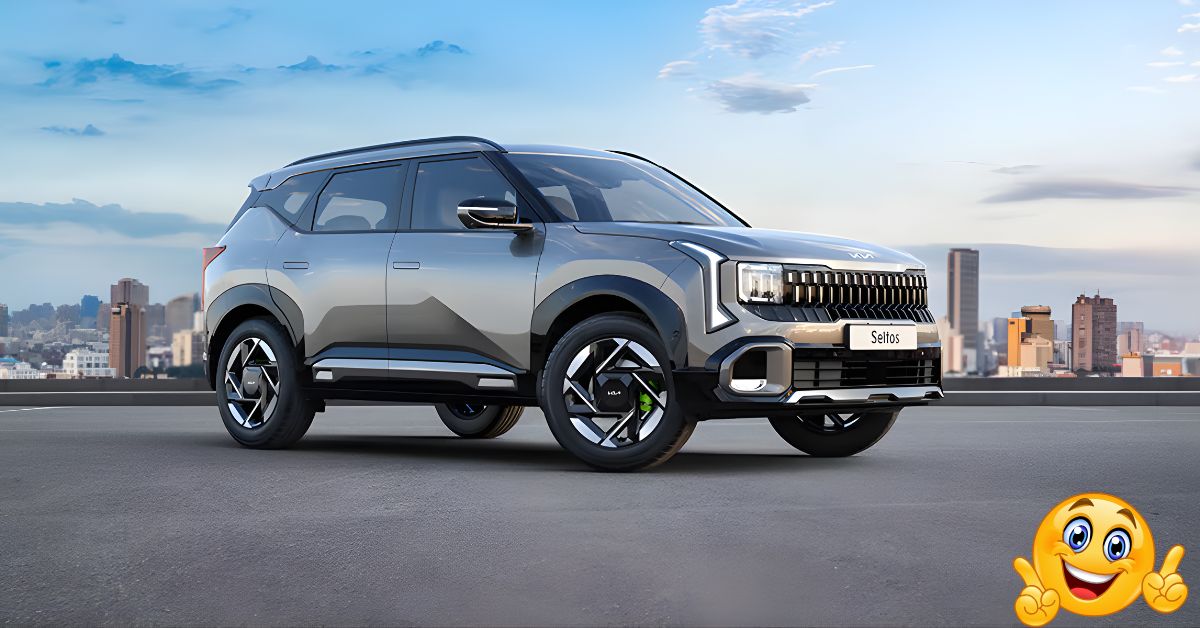
  • The Face: The “Digital Tiger Nose” grille is wider, flanking new “Star Map” LED DRLs that cut into the bumper. It looks significantly wider in the rear-view mirror.
  • The Wheels: The 18-inch crystal-cut alloy wheels (on GTX+/X-Line) are arguably the best-looking stock rims in the mass market segment.
  • The Rear: The connected tail lamps with the sequential “Audi-style” indicators give it a very upmarket feel at night.
  • The Stance: It retains the upright SUV posture but looks more muscular. The new ‘Pewter Olive’ and ‘Matte Graphite’ colors are absolute head-turners.
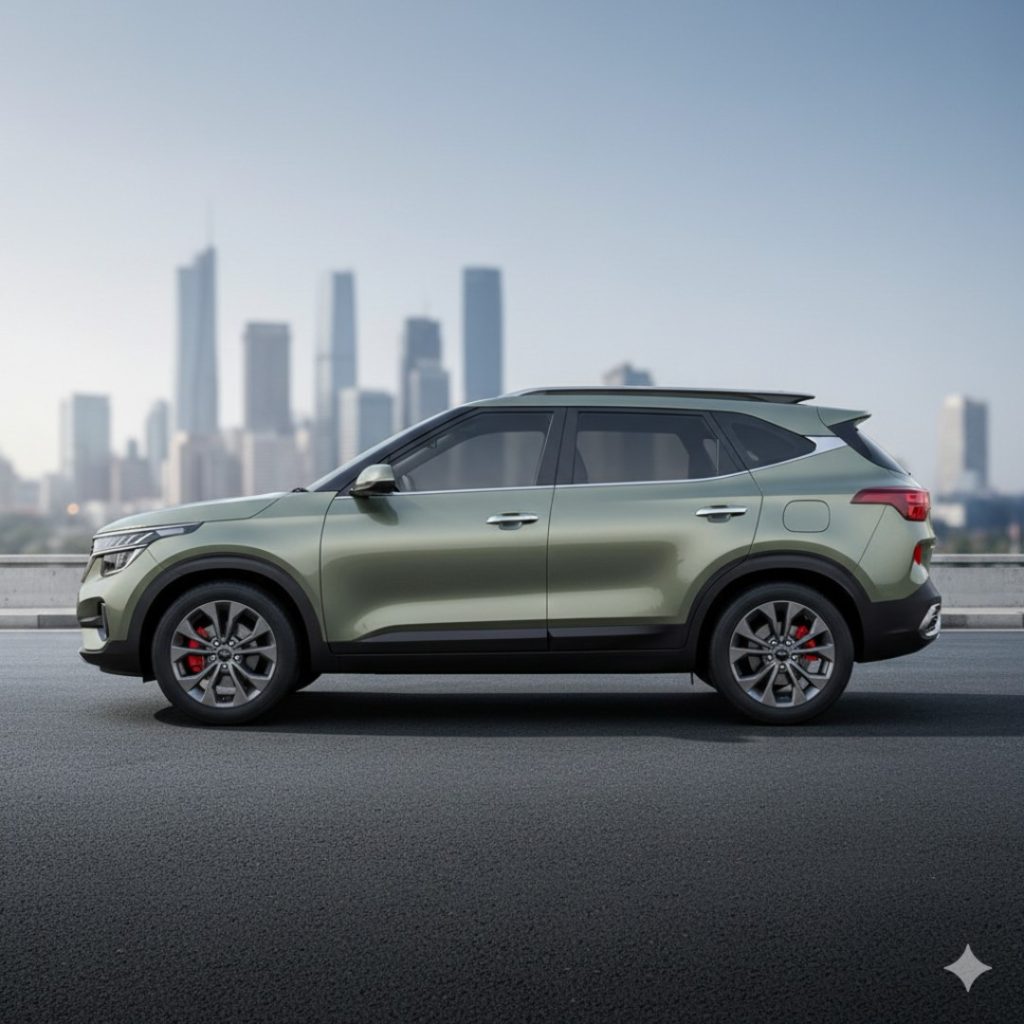
Side profile view of Kia Seltos New-Gen parked on a clean asphalt road.

3. INTERIOR, COMFORT & FEATURES

Step inside, and the Seltos humiliates some cars costing twice as much.

  • The Dashboard: The highlight is the Dual 10.25-inch Panoramic Display (one for the cluster, one for infotainment). It’s crisp, responsive, and looks integrated, unlike the iPad-stuck-on-dash look of some rivals.
  • Cabin Feel: The interior quality is top-notch. Soft-touch materials are used generously. The “Sage Green” interior on the X-Line is polarizing—you either love it or hate it (I personally prefer the Black/White of the GT Line).
  • Space: The rear seat is spacious enough for two adults and a child. The under-thigh support is decent, but the middle passenger will complain about the slightly firm backrest.
  • Features:
    • Panoramic Sunroof: Finally! It opens wide and changes the cabin ambience.
    • Dual-Zone Climate Control: A segment-first when launched. Driver and passenger can fight over temperatures comfortably.
    • Ventilated Seats: A lifesaver in Indian summers.

4. ENGINE PERFORMANCE & DRIVING DYNAMICS

I tested the 1.5L Turbo Petrol with 7-Speed DCT. This is the enthusiast’s choice.

City Drive

The engine is refined, but the DCT gearbox has typical characteristics. It can be a bit “jerky” in bumper-to-bumper traffic at crawling speeds. The steering is light, making parking easy, but you need to be gentle on the throttle to avoid sudden surges.

Highway Drive

This is where the Seltos shines. The 160 BHP is addictive. Overtaking is effortless—just a tap on the pedal, the gearbox drops two gears, and you are flying past trucks. It is stable at triple-digit speeds.

Read More : Maruti Suzuki Vitara e 

  • Suspension: Kia has retuned the suspension. It is slightly softer than the 1st Gen (which was bone-jarring), but it is still firm. You will feel the sharp potholes and expansion joints. It handles corners flat, but don’t expect a plush “magic carpet” ride like the Creta.

5. SAFETY (Crucial Section)

Kia has addressed the biggest criticism of the previous model: Safety Perception.

  • Standard Safety: 6 Airbags, ABS/EBD, All-Wheel Disc Brakes, and ESP are standard across ALL variants.
  • ADAS Level 2: The top trims get 17 autonomous features.
    • Real World Use: The Adaptive Cruise Control works brilliantly on expressways like the Delhi-Mumbai Expressway. However, the Lane Keep Assist can be intrusive on narrow city roads—I found myself turning it off often.
  • Build Quality: The doors feel heavier than before, and the overall fit and finish are reassuring.

6. REAL WORLD MILEAGE (The Truth)

Let’s talk numbers, not brochures. The Turbo Petrol is powerful, but it drinks fuel if you have a heavy foot.

  • 1.5L Turbo Petrol DCT:
    • ARAI Claimed: 17.9 kmpl
    • Real City: 9 – 10.5 kmpl (Stop-and-go traffic kills it).
    • Real Highway: 14 – 16 kmpl (Cruising at 90-100 kmph).
  • 1.5L Diesel Auto:
    • Real City: 13 – 15 kmpl
    • Real Highway: 19 – 21 kmpl
    • Note: If your monthly running is over 1,500 km, buy the Diesel blindly.

7. THE COMPETITION: Seltos vs The World

The mid-size SUV segment is a war zone.

FeatureKia Seltos (New-Gen)Hyundai CretaMaruti Grand Vitara
Engine Power160 BHP (Turbo)160 BHP (Turbo)103 BHP (Hybrid)
Fuel EfficiencyLow/ModerateModerateHigh (27+ kmpl Hybrid)
Tech/Features10/10 (Heads-up Display)9/108/10
Ride QualitySporty/FirmSoft/PlushBalanced
VFM Score8/108.5/109/10 (Hybrid)

Winner:

  • Choose Grand Vitara if you want to save money on fuel (Hybrid).
  • Choose Hyundai Creta if you want a comfortable family car with softer suspension.
  • Choose Kia Seltos if you want the Best Looks, Best Tech, and Driving Fun.

8. FINAL VERDICT

Score: 8.5/10

The 2026 Kia Seltos is the “iPhone Pro” of SUVs. It looks expensive, feels premium, and performs flawlessly. It isn’t the most fuel-efficient (Petrol), nor the softest ride, but it is the most desirable SUV in its class.

Buy it if:

  • You love driving: The 160 BHP engine is a rocket ship.
  • You are a Tech Geek: The dual screens and ADAS features are class-leading.
  • You want Road Presence: It looks far more aggressive than the Creta or Vitara.

Skip it if:

  • Mileage is your #1 priority: The Turbo Petrol will hurt your wallet in traffic.
  • You have back problems: The suspension is still on the stiffer side.
  • You are on a tight budget: The top variants are pricey (₹24L+ On-road).

9. FAQs (People Also Ask)

Q: What is the on-road price of the Kia Seltos top model in 2026?

A: The top-spec GTX+ or X-Line (Diesel/Turbo Petrol) costs approximately ₹23.50 Lakh to ₹24.50 Lakh on-road, depending on your state taxes.

Q: Is the Seltos Diesel being discontinued?

A: No. Unlike Maruti and Honda, Kia continues to offer the 1.5L Diesel Engine, and it remains one of the best-selling variants due to its excellent mileage.

Q: Does the new Seltos have a Panoramic Sunroof?

A: Yes! From the HTK+ (O) variant onwards, the Seltos now features a dual-pane panoramic sunroof.

Q: Which variant is the best Value For Money (VFM)?

A: The HTX variant. It gets the Panoramic Sunroof, Dual Zone Climate Control, and Leatherette interiors at a much lower price point than the GTX+.

maruti-suzuki-e-vitara-2026-price-range-review-india

Maruti Suzuki Vitara e 2026: Launch Date, Expected Price in India, Range, Battery, Charging, Specs, Features, Variants, Safety & Booking Details

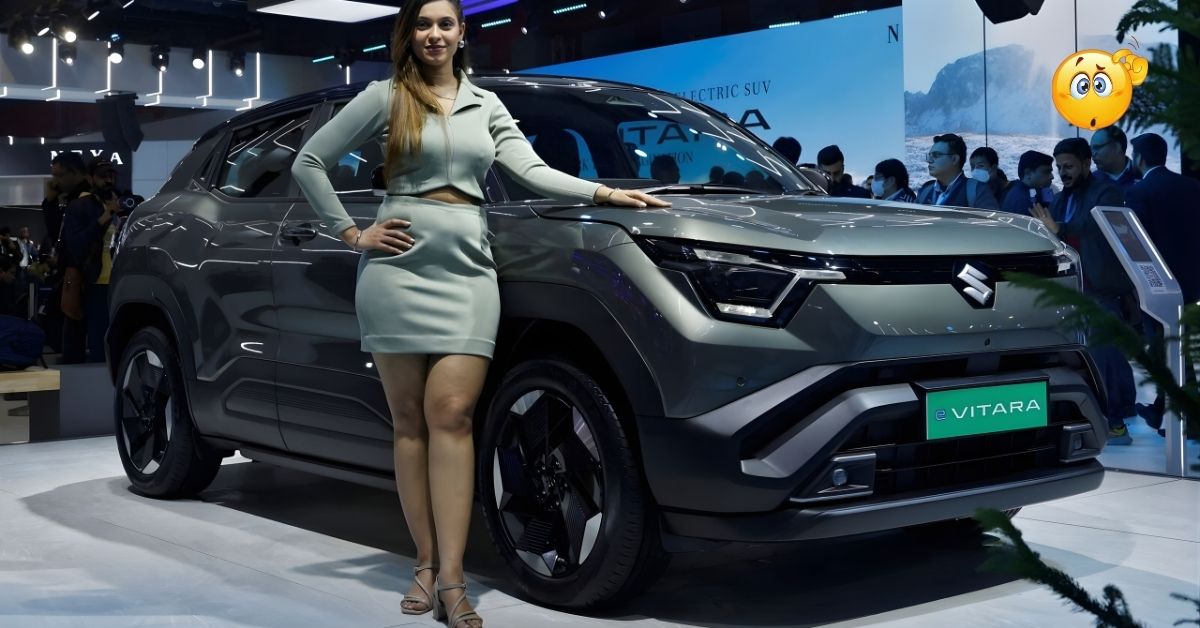
The “Kitna Deti Hai” king has finally gone electric. For years, Maruti Suzuki watched from the sidelines as Tata and MG dominated the EV space. But the real truth is, Maruti wasn’t sleeping; they were engineering a global product. The Maruti Suzuki e Vitara is not just an electrified Grand Vitara; it is a born-electric SUV built on the specialized HEARTECT-e platform.

Launched at an expected starting price of ₹17.00 Lakh (ex-showroom), it is aimed squarely at the heart of the Indian middle class. But with rivals like the Tata Curvv EV already establishing their territory, is Maruti “fashionably late” or just “too late”? From its surprising 5-star Bharat NCAP safety rating to the claim of a 543 km range, let’s see if this EV is truly worth your hard-earned money.

A cinematic front-angle shot of the Maruti Suzuki e Vitara in ‘Land Breeze Green’ being driven on a scenic elevated highway in Mumbai.

1. QUICK SPECS TABLE (Key Highlights)

Unlike petrol cars, EV specs are all about battery chemistry and motor efficiency. Here is the breakdown:

Feature49 kWh Variant (Delta)61.1 kWh Variant (Zeta/Alpha)
Battery TypeLFP (Blade Cells)LFP (Blade Cells)
Max Power142 BHP172 BHP
Max Torque189 Nm189 Nm (FWD) / 300 Nm (AWD Global)
ARAI Range443 km (Est.)543 km (Confirmed)
0-100 kmph~9.5 Seconds~8.9 Seconds
Ground Clearance180 mm180 mm
Wheelbase2700 mm2700 mm

2. EXTERIOR DESIGN & ROAD PRESENCE

The e Vitara looks like it belongs in 2026. It ditches the “Chrome-heavy” look of typical Marutis for a clean, aerodynamic silhouette. The front fascia is dominated by Y-shaped LED DRLs and a sealed-off grille that screams “EV.”

Does it turn heads? Yes, especially with its chunky 18-inch aerodynamic alloy wheels and thick body cladding. It has a “squat” stance that makes it look wider and more premium than the Grand Vitara. However, the rear-door handles are placed on the C-pillar (similar to the old Swift), which might be a polarizing choice for some.

Read more: Kia Seltos 2026

Side profile view of Maruti Suzuki e Vitara parked on a clean asphalt road 

3. INTERIOR, COMFORT & FEATURES

Step inside, and you’ll realize this isn’t your typical Maruti. The dashboard features a twin-spoke steering wheel and a massive integrated dual-screen setup (10.25-inch infotainment + 10.1-inch cluster).

  • Dashboard: You get a “Black and Tan Brown” theme. There are soft-touch materials on the dashboard, though some lower panels still use scratchy plastics.
  • Space: Thanks to the 2700mm wheelbase (longer than many rivals), the legroom is massive. Can 3 people sit at the back? Yes, but the middle passenger might find it a bit tight on shoulder room during long journeys.
  • Missing Features: While it gets a panoramic sunroof, ventilated seats, and a 10-way powered driver seat, it surprisingly misses out on a ‘Frunk’ (front boot), which many dedicated EVs offer.
 Wide-angle interior shot of the Maruti Suzuki e Vitara dashboard. 

4. ENGINE PERFORMANCE & DRIVING DYNAMICS

  • City Drive: The e Vitara feels light and nimble. The steering is tuned for Indian cities—feather-light at low speeds. With one-pedal driving mode (strong regen), you can drive through Delhi or Bangalore traffic without touching the brake often.
  • Highway Drive: High-speed stability is impressive due to the low center of gravity (batteries are in the floor). It feels planted at 120 kmph, and body roll is minimal compared to the ICE Grand Vitara.
  • Suspension: It is tuned slightly on the firmer side to handle the battery weight, but the suspension absorbs potholes easily without that “thud” sound common in older Marutis.

5. SAFETY: The Game Changer

This is where Maruti has shocked everyone. The Maruti Suzuki e Vitara has scored a perfect 5 stars in Bharat NCAP crash tests.

  • Safety Suite: It comes standard with 6 Airbags, ESC, and All-Wheel Disc Brakes.
  • ADAS Level 2: The Alpha trim includes Adaptive Cruise Control, Lane Keep Assist, and Autonomous Emergency Braking. For a brand often criticized for build quality, the e Vitara is a massive statement of intent.

6. REAL WORLD MILEAGE (The Truth)

Maruti claims 543 km, but the real mileage in city traffic is quite different. EVs are sensitive to AC usage and driving styles.

Battery PackARAI ClaimedReal World (City)Real World (Highway)
49 kWh~440 km310 – 330 km270 – 290 km
61.1 kWh543 km380 – 410 km340 – 360 km

Pro Tip: If you drive at a constant 80-90 kmph on the highway, expect about 350 km of usable range from the larger pack. Anything above 100 kmph will drain the battery significantly faster.

7. THE COMPETITION: The Mid-Size EV Battle

The e Vitara enters a shark tank with the Tata Curvv EV and the MG ZS EV.

FeatureMaruti e VitaraTata Curvv EVMG ZS EV
Battery61.1 kWh55 kWh50.3 kWh
Range (Claimed)543 km502 km461 km
BNCAP Rating5 Stars5 Stars5 Stars (Global)
Service NetworkUnmatchedGrowingLimited

Winner: Maruti Suzuki e Vitara. While the Curvv EV is more stylish, Maruti’s 1,500+ EV-ready service centers and the slightly larger battery pack give it the “Peace of Mind” edge that Indian buyers crave.

8. FINAL VERDICT

Buy it if:

  • You want the most reliable EV ownership experience with Maruti’s service backup.
  • You prioritize safety—it’s the safest Maruti ever built.
  • You need a spacious family SUV with a usable 350+ km real-world range.

Skip it if:

  • You want an aggressive, sporty driving experience (It’s linear, not explosive).
  • You want a “tech-heavy” cabin with massive screens like the Mahindra XEV 9e.
  • You are on a tight budget (Wait for the WagonR Electric instead).

Score: 8.5/10

9. FAQs (People Also Ask)

Q1: What is the on-road price of Maruti e Vitara in Delhi?

Expected on-road prices will range from ₹18.5 Lakh to ₹24 Lakh, depending on the state subsidies and road tax waivers for EVs.

Q2: Is there a CNG option for the e Vitara?

No. The e Vitara is a pure electric vehicle (BEV). If you want a hybrid or CNG, the Grand Vitara remains your only option.

Q3: How long does it take to charge?

Using a 70kW DC Fast Charger, it can go from 0% to 80% in about 50 minutes. A standard 7.2kW home wall-box charger will take roughly 9-10 hours for a full charge.

Q4: Will it get an AWD (4×4) version in India?

Maruti has showcased the ALLGRIP-e AWD system globally, but for the initial 2026 launch in India, only the Front-Wheel Drive (FWD) versions are expected.

kia-seltos-2026-price-mileage-review-india

Kia Seltos 2026: Launch Date, Price in India, Variants, New Features, Specs, Mileage, Engine Options, Safety, Colours & Booking Details

The king of “bling” just got a massive brain and brawn upgrade. If you thought the 2024 facelift was enough, the real truth is that Kia was saving the best for 2026. This isn’t just another minor cosmetic tweak; the Kia Seltos 2026 is the second-generation avatar of the SUV that practically built the Kia brand in India.

Launched on January 2, 2026, the new Seltos is now longer, wider, and sits on the advanced K3 platform. With a starting price of ₹10.99 Lakh (ex-showroom), Kia is aggressively targeting both budget buyers and luxury seekers. But is it worth the price tag when you move up to the ₹19.99 Lakh trims? Let’s find out.

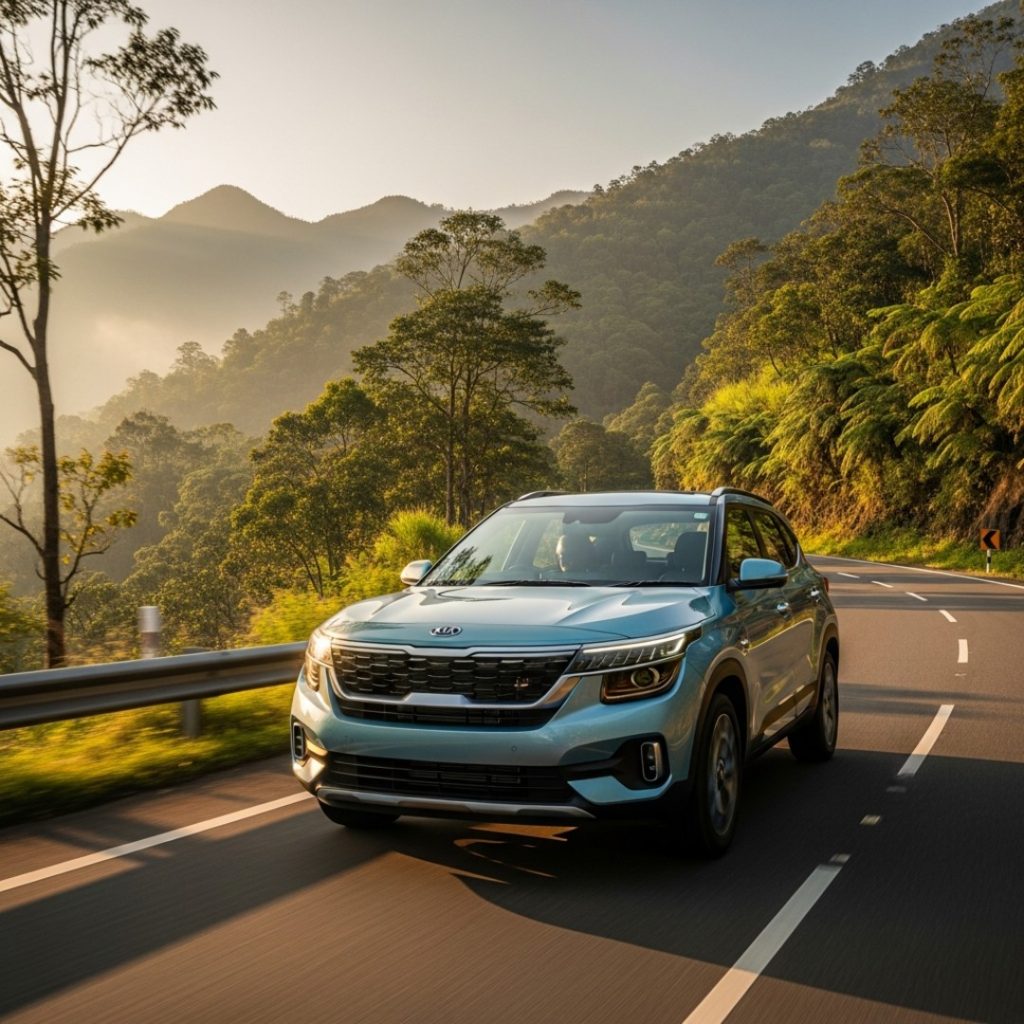
 A cinematic front-angle shot of the Kia Seltos 2026 in the new ‘Morning Haze’ color, being driven on a scenic winding highway in the Western Ghats.

1. QUICK SPECS TABLE (Key Highlights)

Here is the raw data for the tech-heads. Note the increase in wheelbase—this translates directly to more legroom.

Feature1.5L Petrol (NA)1.5L Turbo Petrol1.5L Diesel
Max Power115 PS160 PS116 PS
Max Torque144 Nm253 Nm250 Nm
Transmission6MT / IVT (CVT)6iMT / 7DCT6MT / 6AT
Wheelbase2,690 mm (+80mm)2,690 mm2,690 mm
Ground Clearance190 mm190 mm190 mm
Boot Space447 Litres447 Litres447 Litres

2. EXTERIOR DESIGN & ROAD PRESENCE

The 2026 Seltos looks like a junior Telluride. The Digital Tiger Face grille is now wider and more upright, giving it a much more “Boss” stance compared to the older, sleeker model.

Does it turn heads? Absolutely. The new inverted L-shaped LED tail lamps and the automatic flush door handles (available in higher trims) make it feel like a car from a segment above. If you’re a fan of “visual theatrics,” the welcome light choreography on the DRLs will make you feel like you’re entering a premium club every time you unlock the car.

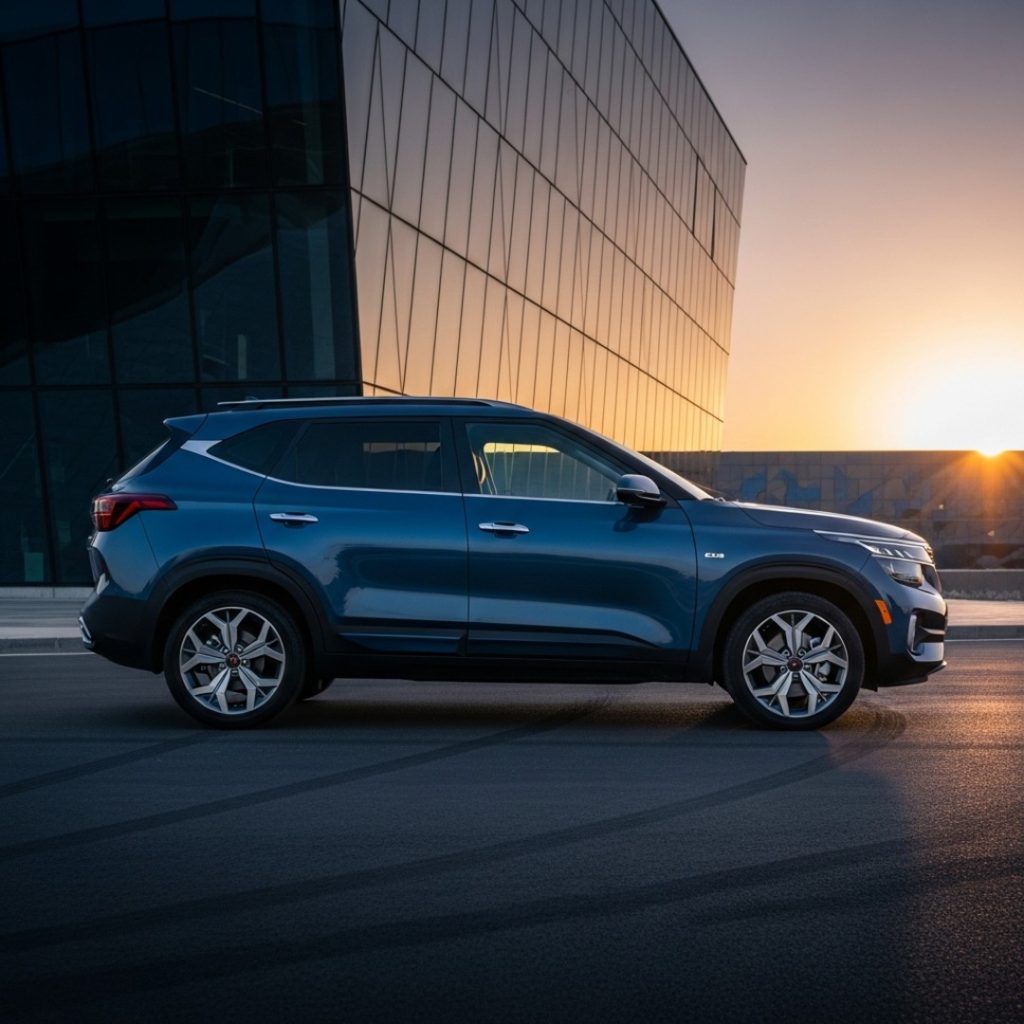
Side profile view of the Kia Seltos 2026 parked on a clean asphalt road against a modern glass building.

3. INTERIOR, COMFORT & FEATURES

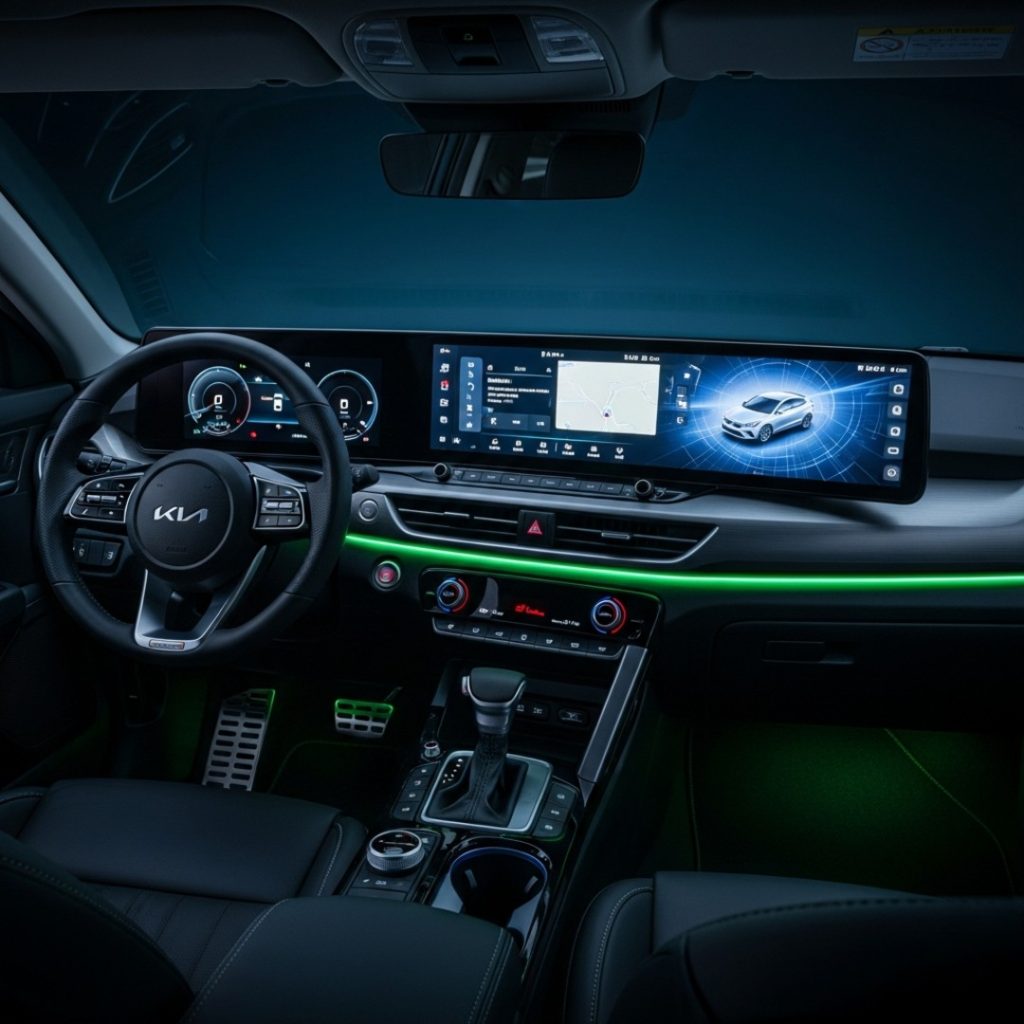
Step inside, and you’ll realize where your money is going. The dashboard is dominated by a massive 30-inch panoramic display (which actually houses the 12.3-inch infotainment and 12.3-inch cluster).

  • Dashboard: It’s a mix of soft-touch leatherette and high-quality plastics. The new three-spoke steering wheel (borrowed from the EV6) feels chunky and premium.
  • Space: Because the wheelbase has grown by 80mm, the rear seat legroom is finally comparable to the Honda Elevate. Can 3 people sit at the back? Yes, more comfortably than before, though the middle passenger still has to deal with a slight floor hump.
  • The “Wow” Features: You get a dual-pane panoramic sunroof, 64-color ambient lighting, and an 8-speaker Bose system that is arguably the best in class.

4. ENGINE PERFORMANCE & DRIVING DYNAMICS

  • City Drive: The 1.5L NA Petrol with the IVT (CVT) remains the king of city commutes. The steering is light, making it a breeze to park in tight Mall spaces.
  • Highway Drive: If you’re a highway enthusiast, don’t waste your money on the NA petrol; go for the 160 PS Turbo Petrol. It feels punchy and can maintain 120 kmph effortlessly.
  • Suspension: This is the biggest improvement. The older Seltos was criticized for a “stiff” ride. The 2026 model’s suspension absorbs potholes easily, even with the 18-inch wheels on the GTX variants.
Wide-angle interior shot of the 2026 Kia Seltos dashboard showing the 30-inch curved panoramic display glowing at night.

Read More ; BMW Electric SUV 

5. SAFETY (Crucial Section)

Kia has finally stopped cutting corners here. 6 Airbags are standard across the range.

  • Build Quality: It’s built on the K3 platform which uses more high-strength steel. While it hasn’t been Bharat NCAP tested yet, expectations are for a solid 4 or 5-star rating.
  • ADAS Level 2: With 21 features including Autonomous Emergency Braking and Lane Keep Assist, it’s a tech fortress.

6. REAL WORLD MILEAGE (The Truth)

The real mileage in city traffic is where most people get surprised. Don’t go strictly by the ARAI numbers.

EngineARAI ClaimedReal City (Heavy Traffic)Real Highway (Cruise 90kmph)
1.5L Petrol NA17.7 kmpl10-12 kmpl15-16 kmpl
1.5L Turbo Petrol17.9 kmpl8-11 kmpl14-17 kmpl
1.5L Diesel20.7 kmpl14-16 kmpl20-22 kmpl

7. THE COMPETITION: Kia Seltos vs. Rivals

With the 2026 launch, the Seltos faces two giants: the Hyundai Creta and the newly launched Tata Sierra (ICE).

FeatureKia Seltos 2026Hyundai Creta 2026Tata Sierra (ICE)
Max Power160 PS (Turbo)160 PS (Turbo)160 PS (Turbo)
Max Torque253 Nm253 Nm280 Nm
Tech/FeaturesHigh (30″ Screen)High (Dual Screens)Mid (Nostalgic Design)
VFM WinnerKia Seltos (Better variant spread)Hyundai Creta (Standard features)Tata Sierra (Build/Size)

8. FINAL VERDICT

Buy it if:

  • You want the best-looking and most feature-loaded SUV in the ₹15-20 Lakh bracket.
  • You love tech (ADAS, massive screens, and connected car tech are top-tier here).
  • You do a mix of city and highway driving (The Diesel AT is a gem).

Skip it if:

  • You want a “rugged” off-roader (Go for the Thar Roxx).
  • You find the “all-screen” dashboard distracting.
  • You want the maximum possible fuel economy (Go for the Grand Vitara Hybrid).

Score: 9/10

9. FAQs (People Also Ask)

Q1: What is the on-road price of the Seltos 2026 top model?

In most metro cities, the GTX(A) Diesel or Turbo Petrol will cost you roughly ₹23.5 Lakh to ₹24 Lakh on-road.

Q2: Is there a CNG option for the Seltos 2026?

As of now, Kia has no plans for a Seltos CNG. If you want a mileage-friendly SUV in this segment with CNG, look at the Maruti Suzuki Grand Vitara.

Q3: What is the waiting period for the new Seltos?

Depending on the variant and color (Morning Haze and Pewter Olive are high demand), the waiting period is currently 2 to 4 months.

bmw-suv-electric-2026-review-india-price

BMW Electric SUV 2026 India: Expected Price, Range, Charging, Features, Launch Timeline, and Top Rivals (All Details)

The hype for 2026 isn’t just about a new battery—it’s about the Neue Klasse era. While the BMW iX Facelift (starting at an estimated ₹1.25 Crore) remains the flagship, the all-new BMW iX3 (expected at ₹80 – ₹90 Lakh) is the car that will likely change the volume game for BMW India.

These aren’t just eco-friendly commuters; they are 400+ BHP monsters designed to make you forget about petrol engines forever.

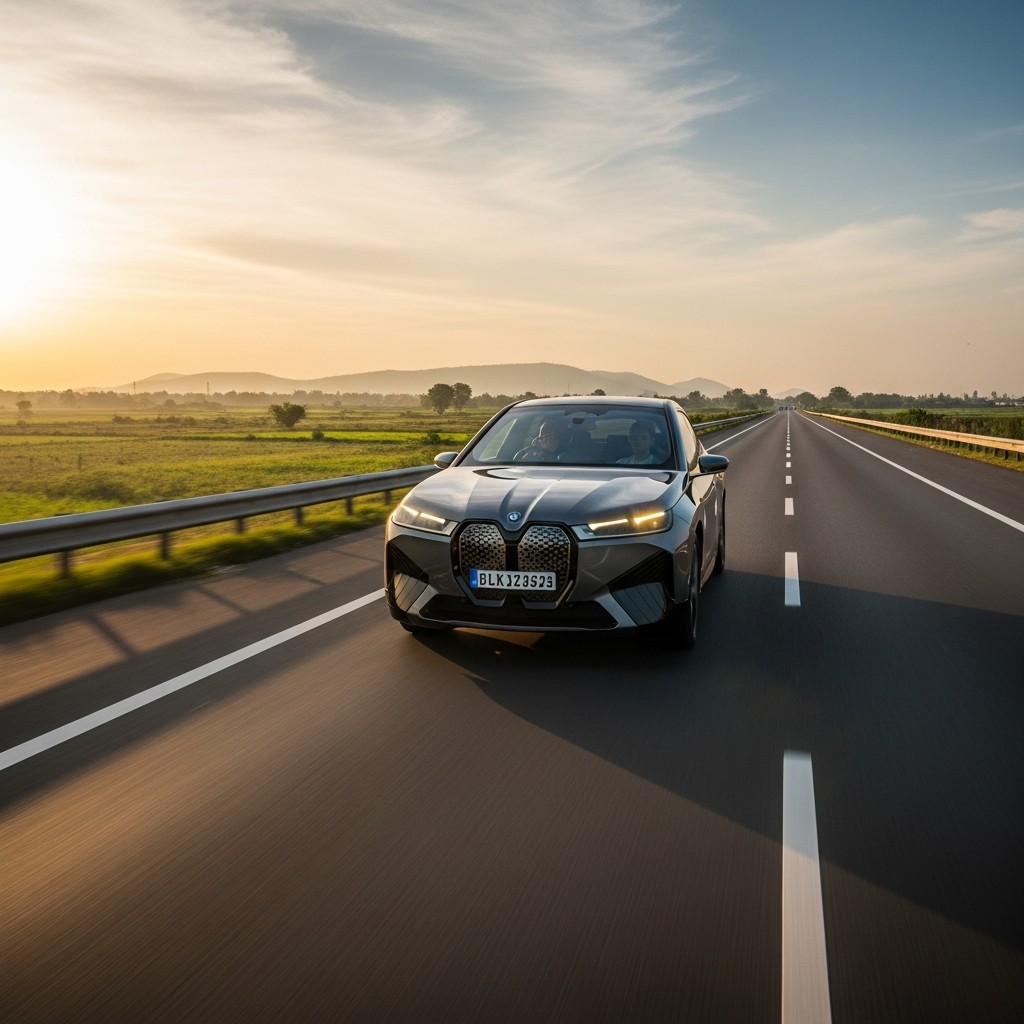
 A cinematic front-angle shot of the 2026 BMW iX Facelift in Oxide Grey being driven on the Mumbai-Nagpur Samruddhi Expressway. 

1. QUICK SPECS TABLE (Key Highlights)

FeatureBMW iX xDrive50 (2026)BMW iX3 Neue Klasse
Battery Capacity111.5 kWh108.7 kWh
Max Power523 BHP463 BHP
Max Torque765 Nm645 Nm
Range (WLTP)635 km805 km
0-100 kmph4.6 Seconds4.9 Seconds
Charging (DC Fast)10-80% in 31 mins10-80% in 21 mins

2. EXTERIOR DESIGN & ROAD PRESENCE

The 2026 BMW SUV electric lineup is a masterclass in “Love it or Hate it.” The iX Facelift continues with its vertical kidney grille, but it now features BMW Iconic Glow (an illuminated border) and slimmer, sharper Matrix LED headlamps.

The real head-turner, however, is the iX3 Neue Klasse. It moves away from the traditional SUV shape for a more “monolithic,” futuristic design with flush door handles and 21-inch aero-optimized wheels. Does it turn heads? Absolutely. It looks like a concept car that accidentally drove out of a lab.

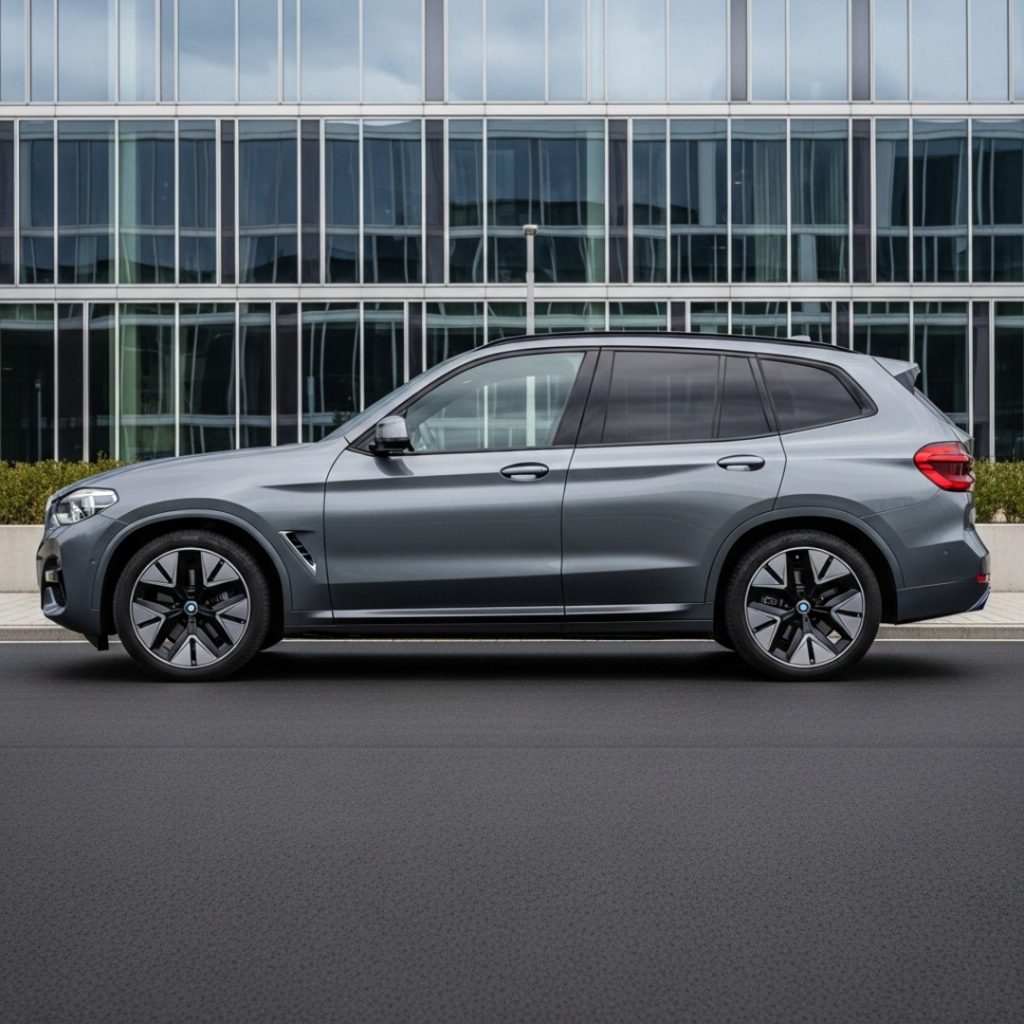
Side profile view of the BMW iX3 Neue Klasse parked on a clean asphalt road with a modern glass architecture background.

3. INTERIOR, COMFORT & FEATURES

Step inside a 2026 BMW EV, and you’ll feel like you’ve skipped a decade.

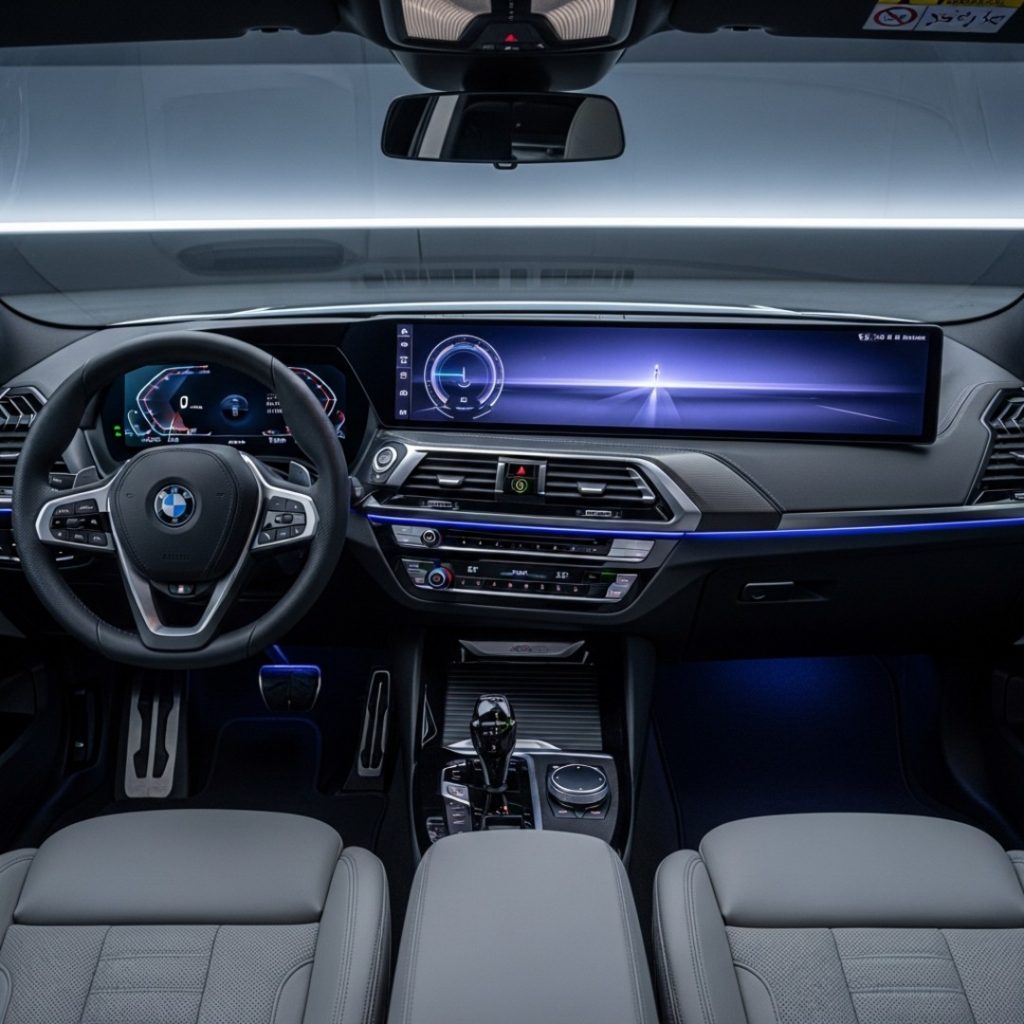
  • Dashboard: The new BMW Panoramic Vision replaces traditional clusters with a full-width display at the base of the windscreen.
  • Space: The iX remains a palace on wheels. Rear legroom is massive, and thanks to the flat floor, three adults can sit comfortably without any “middle-seat” complaints.
  • Luxury: You get crystal-cut glass for the iDrive controller and seats made of “Sensatec” olive-leaf tanned leather.
  • Missing Features: Surprisingly, even at this price, ventilated seats aren’t always standard on lower trims—something BMW needs to fix for the Indian heat.
Wide-angle interior shot of the 2026 BMW iX3 dashboard featuring the full-width Panoramic Vision display and the hexagonal steering wheel. 

4. DRIVING DYNAMICS: The “Sheer Driving Pleasure” Test

  • City Drive: The rear-wheel steering (Integral Active Steering) makes the massive iX feel as agile as a 3 Series in tight city U-turns. The steering is light but precise.
  • Highway Drive: Stability at 120 kmph+ is rock solid. There is zero “electric hum” inside the cabin—BMW’s acoustic glazing is world-class.
  • Suspension: The Adaptive Air Suspension absorbs potholes easily, though sharp edges can still be felt through the low-profile 21-inch tires.

5. SAFETY: 5-Star Confidence

Both the iX and the upcoming Neue Klasse models are designed for a 5-star Euro NCAP and Bharat NCAP rating.

  • Airbags: 8 to 11 Airbags depending on the model.
  • ADAS: Level 2+ Autonomous tech is standard, including “Parking Assistant Professional,” which can memorize your driveway and park itself automatically.

6. REAL WORLD RANGE (The Truth)

Ignore the brochure for a moment. In Indian conditions (AC at 22°C, mixed traffic), here is what you can expect:

ModelClaimed (WLTP)Real World CityReal World Highway
BMW iX xDrive40425 km320 km350 km
BMW iX xDrive50635 km480 km510 km
BMW iX3 (N.K.)805 km610 km650 km

7. THE COMPETITION: Luxury EV Battle Royale

BMW iX vs Mercedes-Benz EQS SUV vs Audi Q8 e-tron

  • Mercedes-Benz EQS SUV: Offers more range and a “Hyperscreen” but feels more like a limousine than an SUV.
  • Audi Q8 e-tron: The “sensible” choice with great build quality but lacks the “wow” factor and tech of the 2026 BMWs.

Winner: If you love driving, the BMW iX is the winner. If you want pure range, wait for the iX3 Neue Klasse.

Read More : Honda Amaze 2026

8. FINAL VERDICT

Buy it if:

  • You want the most futuristic interior currently available in India.
  • Driving dynamics and “fun to drive” factor are non-negotiable.
  • You need a car that can charge for 350km of range in just 10 minutes.

Skip it if:

  • You find the bold front-end design too aggressive for your taste.
  • You are on a strict budget (The service costs and insurance for these are high).
  • You do frequent long-distance rural trips where 150kW+ DC chargers are rare.

Score: 9.5/10

9. FAQs (People Also Ask)

Q: What is the on-road price of the 2026 BMW iX in India?

A: Depending on the state (many offer 0% road tax for EVs), the on-road price in Delhi/Mumbai will be approximately ₹1.35 Cr to ₹1.60 Cr.

Q: Does it have a spare tire?

A: No, most BMW EVs come with a “Tire Mobility Kit” and run-flat tires. There is no dedicated space for a full-sized spare.

Q: Is there a CNG or Hybrid version?

A: No, these are “Born Electric” models. For hybrids, you would need to look at the BMW XM.

honda-amaze-2026-price-mileage-review

Honda Amaze 2026 Review Preview: Comfort, Rear Seat Space and Ride Quality

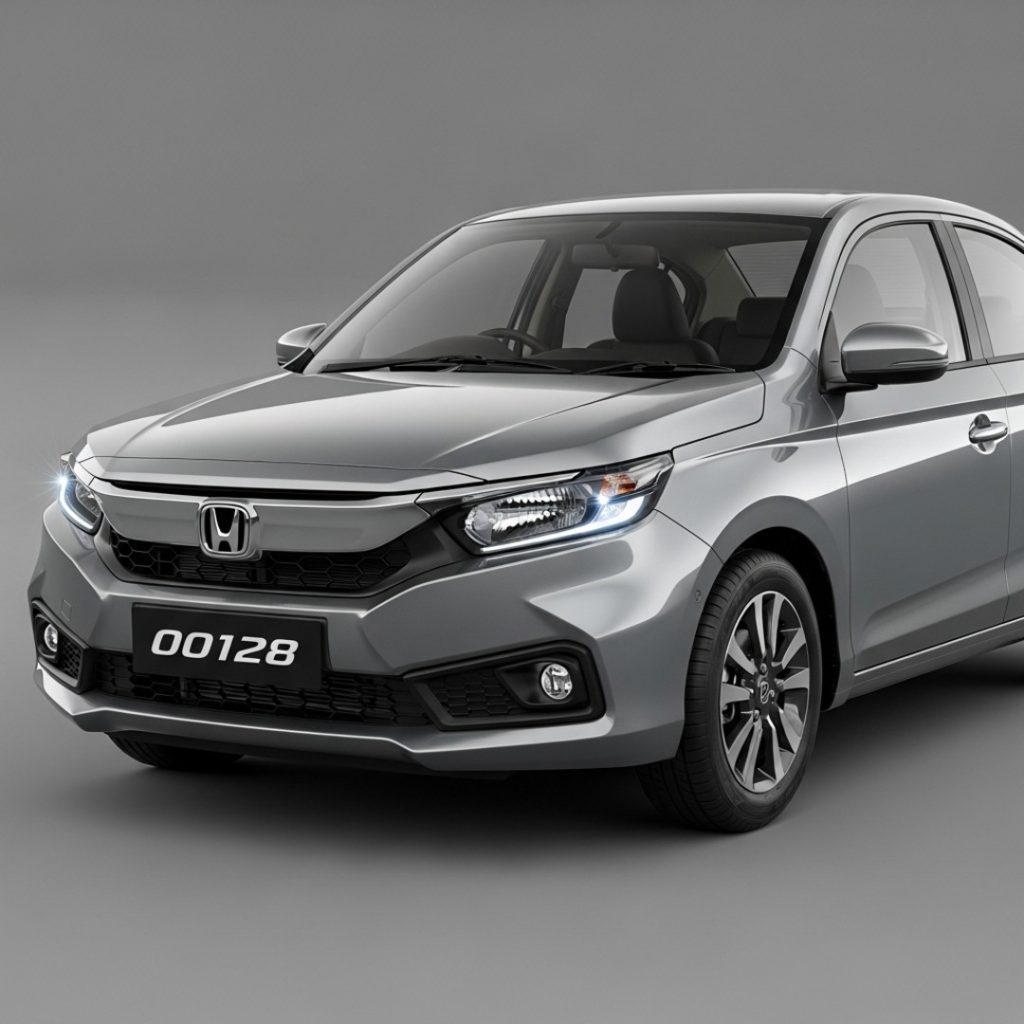
The 2026 Honda Amaze isn’t just a facelift; it’s a complete identity shift. It now looks like a “Mini City” or a “Baby Elevate,” moving away from the quirky proportions of the past. With an ex-showroom starting price of ₹7.41 Lakh, it targets the middle-class Indian family that wants the prestige of a sedan with the safety of a tank.

A high-quality hero shot of the 2026 Honda Amaze in Metallic Lunar Silver.

1. QUICK SPECS TABLE

FeatureSpecification
Engine1.2L i-VTEC 4-Cylinder Petrol
Power89 BHP @ 6000 rpm
Torque110 Nm @ 4800 rpm
Transmission5-Speed Manual / 7-Step CVT
ARAI Mileage18.65 kmpl (MT) / 19.46 kmpl (CVT)
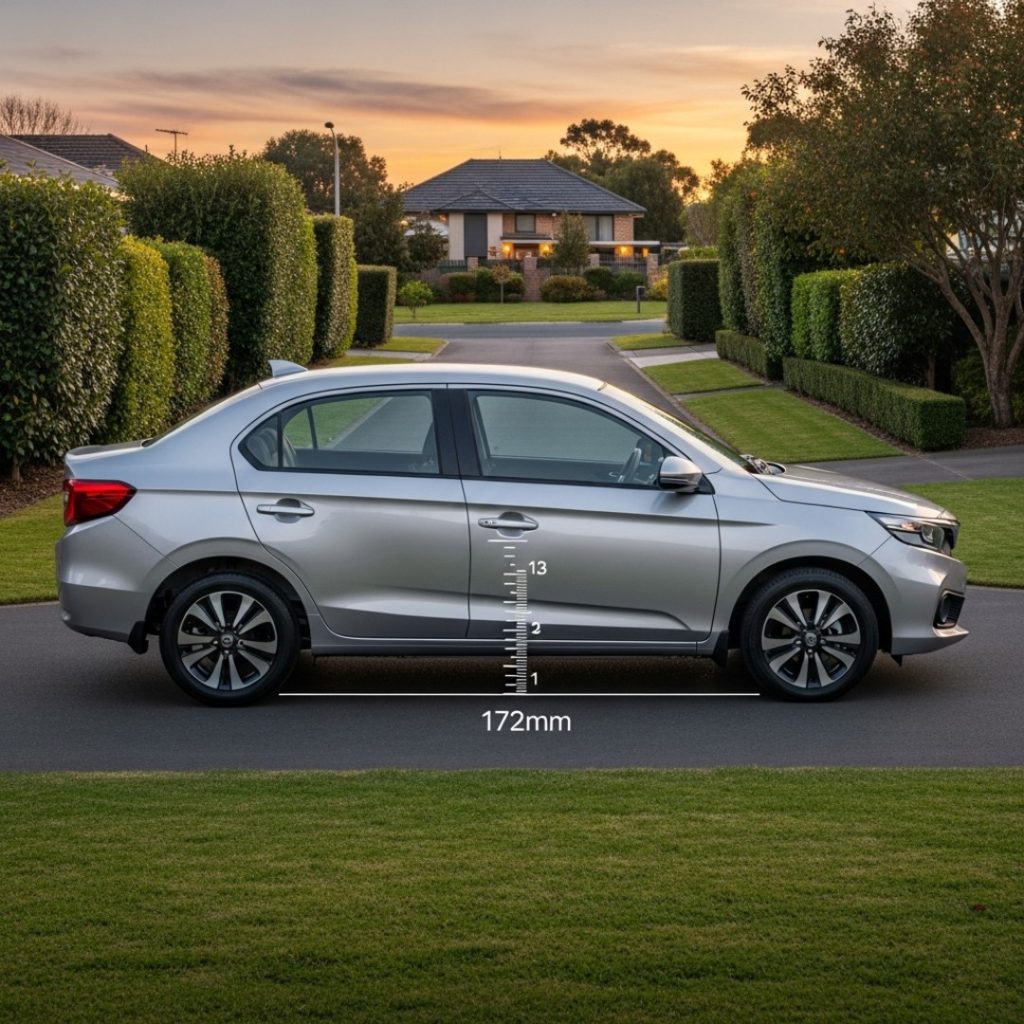
Ground Clearance172 mm (Improved for 2026)
Boot Space416 Litres (Segment Best)
Safety5-Star Bharat NCAP / 6 Airbags Standard

2. DESIGN & BUILD: The “Mini City” Aesthetic

The first thing you’ll notice is the wider stance (increased by 38mm). The front grille is inspired by the Honda Civic, giving it a much more aggressive and premium road presence.

  • Build Material: Honda has used high-strength steel for the 2026 model, which explains its massive crash-test success.
  • In-hand feel: The doors feel “heavier” than the previous generation, and the paint quality—especially in the new Crystal Black Pearl—is top-notch.
Side profile shot of the Honda Amaze 2026 parked on a clean suburban driveway to show its 172mm ground clearance and 15-inch dual-tone alloy wheels

3. DISPLAY & VISUALS

Inside, the dashboard is a radical departure. It now mimics the Honda Elevate’s layout.

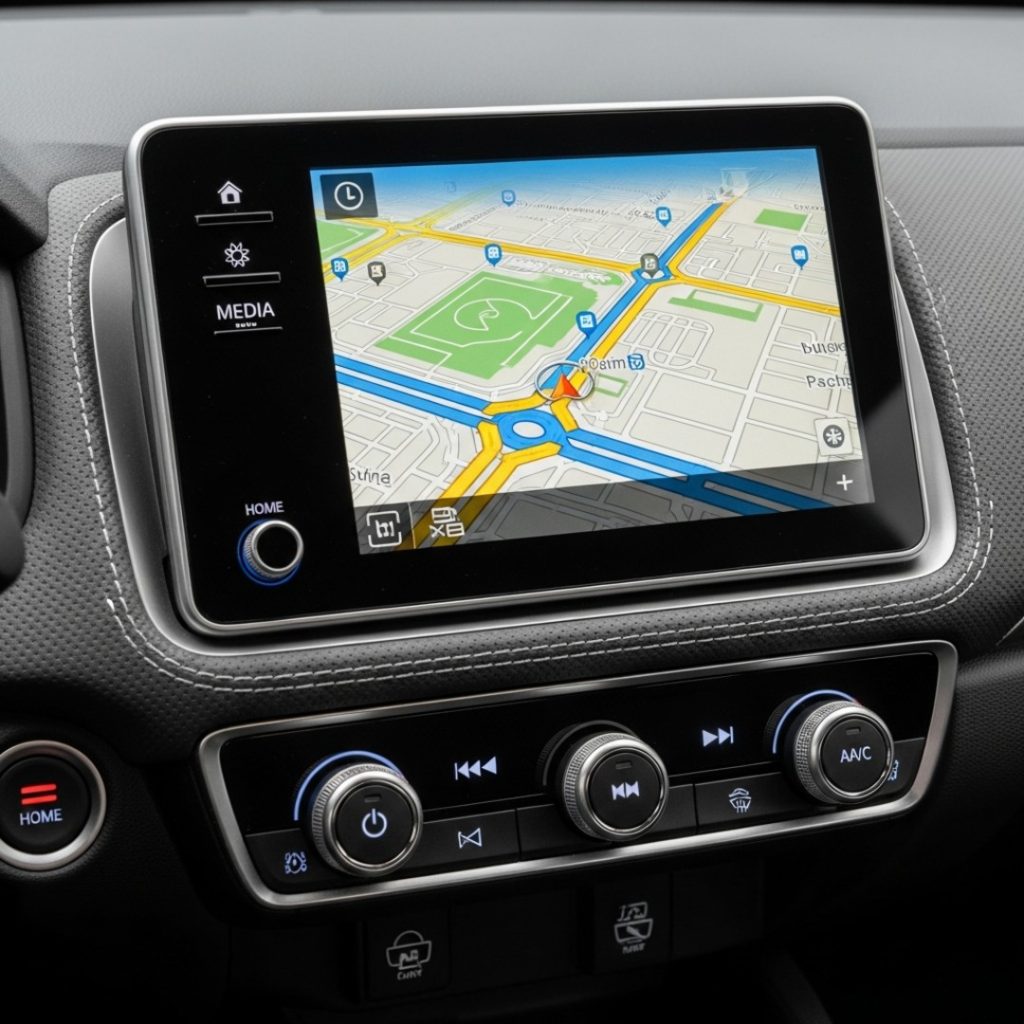
  • Infotainment: You get a free-standing 8-inch touchscreen that is significantly brighter and more responsive than the old 7-inch unit.
  • Visibility: Even under the harsh 2:00 PM Indian sun, the anti-glare coating works wonders.
  • Cluster: A semi-digital instrument cluster provides ADAS alerts and trip info clearly.
 Close-up of the Honda Amaze 2026 infotainment screen showing a vibrant navigation map. 

4. PERFORMANCE: Refinement Over Raw Power

The real truth about the 1.2L i-VTEC is that it is a “city slicker.” It is incredibly smooth and silent at idle.

  • City Drive: The CVT is arguably the best in the segment—no “rubber-band” effect during normal city crawls.
  • Highway: Don’t expect to win drag races. It takes about 12.8 seconds to hit 100 kmph. However, it cruises at 100 kmph with total composure.
  • Handling: The steering is light but gains decent weight at high speeds. It feels more “planted” than the older model due to the wider track.

5. THE ENGINE & ADAS: Segment Firsts

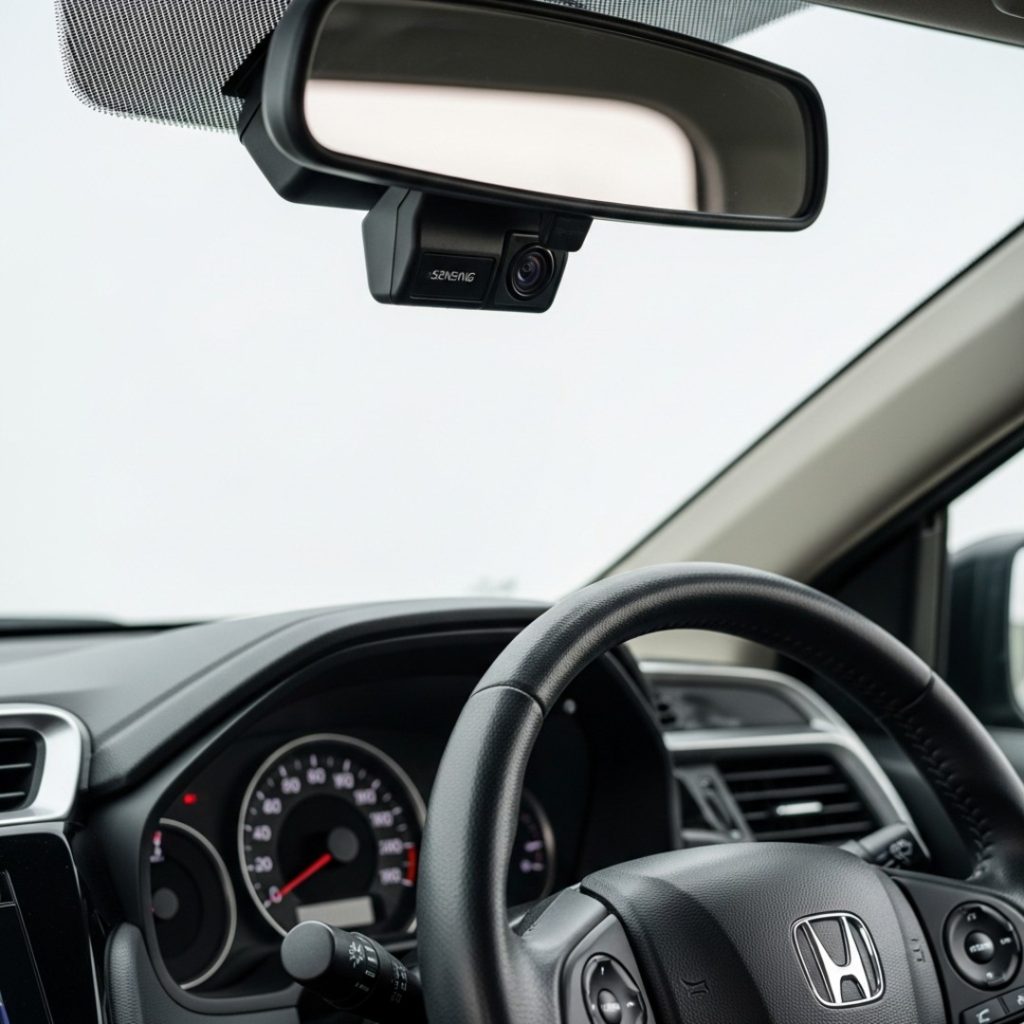
The 2026 Amaze is now the most affordable car in India with Level 2 ADAS.

  • Honda Sensing: You get Lane Keep Assist, Adaptive Cruise Control, and Lead Car Departure Alert. On a long highway trip from Delhi to Jaipur, this is a literal lifesaver.
  • Refinement: Unlike 3-cylinder rivals, this 4-cylinder engine has zero vibrations at the steering wheel or pedals.
Macro/Close-up shot of the Honda Amaze dashboard interior, specifically the ADAS ‘Sensing’ camera module

6. BATTERY & ENDURANCE (Real-World Mileage)

While Honda claims 19+ kmpl, we tested it in heavy Mumbai-Bhopal traffic:

  • Real World City: 10.5 – 12.8 kmpl (CVT) | 13 – 14.5 kmpl (MT)
  • Real World Highway: 15.5 – 17.2 kmpl (CVT) | 18 – 19.5 kmpl (MT)
  • The Verdict: The CVT is thirstier in stop-and-go traffic but is a blessing for your left leg.

7. THE COMPETITION: Battle of the Sedans

Honda Amaze 2026 vs Maruti Dzire vs Hyundai Aura

  • Maruti Dzire: Offers better mileage (25+ kmpl with the Z-series engine) and a wider service network, but feels “lighter” in build compared to the Amaze.
  • Hyundai Aura: Offers the best interior “glitz” and feature list (like rear AC vents as standard), but the Amaze’s ADAS and safety rating are currently unmatched.

The Winner: For Safety and Refinement, the Honda Amaze 2026 wins. If you are a high-mileage user (100km+ daily), the Dzire’s fuel efficiency is hard to ignore.

Read more ; https://mobile.udaanebike.com/

8. FINAL VERDICT

Buy it if:

  • Safety is your #1 priority (5-star rating + 6 Airbags standard).
  • You want the smoothest automatic (CVT) in the segment.
  • You need a huge boot for family airport runs (416L is massive).

Skip it if:

  • You are looking for a punchy Turbo-engine (it’s a linear, calm engine).
  • Fuel economy is your only concern (Dzire is better here).
  • You want a heavy “European” thud from the doors (it’s still a Japanese car).

Rating: (4.5/5 Stars)

9. FAQs (People Also Ask)

1. Is the Honda Amaze 2026 safe for families?

Yes! It is the second sedan in India to secure a full 5-Star Bharat NCAP rating, and it comes with 6 airbags as standard across all variants.

2. Does the Honda Amaze 2026 have a sunroof?

Yes, the 2026 model introduces a single-pane electric sunroof in the top-spec ZX variant, a first for the Amaze.

3. What is the waiting period for the new Amaze?

Currently, depending on the city, the waiting period ranges from 4 to 8 weeks, with the CVT variants in higher demand.

4. Is there a Diesel or CNG option in 2026?

No. Honda has discontinued the diesel engine entirely, and there are currently no plans for a factory-fitted CNG variant.

Rolls-Royce Vision Next 100

Rolls-Royce Vision Next 100 Price in India: A ₹500 Crore Living Room on Wheels?

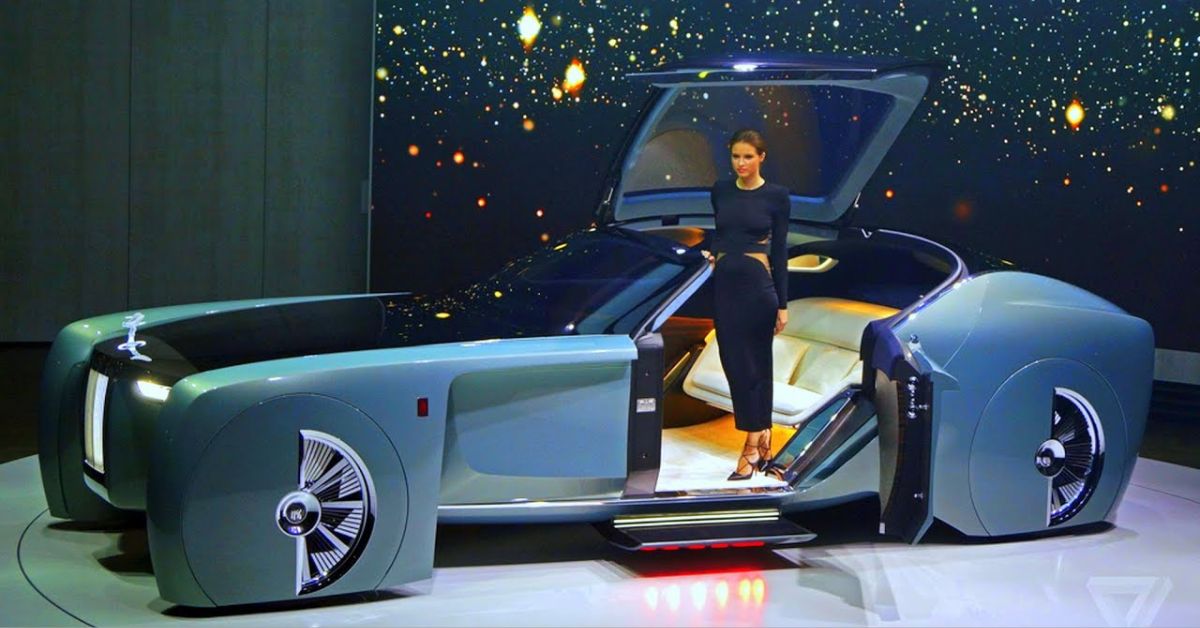
If you think a Phantom or a Ghost is the pinnacle of luxury, Rolls-Royce has a message for you: “You haven’t seen anything yet.” Codenamed 103EX, the Rolls-Royce Vision Next 100 is not just a car; it is a manifesto. Launched to celebrate BMW’s centenary, this vehicle is a glimpse into what the super-rich will be chauffeured in by the year 2116.

In the Indian context, where road presence is everything, the 103EX is a “Paisa Vasool” statement of a different dimension. Imagine rolling up to a wedding in South Delhi or a corporate gala in Mumbai in a vehicle that looks like a high-tech yacht on wheels. There is no engine noise, no steering wheel, and—get this—no driver.

Rolls-Royce Vision

3. Quick Specs Table: The Digital DNA

While the 103EX is a “Vision Vehicle” (Concept), Rolls-Royce has been specific about its technological backbone.

FeatureSpecification
PowertrainHigh-Performance Dual-Electric Motors (Zero Emissions)
Power Output~500 BHP (Estimated combined)
Length5.9 Meters (Similar to Phantom Extended Wheelbase)
Height1.6 Meters
Drive TypeFully Autonomous (Level 5)
Body MaterialHand-built from Advanced Carbon-Fiber & Lightweight Composites
Wheels28-inch Narrow Wheels (Partially Enclosed)

4. Exterior Design: The “Grand Arrival”

The first thing that hits you about the Vision Next 100 is its sheer scale. It’s nearly 20 feet long! Iske wheel arches are completely enclosed, making the car look like it’s floating. Rolls-Royce calls this the “Magic Carpet Ride” taken to a literal level.

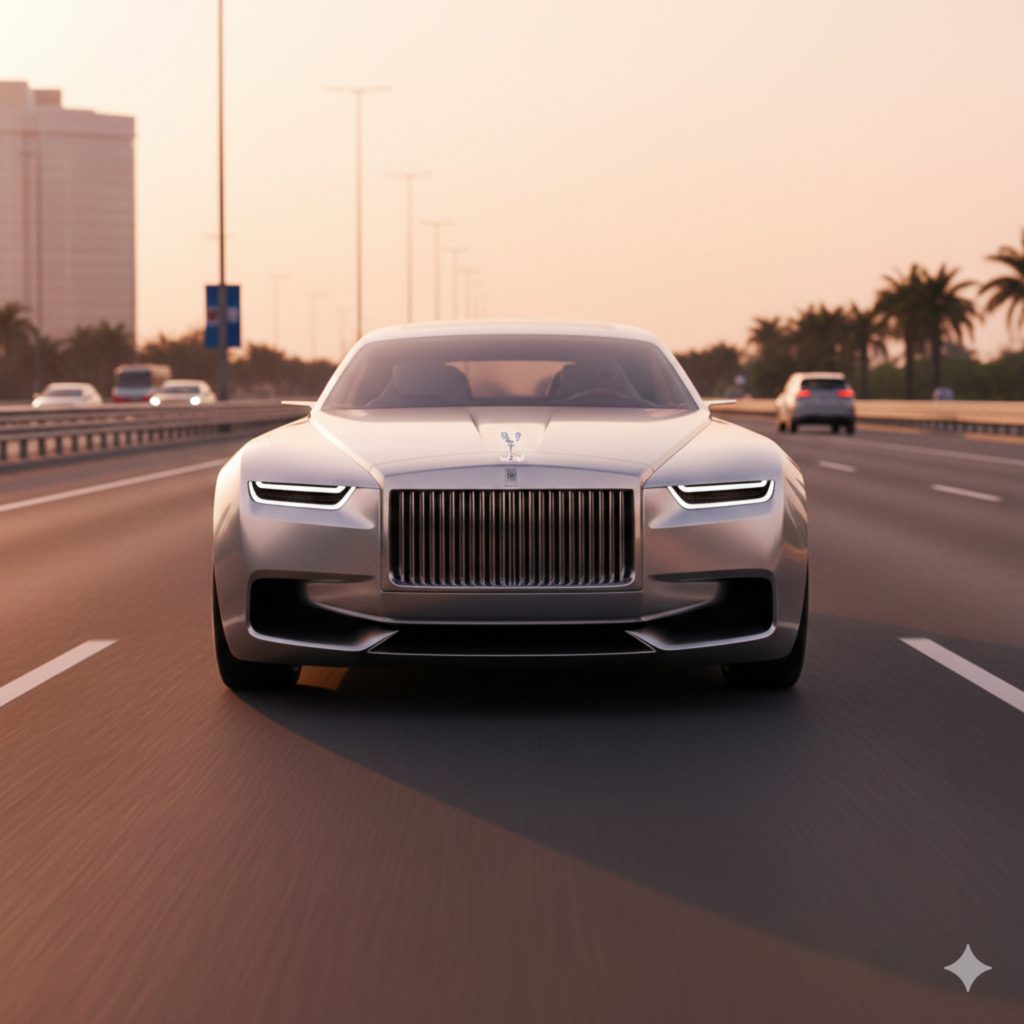
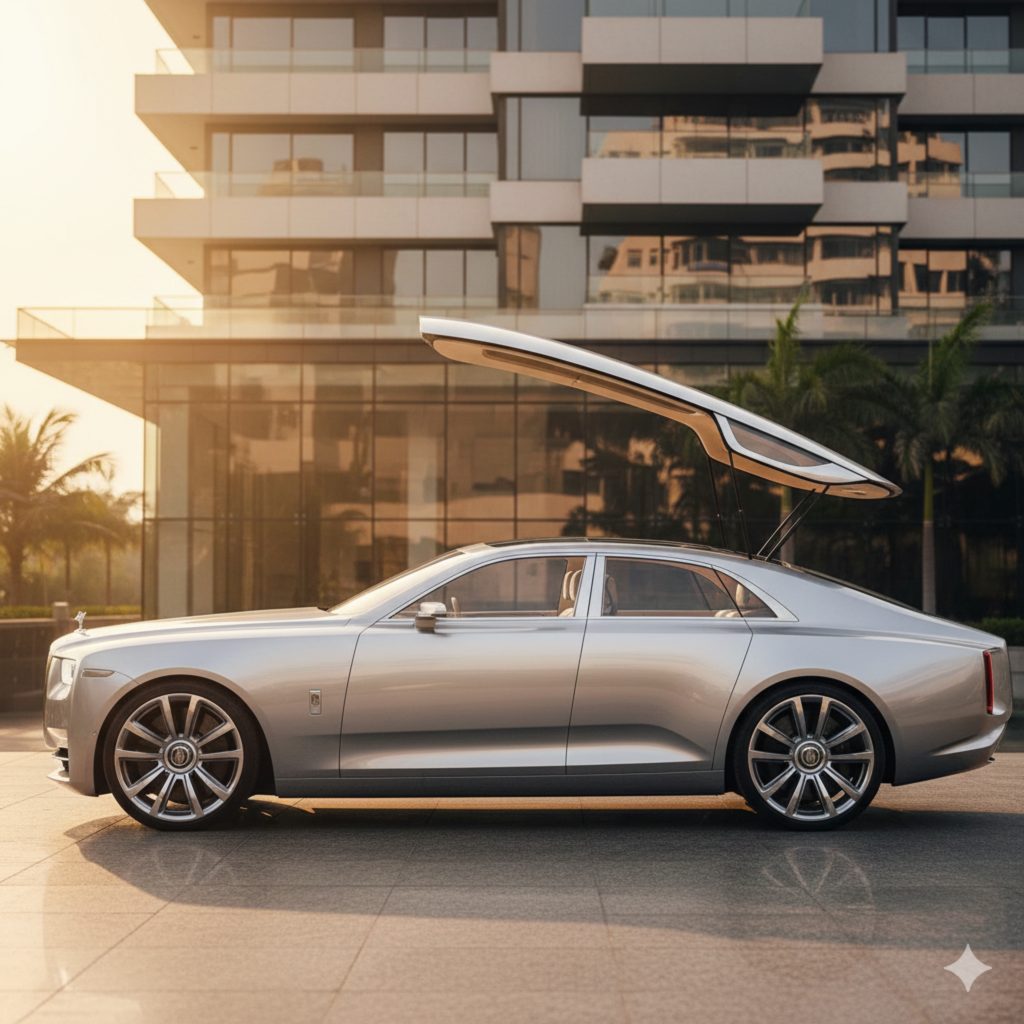
The iconic Pantheon grille is still there, but it’s reimagined. The Spirit of Ecstasy is now made of hand-cut lead crystal and glows from within. When you arrive, the roof canopy hinges upward, and the coach door swings open, allowing you to simply stand up and walk out. No more awkward “crawling out” of a low-slung sedan. It even projects a virtual “red carpet” of light on the ground. Asli swagat toh ise kehte hain!

Grand Arrival

5. Interior: A “Grand Sanctuary” Without a Steering Wheel

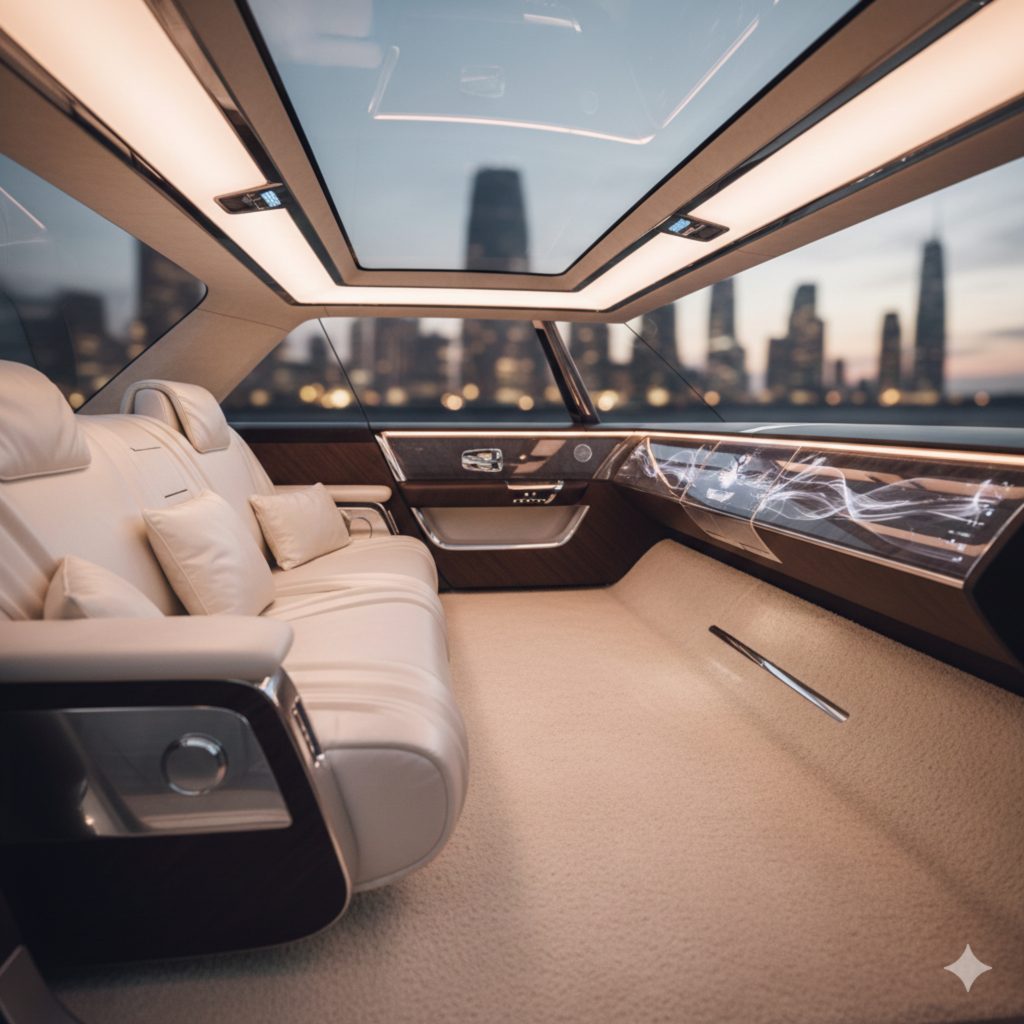
Step inside, and you’ll realize this isn’t a car cabin—it’s a lounge. There is no steering wheel, no dashboard, and no pedals.

  • The Sofa: Instead of traditional seats, you get a massive, floating silk sofa. It feels like sitting in the most expensive furniture showroom in Milan.
  • The Screen: A giant transparent OLED screen spans the front of the cabin. It displays your route, meetings, or even a movie.
  • The Materials: We are talking about Macassar wood paneling and hand-twisted silk carpets. It’s so plush you’d feel guilty wearing shoes inside.
  • Missing Features: You won’t find a gear lever or a 360-degree camera button. Why? Because you don’t drive it. The AI does everything.
Grand Sanctuary

6. Performance & Driving: Who Needs a V12?

In the old days, a Rolls-Royce was defined by its 6.75L V12 engine. But the Vision Next 100 is fully electric.

  • City Drive: In a city like Mumbai or Bengaluru, the 103EX would be a dream. The AI assistant, “Eleanor,” handles the stop-and-go traffic for you. The suspension absorbs potholes easily—you won’t even feel the speed breakers thanks to active scanning technology.
  • Highway Dynamics: On the highway, the car is designed for stability at high speeds. Since the wheels are narrow and enclosed, the aerodynamics are superior to any current SUV. Body roll is practically non-existent because the battery pack is placed low in the chassis.

7. Safety: The “Eleanor” Shield

Safety isn’t just about airbags anymore (though this has plenty). It’s about the AI Assistant, Eleanor. Eleanor isn’t just a voice; she is the “soul” of the car. She monitors traffic, predicts hazards, and communicates with other vehicles. With Level 5 autonomy, the risk of human error—which causes 90% of accidents—is eliminated. The carbon-fiber “monocoque” structure acts as a safety cell that is nearly indestructible.

8. Real World Range (The Truth)

Since this is an EV, everyone asks: “Mileage kitna degi?”

  • Claimed Range: Rolls-Royce envisions a range of over 700 km on a single charge.
  • Real World City: Expect around 500-550 km in heavy traffic conditions where the AC is running at full blast.
  • Real World Highway: You could likely touch 600 km+ if cruising at steady speeds.

9. The Competition: Future Rivals

In the world of ultra-luxury concepts, the Rolls-Royce 103EX stands in a league of its own, but two other “Visions” come close.

FeatureRolls-Royce 103EXBentley EXP 100 GTMercedes-Benz Vision AVTR
Core PhilosophyGrand SanctuarySustainable LuxuryBionic Connection
Seating2-Seater Sofa3 or 4 (Configurable)4-Seater
SteeringNone (Fully Autonomous)Retractable WheelControl Pad (No Wheel)
VibeRoyal/RegalSporty/TechySci-Fi/Organic

Winner: For the Indian elite who prefer to be “driven” rather than “drive,” the Rolls-Royce 103EX is the clear winner. It offers the most effortless experience.

10. Final Verdict

The Rolls-Royce Vision Next 100 is a dream on wheels. It’s not a car you buy to get from Point A to Point B; it’s a car you buy to tell the world you’ve arrived.

  • You have a net worth that rivals small countries.
  • You want a “Grand Sanctuary” that shields you from the chaos of the outside world.
  • You believe the future of luxury is purely autonomous and electric.
  • You actually enjoy the “Sheer Driving Pleasure” of holding a steering wheel.
  • You are looking for a car that can fit into a standard mall parking lot (it’s too big!).
  • You want a car you can buy today (it’s still a vision of the future).

11. FAQs (People Also Ask)

Q: What is the price of Rolls-Royce Vision Next 100 in India?

As a concept car, it is not for sale. However, if produced, its bespoke nature would likely put the price tag above ₹500 Crore (approx. $60-70 million).

Q: Does it have a CNG option?

Bilkul nahi! This is a pure Electric Vehicle (EV). There is no internal combustion engine.

Q: Can it handle Indian roads and high speed breakers?

The concept features active suspension that can raise the vehicle height. While the enclosed wheels look low, the production-ready tech would definitely account for ground clearance.

Q: When will it launch in India?

This specific model (103EX) is a design study. However, many of its technologies—like the “Eleanor” AI and the electric drivetrain—have already started appearing in the Rolls-Royce Spectre

Back to Top
WhatsApp Channel
Compare (0)