
Only COD || Advance में ₹1 भी नहीं देना है
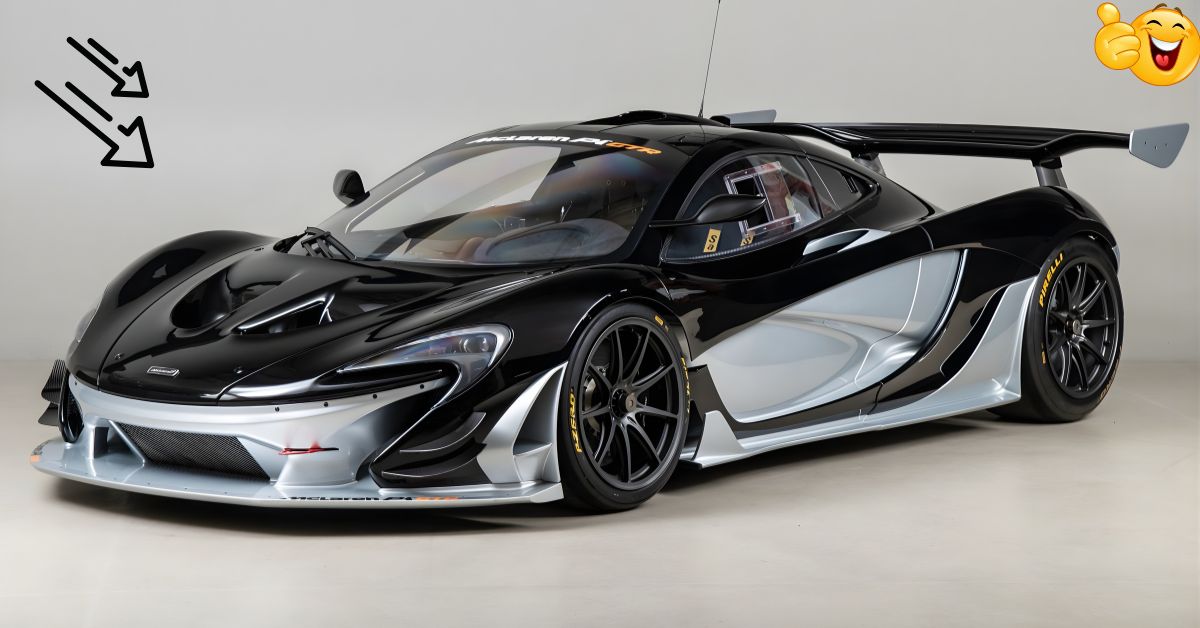
McLaren P1 GTR

McLaren P1 GTR Explained: Specs, History, and Its Craze in India

Car enthusiasts across India and the globe are constantly looking back at the legends of the hypercar world. The McLaren P1 GTR is one such masterpiece that continues to trend. Even years after its original production ended, this 986-horsepower track weapon remains a popular topic among speed lovers, collectors, and automotive fans. From its jaw-dropping design to its hybrid V8 engine, the P1 GTR set a benchmark that even modern supercars struggle to beat. Here is everything you need to know about the McLaren P1 GTR, its background, its connection to the Indian market, and why it matters today.

What Happened: The Birth of a Track Legend

McLaren originally launched the standard P1 as a road-legal hybrid hypercar. When the production of the 375 road cars ended around 2015, the company decided to give its most loyal customers something even more extreme. They removed all the rules required for road cars and created the McLaren P1 GTR. It was strictly built for the race track.

Only existing McLaren P1 owners were allowed to buy the GTR version. The car came with a complete driver training programme, including access to McLaren’s racing simulators and track days at famous Formula 1 circuits around the world. Because of this exclusivity, the P1 GTR instantly became a rare collector’s item.

Read more: Tata Xpres T EV

Key Details and Engineering Marvels

The McLaren P1 GTR takes the hybrid technology of the standard car and pushes it to the limit. It features a 3.8-litre twin-turbocharged V8 engine combined with an electric motor. Together, they produce a massive 986 horsepower.

To make the car faster around corners, McLaren engineers widened the front track and lowered the ride height. They also added a massive fixed rear wing equipped with a Formula 1-style Drag Reduction System (DRS). This wing generates over 660 kg of downforce, gluing the car to the track at high speeds. To save weight, heavy glass windows were replaced with lightweight plastic, and the interior was stripped down to just the bare essentials.

The Lanzante Road-Legal Conversions

Although McLaren built the P1 GTR only for the track, a British company named Lanzante Motorsport stepped in to change the game. With McLaren’s blessing, Lanzante started converting a few P1 GTRs into road-legal cars. They added necessary safety features, modified the exhaust, and adjusted the ride height so the car could handle normal speed bumps. This made the P1 GTR even more famous, as people could suddenly see a pure race car driving on public streets.

Why It Matters and Impact in India

In India, the hypercar culture has grown rapidly over the last few years. While spotting a McLaren P1 GTR on Indian roads is nearly impossible due to import restrictions, heavy taxes, and its track-only nature, the car holds massive respect among Indian auto enthusiasts.

The impact of the P1 GTR in India is most visible in the collector and hobbyist communities. High-quality scale models, such as the 1:14 remote-control versions and 1:40 die-cast models, are highly searched and bought across the country. Indian racing fans also study the aerodynamic design of the P1 GTR, as it serves as a masterclass in automotive engineering. Furthermore, with McLaren officially entering the Indian market recently with models like the GT and 750S, fans are paying closer attention to the brand’s ultimate heritage cars.

What Happens Next: The Legacy Continues

The automotive industry is shifting completely towards electric vehicles, making hybrid V8 hypercars like the P1 GTR extremely valuable. Recently, McLaren revealed its newest ultimate supercar, the W1. While the W1 introduces the next generation of hybrid power, it also makes car lovers nostalgic for the raw, aggressive nature of the P1 GTR. The value of existing P1 GTR models continues to rise at global auctions, proving that this car is a permanent part of automotive history.

Frequently Asked Questions (FAQs)

Is the McLaren P1 GTR road legal?

Originally, the McLaren P1 GTR was built strictly for the race track and was not road legal. However, a company called Lanzante Motorsport converted a limited number of these cars to be driven legally on public roads.

How much horsepower does the McLaren P1 GTR have?

The car is powered by a 3.8-litre twin-turbo V8 engine paired with an electric motor, producing a combined output of 986 horsepower.

Can I buy a McLaren P1 GTR in India?

Buying a real McLaren P1 GTR in India is extremely difficult and expensive due to high import duties, its limited production, and the fact that it was originally offered only to existing P1 owners. However, many fans in India buy officially licensed remote-control and die-cast scale models of the car.

What is the top speed of the McLaren P1 GTR?

The top speed of the P1 GTR is electronically limited to around 350 km/h, but its main focus is on fast cornering and track lap times rather than just straight-line speed.

Why is the P1 GTR trending again?

The car often trends when rare models go up for auction, when automotive content creators review them, or when McLaren announces new hypercars like the W1, causing fans to look back at the brand’s previous masterpieces.
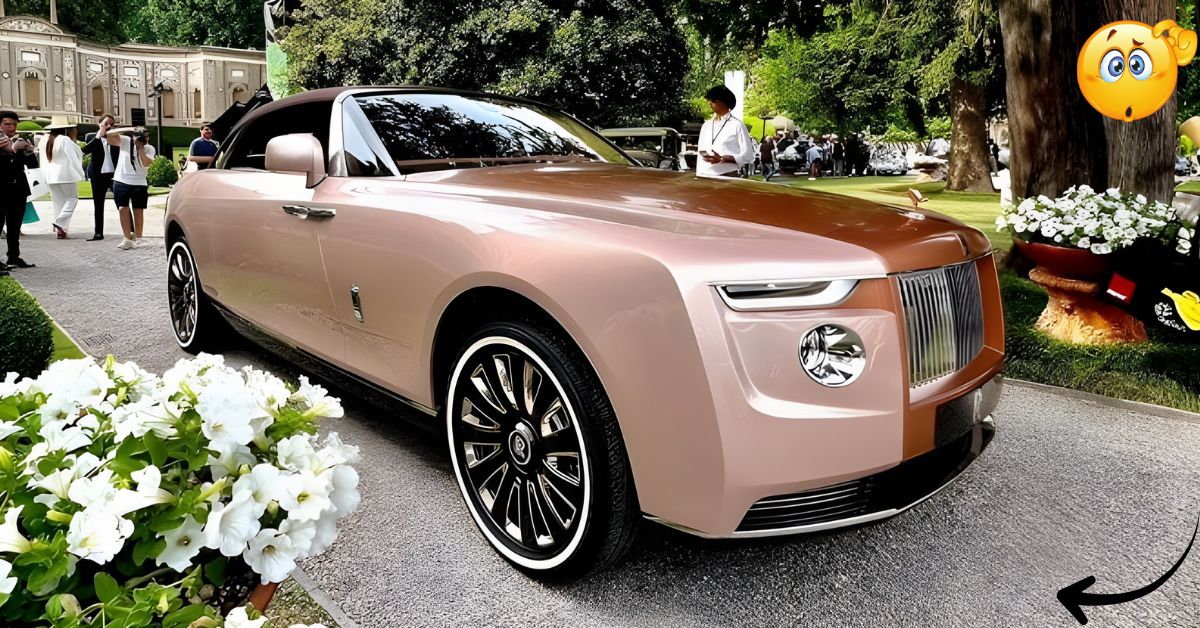
Rolls-Royce Boat Tail

Rolls-Royce Boat Tail: The ₹200 Crore Car Explained

Imagine a car that costs more than a luxury villa in Mumbai, a private jet, and a helicopter combined. That is exactly what the Rolls-Royce Boat Tail is. It is not just a vehicle; it is a moving piece of art that has shocked the entire world with its price tag.

For car lovers in India, Rolls-Royce has always been the ultimate symbol of wealth. But the Boat Tail takes this to a level that is hard to believe. With a price tag estimated at around $28 million (approx. ₹230 to ₹250 Crores in India), it currently holds the title of one of the most expensive new cars ever sold in history.

Let’s dive deep into what makes this car so special and why it costs a fortune.

What is the Rolls-Royce Boat Tail?

The Boat Tail is not a regular car that you can just walk into a showroom and buy. It is a “Coachbuilt” model. This means Rolls-Royce essentially revived an old tradition where the chassis (the base of the car) is standard, but the body and interior are 100% custom-made according to the buyer’s specific dreams.

Only three units of this car exist in the entire world. Yes, just three.

The design is inspired by J-class yachts. It looks like a luxury boat on wheels. It is nearly 5.8 meters long and has a sleek, flowing shape that mimics the hull of a ship. The creators at Rolls-Royce spent four years working with the buyers to design every single inch of this vehicle.

Read more: Bugatti Centodieci

Why Is It So Expensive?

You might wonder, “It’s just a car, why does it cost ₹200 Crores?” The answer lies in the details.

1. Hand-Built Perfection: Unlike modern cars built by robots on an assembly line, the Boat Tail was hammered and shaped by hand. The aluminium body panels were manually crafted by skilled artisans, which takes thousands of hours.

2. The Rear “Hosting Suite”: The most talked-about feature is the back of the car. It does not have a normal boot or trunk. Instead, with the press of a button, the wooden rear deck opens up like the wings of a butterfly. Inside, it reveals a full “hosting suite.”

This suite includes a refrigerator capable of cooling champagne to precisely 6 degrees, expensive crystal glassware, silver cutlery, and even porcelain plates. It also has a parasol (a fancy umbrella) that pops up to provide shade while you enjoy a picnic next to your ₹200 Crore car.

3. Unique Timepieces: The dashboard features a custom clock made by BOVET 1822, a luxury Swiss watchmaker. These aren’t just dashboard clocks; they can be removed and worn as wristwatches by the owners.

Engine and Performance

While the luxury is the main focus, the power is also massive. The Boat Tail is powered by the same engine found in the Rolls-Royce Phantom—a 6.75-litre twin-turbo V12 engine. It produces around 563 horsepower.

However, this car is not built for racing. It is built for “waftability”—a term Rolls-Royce uses to describe the feeling of floating on the road without feeling any bumps or noise.

Who Owns These Cars?

Since only three were made, the owners are very secretive. However, strong reports and rumors suggest that the first unit (which is blue) belongs to the music power couple Jay-Z and Beyoncé. The car features many details that match their personal preferences, including a specific shade of blue and a refrigerator designed for their favorite champagne brand.

The second unit was reportedly sold to a business tycoon whose family business is in the pearl industry. The car’s paint actually changes colour slightly depending on the sunlight, mimicking a pearl. The owner of the third unit remains a mystery.

The Indian Perspective

As of now, there is no confirmed Indian owner of the Rolls-Royce Boat Tail. While India is home to billionaires like Mukesh Ambani and Gautam Adani, who own impressive car collections, this specific model is extremely rare.

If someone were to import this car to India, the cost would be astronomical. With India’s import duties on luxury cars (which is roughly 100% or more), the final price could easily cross ₹400 Crores to ₹500 Crores. For that amount, one could buy dozens of Rolls-Royce Phantoms or Cullinans.

What’s Next for Rolls-Royce?

The Boat Tail has proven that there are people in the world willing to pay any amount for exclusivity. Following this success, Rolls-Royce has continued its “Coachbuild” program, recently launching the Droptail, which is another ultra-limited series. These cars are not just vehicles; they are investment assets that will likely increase in value over time.

Frequently Asked Questions (FAQs)

1. What is the price of Rolls-Royce Boat Tail in Indian Rupees?

The estimated price is around ₹230 to ₹250 Crores, depending on exchange rates. If imported to India with taxes, it could cost double that amount.

2. How many Rolls-Royce Boat Tails are there in the world?

There are only three units of the Rolls-Royce Boat Tail in the entire world.

3. Does Mukesh Ambani own a Rolls-Royce Boat Tail?

No, there is no official report of Mukesh Ambani owning a Boat Tail. However, he owns several other Rolls-Royce models like the Cullinan and Phantom.

4. What is special about the back of the Boat Tail?

The back opens like butterfly wings to reveal a luxury picnic set, including a fridge, glasses, tables, and a sunshade.

5. Is the Rolls-Royce Boat Tail the most expensive car in the world?

It was the most expensive new car when it launched. However, the recently launched Rolls-Royce Droptail is rumoured to be even more expensive, close to $30 million.

Back to Top
WhatsApp Channel
Compare (0)