Only COD || Advance में ₹1 भी नहीं देना है
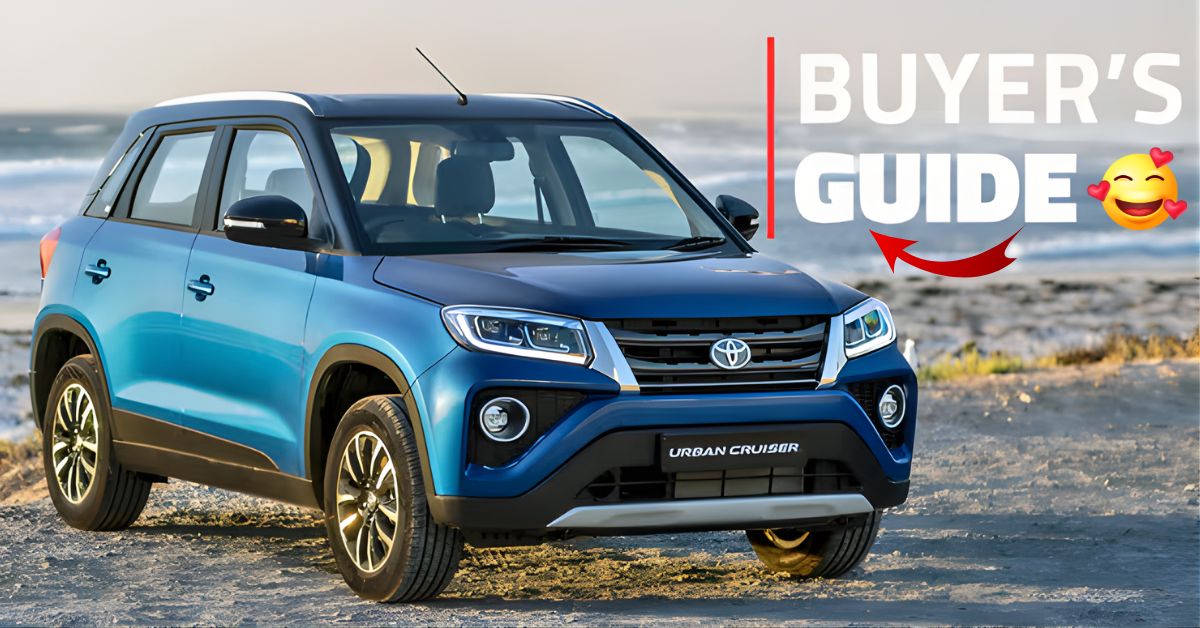
Toyota Urban Cruiser

Toyota Urban Cruiser EBella EV Explained: Specs, Battery Range, Booking and Expected Price

Toyota has officially stepped into India’s fast-growing electric vehicle market with the Toyota Urban Cruiser EBella. The new electric SUV is creating strong buzz among car buyers because it marks Toyota’s first major mass-market electric car for India.

The Urban Cruiser EBella combines Toyota’s SUV design with modern EV technology. It offers long driving range, advanced safety features, and connected car technology aimed at urban users. In this article, we explain everything important about the Toyota Urban Cruiser EBella, including price expectations, battery options, features, and what it means for India’s EV market.

What Is Toyota Urban Cruiser EBella?

The Toyota Urban Cruiser EBella is a mid-size electric SUV developed by Toyota Kirloskar Motor for the Indian market. It represents the company’s entry into the battery electric vehicle (BEV) segment in India.

Toyota says the EBella is designed around its “Urban Tech” philosophy, combining futuristic design with electric mobility. The SUV features bold styling, spacious interiors, and modern connectivity features.

The model has also been developed under the Toyota-Suzuki partnership and shares its platform with the Maruti Suzuki e-Vitara, though the exterior design and branding differ.

Expected Price of Toyota Urban Cruiser EBella in India

Toyota has not confirmed final prices yet, but early estimates suggest the SUV will target the mid-range EV segment.

VariantBatteryExpected Price (Ex-Showroom)
E149 kWh₹17 – ₹19 lakh
E261 kWh₹19 – ₹21 lakh
E361 kWh₹21 – ₹24 lakh

Prices may vary depending on features and battery pack.

Battery Options and Driving Range

One of the biggest highlights of the Urban Cruiser EBella is its long electric range. Toyota offers two battery pack choices.

SpecificationDetails
Battery options49 kWh and 61 kWh
Power outputUp to about 174 bhp
TorqueAround 189 Nm
Driving rangeUp to 440–543 km (claimed)
Charging0–80% in around 50 minutes (fast charger)

The smaller battery version offers about 440 km range, while the larger battery can deliver up to around 543 km on a single charge, depending on driving conditions.

Check out more: Motorola G96 5G

Key Features and Technology

The Urban Cruiser EBella includes several modern features designed for everyday comfort and connectivity.

Important highlights include:

  • Dual digital displays (10.1-inch instrument cluster and 10.25-inch infotainment screen)
  • Toyota i-Connect connected car technology
  • Wireless phone charging
  • JBL premium sound system
  • Smartwatch connectivity
  • Panoramic sunroof
  • Electrically adjustable driver seat

The vehicle focuses on a premium cabin experience with digital controls and smart integration features.

Safety Features

Toyota has also equipped the electric SUV with advanced safety systems.

Safety FeatureDetails
Airbags7 airbags standard
ADASLevel-2 advanced driver assistance
Cameras360-degree surround camera
Driving aidsAdaptive cruise control, lane assist
Standard systemsABS, EBD, reverse sensors

These features aim to improve driver safety and make long drives more comfortable.

Booking and Launch Timeline

Bookings for the Toyota Urban Cruiser EBella have already started at Toyota dealerships with a token amount of around ₹25,000.

The official market launch is expected around March 2026, depending on region and dealership availability.

Toyota is also offering additional benefits such as:

  • 8-year battery warranty
  • Assured buyback program
  • Battery-as-a-Service option

These offers aim to increase buyer confidence in electric vehicles.

Why Toyota Urban Cruiser EBella Matters for India

India’s electric vehicle market is growing quickly as buyers look for fuel savings and lower emissions. Toyota’s entry into the segment is important for several reasons.

First, Toyota is known globally for reliability and hybrid technology. Its move into electric SUVs shows the company’s long-term commitment to India’s EV transition.

Second, the EBella competes directly with popular electric SUVs such as:

  • Tata Nexon EV
  • Hyundai Creta Electric
  • MG ZS EV
  • Mahindra BE series

With strong range and modern features, the Urban Cruiser EBella could become a serious competitor in the mid-size electric SUV segment.

What Happens Next?

Over the next few months, Toyota is expected to reveal:

  • Official price announcement
  • Variant-wise feature list
  • Test drive availability
  • Delivery timelines

As charging infrastructure expands in India, electric SUVs like the EBella could attract more mainstream buyers.

FAQs

1. What is the Toyota Urban Cruiser EBella?

The Toyota Urban Cruiser EBella is Toyota’s first mass-market electric SUV launched for the Indian market.

2. What is the expected price of Toyota Urban Cruiser EBella?

The expected price is around ₹17 lakh to ₹24 lakh, depending on the battery pack and variant.

3. What is the driving range of the EBella?

The SUV offers an estimated 440 km to 543 km range on a full charge.

4. When will the Toyota Urban Cruiser EBella launch in India?

The vehicle is expected to launch in India around March 2026, with bookings already open.

5. How long does it take to charge the EBella?

With fast charging, the battery can reach around 80% in roughly 50 minutes.
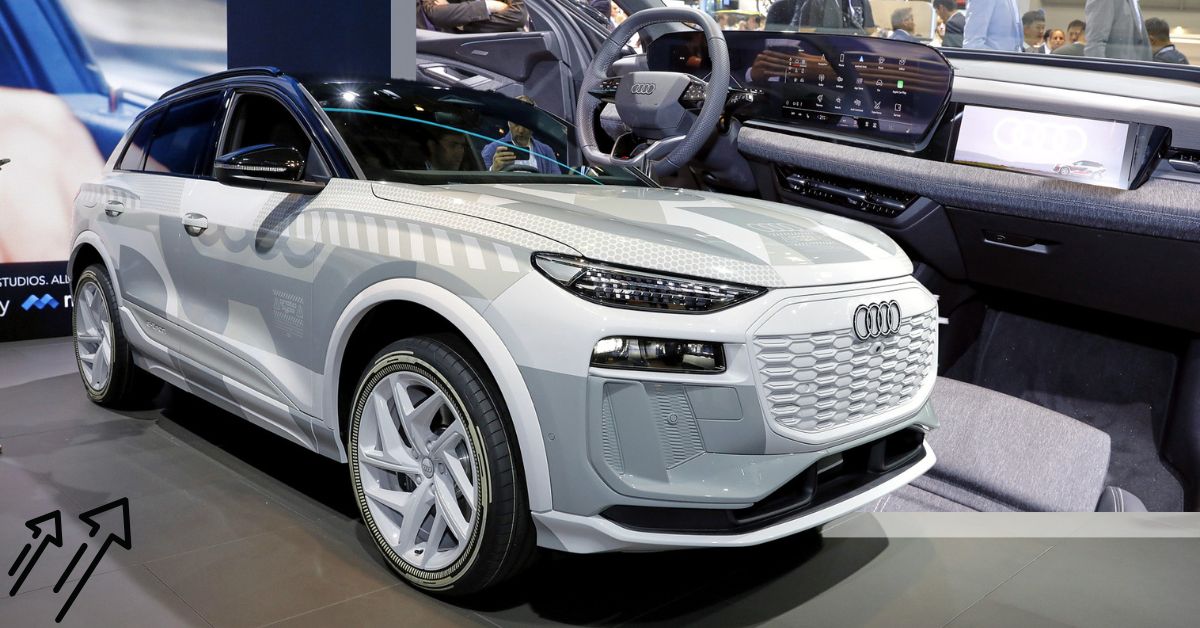
Audi Q6 e-tron

Audi Q6 e-tron India Launch: Expected Price, Range, Features and Latest Updates

The Audi Q6 e-tron is one of the most anticipated luxury electric SUVs expected to enter the Indian market soon. Audi has already showcased the model globally, and reports suggest the electric SUV could arrive in India within the next year. With advanced technology, long driving range, and premium design, the Q6 e-tron will play an important role in Audi’s growing electric vehicle (EV) lineup.

In this article, we explain everything known so far about the Audi Q6 e-tron, including its expected launch in India, price, battery range, features, and why it matters for the country’s luxury EV market.

What is the Audi Q6 e-tron?

The Audi Q6 e-tron is a mid-size luxury electric SUV positioned between the Q4 e-tron and Q8 e-tron in Audi’s EV lineup. It is built on the Premium Platform Electric (PPE) architecture, which was jointly developed by Audi and Porsche.

This platform is designed specifically for next-generation electric vehicles and supports high performance, fast charging, and improved efficiency.

Globally, the model is offered in multiple variants including the standard Q6 e-tron and a more powerful performance version called SQ6 e-tron.

Expected Launch Date in India

The Audi Q6 e-tron has already been spotted testing in India, which indicates the company is preparing it for the local market.

Industry reports suggest the SUV could launch in India between late 2025 and early 2026, although Audi has not officially confirmed the exact date yet.

Once launched, it will strengthen Audi’s electric portfolio in India, which already includes models like the e-tron GT and Q8 e-tron.

Expected Price in India

The expected price range of the Audi Q6 e-tron in India is likely to fall between:

₹85 lakh to ₹1.1 crore (ex-showroom) depending on the variant and features.

This pricing places the SUV firmly in the luxury EV segment, targeting premium buyers who want high performance with zero emissions.

Check out more: Tata Harrier 2026

Battery, Range and Performance

Globally, the Audi Q6 e-tron is powered by a 100 kWh battery pack, although smaller battery options may be offered in some markets.

Key performance highlights include:

  • Range: Up to about 625 km on a single charge (claimed WLTP range).
  • Power output: Around 382 bhp in the standard model and up to 483 bhp in the SQ6 variant.
  • Fast charging: With high-speed DC charging, the battery can charge from 10% to 80% in about 21 minutes.

These specifications make the Q6 e-tron competitive with other premium electric SUVs worldwide.

Design and Interior Features

The Q6 e-tron introduces Audi’s latest design language with modern lighting technology and a futuristic interior.

Exterior highlights

The SUV features:

  • Matrix LED headlights with customizable lighting patterns
  • Digital OLED tail lights
  • Aerodynamic body styling for improved efficiency

Interior and technology

Inside the cabin, the Q6 e-tron focuses heavily on digital displays and advanced connectivity.

Important features include:

  • 11.9-inch digital instrument cluster
  • 14.5-inch infotainment touchscreen
  • 10.9-inch passenger display
  • Augmented reality head-up display
  • Premium Bang & Olufsen sound system
  • Advanced driver assistance systems (ADAS)

The infotainment system runs on Android Automotive OS and supports apps such as YouTube and voice commands.

Why the Audi Q6 e-tron Matters for India

India’s luxury EV market is growing quickly as more premium buyers look for sustainable mobility options. The Q6 e-tron could help Audi expand its presence in this segment.

Key reasons it is important:

  • Expands Audi’s electric SUV lineup in India
  • Introduces next-generation EV technology based on the PPE platform
  • Competes with upcoming luxury electric SUVs in the ₹80 lakh–₹1 crore segment

The launch will also support India’s long-term transition toward electric mobility.

What Happens Next?

Before the official launch, Audi will likely start road testing and homologation for the Indian market. The company may also reveal more details about the India-specific battery, range, and variant lineup.

Once launched, the Q6 e-tron is expected to be sold through Audi’s existing dealership network across major Indian cities.

FAQs

1. When will the Audi Q6 e-tron launch in India?

The Audi Q6 e-tron is expected to launch in India between late 2025 and early 2026, although the company has not confirmed the exact date yet.

2. What will be the price of the Audi Q6 e-tron in India?

The expected price range is around ₹85 lakh to ₹1.1 crore (ex-showroom) depending on the variant.

3. What is the driving range of the Audi Q6 e-tron?

The global model offers a claimed range of up to 625 km on a single charge.

4. What battery does the Audi Q6 e-tron use?

The international version uses a 100 kWh battery pack with fast-charging capability.

5. Will there be multiple variants of the Q6 e-tron?

Yes. Globally, Audi offers the standard Q6 e-tron and a more powerful SQ6 e-tron performance variant.

Tata Sierra EV

Tata Sierra EV Launch in India 2025: Expected Price, Range and Features

The Tata Sierra EV is one of the most talked-about upcoming electric SUVs in India. After being showcased earlier as a concept, Tata Motors has confirmed that the Sierra nameplate will return in an all-new electric avatar. Many Indian buyers are now waiting to know its launch date, expected price, features, and battery range.

In this article, we explain everything you need to know about the Tata Sierra EV in simple English.

Tata Sierra EV – What is It?

The Tata Sierra EV is an upcoming electric SUV from Tata Motors. It is based on the iconic Tata Sierra, which was very popular in India during the 1990s. Now, Tata is bringing it back with a modern design and electric powertrain.

This SUV will be built on Tata’s new electric vehicle platform, which is designed for long range and better performance.

Expected Launch Date in India

Tata Motors has officially confirmed that the Sierra EV will come to the Indian market first before its petrol or diesel version.

As per current updates from the company’s announcements at Auto Expo and investor meets:

  • The Tata Sierra EV is expected to launch in India in 2025
  • Production-ready models may be revealed before the final launch
  • The ICE (petrol/diesel) version will come after the EV model

However, the exact launch date is not officially confirmed yet.

Check out more: MG M9 Price

Tata Sierra EV Expected Price in India

Experts in the auto industry believe that the Tata Sierra EV could be priced between:

₹25 lakh to ₹30 lakh (ex-showroom)

This price range will place it above the Tata Nexon EV and below the premium EV SUVs in India.

Design and Exterior Highlights

The new Sierra EV keeps the original boxy look but adds modern styling.

Key design updates include:

  • Signature closed EV grille
  • Connected LED DRLs
  • Large glass windows inspired by the original Sierra
  • Flush door handles
  • Stylish alloy wheels
  • LED tail lamps at the rear

It will likely be offered in both 4-seater lounge style and standard 5-seater versions.

Interior Features Expected

Inside the cabin, Tata Sierra EV may offer premium features such as:

  • Large touchscreen infotainment system
  • Fully digital instrument cluster
  • Panoramic sunroof
  • Connected car technology
  • Wireless charging
  • Ventilated seats
  • ADAS safety features
  • Premium sound system

These features are expected to make it a strong competitor in the mid-size electric SUV segment.

Battery Range and Performance

Tata has not shared full battery details yet. But based on platform expectations:

  • Driving range may be around 400 km to 500 km on a single charge
  • Fast charging support will be available
  • Multiple battery pack options may be offered

This will make the Sierra EV suitable for city driving as well as long-distance travel in India.

Why Tata Sierra EV Matters for India

Electric vehicles are becoming popular in India due to rising fuel prices and pollution concerns.

The Sierra EV matters because:

  • It revives an iconic Indian SUV name
  • It supports India’s shift towards electric mobility
  • It may offer premium EV features at a competitive price
  • It expands Tata’s growing EV portfolio

Tata Motors already leads the Indian EV market, and Sierra EV can further strengthen its position.

What Happens Next?

Before launch, Tata Motors is expected to:

  • Reveal the production-ready version
  • Announce final specifications
  • Share official battery and range details
  • Open bookings closer to launch

More official updates are likely to come in the coming months.

Frequently Asked Questions (FAQs)

Is Tata Sierra EV confirmed for India?

Yes, Tata Motors has officially confirmed that the Sierra EV will launch in India.

When will Tata Sierra EV launch?

It is expected to launch in 2025, but the exact date is not confirmed yet.

What will be the price of Tata Sierra EV?

The expected price is between ₹25 lakh to ₹30 lakh (ex-showroom).

What will be the driving range of Tata Sierra EV?

It may offer a range of around 400 km to 500 km on a full charge.

Will Tata Sierra come in petrol or diesel?

Yes, a petrol or diesel version may come later after the EV model is launched.

Toyota Ebella

Toyota Ebella: Range, Price, and Features of Toyota’s New EV

The wait is over for Toyota fans in India. Toyota Kirloskar Motor has officially taken a giant leap into the electric vehicle (EV) market. The company has unveiled its first-ever mass-market electric SUV for India, named the Toyota Urban Cruiser Ebella.

For years, Indian buyers have trusted Toyota for reliable diesel SUVs and efficient hybrids. Now, the Japanese giant is ready to challenge Tata, MG, and Hyundai in the pure electric race. The Ebella promises to combine Toyota’s legendary durability with modern electric technology.

Here is everything you need to know about the new Toyota Ebella, its range, features, and expected price.

What is the Toyota Ebella?

The Toyota Urban Cruiser Ebella is a mid-size electric SUV. If it looks familiar, that is because it is based on the same platform as the Maruti Suzuki e Vitara. Toyota and Suzuki are global partners, and they often share technology. However, the Ebella is not just a copy-paste job.

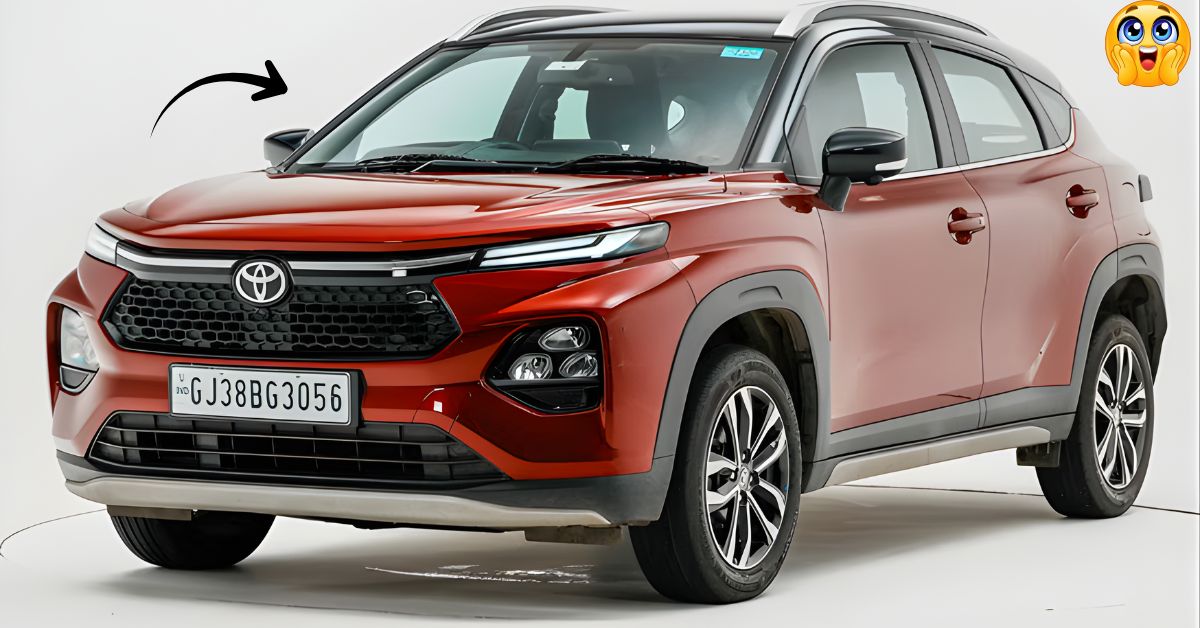
Toyota has given the Ebella a unique look to match its own “Urban Tech” design philosophy. It features a sharp front design called the “Hammerhead” look, which makes it appear aggressive and futuristic. It stands out from the Maruti version with different LED lights, bumpers, and alloy wheels.

Check out more: Skoda Superb 2026 

Battery, Power, and Range

The most important part of an electric car is the battery. Toyota knows this and is offering two battery options to suit different needs and budgets.

Two Battery Options

  • 49 kWh Battery: This is the smaller battery pack. It is great for city driving and offers a claimed range of around 440 km on a full charge.
  • 61 kWh Battery: This is the larger, long-range option. It offers an impressive ARAI-certified range of 543 km. This version is perfect for highway trips and weekend getaways.

Performance

The Ebella is expected to be a smooth performer. The larger battery version produces around 172 bhp and 189 Nm of torque. It comes with a Front-Wheel Drive (FWD) system. While it is not a sports car, it has enough power for quick overtakes in Indian traffic.

Interior and Top Features

Inside, the Toyota Ebella feels premium and modern. It is designed to be comfortable for five passengers.

  • Dual Screens: The dashboard has a modern look with two large screens. There is a 10.25-inch touchscreen for music and maps, and a 10.1-inch digital display for the driver.
  • Comfort: It comes with ventilated front seats, which are a blessing for Indian summers.
  • Sunroof: A large panoramic glass roof makes the cabin feel airy and spacious.
  • Sound System: Music lovers will enjoy the premium JBL audio system.
  • Safety: Toyota has packed the Ebella with safety tech. It gets Level 2 ADAS (Advanced Driver Assistance Systems), a 360-degree camera, and multiple airbags as standard.

Expected Price and Rivals

Toyota has not announced the final price yet, but experts have a good estimate. The launch is expected around February 21, 2026.

  • Estimated Price: ₹16 Lakh to ₹21 Lakh (ex-showroom).

At this price point, the Toyota Ebella enters a very hot market. It will directly compete with:

  1. Hyundai Creta EV: The electric version of India’s favorite SUV.
  2. Tata Curvv EV: Known for its stylish coupe design.
  3. MG ZS EV: A well-established player in the EV space.
  4. Maruti e Vitara: Its own sibling and platform partner.

Why Does This Launch Matter?

This launch is significant for the Indian auto industry. Until now, Toyota focused heavily on Hybrids (like the Hyryder and Innova Hycross). By launching the Ebella, Toyota is sending a message that it is serious about pure electric cars too.

For Indian buyers, this is great news. Many people hesitated to buy EVs because they were worried about reliability and service. With Toyota entering the game, that trust factor increases. A Toyota EV means peace of mind regarding service, spare parts, and resale value.

What Happens Next?

The official launch is just around the corner. Bookings are expected to open soon at Toyota dealerships across India. If you are planning to buy a mid-size SUV in 2026, it might be worth waiting a few days to test drive the Ebella.

Frequently Asked Questions (FAQs)

1. What is the real-world range of the Toyota Ebella?

While the official ARAI range is 543 km for the top model, the real-world range in city traffic with AC on will likely be around 350 km to 400 km.

2. Is the Toyota Ebella the same as the Maruti e Vitara?

They share the same battery, motor, and platform. However, the Ebella has different exterior styling, Toyota badging, and likely a different warranty package.

3. Does the Toyota Ebella have a sunroof?

Yes, the higher variants of the Toyota Ebella come with a panoramic glass roof.

4. When will the Toyota Ebella launch in India?

The car has been unveiled, and the official market launch with price announcement is expected around February 21, 2026.

5. What is the expected price of the Toyota Ebella?

The price is expected to start from ₹16 Lakh for the base model and go up to ₹21 Lakh for the top model.

Maruti Suzuki eVX

Maruti Suzuki eVX (e-Vitara) Launched: Price, Range, and Features

The wait is finally over. The car that India has been searching for as the Maruti Suzuki eVX has officially hit the roads, but with a new name: the Maruti Suzuki e-Vitara.

For nearly two years, the eVX concept was the most talked-about electric SUV in India. Now, Maruti Suzuki has turned that concept into reality. This is Maruti’s first-ever high-performance electric vehicle (EV), and it is here to challenge the Tata Curvv EV and Hyundai Creta EV.

If you are planning to buy your first electric SUV, here is everything you need to know about the new Maruti e-Vitara (formerly eVX), including its price, battery range, and top features.

From eVX Concept to e-Vitara: What Changed?

For a long time, spy shots and news reports referred to this car as the “Maruti eVX.” However, the production model is globally and domestically named the e-Vitara.

While the name has changed, the bold design remains. It retains the muscular look of the eVX concept with sharp LED daytime running lights, high ground clearance, and a coupe-like sloping roofline. It looks tough, modern, and very different from the regular petrol Grand Vitara.

Read More: Toyota Camry 

Maruti Suzuki e-Vitara: Price in India

Maruti has launched the e-Vitara at a very competitive price point to take on Tata and MG.

  • Starting Price: ₹19.49 Lakh (ex-showroom)
  • Top Model Price: ₹24.95 Lakh (ex-showroom)

This pricing puts it directly in the premium mid-size SUV segment. It is slightly more expensive than the entry-level Tata Curvv EV but offers a larger body and more space.

Battery, Range, and Charging

The most important question for any Indian EV buyer is: “Kitna deti hai?” (What is the range?). The e-Vitara comes with two battery options.

1. 49 kWh Battery (Standard Range)

  • Claimed Range: Approx. 400 km
  • Power: 144 bhp
  • Best For: City driving and daily office commutes.

2. 61 kWh Battery (Long Range)

  • Claimed Range (ARAI): Over 500 km
  • Power: 174 bhp
  • Best For: Highway trips and long-distance travel.

Charging Time

The car supports DC Fast Charging. You can charge the battery from 15% to 80% in just 45 minutes using a 100kW fast charger. For home charging, a standard AC wall box charger will take roughly 8-10 hours for a full charge.

Top Features and Interior

Maruti has upgraded its game for the interiors. The cabin feels premium and tech-heavy, looking much more advanced than the Swift or Brezza.

  • Dual Screens: A floating widespread panel that houses the digital instrument cluster and the touchscreen infotainment system.
  • AWD System: The top variant comes with “AllGrip-e”, an All-Wheel Drive system. This is a segment-first feature, allowing the electric SUV to handle rough terrain and snow easily.
  • ADAS Level 2: It comes with advanced safety features like Automatic Emergency Braking, Adaptive Cruise Control, and Lane Keep Assist.
  • 360-Degree Camera: Essential for parking a big SUV in tight Indian spots.
  • Ventilated Seats: A must-have feature for Indian summers.

Competition: Who are the Rivals?

The Maruti e-Vitara enters a very crowded battlefield. Its main competitors are:

  1. Tata Curvv EV: The current segment leader with a stylish coupe design.
  2. Hyundai Creta EV: Launching soon, this will be its toughest rival.
  3. MG ZS EV: A tried and tested option with great performance.
  4. Mahindra BE 6: The upcoming sporty EV from Mahindra.

Should You Buy It?

If you were waiting for the Maruti Suzuki eVX, the e-Vitara is exactly that car. It offers the trust of the Maruti service network combined with Toyota’s EV technology.

The 4WD (All-Wheel Drive) option makes it unique in this price range. If you want a family SUV that can do city duties on weekdays and handle adventure trips on weekends, this is a strong contender.

Frequently Asked Questions (FAQs)

1. Is the Maruti eVX and Maruti e-Vitara the same car?

Yes. The car was developed under the codename “eVX” (concept). The final production version sold in showrooms is named the Maruti Suzuki e-Vitara.

2. What is the real-world range of the Maruti e-Vitara?

While the ARAI claimed range is over 500 km for the 61 kWh battery, you can expect a real-world range of 350 km to 380 km depending on your driving style and AC usage.

3. Does the Maruti e-Vitara have a sunroof?

Yes, the top variants of the e-Vitara come with a panoramic sunroof.

4. When did the deliveries start in India?

Maruti Suzuki started deliveries for the e-Vitara in January 2026. You can book it now at NEXA dealerships.

5. Is it safe?

The car is built on a new “HEARTECT-e” platform and comes with 6 airbags standard, ESP, and ADAS Level 2, making it one of the safest Maruti cars.

Maruti Suzuki e-Vitara

Maruti Suzuki e-Vitara Launch Feb 2026: Confirmed Price, Range & Specs

The wait is finally over for Indian car buyers. Maruti Suzuki is all set to launch its first-ever electric SUV, the e-Vitara, in India this month. After making headlines at the Bharat Mobility Global Expo and undergoing months of testing, the official launch is expected around February 15, 2026.

This is a massive moment for the Indian auto industry because Maruti Suzuki is the country’s largest carmaker. Until now, they have stayed away from electric vehicles (EVs). With the e-Vitara, they are entering the market to compete directly with Tata Motors and MG.

Here is everything you need to know about the Maruti Suzuki e-Vitara, including its battery range, top features, safety rating, and expected price in India.

Launch Date and Expected Price

Maruti Suzuki is expected to announce the official prices for the e-Vitara in the second half of February 2026. Dealerships across India have already started generating hype, and bookings are expected to open shortly.

Industry experts believe the e-Vitara will be priced aggressively to attract buyers.

  • Estimated Starting Price: ₹17 Lakh (ex-showroom)
  • Estimated Top Model Price: ₹22.50 Lakh (ex-showroom)

If Maruti launches it at this price point, it will be a strong rival to the Tata Curvv EV, MG ZS EV, and the upcoming Hyundai Creta EV.

Read more: MG Majestor SUV 

Battery, Range, and Performance

The e-Vitara is built on a brand-new platform called HEARTECT-e, which is designed specifically for electric cars. Unlike some other EVs that are just modified petrol cars, this one is built as an EV from the ground up. This allows for more cabin space and better battery safety.

Maruti is offering two battery pack options to suit different needs:

  1. 49 kWh Battery: This is the entry-level option. It produces about 142 bhp of power and is great for city driving.
  2. 61 kWh Battery: This is the long-range version. It produces 172 bhp and is ideal for highway trips.

Range: The larger 61 kWh battery pack comes with a claimed ARAI driving range of 543 km on a single charge. In real-world driving conditions, you can expect a range of around 350 to 400 km, which is sufficient for most inter-city travel.

Interior and Top Features

Maruti Suzuki has completely changed its design language for the e-Vitara. The cabin feels premium and modern, looking very different from cars like the Brezza or Grand Vitara.

The dashboard features a dual-screen setup that combines the instrument cluster and the infotainment system into one glass panel. It looks sleek and high-tech.

Key features include:

  • Ventilated Front Seats: Keeps you cool during hot Indian summers.
  • Panoramic Sunroof: A large glass roof that opens up to make the cabin feel airy.
  • Wireless Charging: Easily charge your phone without cables.
  • ADAS Level 2: Advanced safety tech like adaptive cruise control and automatic emergency braking.
  • ‘e for me’ App: A dedicated mobile app to find charging stations and check battery status.

5-Star Safety Rating

Safety is a huge priority for Indian families today, and the e-Vitara delivers on this front. The SUV has already scored a 5-star safety rating in Bharat NCAP crash tests.

It comes loaded with safety equipment. All variants get 7 airbags as standard, including a knee airbag for the driver. Other safety features include a 360-degree camera, Electronic Stability Control (ESC), and front and rear parking sensors.

What Happens Next?

With the launch just weeks away, Maruti Suzuki is focusing on charging infrastructure. They are setting up fast chargers at their service centers and dealerships across 1,000 cities.

If you are planning to buy a mid-size SUV, it might be worth waiting a few weeks to test drive the e-Vitara. It promises the trust of Maruti combined with the low running cost of an electric car.

Frequently Asked Questions (FAQs)

1. When is the Maruti Suzuki e-Vitara launching in India?

The car is expected to launch around February 15, 2026.

2. What is the real-world range of the e-Vitara?

While the official ARAI range is 543 km for the top model, the real-world range will likely be between 350 km and 400 km depending on your driving style and AC usage.

3. Is the Maruti e-Vitara safe?

Yes, it is very safe. It has received a 5-star rating from Bharat NCAP and comes with 7 airbags and ADAS Level 2 features.

4. Does it have a sunroof?

Yes, the higher variants (Zeta and Alpha) come with a panoramic sunroof.

5. How long does it take to charge?

Using a DC fast charger, the battery can go from 10% to 80% in about 45 to 50 minutes. Home charging with a standard AC charger will take overnight (around 8-9 hours).

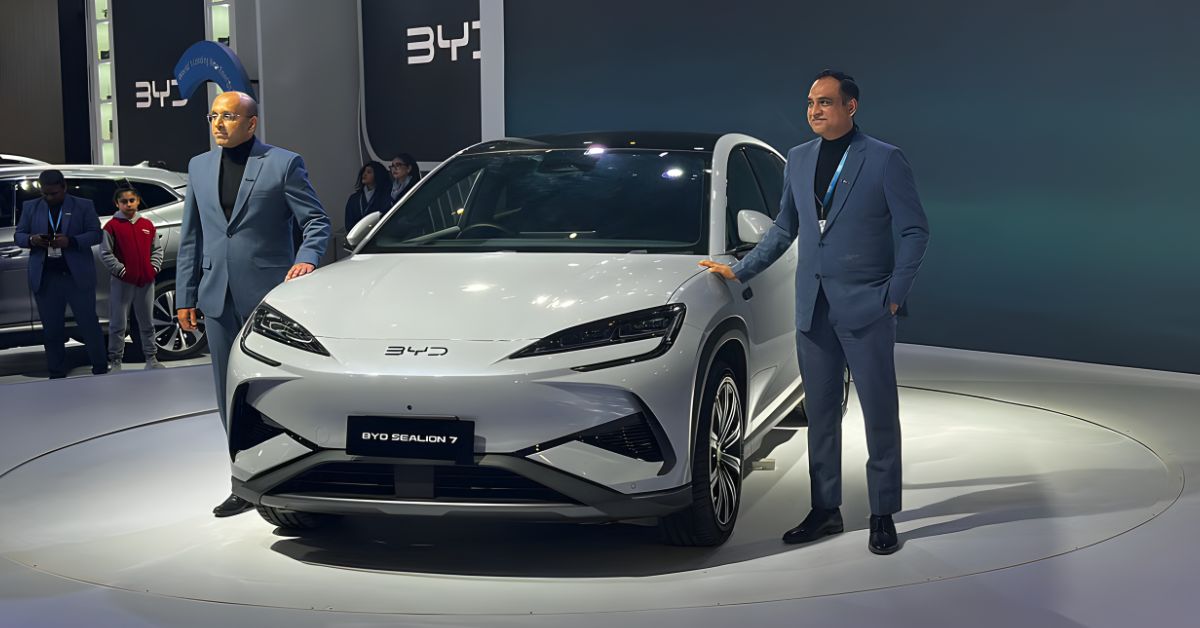
BYD Sealion 7

BYD Sealion 7 Price Hike (2026): New Prices, Specs & Features

The electric vehicle (EV) market in India is heating up, but buyers looking for the popular BYD Sealion 7 will now have to pay a little more. As of January 2026, BYD India has officially increased the price of its electric SUV.

If you are planning to bring this futuristic car home, it is important to know the new rates, the reasons behind the hike, and whether it is still a good deal compared to rivals like the Hyundai Ioniq 5 and Kia EV6. Here is a complete breakdown of the latest updates, specs, and features of the BYD Sealion 7.

News Update: Price Increase Announced (January 2026)

BYD India has announced a price hike of ₹50,000 on the Premium variant of the Sealion 7. This change came into effect from January 1, 2026.

According to the company, this adjustment is due to rising input costs and operational expenses. However, there is good news for performance lovers: the price of the top-spec Performance variant remains unchanged.

Read more: Ferrari 296 GTB

New Price List (Ex-Showroom, India)

  • Sealion 7 Premium (RWD): ₹49.40 Lakh (Previously ₹48.90 Lakh)
  • Sealion 7 Performance (AWD): ₹54.90 Lakh (Unchanged)

Note: Customers who booked the vehicle on or before December 31, 2025, are protected from this hike and will pay the older price.

Why Is the BYD Sealion 7 Trending?

Since its launch in early 2025, the Sealion 7 has grabbed attention for its “Ocean X” design language and impressive tech. It sits right between the BYD Atto 3 and the BYD Seal sedan in the company’s lineup.

It is a mid-sized electric SUV that looks like a coupe (sloping roofline). Indian buyers love it because it offers a luxury experience similar to cars that cost twice as much.

Key Specifications and Performance

The Sealion 7 is not just about looks; the numbers on paper are strong.

Battery and Range

Both variants come with a large 82.56 kWh battery pack. This uses BYD’s famous “Blade Battery” technology, which is considered one of the safest in the world.

  • Premium Variant: Offers a claimed range of 567 km on a single charge.
  • Performance Variant: Offers a claimed range of 542 km (slightly less due to higher power).

Power and Speed

  • Premium (Rear-Wheel Drive): Produces 308 bhp and 380 Nm of torque. It is quick enough for daily city driving.
  • Performance (All-Wheel Drive): This is the beast. It has dual motors producing a massive 523 bhp and 690 Nm of torque. It can sprint from 0 to 100 km/h in just 4.5 seconds.

Charging

The car supports ultra-fast DC charging up to 230 kW. If you find a charger powerful enough, you can charge the battery from 10% to 80% in just 24 minutes.

Interior and Features

BYD is known for unique interiors, and the Sealion 7 is no different.

  • Rotating Screen: The dashboard features a massive 15.6-inch touchscreen that can rotate between landscape (horizontal) and portrait (vertical) modes with a touch of a button.
  • Comfort: It comes with Nappa leather seats, which are heated and ventilated (perfect for Indian summers).
  • Safety: The car is loaded with 11 airbags and a full suite of ADAS (Advanced Driver Assistance Systems) like automatic emergency braking and adaptive cruise control.

BYD Sealion 7 vs. The Competition

Is it still worth the money after the price hike? Let’s compare it to its main rival, the Hyundai Ioniq 5.

The Hyundai Ioniq 5 is priced around ₹46 Lakh, which makes it cheaper than the Sealion 7 Premium (now ₹49.40 Lakh). However, the Sealion 7 offers a larger battery and more power. The Kia EV6 is another rival, but it is much more expensive, starting over ₹60 Lakh.

Verdict: If you want maximum features, a newer design, and faster acceleration, the Sealion 7 is still a solid choice despite the extra ₹50,000 cost.

Frequently Asked Questions (FAQs)

1. What is the new price of the BYD Sealion 7 in 2026?

The base ‘Premium’ variant now costs ₹49.40 Lakh (ex-showroom). The top ‘Performance’ variant price is unchanged at ₹54.90 Lakh.

2. What is the real-world range of the BYD Sealion 7?

While the certified range is up to 567 km, you can expect a real-world driving range of around 400–450 km depending on traffic and AC usage.

3. Does the Sealion 7 have a sunroof?

Yes, it comes with a large panoramic glass roof that makes the cabin feel very airy and spacious.

4. How long does it take to charge?

With a fast DC charger, it takes about 24 minutes to go from 10% to 80%. At home with a standard AC wall box, it will take overnight to fully charge.

5. Is the price hike applicable to old bookings?

No. If you booked your car before December 31, 2025, you will pay the old price. The new price applies only to bookings made from January 1, 2026 onwards.

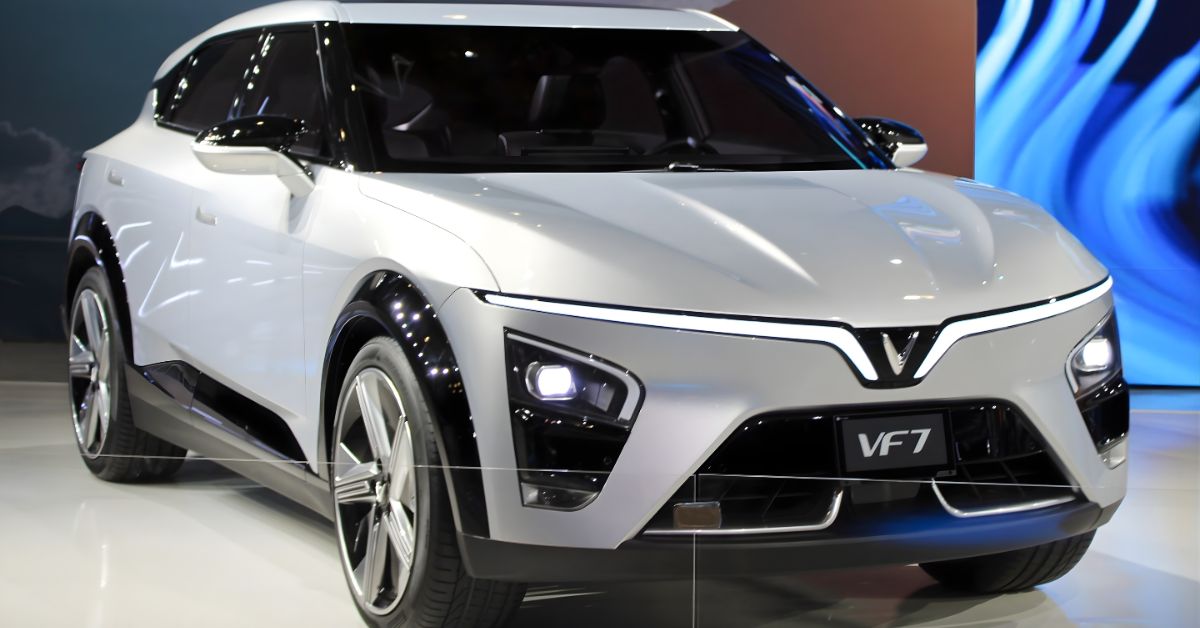
VinFast VF7

VinFast VF7 Price in India 2026: Specs, 532km Range, and 5-Star Safety Rating

The Indian electric vehicle (EV) market has a bold new player. Vietnam’s automotive giant, VinFast, has officially disrupted the premium SUV segment with the launch of the VinFast VF7. As of January 2026, the VF7 has firmly established itself as a flagship offering, combining futuristic “Aerospace” design with high-performance electric power.

Locally assembled at VinFast’s state-of-the-art facility in Thoothukudi, Tamil Nadu, the VF7 is not just a global product brought to India; it is a statement of the brand’s long-term commitment to the country. With deliveries now in full swing and the company ranking as India’s fourth-largest EV maker just months after its debut, the VF7 is quickly becoming a common sight on urban roads.

VinFast VF7 Price in India and Variants

VinFast has positioned the VF7 competitively to take on both established luxury EVs and upcoming mid-size electric SUVs. Following the end of its initial introductory pricing, the current ex-showroom prices for the five available variants are:

  • VF7 Earth (Base): ₹20.89 Lakh
  • VF7 Wind: ₹23.49 Lakh
  • VF7 Wind Infinity: ₹23.99 Lakh
  • VF7 Sky (AWD): ₹24.99 Lakh
  • VF7 Sky Infinity (AWD): ₹25.49 Lakh

The “Infinity” trims are particularly popular in India as they come equipped with a massive fixed panoramic glass roof, adding to the cabin’s premium and airy feel.

Read more: Nissan Magnite 2026

Performance: Range and Battery Options

The VF7 offers two distinct battery configurations to suit different driving needs. The entry-level Earth variant features a 59.6 kWh battery pack with a front-wheel-drive setup, delivering 177 hp and a healthy range of 438 km.

For those seeking more power, the Wind and Sky variants upgrade to a larger 70.8 kWh battery. The top-tier Sky AWD (All-Wheel Drive) variant is a performance beast, churning out 353 hp and 500 Nm of torque. This allows the SUV to sprint from 0 to 100 km/h in just 5.8 seconds, making it one of the quickest EVs in its price bracket.

Charging is also remarkably efficient. Using a DC fast charger, the VF7 can juice up from 10% to 70% in approximately 24 to 28 minutes, significantly reducing range anxiety for long-distance travelers.

5-Star Bharat NCAP Safety Rating

In a major win for the brand, the VinFast VF7 recently secured a perfect 5-star safety rating from Bharat NCAP in January 2026. This rating applies to both adult and child occupant protection across all variants.

The vehicle comes standard with seven airbags, including a driver knee airbag. It also features a comprehensive Level 2 ADAS (Advanced Driver Assistance Systems) suite, which includes adaptive cruise control, lane-keeping assist, and emergency braking. For the Indian buyer who prioritizes safety, this official certification puts the VF7 ahead of many competitors.

Why It Matters: The “V Face” Design and Tech

The VF7 stands out on the road thanks to its signature “V Face” LED lighting—a wing-shaped light bar that stretches across the front and rear. Inside, the cabin is minimalist and driver-centric.

Instead of a traditional dashboard, most functions are controlled via a crisp 12.9-inch or 15-inch touchscreen. Interestingly, the VF7 ditches the standard instrument cluster in favor of a Heads-Up Display (HUD), which projects speed and navigation directly onto the windshield, keeping the driver’s eyes on the road.

What’s Next for VinFast India?

VinFast is not stopping with the VF7. The company has announced an aggressive “one launch every six months” strategy. Following the success of the VF6 and VF7 SUVs, the brand is currently testing the Limo Green, a 7-seater electric MPV expected to launch by mid-2026.

Additionally, VinFast is expanding its “V-Green” charging network through partnerships with HPCL and is scaling up its Tamil Nadu plant to produce electric scooters and buses, aiming to become a top-three carmaker in India within the next decade.

Frequently Asked Questions (FAQs)

What is the range of the VinFast VF7 in India?

The VinFast VF7 offers an ARAI-rated range between 438 km and 532 km depending on the variant and battery size (59.6 kWh or 70.8 kWh).

Is the VinFast VF7 4×4 or AWD?

Yes, the higher-end Sky and Sky Infinity variants come with an All-Wheel Drive (AWD) system and dual motors, providing superior grip and faster acceleration.

What is the warranty on the VinFast VF7 battery?

VinFast offers an industry-leading battery warranty of 10 years or 2,00,000 km in India, whichever comes first. They also currently offer free charging at their V-Green stations until 2028 for early buyers.

Is VinFast an Indian company?

No, VinFast is a Vietnamese automotive company. However, it has heavily invested in India, setting up a large manufacturing plant in Tamil Nadu where it locally assembles its vehicles for the Indian market.

Does the VF7 have a sunroof?

The “Infinity” variants (Wind Infinity and Sky Infinity) come with a premium fixed panoramic glass roof. The base variants do not include this feature.

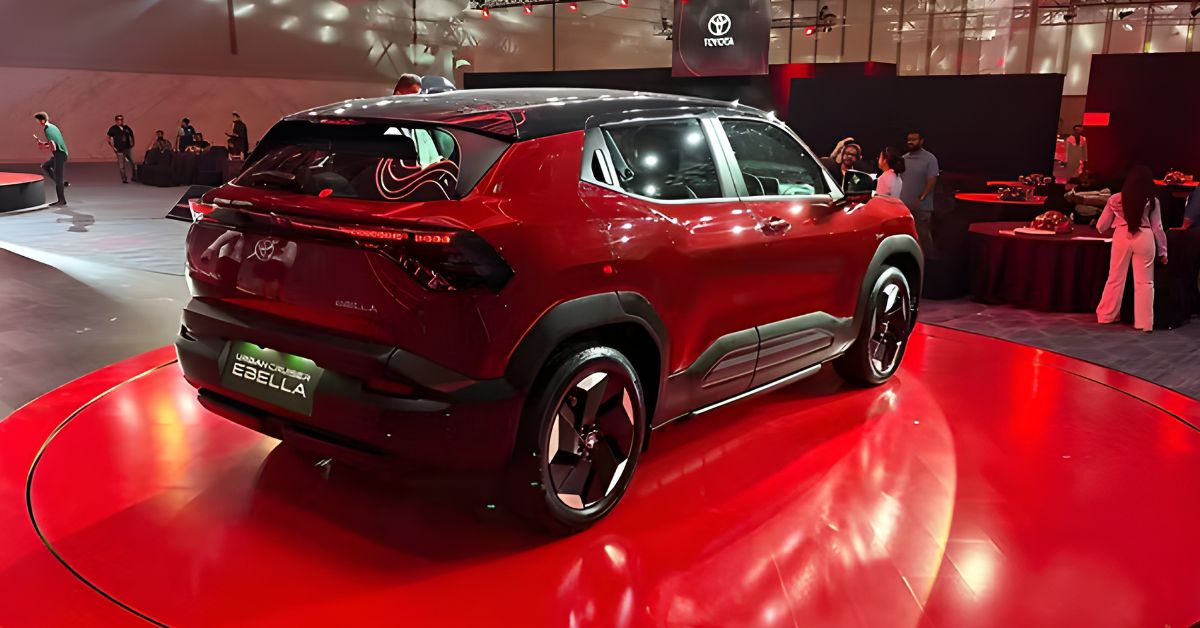
Toyota Urban Cruiser Ebella

Toyota Urban Cruiser Ebella: Price, Range & Features

Toyota has officially entered the mass-market electric vehicle (EV) race in India with the unveiling of the Toyota Urban Cruiser Ebella. After the success of its hybrid models like the Hyryder, this is Toyota’s first fully electric SUV for Indian roads.

Unveiled in late January 2026, the Ebella promises a strong driving range, premium features, and Toyota’s signature reliability. It is expected to rival popular electric SUVs like the Hyundai Creta EV, Tata Curvv EV, and the upcoming Maruti Suzuki e Vitara.

Here is everything you need to know about Toyota’s new electric SUV.

What is the Toyota Urban Cruiser Ebella?

The Urban Cruiser Ebella is a mid-size electric SUV co-developed with Maruti Suzuki. While it shares its core technology and platform with the Maruti e Vitara, Toyota has given it a distinct look and feel.

It is built on a dedicated electric platform (born-EV architecture), which means it offers better cabin space and floor planning compared to cars that are converted from petrol to electric.

Read more: Lamborghini Gallardo

Key Highlights at a Glance

  • Battery Options: 49 kWh and 61 kWh.
  • Range: Up to 543 km on a full charge.
  • Expected Price: ₹16 Lakh to ₹21 Lakh (Ex-showroom).
  • Launch Date: Bookings are open; price announcement expected in February 2026.

Exterior and Interior Design

Toyota has worked hard to ensure the Ebella stands out from its competitors.

Exterior: The front of the car features a new “hammerhead” design, which is a signature of modern Toyota EVs. It has a closed-off grille, sleek LED Daytime Running Lights (DRLs), and a new bumper that gives it a sharp, aggressive look. The side profile looks muscular with 18-inch alloy wheels and chunky cladding. At the rear, it gets connected LED tail lamps and a sporty roof spoiler.

Interior: Inside, the cabin feels modern and premium. It features a dual-screen setup:

  1. A 10.25-inch touchscreen for infotainment (music, maps, etc.).
  2. A 10.1-inch digital driver display for speed and battery info.

The interior theme uses premium materials with soft-touch finishes. Toyota has also included a floating center console, which adds more storage space between the front seats.

Battery, Range, and Performance

The Toyota Urban Cruiser Ebella is designed for both city commutes and long highway drives. It comes with two battery choices:

  • Standard Range (49 kWh): Delivers around 142 bhp and a range of approximately 440 km. Best suited for daily city use.
  • Long Range (61 kWh): Delivers 172 bhp and a claimed range of 543 km. Ideal for those who travel inter-city.

Both versions produce 189 Nm of torque, ensuring quick acceleration. The car supports DC fast charging, which can charge the battery from 10% to 80% in just about 45 minutes.

Top Features and Safety

Toyota is known for safety, and the Ebella is no exception. It comes packed with advanced technology to keep passengers safe and comfortable.

Comfort Features:

  • Panoramic glass roof (fixed).
  • Ventilated front seats (cooling function).
  • Wireless smartphone charger.
  • Premium JBL sound system.
  • Powered driver’s seat.

Safety Features:

  • 7 Airbags as standard across all variants.
  • Level-2 ADAS (Advanced Driver Assistance Systems) like Adaptive Cruise Control and Lane Keep Assist.
  • 360-degree parking camera.
  • Electronic Stability Control (ESC) and Tyre Pressure Monitoring System (TPMS).

Why This Launch Matters

For a long time, Toyota focused heavily on Hybrids (cars with both petrol and electric power). The launch of the Ebella marks a major shift as Toyota fully embraces the pure electric market in India.

For Indian buyers, this is great news. It brings a reliable Japanese alternative to the market, challenging the dominance of Tata Motors and the new entries from Hyundai and MG. Toyota is also offering attractive ownership packages, including an 8-year battery warranty and buyback assurance, to give customers peace of mind.

Frequently Asked Questions (FAQs)

Q1. What is the expected price of the Toyota Urban Cruiser Ebella?

The price is expected to start around ₹16 Lakh for the base model and go up to ₹21 Lakh for the top model.

Q2. What is the real-world range of the Ebella?

While the certified range is 543 km for the larger battery, you can expect a real-world range of around 380-420 km depending on driving conditions and AC usage.

Q3. Is the Toyota Ebella the same as the Maruti e Vitara?

They share the same platform and battery tech, but the Ebella has different exterior styling, distinct interior themes, and comes with Toyota’s service and warranty benefits.

Q4. When will the deliveries start?

Toyota has opened bookings in late January 2026. Deliveries are expected to begin in March or April 2026.

Q5. Does it have a sunroof?

Yes, the top variants of the Urban Cruiser Ebella come with a large panoramic glass roof.

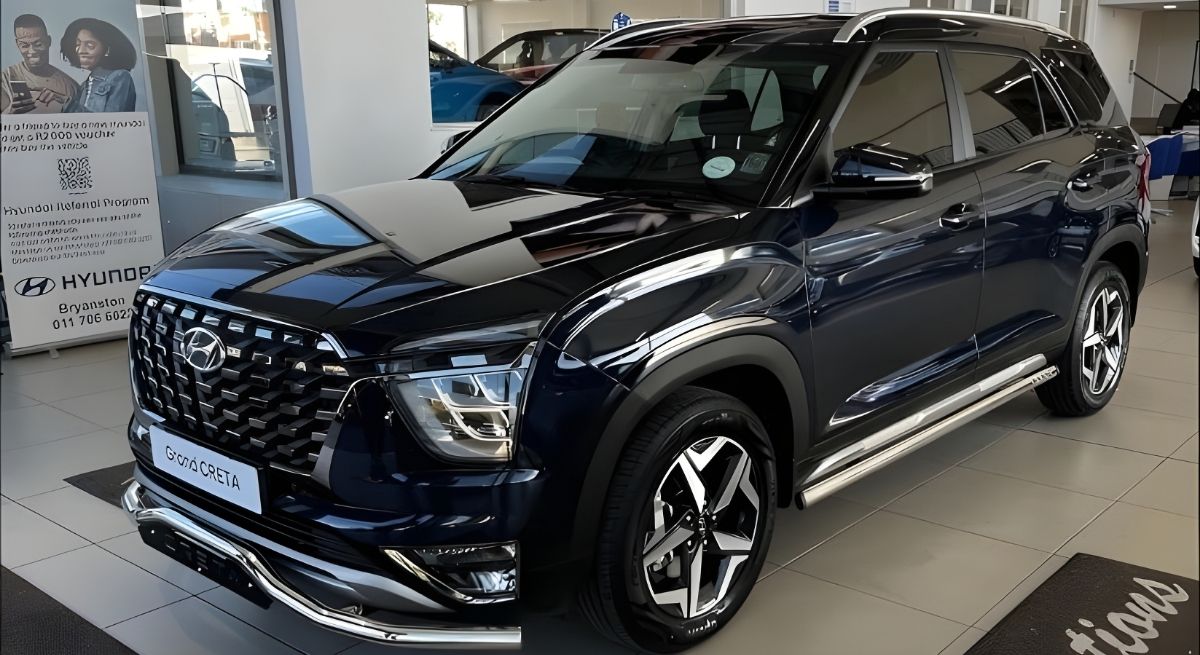
Hyundai Creta

Hyundai Creta Discount India: Get Up to ₹40,000 Off in 2026?

Here is a comprehensive, deep-dive review and discount analysis of the Hyundai Creta, written from the

Let’s be honest. In India, you don’t just “buy” a Hyundai Creta; you join a cult. It is the default choice for the middle-class family that wants to announce, “We have arrived.” But with prices touching ₹20 Lakh on-road for top models, the burning question everyone is asking is: Is there a Hyundai Creta discount in India right now?

The long answer: While Hyundai dealers are notorious for giving zero discounts on the Creta, the market has shifted in early 2026. With stock of the 2025 manufacturing year (MY2025) still lingering in some yards and fierce competition from the Maruti Grand Vitara Hybrid, you can actually squeeze out a deal if you know where to look.

I spent a week with the Hyundai Creta SX(O) Diesel Automatic, driving it from the choked streets of Mumbai to the open expressways of Pune. Here is the unfiltered truth about the car, the discounts, and the real-world mileage.

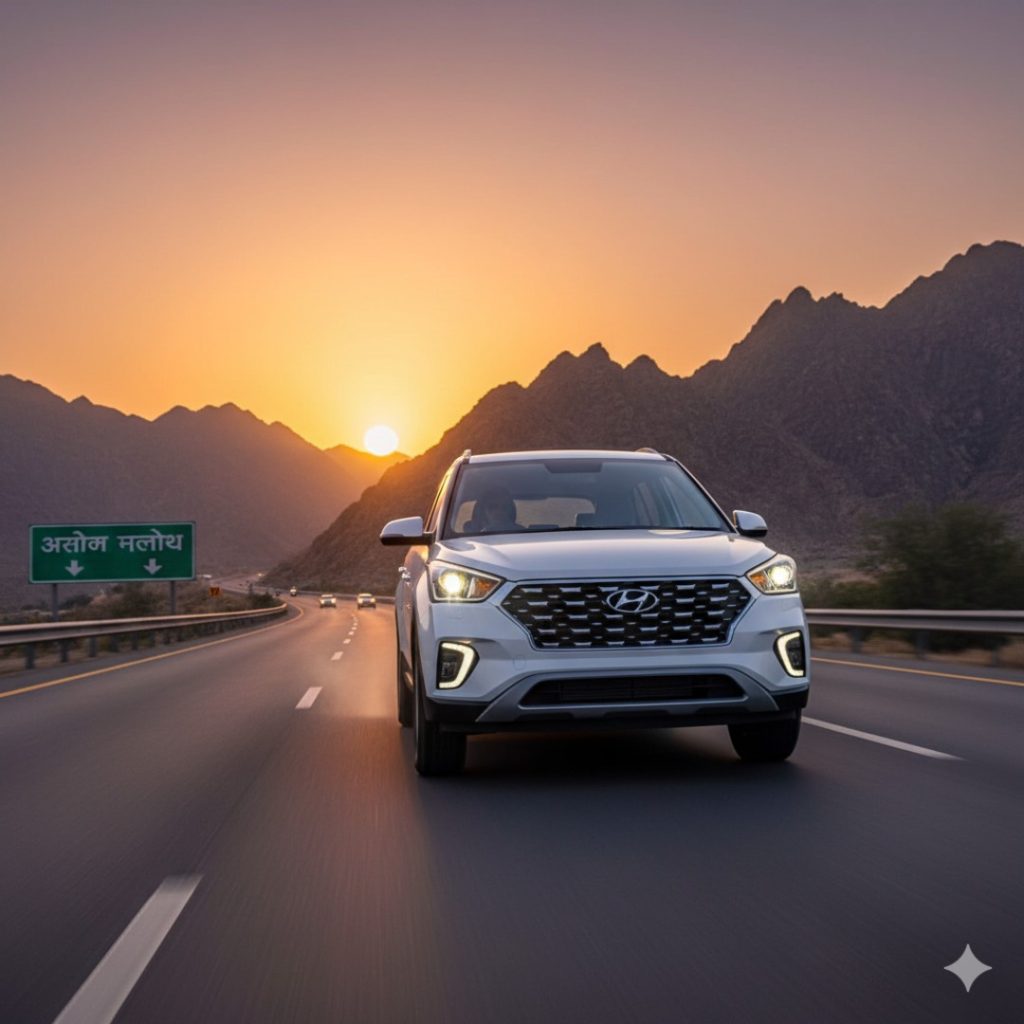
white Hyundai Creta facelift being driven on a scenic Indian highway with mountains in the background. Golden hour lighting reflecting on the parametric grille.

3. Quick Specs: The Numbers That Matter

Before we talk about money, let’s see what you are getting under the hood. The Creta offers the widest range of engines in this segment.

FeatureSpecification (Top Model)
Engine Options1.5L NA Petrol
Power115 PS
Torque144 Nm
Transmission6MT, IVT (CVT), 6AT, 7DCT
Boot Space433 Litres
Ground Clearance190 mm
Fuel Tank50 Litres
Tyre Size215/60 R17 (Diamond Cut Alloy)

4. Exterior Design & Road Presence

Hyundai played a risky game with the facelift. The old design was polarizing; the new one is… boxy.

The “Parametric” Grille:

Read more: Nissan Tekton 5G SUV

The front grille looks like a piece of jewelry. The connected LED DRL strip that runs across the bonnet gives it a very futuristic, “Robocop” vibe at night. It definitely grabs attention.

The Stance:

Is it a proper SUV? Well, it’s a crossover. It doesn’t have the rugged, muscular stance of a Scorpio-N or the Tata Harrier. It looks urban, polished, and sophisticated. The 17-inch alloys look decent, but I frankly wish they offered 18-inchers on the N-Line or top variants to fill those wheel arches better.

The Rear Profile:

The connected tail lamp setup is the new trend (seen in Verna, Venue, Seltos). It looks premium, but the bumper design with the silver skid plate tries a bit too hard to look rugged.

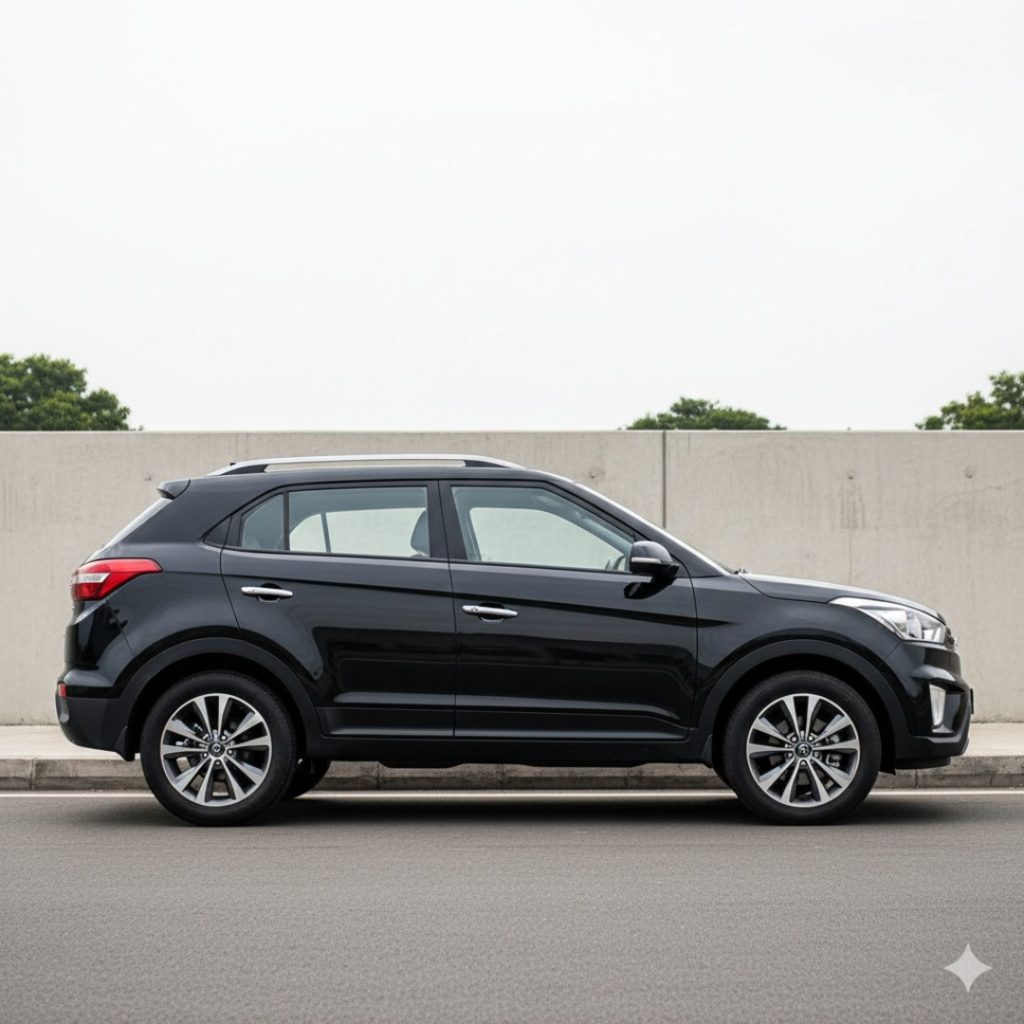
black Hyundai Creta parked on a clean asphalt road. Showcasing the diamond-cut alloy wheels, silver roof rails, and high ground clearance.

5. Interior, Comfort & Features

Step inside, and you realize why this car sells 15,000 units a month.

The Dashboard:

The dual 10.25-inch screens (one for the cluster, one for infotainment) are ripped straight from luxury cars. The touch response is fluid—no lag, no stutter. The dashboard material is mostly hard plastic, but the “crash pad” area has a nice texture.

Space & Comfort:

  • Driver: The powered driver seat is a blessing. The ventilation function is powerful—crucial for Indian summers.
  • Rear Seat: Can 3 people sit at the back? Yes. The floor is almost flat, and the width is sufficient. Legroom is generous even if a 6-foot driver is in front. The two-step recline on the rear seat is a feature your parents will love on long trips.

Missing Features:

  • No Wireless Android Auto/Apple CarPlay in the top-end model (It’s wired, which is ironic because the lower variants get wireless!).
  • No Heads-Up Display (HUD) – The Seltos and Grand Vitara offer this.
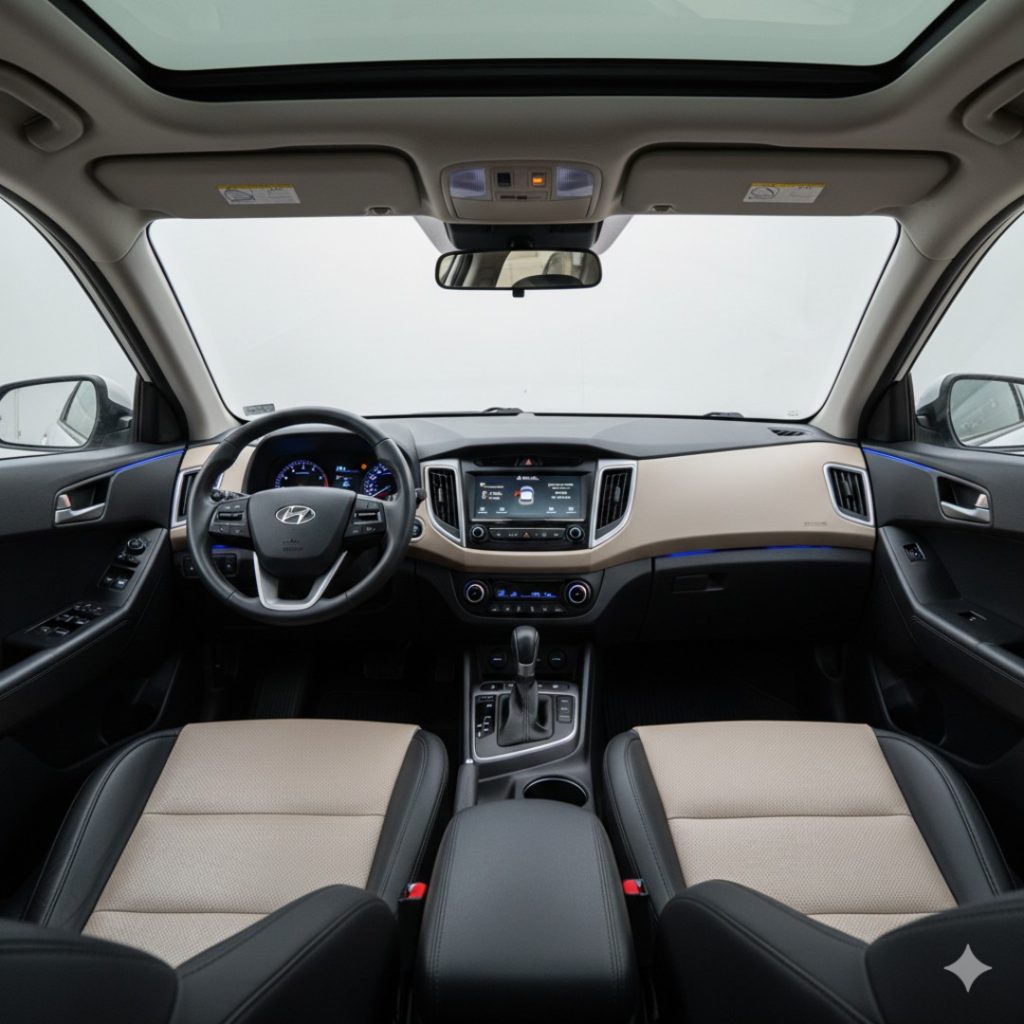
dual-tone dashboard and steering wheel of the Hyundai Creta. Ambient lighting glowing in blue. Panoramic sunroof visible at the top.

6. Engine Performance & Driving Dynamics

I tested the 1.5L Diesel Automatic, which is the favorite choice for Indian highway runners.

City Drive (Traffic Test):

The steering is incredibly light—you can turn it with one finger. Parking this SUV in a tight mall spot is effortless. The 6-speed Torque Converter Automatic is smooth. It doesn’t jerk like an AMT or get confused like some DCTs in stop-go traffic.

Highway Drive (100 kmph+):

This is where the Creta shines. The diesel engine has a fantastic mid-range punch.

  • Stability: At 120 kmph, the car feels planted. The suspension has been tuned to be slightly firmer than the old Creta, meaning it doesn’t bounce around like a boat on undulations.
  • Body Roll: It’s a tall car, so you will feel some lean in sharp corners, but it’s well-controlled.

The 1.5L Turbo Petrol:

If you are an enthusiast, buy the Turbo. It produces 160 PS. It is a rocket. However, the 7-speed DCT gearbox can be a bit jerky at crawling speeds.

Suspension & Potholes:

Hyundai has nailed the “Indian Road” tuning. Small potholes are absorbed silently. You hear a “thud” only on the massive craters.

7. Safety: No More “Tin Can” Jokes?

Hyundai took the criticism seriously. The structural rigidity has been improved.

  • Standard Safety: 6 Airbags are standard across all variants (E to SX(O)). This is a huge move.
  • ADAS Level 2: The top model gets 19 ADAS features. I tested the Adaptive Cruise Control on the expressway, and it works flawlessly, slowing down automatically when a truck cuts in.
  • Braking: All 4 Disc Brakes give you confident stopping power.

Note: While Global NCAP ratings for the new facelift aren’t out yet, the build feels significantly heavier and more solid than the pre-2020 version.

8. Real World Mileage: The Truth

This is where the marketing brochures lie. Here is what I actually got on the MID and Tank-to-Tank method.

1.5L Diesel Automatic:

  • ARAI Claimed: ~19.1 kmpl
  • Real World City: 13.5 – 14.5 kmpl (Moderate Traffic)
  • Real World Highway: 18 – 20 kmpl (Cruising at 90 kmph)

1.5L NA Petrol Manual:

  • Real World City: 10 – 11 kmpl (It drinks fuel in traffic)
  • Real World Highway: 15 – 16 kmpl

1.5L Turbo Petrol DCT:

  • Real World City: 8 – 9 kmpl (If you drive aggressively)
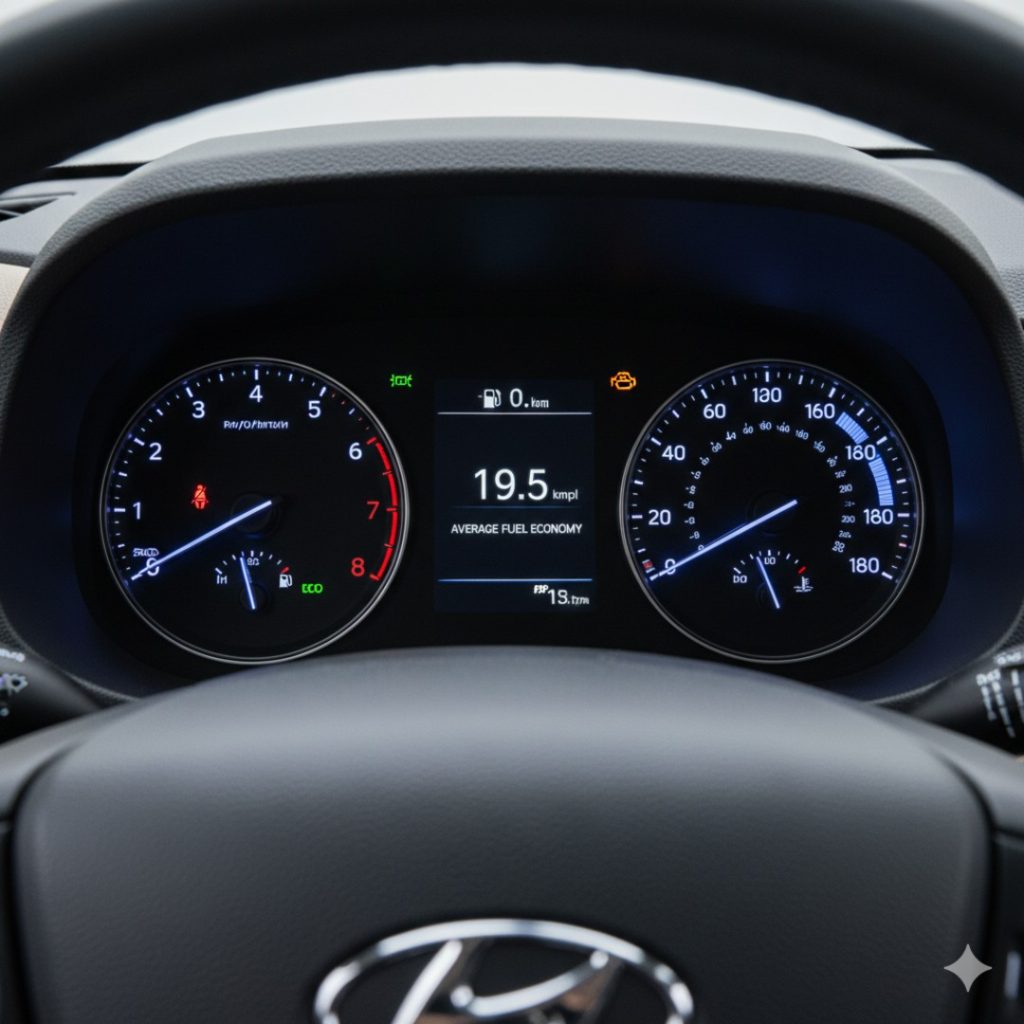
Hyundai Creta digital instrument cluster showing ‘19.5 kmpl’ average fuel economy. Modern graphics.

9. The Discount Reality: How to Save Money

Now, back to your main query: “Hyundai Creta Discount India”.

Officially, Hyundai rarely advertises cash discounts on the Creta because the waiting period is still 1-3 months. However, in January 2026, here is the scoop:

  1. MY2025 Stock: Dealers are desperate to clear the 2025 manufacturing year stock. You can negotiate a cash discount of ₹40,000 – ₹50,000 on these units.
  2. Exchange Bonus: There is typically a ₹20,000 – ₹30,000 exchange bonus if you trade in your old car.
  3. Corporate Discount: If you work for an MNC, ask for the ₹5,000 – ₹10,000 corporate discount.
  4. Insurance Hack: Dealers quote inflated insurance (approx ₹80k). Buy it online (approx ₹45k) or ask them to match it. That’s an instant ₹35,000 saving.

Total Potential Savings: Up to ₹1 Lakh if you pick a 2025 model and negotiate the insurance hard.

10. The Competition: Battle of the Mid-Size SUVs

Auto-selected Rivals:

  1. Kia Seltos (The Stylish Sibling)
  2. Maruti Grand Vitara (The Mileage King)
FeatureHyundai CretaKia SeltosMaruti Grand Vitara (Hybrid)
Starting Price₹10.99 L₹10.89 L₹10.99 L
Top Spec Price₹20.30 L₹20.45 L₹19.99 L
SuspensionComfort OrientedStiff (Sporty)Balanced
Real City Mileage10-14 kmpl10-14 kmpl22-24 kmpl (Hybrid)
FeaturesPanoramic SunroofPano SunroofPano Sunroof (Thin cloth)
Diesel Option?YESYESNO

The Comparison:

  • Vs Seltos: The Seltos looks sharper and handles better around corners, but the Creta has a much more comfortable ride quality for families.
  • Vs Grand Vitara: If your daily running is over 50km in city traffic, buy the Grand Vitara Hybrid. You will save lakhs in fuel. But if you want power, punch, and premium feel, the Grand Vitara feels cheap inside compared to the Creta.

Winner: Hyundai Creta wins on “All-Rounder” appeal. It’s not the most efficient, nor the sportiest, but it does everything 8/10.

11. Final Verdict

The Hyundai Creta is like the “iPhone” of SUVs in India. It’s safe, reliable, feature-loaded, and holds its resale value incredibly well.

Is it worth the price tag?

At ₹20 Lakh+ for the top model, it is expensive. However, the comfort and resale value justify it if you plan to keep it for 5+ years.

Buy it if:

  • You want a Diesel SUV: It is one of the last remaining good diesel options in this segment.
  • You want Resale Value: A 5-year-old Creta sells for 60-70% of its original value.
  • You want Comfort: The suspension and rear seat comfort are best in class.

Skip it if:

  • You want high City Mileage: The petrol variant will hurt your wallet. Buy a Hybrid (Grand Vitara/Hyryder) instead.
  • You hate Waiting: Waiting 3-6 months for a car is frustrating.
  • You want 4×4: It’s a FWD soft-roader. It cannot do off-roading like a Thar or Scorpio-N (4WD).

12. FAQs (People Also Ask)

Q1: Is there any cash discount on Hyundai Creta in 2026?

On fresh 2026 stock, there is usually no cash discount. However, on MY2025 (unsold stock from last year), dealers are offering discounts up to ₹50,000.

Q2: Which Creta variant is the most Value For Money (VFM)?

The S(O) variant is the most value-for-money. It gets the Panoramic Sunroof, LED lamps, and good tech without the heavy price tag of the SX(O).

Q3: What is the waiting period for Creta Diesel?

The Diesel Automatic currently commands a waiting period of 3 to 5 months in major cities like Delhi and Mumbai. The Petrol Manual is available faster (1 month).

Q4: Is the Creta N-Line worth the extra money?

Only if you are an enthusiast. The N-Line has stiffer suspension and a heavier steering feel, making it fun to drive, but less comfortable for elderly passengers.

Q5: Can I get a discount on Creta if I book online?

No, online bookings are standard. Discounts are purely dealer-level negotiations. You must visit the showroom and haggle on Insurance and Accessories to get a “discount”.

Back to Top
WhatsApp Channel
Compare (0)